
Table of Contents >> Show >> Hide
- What a Bear Market Really Means
- Why Bear Markets Keep Coming Back
- What History Tells Us
- Why Bear Markets Feel So Much Worse Than Bull Markets Feel Good
- The Hidden Benefit of Admitting Bear Markets Are Inevitable
- How Smart Investors Usually Respond
- Bear Markets Separate Plans From Fantasies
- The Real Point: Inevitability Is Not the Same as Doom
- Experience: What Living Through a Bear Market Actually Feels Like
- Conclusion
Every generation of investors eventually learns the same rude lesson: the stock market does not move in a straight, elegant line from lower left to upper right. It lurches. It stumbles. It occasionally throws a spectacular tantrum. And when those tantrums turn serious, we call them bear markets.
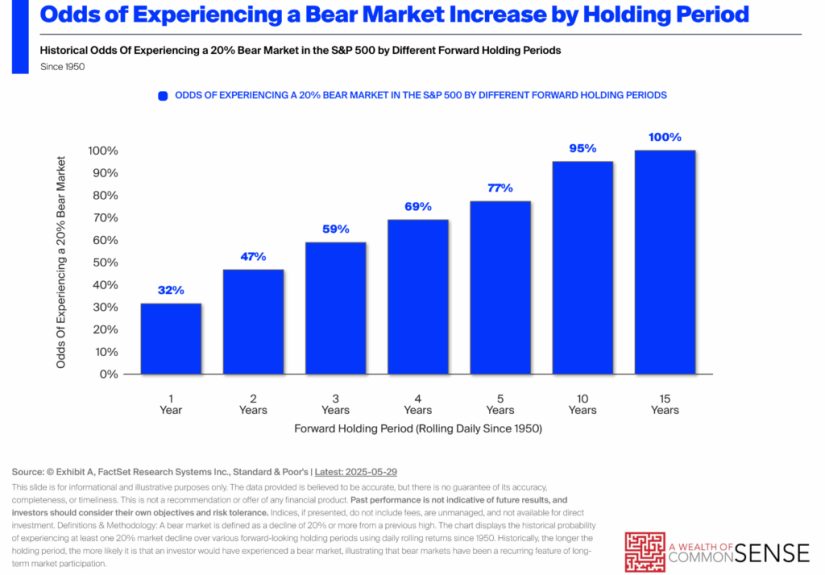
That sounds ominous because it is ominous. A bear market is not a cute little market hiccup. It is the kind of stretch that makes headlines louder, portfolio apps scarier, and group chats suddenly full of amateur economists. But here is the part that matters most: bear markets are not rare accidents. They are a normal, recurring feature of investing.
If that feels unfair, welcome to the club. Markets are made of human expectations, company earnings, borrowing costs, policy decisions, global shocks, and a never-ending wrestling match between greed and fear. That combination practically guarantees that periods of excess optimism will eventually be followed by periods of painful reality. In other words, bear markets are not a glitch in the system. They are part of the system.
This article explores why bear markets keep showing up, what history teaches us about them, why they feel so awful in real time, and how investors can respond without making their future selves write angry letters to their past selves.
What a Bear Market Really Means
In plain English, a bear market usually refers to a broad market decline of 20% or more from recent highs. That is the technical shorthand. The emotional version is less tidy: confidence fades, bad news multiplies, and investors begin speaking in the hushed tone usually reserved for canceled flights and surprise dental bills.
Bear markets are different from ordinary pullbacks or corrections. Markets can dip 5% or 10% for all sorts of reasons and recover before anyone has time to dramatically swear off stocks forever. A bear market has more weight behind it. It often reflects a deeper problem such as stretched valuations, slowing earnings, tighter credit, recession fears, or a shock that forces investors to rethink what assets are worth.
Most important, a bear market changes behavior. Consumers spend differently. Businesses hire more cautiously. Investors who were feeling bold last year suddenly rediscover the thrill of cash. The mood shift is part of the story, not just a side effect.
Why Bear Markets Keep Coming Back
Bear markets are inevitable because the forces that create them are also inevitable. As long as markets are powered by people, leverage, optimism, competition, and economic cycles, downturns will continue to arrive on schedule like an unwanted relative who never texts first.
1. Bull markets plant the seeds of bear markets
Long advances in stock prices can make investors feel smarter than they really are. When markets rise for years, people begin to assume that strong returns are normal, risk is manageable, and expensive assets are somehow still bargains if everyone else is buying them too. Valuations stretch. Standards loosen. Caution starts to look old-fashioned.
That is often when trouble begins. Bull markets reward optimism, but eventually optimism becomes overconfidence. Once prices get ahead of fundamentals, the market does not need a huge disaster to fall. Sometimes it only needs a reason.
2. The economy moves in cycles
Economic growth is not permanent or perfectly smooth. Expansions slow down. Consumer demand weakens. Companies cut forecasts. Credit conditions tighten. Recessions appear. Even when a bear market does not line up perfectly with an official recession, the broader business cycle still matters because stock prices are constantly trying to estimate the future. When the future starts looking thinner, stock prices usually notice before everyone feels comfortable admitting it.
3. Interest rates change the math
When money is cheap, risk-taking tends to bloom. Investors are more willing to pay high prices for future growth because the discount rate is low and alternatives like cash or bonds may look less attractive. When rates rise, that math gets less friendly. Valuations compress. Borrowing gets harder. Companies and consumers feel pressure. A market that once floated on easy assumptions can suddenly feel very heavy.
4. Shocks will always exist
No one can predict the exact trigger for the next bear market. It could be a financial imbalance, an inflation scare, a geopolitical event, a banking problem, an energy spike, a policy mistake, or a recession no one wanted to believe was coming. The trigger changes. The pattern does not. Markets repeatedly remind us that uncertainty is not a temporary inconvenience. It is the permanent wallpaper.
5. Human psychology is gloriously unreliable
Investors chase performance on the way up and demand safety on the way down. They feel clever near market peaks and cursed near market bottoms. This is normal human behavior, but normal human behavior can produce very abnormal price swings. Herd behavior, panic selling, FOMO buying, and narrative addiction all help turn ordinary stress into full-blown market drama.
What History Tells Us
Market history does not say that every bear market looks the same. It says the opposite. Some are fast and violent. Others are slow, grinding, and emotionally exhausting. Some are tied to deep recessions. Others are driven by valuation resets or policy shocks. But history does show a consistent pattern: declines happen, fear expands, markets bottom eventually, and recoveries begin before confidence fully returns.
Consider a few familiar chapters. The Great Depression remains the giant cautionary tale, a reminder that financial excess and policy failures can leave long shadows. The 1973–74 decline was shaped by inflation, oil shocks, and economic weakness. The dot-com bust punished sky-high expectations and flimsy business models. The 2007–09 financial crisis exposed the dangers of leverage, housing speculation, and fragile credit systems. The 2020 pandemic bear market was brief but brutal, showing how quickly panic can spread. The 2022 downturn reminded investors that inflation and rising rates can hit valuations hard, especially when markets had grown used to easy money.
Different villains, same genre.
That is the lesson investors often miss. We spend too much time arguing about the costume and not enough time recognizing the plot. The next bear market will probably arrive wearing a different hat, using different jargon, and inspiring a fresh wave of very confident TV panels. It will still be a bear market.
Why Bear Markets Feel So Much Worse Than Bull Markets Feel Good
Because humans are not spreadsheets.
A rising portfolio is satisfying, but a falling portfolio feels personal. Losses grab attention more aggressively than gains. A 25% decline does not feel like a neat inverse of a 25% gain. It feels like your future has become less certain, your plan has become more fragile, and your phone has become an emotional support rectangle.
That emotional punch explains why bear markets are so effective at shaking investors loose from sound plans. People do not usually abandon long-term strategy when everything is calm and sunny. They abandon it when volatility convinces them that “this time is different,” “I will get back in later,” or “maybe mattress money was the move all along.”
Unfortunately, the worst emotional moments often arrive close to the most important long-term decisions. Selling after large declines can turn temporary damage into permanent damage. Missing the early stages of a recovery can be especially costly because rebounds often begin while the news still sounds terrible.
The Hidden Benefit of Admitting Bear Markets Are Inevitable
Once you stop treating bear markets as shocking betrayals, you can prepare for them like an adult who knows winter exists and therefore owns a coat.
Preparation does not mean prediction. It means structure. Investors who accept that downturns will happen are more likely to build portfolios that can survive them. They diversify. They hold the right mix of stocks, bonds, and cash for their timeline and risk tolerance. They keep emergency savings separate from long-term investments. They rebalance instead of improvising. They avoid taking huge risks just because the recent past looked friendly.
This mindset also improves decision-making. A decline may still hurt, but it does not feel like proof that investing itself was a mistake. It feels like a known part of the journey. That shift matters. Expectations shape behavior, and behavior shapes outcomes.
How Smart Investors Usually Respond
Stay focused on allocation, not headlines
Bear markets tempt investors to respond to the loudest story of the week. That rarely ends well. A more useful question is whether your portfolio still matches your goals, time horizon, and tolerance for risk. If the answer is yes, the smartest move may be boring: stay the course.
Diversify like you mean it
Diversification will not eliminate losses in a broad downturn, but it can reduce the chance that one concentrated bet wrecks the entire plan. Spreading investments across asset classes, sectors, geographies, and security types can help cushion shocks and create a more durable portfolio.
Use rebalancing as a discipline tool
When markets move sharply, portfolios drift. Rebalancing brings them back toward target allocations. This can force a behavior investors struggle to do on instinct: buying assets after they have become cheaper and trimming assets after they have become relatively expensive. It is not glamorous, but neither is retirement insecurity.
Keep investing if your horizon is long
For investors still accumulating wealth, bear markets can be unpleasant but useful. Regular contributions continue buying shares at lower prices. That does not make declines fun, but it can make them productive. Dollar-cost averaging is not magic, and it does not prevent loss, but it can reduce the pressure to guess the perfect entry point in chaotic conditions.
Protect near-term cash needs
Investors who will need money soon should not rely heavily on volatile assets. That is especially true for retirees or anyone with planned withdrawals in the near future. A cash buffer or appropriate bond allocation can reduce the odds of being forced to sell stocks at the wrong time.
Bear Markets Separate Plans From Fantasies
There is an old investing truth hiding in plain sight: everybody loves risk until risk starts acting like risk.
A bear market reveals whether a portfolio was built for real life or for good vibes. It exposes overconfidence, weak diversification, excessive leverage, vague goals, and strategies that only worked as long as prices kept rising. That sounds harsh because it is harsh. But it is also useful. Stress tests teach what calm markets hide.
In that sense, bear markets are painful editors. They cut the fluff. They force investors to identify what matters, what they actually own, and why they own it. They remind people that time horizon is not just a phrase to drop at parties with financial planners. It is the difference between staying invested and panicking out.
The Real Point: Inevitability Is Not the Same as Doom
Saying bear markets are inevitable is not the same as saying long-term investing is hopeless. Quite the opposite. The history of markets suggests that downturns are the price of admission for growth assets. You do not get the long-term reward without enduring the occasional period when the market seems determined to test your patience, your discipline, and possibly your blood pressure.
The goal is not to eliminate every decline. That is fantasy. The goal is to survive declines without blowing up your plan. Investors who understand this tend to make fewer desperate moves, maintain more realistic expectations, and leave room for recoveries to do their quiet, powerful work.
Bear markets are inevitable because cycles are inevitable, human emotion is inevitable, and uncertainty is inevitable. But so is adaptation. So is recovery. So is the next stretch of optimism that eventually convinces a fresh crop of investors that maybe risk has finally been canceled.
It has not. It never will be. And oddly enough, that is exactly why a disciplined investor can still come out ahead.
Experience: What Living Through a Bear Market Actually Feels Like
If you have never lived through a serious bear market, it is easy to imagine it as a clean chart in a finance article. A neat slope downward. A crisp label. A tidy lesson. Real life is messier. A bear market usually arrives as an atmosphere before it feels like a chapter in financial history.
At first, it feels manageable. The market is down, but people say it is healthy. Then it drops again. Then again. You begin checking your portfolio more often, which is a little like checking a toothache every five minutes to see whether it still hurts. Spoiler: it still hurts.
You start noticing how mood changes around money. Friends who used to brag about hot stocks now speak in broad philosophical terms about “capital preservation.” Financial news suddenly discovers the word “uncertainty” as if it has just been invented. Every rally feels like a turning point until it is not. Every decline feels like an overreaction until it is not.
For people still working and investing regularly, the strangest part is the split-screen effect. On one hand, your account balance is shrinking, and that stings. On the other hand, if you are still contributing to retirement accounts, you are buying at cheaper prices. It feels bad and useful at the same time, which is deeply annoying to the human brain. We prefer our emotions less nuanced and our markets less dramatic.
For retirees or anyone close to retirement, the experience can feel sharper. A bear market is no longer just a paper loss. It raises practical questions. Should withdrawals change? Is the cash cushion big enough? Was the portfolio too aggressive? This is where planning matters most, because fear gets loud when time gets short.
There is also a social experience to bear markets that rarely gets enough attention. They change conversations at work, at home, and even in families. Big purchases get delayed. Job security suddenly matters more. People who ignored economics for years become overnight experts in inflation, rates, and recession probabilities. It is a season of second-guessing.
Yet there is another side to the experience. If you stay in the game long enough, you begin to recognize patterns. The panic feels unique, but the emotional rhythm is familiar. Bad news clusters. Certainty disappears. Predictions multiply. Then, quietly, the market starts healing before the emotional weather improves. That part always feels unfair, too. Recovery rarely sends a formal invitation.
Many seasoned investors come away from bear markets with fewer illusions but better habits. They stop worshipping recent returns. They hold more cash for near-term needs. They diversify more thoughtfully. They become less interested in sounding brilliant and more interested in being durable. A bear market is an expensive teacher, but the lessons tend to stick.
So yes, the experience is uncomfortable. Sometimes it is frightening. Sometimes it is exhausting. But it is also clarifying. It teaches that investing is not about always feeling confident. It is about building a plan sturdy enough to survive the stretches when confidence goes missing.
Conclusion
Bear markets are inevitable, but investor panic is optional. The market will always have periods of decline because economies cycle, valuations overshoot, and humans remain wonderfully bad at being calm when prices fall. What matters is not whether bear markets show up. They will. What matters is whether your strategy expects them, absorbs them, and keeps moving anyway.
The investors who do best over time are not the ones who predict every downturn. They are the ones who prepare for downturns without letting fear run the whole household. In investing, resilience beats drama almost every time.







 Close
Close