Table of Contents >> Show >> Hide
- The Photo That Made the Internet Stop Scrolling
- What’s True, What’s Uncertain, and Why That Matters
- Meet the Stars: Little Penguins (Fairy Penguins)
- Why the Melbourne Skyline Photo Resonated So Deeply
- Wildlife Storytelling vs. Anthropomorphism: Walking the Tightrope
- What the Photo Teaches About Great Wildlife Photography
- Conservation Context: Why St Kilda and Little Penguins Matter
- Why This Viral Penguin Photo Still Works Years Later
- Conclusion
- Related Experiences: Why This Penguin Photo Feels So Personal (Extended Reflection)
Some photos go viral because they are dramatic. Others go viral because they are weird. And then there are the rare images that quietly walk into the internet, put a flipper around everyone’s shoulders, and make millions of people feel something at once. That is exactly what happened with the now-famous photo of two little penguins (also called fairy penguins) standing side by side near Melbourne, apparently gazing at the city lights like they were sharing a late-night conversation nobody else was invited to.
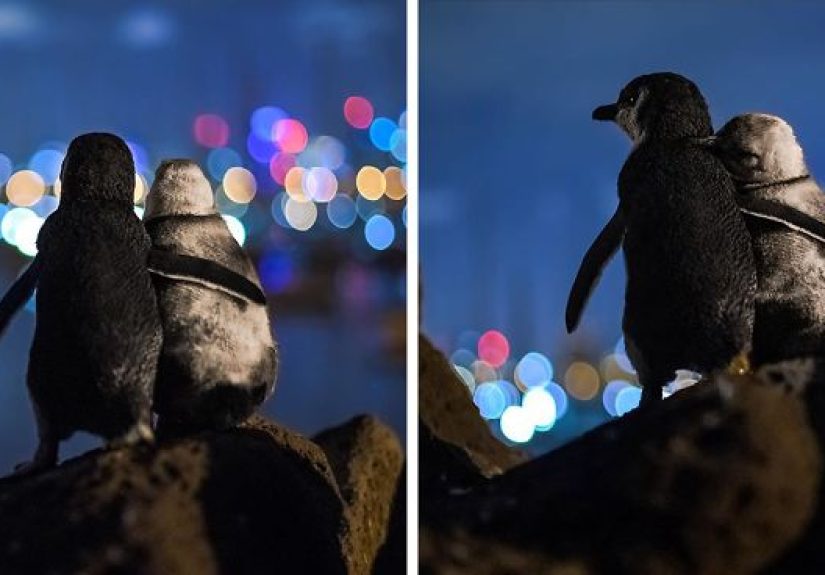
The image, captured by photographer Tobias Baumgaertner at St Kilda in Melbourne, spread widely during the early pandemic years. It was shared as a story of two widowed penguins comforting each other. The emotional power of that narrative was huge. But the deeper story is even more interesting: this is not just a touching wildlife photo. It is a case study in why humans love animal stories, how social media shapes meaning, and why ethical wildlife photography and careful captioning matter just as much as a beautiful frame.
In other words: yes, it is adorable. But it is also an unexpectedly smart lesson in visual storytelling, conservation awareness, and the very human habit of turning animals into tiny feathery philosophers.
The Photo That Made the Internet Stop Scrolling
The widely shared image shows two little penguins perched on rocks with the Melbourne skyline glowing softly in the background. Baumgaertner reportedly spent multiple nights with the colony to make the shot, working in low light and without using artificial lighting. That detail matters. Wildlife images that look effortless almost never are. This one required patience, restraint, and a lot of waiting while small, constantly moving birds refused to become cooperative models.
The original viral caption described the pair as widowed penguins who regularly met and comforted each other while watching the “dancing lights” of the nearby city. That phrasing was emotionally irresistible, and the timing amplified it. During lockdown-era isolation, people were already primed for stories about companionship, grief, and quiet solidarity. A pair of penguins against a city skyline felt less like wildlife content and more like a postcard from a gentler universe.
The image later gained additional attention through photography coverage and award recognition, including the Ocean Photography Awards (Community Choice). By that point, the photo had become more than a picture. It was internet folklore with feathers.
What’s True, What’s Uncertain, and Why That Matters
Here is where the story gets more nuancedand honestly, more responsible.
Baumgaertner later explained that the original caption was shared to spread love and hope during a difficult moment, and that he had romanticized parts of the description. He also noted that members of the scientific community cautioned against anthropomorphizing wild animals too heavily, especially when doing so might encourage people to interact with wildlife in ways that are not safe for the animals.
Some follow-up reporting also noted that local observers and conservation voices suggested the two penguins may not have been a “widowed couple” in the way the internet imagined. One interpretation raised by local caretaking groups was that the pair could even be related, with one bird potentially being younger. In short: the exact relationship between these two penguins is not known with certainty from the photo alone.
That does not make the image fake. It makes it real in the way many viral wildlife stories are real: the moment happened, the behavior was observed, the emotional caption traveled faster than the biological certainty, and the internet filled in the rest. The photo still captures connection. We just have to be honest about what we know and what we are projecting.
Why this clarification actually improves the story
Once you remove the overly neat “widowed soulmates” framing, the image becomes more powerful, not less. It reminds us that animals have social behaviors we can observe, but not always decode completely. It also reminds writers, photographers, and publishers to pair wonder with precision. A moving caption can bring people in; an accurate caption keeps trust intact.
Meet the Stars: Little Penguins (Fairy Penguins)
The birds in the photo are little penguins, scientifically known as Eudyptula minor. They are the smallest penguin species in the world and are commonly called little penguins or fairy penguins. They are native to Australia and New Zealand, and they are famous for coming ashore at night in what many visitors describe as a “penguin parade” (yes, nature really does great branding when left alone).
Little penguins are built for swimming rather than flight, forage for small fish and marine invertebrates, and live in coastal environments. Their compact size, blue-tinged plumage, and nighttime shore returns make them especially captivating to both tourists and photographers. The same traits that make them charming, however, also make them vulnerable to disturbance if people crowd habitats, use lights, or ignore viewing rules.
That is one reason the Melbourne setting is so fascinating. St Kilda is urban, iconic, and visually dramatic, but it is also a functioning habitat. The skyline in the background may look cinematic, yet the birds in the foreground are not props. They are wildlife navigating a human-shaped coast.
Why the Melbourne Skyline Photo Resonated So Deeply
The popularity of this penguin image was not just about cuteness. It struck a nerve because it layered multiple emotional ideas in one frame:
1) Companionship without noise
The penguins are not “performing” in an obvious way. They are simply standing together. That kind of stillness reads as intimacy to human viewers. We project our own experiencesgrief, friendship, loyalty, healingonto a posture that feels familiar.
2) Nature and city in the same frame
The Melbourne skyline creates contrast: wild animals in front, urban life behind. The image quietly asks a question many modern conservation stories revolve around: can human spaces and wildlife habitats coexist without one overwhelming the other?
3) Timing during global isolation
The photo circulated widely when many people were physically separated from loved ones. A shared image of two animals appearing to comfort one another became emotional shorthand for what people missed mostpresence, routine, and contact.
4) A caption that gave people a narrative arc
Humans do not just share images; we share stories. “Two widowed penguins overlooking the Melbourne skyline together” is not merely descriptive text. It is a mini-movie trailer. It contains grief, tenderness, a setting, and a visual ending shot. Social media loves that structure because people can repost it instantly without needing additional context.
Wildlife Storytelling vs. Anthropomorphism: Walking the Tightrope
There is a reason this photo became a conversation point among journalists, wildlife lovers, and science-minded readers. It sits right on the line between meaningful storytelling and over-interpretation.
On one hand, anthropomorphic language (“they are comforting each other,” “they are talking about penguin stuff”) helps people feel emotionally connected to animals. That connection can be useful. It can increase empathy and spark interest in conservation. Plenty of people who never thought about little penguin habitats before this photo suddenly cared a lot.
On the other hand, overconfident claims about animal emotions or relationships can mislead audiences and influence how they behave around wildlife. If people think wild animals are basically small humans in formalwear, they may be more likely to approach, touch, feed, or crowd them. That is exactly the kind of outcome ethical wildlife photography guidance warns against.
The best approach is balanced storytelling: describe what is visible, share the context provided by credible observers, and clearly label uncertainty. For example: “The penguins were photographed standing close together for a prolonged period” is observational. “They were definitely discussing heartbreak and municipal lighting design” is, scientifically speaking, a stretch.
What the Photo Teaches About Great Wildlife Photography
This image is also a masterclass in technique and ethics, not just emotion.
Patience beats gear obsession
Yes, camera equipment matters. But what made this image special was time spent observing behavior, waiting for a natural moment, and working with available conditions. Many aspiring photographers want a better lens; often what they really need is a better chair and more patience.
Low-light wildlife photography demands restraint
Baumgaertner described the challenge of photographing small, moving penguins in low light without artificial lighting. That choice aligns with a core principle of ethical wildlife photography: the welfare of the animal and the integrity of its habitat come before the shot. If the animal changes behavior because of the photographer, the image may cost more than it is worth.
Captioning is part of the craft
Audiences often think the “photo” is just the image file. In reality, the caption is part of the experience. It frames meaning, shapes public response, and can affect how viewers understand animal behavior. This penguin story became a global example of why captioning should be emotionally engaging and transparent.
Conservation Context: Why St Kilda and Little Penguins Matter
St Kilda’s little penguin colony is one of the most beloved urban wildlife experiences in the Melbourne area. That popularity is a blessing and a challenge. Public attention can support conservation, improve funding, and encourage better habitat protection. It can also increase visitor pressure if not managed carefully.
This is why infrastructure, controlled viewing, and visitor rules matter so much in places where people and wildlife share the same edge of the city. The “two widowed penguins” photo may have looked like a private moment, but it also became a public reminder that charismatic wildlife needs practical protection: safe viewing distances, habitat management, and education that turns fascination into respect.
Even broader penguin science reinforces that urgency. Penguins are highly adapted marine birds, and many species face pressures from changing oceans, prey availability, and human impact. Little penguins may be tiny, but they are part of a very big environmental story.
Why This Viral Penguin Photo Still Works Years Later
The internet is full of “heartwarming” posts that disappear after 48 hours. This one lasted because it operates on two levels. First, it gives you instant emotional clarity: two small figures, one big city, a shared moment. Second, it rewards a closer look: questions about ethics, conservation, narrative truth, and how we interpret animal behavior.
That combination is rare. Most viral content is either emotionally strong and factually flimsy, or factually rich and emotionally flat. This image sparked both feelings and discussion. It made people smile, then made many of them curious. For a wildlife photo, that is a serious accomplishment.
Conclusion
“Photographer Captures A Shot Of Two Widowed Penguins Overlooking The Melbourne Skyline Together” became a global headline because it felt like a tiny poem: grief, companionship, and city lights in one frame. The full story is more nuanced than the viral caption suggested, but that nuance does not weaken the image. It strengthens it.
What remains undeniable is the photograph’s impact. It introduced millions of people to little penguins, highlighted the visual magic of St Kilda and the Melbourne skyline, and sparked useful conversations about wildlife photography ethics and anthropomorphism. It is a reminder that the best nature images do not just show animalsthey reveal how humans look at animals, and what we hope to find in them.
And if a pair of penguins on a rock can get the internet to pause and think about tenderness, truth, and conservation all at once, that is not just a viral moment. That is a very good photograph doing exactly what great photographs are supposed to do.
Related Experiences: Why This Penguin Photo Feels So Personal (Extended Reflection)
One reason people keep returning to the Melbourne penguin skyline photo is that it mirrors experiences many of us have had without realizing it. Think about the times you stood next to someone you care about and said almost nothingafter a funeral, during a hard season, after a long day, or while looking at city lights from a bridge, a rooftop, or a parking lot that somehow became important. The power was not in conversation. It was in company. That is exactly the emotional language viewers read into this image.
For photographers, the image also captures a familiar experience: the long wait before the “real” frame arrives. Wildlife photography, street photography, and even travel photography all teach the same lessonmost of the work is quiet observation. You watch patterns. You miss shots. You second-guess your settings. You wonder whether the light is gone for good. Then, suddenly, two subjects align in a way that feels almost scripted, and the camera gets there just in time. People see one still image. The photographer remembers the hours of uncertainty behind it.
For travelers and locals, the photo may trigger another kind of memory: seeing wildlife in a city and feeling your brain briefly reboot. Urban life trains us to move fast and filter everything. Then a bird lands nearby, a fox appears at dusk, or penguins come ashore near a skyline, and the entire mood changes. You stop scrolling your own thoughts for a second. You pay attention. That moment of surprise is part of why urban wildlife encounters feel so restorative. They interrupt routine in the best possible way.
For people who experienced loneliness during the pandemic, the image carries a different weight. It circulated during a time when many households were separated by distance, travel restrictions, illness, or grief. Even if the caption’s original framing was more poetic than scientific, the emotional timing was real. Viewers were not only reacting to penguins; they were reacting to the idea of shared presence. The image became a symbolic stand-in for all the relationships people were trying to protect.
There is also a lesson here for writers and publishers. Audiences do not reject nuancethey reject coldness. If you tell a moving story and then responsibly explain what is confirmed, what is inferred, and what remains unknown, readers usually appreciate the honesty. In fact, that honesty often makes the emotional core feel more credible. The penguin photo is a great example of how a story can be both heartfelt and careful at the same time.
Ultimately, the experiences connected to this imagewaiting, witnessing, grieving, traveling, reflecting, and caringare why it endures. It is not just about two penguins by the Melbourne skyline. It is about the moments when we recognize connection in the world around us and, for a few seconds, feel less alone. That is a powerful thing for any photograph to do, and a rare thing for the internet to hold onto this long.