Table of Contents >> Show >> Hide
- What Is a Rolling Ladder?
- Why Rolling Ladders Matter
- Rolling Ladder Safety: The Rules That Actually Matter
- Types of Rolling Ladders
- How to Choose the Right Rolling Ladder
- Rolling Library Ladders in Home Design
- Installation and Maintenance Tips
- Common Mistakes People Make With Rolling Ladders
- Real-World Experiences With Rolling Ladders
- Conclusion
Some products are born glamorous. Others are born useful. Rolling ladders, somehow, managed to become both. In one setting, they are the steel workhorses of warehouses, stockrooms, archives, and maintenance bays. In another, they are the stars of dream libraries, luxe closets, tall pantries, and kitchens that seem determined to store everything six feet above normal human optimism.
That mix of style and practicality is exactly why rolling ladders have stayed relevant. They solve a simple problem: how to reach high places safely, repeatedly, and efficiently. But the best rolling ladders do more than help someone get from floor to shelf. They improve workflow, reduce awkward stretching, make elevated access more stable, and in the right room, add enough character to make a plain wall feel like it belongs in a magazine spread rather than a forgotten corner of real life.
If you are shopping for one, specifying one for a project, or just trying to understand why some ladders glide on rails while others lock down like miniature staircases, you need more than a pretty product photo. You need to know the difference between decorative charm and actual function, between a rolling library ladder and an industrial mobile ladder stand, and between “that looks nice” and “that meets the demands of real daily use.”
What Is a Rolling Ladder?
A rolling ladder is a ladder designed to move easily into position and then provide stable access to elevated shelves, work surfaces, or storage areas. Broadly, the term covers two main categories.
1. Rolling library ladders
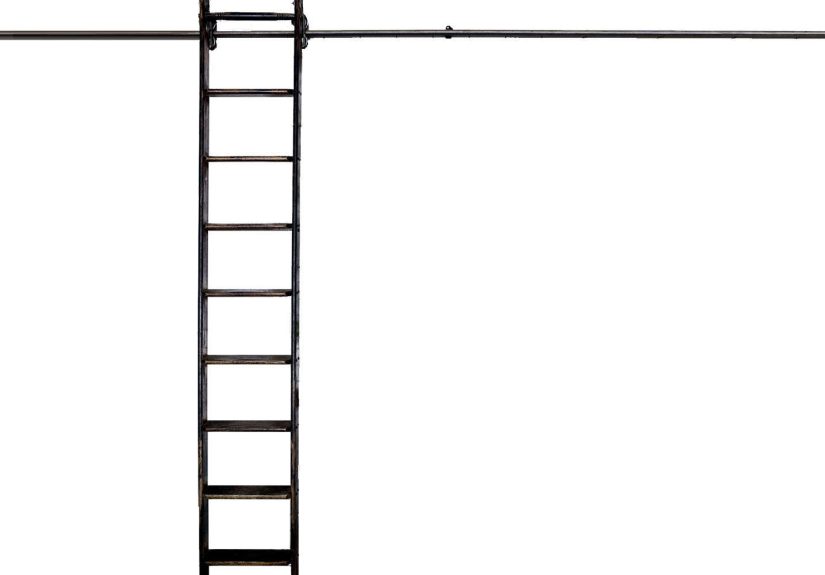
These are the elegant track-mounted ladders you see in home libraries, closets, kitchens, wine rooms, and boutique retail spaces. They typically ride on a rail mounted to shelving or cabinetry and can be tucked flat against the wall when not in use. The visual effect is classic, but the function is very modern: better access without dragging a step stool from room to room like a defeated raccoon.
2. Industrial rolling ladders
These are mobile ladder stands or rolling warehouse ladders used in commercial and industrial settings. They usually feature wider steps, handrails, locking casters, heavier-duty frames, and more task-oriented platforms. They are built for repeated climbing, stock picking, equipment access, maintenance, and other work where safety and speed matter more than whether the finish matches the trim.
Why Rolling Ladders Matter
High storage is useful only if people can actually reach it. That sounds obvious, but plenty of spaces are designed around vertical storage without enough thought given to access. A rolling ladder fixes that mismatch. It makes tall shelving practical instead of theoretical.
In commercial spaces, that means faster picking, fewer awkward reaches, and more predictable movement in aisles and work zones. In homes, it means upper cabinets and bookcases become truly usable rather than decorative zones for baskets full of things no one touches for seven years.
There is also a safety argument. Ladder-related injuries remain a real issue in the United States, both at work and at home. That is why the choice of ladder type, surface, load rating, handrails, and locking system matters so much. A rolling ladder is not “safe” merely because it has wheels. In fact, wheels add a new layer of responsibility. The ladder must move when you want it to and stay put when you do not. That balance is the whole game.
Rolling Ladder Safety: The Rules That Actually Matter
When people hear “OSHA ladder rules,” their eyes sometimes glaze over like a donut in a break room. But the requirements for mobile ladder stands are surprisingly practical. They are basically a checklist for not turning a simple access tool into a slapstick disaster.
For industrial rolling ladders, OSHA requires a minimum step width of 16 inches, slip-resistant steps and platforms, and a design capable of supporting at least four times the maximum intended load. If the top step height is 4 feet or more, handrails are required. If the unit has wheels or casters, it must have a system that prevents horizontal movement while someone is on it. In plain English: when a person climbs up, the ladder should not decide to become a shopping cart.
OSHA also addresses proportions and fall protection. The maximum work-surface height cannot exceed four times the shortest base dimension unless additional support is used. Mobile ladder stand platforms 4 to 10 feet high need handrails and midrails in the platform area, and units above 10 feet need guardrails and toeboards on exposed sides and ends. The details may sound technical, but they reflect common sense: narrow bases, slick steps, and unsecured movement are a terrible combination.
Training matters too. Employers are expected to train workers on proper care, inspection, storage, use, and movement procedures. Pre-use inspections are part of the culture around safe ladder use, and damaged equipment should be tagged out and removed from service until repaired or replaced. Good rolling ladders are sturdy. Bad habits are not.
Three habits that make a huge difference
- Use three points of contact. Keep two hands and one foot, or two feet and one hand, on the ladder while climbing.
- Do not overreach. If your belly button is trying to leave the ladder’s centerline, it is time to move the ladder.
- Never move an occupied rolling ladder. This is not a parade float, and your coworker is not cargo.
Types of Rolling Ladders
Rolling warehouse ladders
These are the classic industrial models seen in stockrooms, shipping areas, manufacturing facilities, and maintenance departments. Most are made from steel, aluminum, stainless steel, or a hybrid combination. They often include serrated or perforated treads, spring-loaded or foot-activated locking systems, and handrails for safer repeated climbing.
These models are built for utility first. If you need to access inventory all day long, service machinery, or perform routine elevated tasks, this is the category that earns its keep.
Mobile ladder stand platforms
These are more platform-oriented than standard rolling ladders. They give the operator more standing room at the top and often feel more like compact mobile stairs with a working deck. They are useful for longer tasks, inspections, parts handling, and jobs requiring both hands once the worker reaches the top.
Rolling library ladders
These are the design-forward version. Wood remains the popular choice in homes, especially oak and maple, while hardware finishes range from black and bronze to satin nickel and polished brass. Some systems roll on a mounted rail; others use hook-style hardware for a slightly different look and installation approach.
The appeal is not just visual. A well-designed library ladder makes tall built-ins far more practical in home offices, reading rooms, pantries, closets, and wine storage areas. Better Homes & Gardens has noted the same thing designers love: the ladder provides access to upper shelves while doubling as a decorative accent. In other words, it works hard and photographs well, which is the dream.
How to Choose the Right Rolling Ladder
The best rolling ladder is not the prettiest one or the heaviest one. It is the one that matches the actual job, the surrounding space, and the people who will use it.
Match the ladder to the height you really need
Do not buy based only on shelf height. Think about the height of the top standing area, the reach required, and whether the user will be working at the top or simply retrieving items. In industrial settings, platform height and working height are not the same thing. In homes, the ladder should provide comfortable access without putting the user on the top edge like they are auditioning for poor decision-making.
Consider the environment
Material matters. Steel feels robust and durable for many indoor industrial applications. Aluminum is lighter and easier to maneuver. Stainless steel is often the better choice where corrosion resistance and cleanability matter. In residential settings, wood ladders usually win on appearance, while hardware selection influences both style and glide performance.
Look at tread, angle, and comfort
A ladder that technically works but feels awkward will not be loved for long. Wider steps generally feel more secure. A gentler climb angle is often more comfortable for repeated use. Tread type matters too: perforated, serrated, rubberized, and slip-resistant surfaces each suit different conditions. If a ladder will be used constantly, comfort becomes a productivity feature, not a luxury.
Think about mobility and storage
Industrial buyers should think about aisle width, turning radius, doorways, and floor conditions. Residential buyers should think about rail placement, storage position, and whether the ladder sits flat against the wall when parked. A beautiful rolling ladder that blocks circulation is like a gorgeous sofa that swallows the doorway: still a problem, just a better-dressed one.
Pay attention to locking systems
Different products use different methods to stop movement when the ladder is occupied. Some rely on spring-loaded casters, others on foot pedals or weight-activated mechanisms. The important part is not the marketing phrase. It is whether the system works reliably, engages consistently, and suits the task.
Rolling Library Ladders in Home Design
Rolling library ladders have escaped the library in the best possible way. Today, they show up in kitchens with towering cabinetry, dressing rooms with high shelving, mudrooms, lofts, pantry walls, and even retail spaces that want a little old-world polish without feeling stuffy.
This Old House leans into the practical side by treating the rolling library ladder as a functional upgrade for shelves and cabinets, and that is exactly the right mindset. Yes, the ladder looks great. But the real win is that it turns vertical space into usable storage. That matters in smaller homes, narrow rooms, and renovation projects where expanding out is not an option but building up is.
Design-wise, homeowners usually choose between two broad strategies. The first is contrast: a dark ladder against light cabinetry, or warm brass hardware against painted built-ins. The second is camouflage: matching ladder wood and finish to the shelving so the system feels seamless and architectural. Both can work beautifully. One says “look at this lovely feature,” and the other says “of course this room has a rolling ladder; why wouldn’t it?”
There is also a practical elegance to how these ladders store. Many are designed to rest flat against the wall or shelving when not in use, which keeps circulation clear and reduces tripping hazards. That is part of their charm. They do not just help a room look smarter; they help it behave smarter.
Installation and Maintenance Tips
Even the best ladder will disappoint if installed poorly or maintained lazily. In residential projects, the rail system must be mounted into structure that can actually support the load. Decorative trim is not structural support, no matter how confident it feels about itself. Cabinet framing, blocking, or solid backing matters.
In industrial environments, maintenance should be routine, not reactive. Inspect steps, treads, wheels, locks, welds, handrails, and hardware. Keep the ladder clean and dry. Address bent components, missing fasteners, and worn traction surfaces early. Small defects have a rude habit of becoming large incidents.
It is also wise to define ownership. In workplaces, someone should know who inspects the ladder, who trains users, who approves repairs, and when the ladder is removed from service. Safety gets better fast when responsibility stops floating around anonymously like office cake nobody claims to have eaten.
Common Mistakes People Make With Rolling Ladders
- Buying based on appearance alone and ignoring load rating, step width, or platform design.
- Choosing a ladder that is too steep or too narrow for frequent use.
- Ignoring floor conditions and mobility needs.
- Assuming all wheels lock the same way.
- Using a residential decorative ladder where a commercial duty ladder is required.
- Failing to inspect before use.
- Moving the ladder while someone is on it.
- Turning high storage into a daily-access zone without a ladder plan.
Real-World Experiences With Rolling Ladders
In real spaces, the experience of using a rolling ladder tends to reveal things that product descriptions do not. On paper, two ladders may look nearly identical. In practice, one feels calm and confident, while the other feels like it wants to negotiate with gravity every time you climb it.
In warehouses and back-of-house retail stockrooms, users usually notice step comfort almost immediately. A ladder with wider, more secure treads feels less tiring over the course of a shift. When someone climbs dozens of times a day, the difference between “good enough” and “pleasantly stable” becomes impossible to ignore. The same goes for handrails. People may not mention them in a buying meeting, but after a week of real use, they absolutely notice whether the grip feels natural and whether the top area feels secure while handling boxes or tools.
Mobility is another real-world separator. A rolling ladder that glides smoothly into place saves time and frustration. One that catches awkwardly, turns poorly, or demands a wrestling match at every repositioning becomes unpopular fast. In tighter work areas, users often appreciate lighter ladders or models designed for better maneuverability. In rougher-duty environments, they tend to favor sturdier units that feel planted once locked. The ideal balance depends on whether the ladder is moving constantly or spending most of its time stationed at one task area.
At home, the experience is different but equally revealing. People often fall in love with rolling library ladders for the look first, then stay loyal because the ladder changes how they use the room. Shelves that once held “nice things nobody reaches” become active storage. A top cabinet in the kitchen suddenly becomes useful for specialty appliances. A closet gains another level of accessible organization. A reading room feels more immersive, not just because the ladder is charming, but because it makes the whole wall of books feel alive and functional.
Noise is something homeowners mention more than expected. A well-installed rail and quality hardware usually make movement feel smooth and satisfying. A poorly aligned setup can squeak, scrape, or clatter like a tiny theatrical production of regret. That is one reason installation quality matters so much in residential work.
Another common experience is confidence. People use ladders differently when they trust them. A stable rolling ladder encourages measured movement, better posture, and safer habits. A shaky or poorly designed one creates hesitation, side-reaching, and clumsy improvised behavior. That confidence factor is difficult to measure in a catalog, but it is easy to feel in a real room.
Over time, the most appreciated rolling ladders are not necessarily the fanciest. They are the ones that fit the space, lock reliably, feel good underfoot, and make elevated access routine instead of annoying. That may not sound romantic, but in the world of ladders, being quietly dependable is basically rock-star behavior.
Conclusion
Rolling ladders sit at a rare intersection of safety, utility, and design. In industrial settings, they help workers reach inventory, equipment, and elevated work zones with greater control and efficiency. In residential settings, they turn tall shelving into usable space while adding character that feels timeless rather than trendy. The key is choosing the right type for the right job.
If the ladder will live in a warehouse, focus on compliance, tread, load, handrails, locking systems, maneuverability, and maintenance. If it will live in a home, focus on structure, hardware quality, rail installation, proportions, and finish. In both cases, the same truth applies: the best rolling ladder is the one that feels stable, fits the task, and makes reaching upward a lot less risky and a lot more graceful.