Table of Contents >> Show >> Hide
- First, a quick refresher: what shingles is (and why it’s such a pain)
- So… where does dementia come in?
- What the research actually shows (and why people are excited)
- Is it correlation or causation? The honest answer is: “Probably something real, but not proven yet.”
- How could a shingles vaccine affect dementia risk? Plausible pathways (without the hype)
- What this means for everyday people (and their future selves)
- FAQ: The questions people ask right after they read a headline like this
- The bigger picture: think “stacking advantages,” not “one weird trick”
- Real-world experiences: what people notice (and what comes up in real conversations)
If you told your past self that the shingles vaccine might someday get talked about like a “brain health” move,
Past You would probably have blinked twice… and then asked if you were trying to sell them a timeshare.
And yet, here we are: a growing pile of research suggests shingles vaccination may be linked to a lower risk of
dementia later on.
To be crystal clear (and pleasantly un-dramatic): scientists are not claiming the shingles vaccine is a magic shield
against Alzheimer’s disease or other dementias. But the signal is strong enoughand the study designs are clever
enoughthat researchers are paying serious attention.
First, a quick refresher: what shingles is (and why it’s such a pain)
Shingles 101: the “chickenpox sequel” nobody asked for
Shingles (herpes zoster) happens when varicella-zoster virusthe same virus that causes chickenpoxwakes up years
(or decades) after the original infection. Instead of politely staying dormant, it can reactivate and cause a rash
that usually appears on one side of the body, often with burning, itching, tingling, or outright “why is my shirt
touching me?” pain.
The rash is bad, but the complications are what make shingles a true villain in the health storyline. The most common
is postherpetic neuralgia (PHN), long-lasting nerve pain that can linger months or even years after the
skin clears. Shingles can also involve the eye or ear, and in rarer cases lead to more serious issues like pneumonia
or brain inflammation.
What the shingles vaccine does in real life
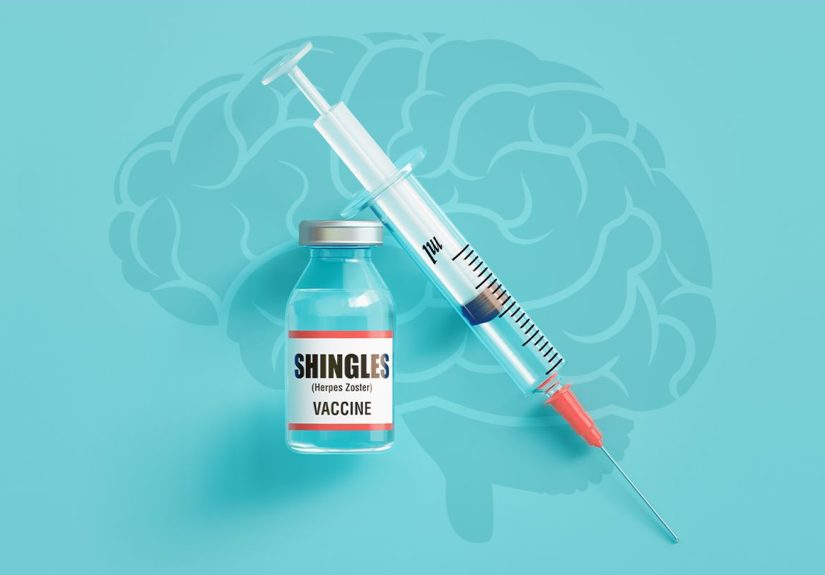
In the U.S., the recommended shingles vaccine is Shingrix (a recombinant, non-live vaccine). The CDC
recommends two doses for most immunocompetent adults age 50 and older, spaced 2–6 months
apart. It’s also recommended for adults 19 and older who are or will be immunocompromised, with some
people benefiting from a shorter dosing interval (your clinician decides what makes sense).
If you remember Zostavax, that was an older, live vaccine. It’s no longer available for use in the U.S.
(translation: it has retired and is not coming back for an encore).
So… where does dementia come in?
Dementia is a syndrome (a collection of symptoms) involving declines in memory, thinking, or daily functioning.
Alzheimer’s disease is the most common cause, but not the only one. Many dementias involve a mix of brain changes,
blood vessel problems, inflammation, andthis is the part researchers keep circling back topossible contributions
from infections and immune responses over time.
The idea that preventing (or changing the course of) certain infections could influence dementia risk used to sound
like science fiction. Now it’s more like: “science, but with a lot of footnotes.”
What the research actually shows (and why people are excited)
1) A U.S. “natural experiment” found Shingrix was linked to lower dementia risk than the older shingles vaccine
One major study used U.S. electronic health records and took advantage of a real-world shift: around late 2017,
clinicians rapidly moved from the older live shingles vaccine to the newer recombinant vaccine (Shingrix).
Researchers compared people vaccinated just before vs. just after that switchtwo groups close in time, likely similar
in many ways, but more likely to have received different vaccine types.
The finding: people who received the recombinant shingles vaccine had a lower risk of being diagnosed with dementia
in the following years than those who received the live vaccine. The paper translated this into something easy to picture:
among people who eventually developed dementia, the Shingrix group lived about 164 more days without a dementia diagnosis.
The association also looked favorable compared with recipients of some other common adult vaccines.
2) A Wales rollout created a “birthday cutoff” study that looked unusually close to cause-and-effect
Another headline-grabbing study came from Wales, where shingles vaccination eligibility was determined by a strict
date-of-birth rule. That created a powerful research setup: people born just on one side of the cutoff were eligible
and far more likely to get vaccinated; people born just on the other side were not.
Why does that matter? Because it reduces the usual messiness where healthier, wealthier, more health-conscious people
are also more likely to get vaccinated. In this design, your eligibility didn’t depend on your jogging habits or
your kale intakeit depended on your birthday. (Finally, a use for the awkward “What year were you born?” question.)
Over about seven years, receiving the shingles vaccine was associated with roughly a 20% relative reduction
in new dementia diagnoses. The protective effect appeared stronger among women than menan intriguing pattern seen in
multiple analyses.
3) Newer work hints at benefits even after dementia beginsbut this is still early
Emerging research has also explored whether shingles vaccination might be linked not only to fewer new dementia diagnoses,
but also to slower decline or lower mortality among people already living with dementia. These findings are
attention-grabbing (because, wow), but they’re also a reminder to keep our scientific seatbelts fastened:
observational studies can point strongly in a direction without being the final word.
Is it correlation or causation? The honest answer is: “Probably something real, but not proven yet.”
If you’ve read health headlines before, you know the usual problem: observational research can confuse correlation
with causation. People who get vaccinated might differ in important ways from those who don’taccess to care, chronic
disease management, income, education, social support, and more. Any of those factors can influence dementia risk.
That’s why the more “natural experiment” designs are such a big deal here. They’re not randomized controlled trials
(RCTs), but they try hard to mimic the fairness of one. When multiple methods, in multiple populations, keep pointing
in the same direction, scientists start to say, “Okay… we should take this seriously.”
Still, we don’t yet have a large RCT that randomizes people to shingles vaccination specifically to test dementia outcomes.
Those trials are expensive, take years, and require big sample sizes. But the current evidence is exactly the kind
of “strong signal” that makes researchers argue it’s worth doing.
How could a shingles vaccine affect dementia risk? Plausible pathways (without the hype)
Pathway A: Less viral reactivation, less long-term damage
Varicella-zoster virus doesn’t just cause a rashit interacts with nerves and the immune system. Reactivation can trigger
inflammation, and inflammation is increasingly recognized as a contributor to cognitive decline. If vaccination reduces
shingles episodes (and subclinical reactivation), it could reduce repeated inflammatory hits over time.
Pathway B: Protecting blood vessels (and the brain that depends on them)
Shingles has been associated with increased vascular risk (including stroke) in some research. Vascular injury and
impaired blood flow are major players in cognitive decline and vascular dementia, and they can also worsen Alzheimer’s
pathology. A vaccine that reduces shingles and its vascular aftermath could plausibly reduce downstream brain effects.
Pathway C: The immune system “tune-up” effect
Shingrix uses a specific adjuvant system designed to produce a strong immune response. Some researchers suspect the
protective effect might not be only about preventing shingles infectionsit might also involve broader immune modulation.
Think of it less like “one virus blocked” and more like “immune system coached to respond differently.”
This is still a hypothesis, not a confirmed mechanism. But it helps explain why the dementia signal appears notable even
when comparing shingles vaccination to other vaccines, not just to “no vaccine.”
Pathway D: Fewer severe infections, fewer cognitive setbacks
Severe infections and hospitalizations can be associated with higher dementia risk later on, and they can also cause
major setbacks in people already experiencing cognitive decline. Preventing shingles (which can be severe, especially
in older adults or immunocompromised people) may reduce health stressors that are tough on the brain.
What this means for everyday people (and their future selves)
Here’s the practical takeaway: Shingles vaccination is already recommended for preventing shingles and its complications.
The possibility that it might also reduce dementia risk is a potential bonuslike ordering fries and finding out they
accidentally gave you onion rings too. (Except more medically responsible.)
Who should consider Shingrix in the U.S.?
- Most adults 50 and older: two doses, typically 2–6 months apart.
- Adults 19 and older who are immunocompromised (or will be): two doses, sometimes on a shorter timeline based on clinical needs.
- People who already had shingles: vaccination may still be recommended once the acute episode has resolved.
- People who previously received Zostavax: Shingrix can still be recommended; timing depends on age and clinical context.
What to expect after the shot
Many people get local arm soreness, redness, or swelling. Some feel tired, achy, feverish, or headache-y for a day or two,
especially after the second dose. This is common and generally short-lived. A small number of people have stronger reactions
that may require a day of rest.
Serious allergic reactions are rare. There has also been a safety signal observed for Guillain-Barré syndrome (GBS)
in older adults shortly after vaccination, and the FDA required a warning in prescribing information. Public health authorities
still conclude that the benefits of vaccination outweigh the risks for recommended groups.
If you have a history of severe allergic reaction to vaccine components, prior GBS, or complex immune conditions,
the smart move is simple: discuss it with a clinician who knows your medical history.
FAQ: The questions people ask right after they read a headline like this
Does this mean the shingles vaccine prevents Alzheimer’s disease?
No. The current research suggests an association with lower dementia diagnoses, and some studies use designs that strengthen
causal inferencebut it’s not proof of prevention, and dementia has many causes.
Is Shingrix the vaccine linked to lower dementia risk?
Multiple lines of research point to shingles vaccination in general. One major analysis specifically found the recombinant
vaccine (Shingrix) was associated with a lower dementia risk than the older live vaccine. Other strong “natural experiment”
evidence comes from programs that used the older live vaccine. Scientists are actively working to clarify whether Shingrix
provides the same (or greater) brain-related benefit.
If I missed my second dose, do I have to restart the series?
In general, public health guidance does not require restarting the series if the second dose is delayedpeople are advised
to get the second dose as soon as feasible. Your healthcare provider can guide you based on your situation.
If the vaccine helps dementia risk, why isn’t everyone getting it?
Vaccination rates often lag behind recommendations for lots of boring reasons: people don’t know they’re eligible, they
underestimate shingles, they don’t want side effects, scheduling is annoying, or they assume “I’m healthy, so I’m fine.”
The research on dementia may motivate more people to take shingles prevention seriouslybut the main reason to vaccinate
is still: shingles is miserable and sometimes life-altering.
The bigger picture: think “stacking advantages,” not “one weird trick”
Even if shingles vaccination truly reduces dementia risk, it won’t replace the other big brain-health levers:
managing blood pressure, staying physically active, treating hearing loss, sleeping enough, controlling diabetes,
avoiding smoking, and staying socially and mentally engaged. Dementia risk is shaped by decades of biology and life.
Vaccination could be one more advantage in a long game.
The most exciting part of this story might be what it represents: a shift toward prevention strategies that are
practical right now, not hypothetical someday. A vaccine you can get at a pharmacypossibly influencing brain health?
That’s a public health plot twist worth investigating.
Real-world experiences: what people notice (and what comes up in real conversations)
This topic tends to spark the same set of “okay, but what’s it actually like?” questionsand the experiences are
surprisingly consistent across households, clinics, and pharmacy counters.
1) The scheduling moment is weirdly emotional. A lot of people describe making the appointment as a small
milestone: “I guess I’m officially in the age bracket where shingles is on the menu.” Some laugh, some sigh, some text
their siblings a meme about turning 50. If you’re a caregiver booking it for a parent, it can feel like one more item
on the endless checklistuntil you remember it’s also one of the few items that can prevent a genuinely brutal illness.
2) The arm soreness is real, and people plan around it. Many people report their arm feels heavy, tender,
or “like I did push-ups I did not sign up for.” It’s common for folks to schedule the shot before a lighter day, or to
avoid doing that one activity that requires a lot of shoulder movement (tennis, painting the ceiling, carrying every
grocery bag in one trip to prove a point). Some people barely notice it; others prefer a day where they can take it easy.
3) The second dose gets a reputation. In casual conversation, Shingrix dose #2 sometimes gets described as
“the one that made me nap.” Not everyone has stronger side effects the second time, but it’s common enough that people
swap tips like they’re trading weather forecasts: fatigue, chills, headache, and muscle aches for a day or two are frequently
mentioned. Many people say the best strategy is simply to expect you might feel off and plan accordinglythen be pleasantly
surprised if you feel fine.
4) The “dementia angle” changes how families talk about the vaccine. Plenty of people were already motivated
by shingles prevention, especially if they’ve seen a friend deal with PHN. But when the conversation includes dementia risk,
it often becomes more urgentparticularly for adult children helping older parents navigate health decisions. You’ll hear
things like: “Even if it’s not proven, it’s another reason not to put it off.” For some families with a history of Alzheimer’s,
the research feels personal, and the vaccine becomes less about avoiding a rash and more about stacking every possible
protective factor.
5) People want a clear, non-scary bottom line. The most helpful real-world framing tends to be:
“This vaccine is recommended anyway to prevent shingles and painful complications. Some studies suggest it may also be linked
to lower dementia risk. We don’t know everything yet, but it’s a smart, evidence-based step for eligible adults.”
That statement is calming because it doesn’t overselland it doesn’t undersell.
Finally, people often say they like feeling proactive. Dementia can feel like a distant, unpredictable storm cloud.
Getting vaccinated feels more like putting on a seat belt: it doesn’t guarantee anything, but it’s a practical move with
clear benefitsplus a possible brain-health bonus that researchers are still working to understand.