
Table of Contents >> Show >> Hide
- Why Mixed Scrap Plastic Is the Recycling World’s Unfinished Homework
- Pyrolysis 101: Turning Plastic Back Into Hydrocarbons (Without Lighting It on Fire)
- Where Solar Power Fits: Electricity, Heat, and the “Sun Doesn’t Work Night Shift” Problem
- Inside the Facility: Step-by-Step From Scrap Plastic to Liquid Fuel
- What the Plant Produces: Diesel-Range Liquids, Naphtha-Like Cuts, and “Please Don’t Call It Gasoline Yet”
- Environmental Math: The Promise, the Pushback, and the Part Where Everyone Argues About Boundaries
- Economics and Policy: The Unromantic Forces That Decide Whether the Plant Lives
- Design Playbook: What Makes a Solar-Powered Pyrolysis Facility Credible
- Wrapping Up: Can the Sun Help Turn Plastic Into Fuel?
- Experience Notes: What “Solar-Powered Plastic-to-Fuel” Feels Like in Real Life (No Hard Hat Required)
Picture this: a mountain of grimy snack wrappers, crinkly shipping film, and mystery plastic that your recycling bin politely refuses to deal with.
Now picture that same mess leaving a facility as a usable liquid fuel blendstockpowered, in large part, by the sun.
Sounds like science fiction with a sustainability filter… until you realize the ingredients already exist: pyrolysis (heat + no oxygen) and solar energy (heat and electricity, politely delivered by photons).
This article breaks down how a solar powered pyrolysis facility can convert scrap plastic into fuel, what “plastic-to-fuel” actually means in the real world,
and why the engineering is both exciting and annoyingly picky (plastic is like that friend who says they’ll eat “anything” and then lists 47 exceptions).
Why Mixed Scrap Plastic Is the Recycling World’s Unfinished Homework
The U.S. generates an enormous amount of plastic, and a lot of it is designed for convenience, not reincarnation.
Many common itemsmulti-layer packaging, thin films, contaminated containers, and mixed-resin productsare tough to recycle mechanically.
Mechanical recycling likes clean, sorted, single-resin streams. Real life provides… none of that.
That’s where “advanced recycling” (also called chemical recycling) enters the chat: technologies aimed at breaking plastics back into hydrocarbons or chemical building blocks.
Pyrolysis is one of the best-known options because it can accept certain mixed or hard-to-recycle plasticsif you prepare the feedstock correctly.
Translation: “It takes what the blue bin can’t.”
Sort of. A pyrolysis plant still needs a reasonably controlled feedstock.
Films and polyolefins (think polyethylene and polypropylene) are often targeted because they can produce a high yield of hydrocarbon liquids.
PVC and heavily halogenated materials can cause corrosion and contaminant issues; moisture and food residue can create processing headaches.
So yes, it can take “hard-to-recycle” plasticsjust not “anything you found behind the couch.”
Pyrolysis 101: Turning Plastic Back Into Hydrocarbons (Without Lighting It on Fire)
Pyrolysis is thermal decomposition in a low-oxygen (or oxygen-free) environment.
Instead of combusting, polymers crack into smaller hydrocarbon molecules. The outputs typically include:
- Pyrolysis oil (a liquid hydrocarbon mixture often upgraded or distilled)
- Non-condensable gas (often used as on-site process fuel)
- Char/solids (usually less for plastics than for biomass, but still a management item)
Fuel, feedstock, or both?
Here’s the nuance that matters for policy, economics, and honesty:
pyrolysis oil can be used as a fuel blendstock after appropriate upgrading, or it can be routed into petrochemical systems as a feedstock to make new chemicals and plastics.
Facilities and partners may prefer one pathway over the other depending on equipment, permitting, and market demand.
Where Solar Power Fits: Electricity, Heat, and the “Sun Doesn’t Work Night Shift” Problem
A pyrolysis plant needs energy in two big buckets: electricity (shredders, conveyors, controls, pumps, condensers)
and high-temperature heat (the reactor and associated process heating).
Solar can help with bothif you design around intermittency.
Option A: Solar PV runs the plant’s electrical backbone
Rooftop or ground-mount solar photovoltaics can offset a meaningful share of a facility’s daytime electric load.
Add batteries for smoothing, and you can stabilize sensitive equipment and reduce peak demand charges.
This is the “easy win” because electricity is modular: you can scale PV and storage without rewriting thermodynamics.
Option B: Solar thermal provides process heat (the spicy part)
Pyrolysis requires sustained high temperatures. Solar thermalespecially concentrating solarcan deliver industrial-grade heat.
The challenge is making it steady enough for a continuous process.
That’s where thermal energy storage (think hot tanks, packed beds, or other heat storage designs) becomes the facility’s secret weapon:
store heat when the sun is generous, discharge it when the sun is… emotionally unavailable.
Option C: Hybrid heatsolar + pyrolysis gas for 24/7 reality
Many pyrolysis systems already produce non-condensable gas that can be burned for process heat.
A solar-powered design can use solar heat when available, then automatically switch to recovered process gas (or another low-carbon heat source)
to keep temperatures stable overnight or during cloudy spells. Hybridization is often the difference between a nice concept and an actually-running plant.
Inside the Facility: Step-by-Step From Scrap Plastic to Liquid Fuel
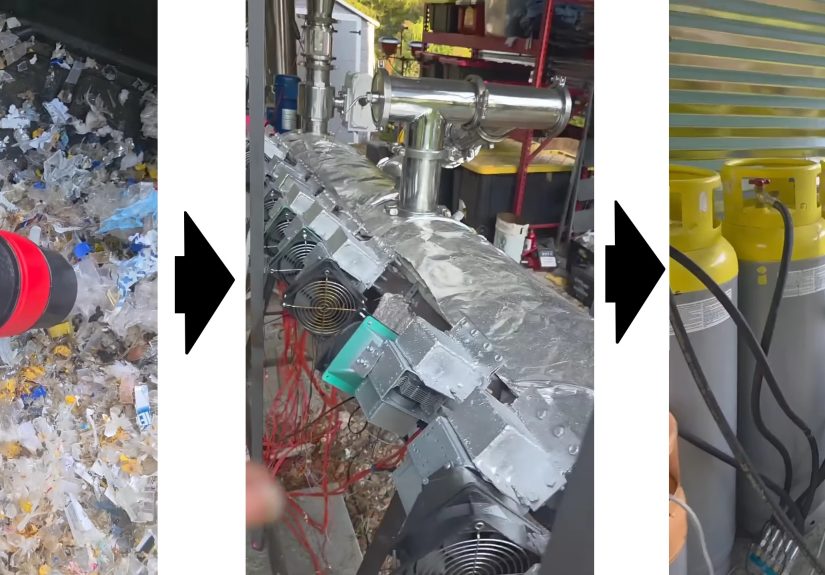
A modern plastic pyrolysis facility looks less like a junkyard and more like an industrial kitchen where the recipe is “controlled chaos.”
Here’s a practical workflow.
1) Feedstock intake and “de-grossing”
Incoming bales or loose plastics are inspected, weighed, and sampled.
Magnets and screening remove metals, glass, and other “surprises.”
The goal is consistency: the reactor hates novelty.
2) Sorting and contamination control
Even advanced recycling needs guardrails. Facilities commonly reduce PVC and other problematic materials.
They may also wash or dry certain streamsespecially if the incoming material is post-consumer and contaminated.
Better feedstock usually means better yields and fewer downstream headaches.
3) Size reduction and densification
Shredders and granulators make the plastic a consistent size.
Films can be particularly stubborn (they wrap around everything like clingy spaghetti), so densification or specialized handling is often used.
This is a great spot for solar PV to offset heavy electrical loads.
4) Pyrolysis reaction: heat, no oxygen, controlled cracking
The prepared plastic enters a reactoroften continuouswhere it’s heated until polymers break into smaller hydrocarbons.
A solar-integrated plant can use solar thermal heat (directly or via stored heat) to support reactor temperature,
while using recovered process gas to fill gaps and maintain stable operations.
5) Condensation, fractionation, and cleanup
Vapors leaving the reactor are cooled and condensed into liquids.
Many systems then separate the liquid into fractions (lighter/heavier cuts) and remove contaminants.
The exact cleanup depends on the intended destination: refinery upgrading, on-site blending, or chemical feedstock use.
6) Product storage and off-take
The “fuel” product is typically stored as a hydrocarbon liquid that may be further refined.
Off-take agreementswho buys it, and for whatoften determine the plant’s economics more than any fancy brochure ever will.
Key takeaway
The headline is simple: scrap plastic in, liquid hydrocarbons out.
The reality is a supply chain and process-control puzzle where solar can reduce operating emissionsif the plant is engineered for it.
What the Plant Produces: Diesel-Range Liquids, Naphtha-Like Cuts, and “Please Don’t Call It Gasoline Yet”
Pyrolysis oil isn’t automatically road-ready fuel. Think of it as a hydrocarbon soup that may need upgrading, hydrotreating,
distillation, or blendingdepending on quality and target specs.
Many projects describe outputs as fractions that resemble refinery streams: naphtha-range material, diesel-range cuts, and waxes/heavier fractions.
Those terms describe boiling ranges more than “ready to pour into your truck.”
Specific examples in the U.S. market
U.S. companies and projects have pursued pyrolysis for mixed plastics and for specific resins like polystyrene (which can be depolymerized toward styrene).
Industry reporting and company disclosures show a mix of outcomes: pilot successes, scale-up delays, restarts, and ongoing debate about what counts as “circular.”
In other words: the technology is real, but the scoreboard is complicated.
Environmental Math: The Promise, the Pushback, and the Part Where Everyone Argues About Boundaries
A solar powered pyrolysis facility has an intuitive climate pitch: replace some fossil energy with solar energy while converting plastic waste into useful hydrocarbons.
But whether it’s “good for the planet” depends on details people love to fight about at conferences:
feedstock sourcing, avoided landfill/incineration, energy inputs, emissions controls, and what product it displaces.
Why critics raise eyebrows
Environmental groups and investigative reporting have criticized some “chemical recycling” projects for high energy demand,
hazardous byproducts, and poor real-world performance compared with announcements.
Concerns also include whether outputs are truly used for circular plastics or mostly for fuels (which are burned, releasing carbon).
What stronger designs do differently
- Feedstock discipline: reduce problematic resins and contamination to lower emissions and waste streams.
- Energy integration: use process gas efficiently, recover heat, and add solar (PV and/or thermal) to cut fossil inputs.
- Controls and monitoring: treat emissions control as core design, not an optional accessory.
- Transparent accounting: document yields, uptime, and where products actually go.
If a plant uses solar to offset electricity and a portion of process heatwhile maintaining strong emissions controls
it can improve the environmental profile versus a conventional, fossil-powered setup.
The biggest gains typically come from ruthless efficiency: heat integration, steady operations, and minimizing contaminant-driven problems.
Economics and Policy: The Unromantic Forces That Decide Whether the Plant Lives
Pyrolysis is not just chemistry; it’s a business model balancing feedstock costs, uptime, product pricing, permitting, and public acceptance.
Even well-funded projects have struggled to ramp reliably.
That’s why solar integration should be framed as operational resilience and cost stability, not just virtue signaling with panels.
Policy realities in the U.S.
Regulatory attention has increased around chemicals derived from plastic waste and how they’re used, including as transportation fuel.
The compliance landscape can shift, and project developers need to treat regulatory strategy as seriously as reactor design.
Where solar can help the business case
- Lower operating costs when solar offsets grid electricity during peak price windows.
- Reduced emissions intensity (helpful for permitting narratives and certain customer requirements).
- Energy hedging against volatile fuel or electricity markets.
Design Playbook: What Makes a Solar-Powered Pyrolysis Facility Credible
If you’re designing a facility that claims “solar powered plastic-to-fuel,” these are the credibility markers that separate engineering from marketing:
1) Define “solar powered” with a straight face
Is solar covering 10% of electricity? 60% of total energy? Daytime only? Net annual basis?
State it clearly. Ambiguity is where trust goes to die.
2) Build around storageelectrical and/or thermal
Pyrolysis likes steady heat. Solar likes sunshine. Storage is their couples therapist.
Batteries smooth electrical loads; thermal storage can stabilize reactor heat input when solar thermal is used.
3) Engineer feedstock like it’s a product, not a trash pile
The feedstock spec is your real “secret sauce.”
Better sorting and contamination control can outperform flashy reactor claims every time.
4) Prove the destination of outputs
If the output becomes fuel, say so. If it becomes circular feedstock, document the chain.
Customers and regulators increasingly care about traceability and contaminant control.
5) Publish performance metrics (even the awkward ones)
Throughput, uptime, yield ranges, emissions controls, waste handling, and energy balance:
these are the numbers that make a facility legible to investors, communities, and skeptical engineers alike.
Wrapping Up: Can the Sun Help Turn Plastic Into Fuel?
Yesespecially when solar is used strategically. Solar PV can reduce the electrical footprint of feedstock prep and plant operations.
Solar thermal (paired with storage and hybrid heat) can support process heat for pyrolysis, improving the emissions profile and reducing fossil dependence.
But a solar powered pyrolysis facility isn’t magic. It’s a complex industrial system that succeeds only when the unglamorous parts are handled well:
feedstock quality, heat integration, emissions controls, and a real market for the outputs.
When those pieces align, turning scrap plastic into fuel (or fuel precursors) can be a meaningful part of a broader plastics strategyalongside reduction, reuse, and better mechanical recycling.
Experience Notes: What “Solar-Powered Plastic-to-Fuel” Feels Like in Real Life (No Hard Hat Required)
If you ever get the chance to walk through the idea of a solar-powered pyrolysis facilitywhether on a tour, in a project meeting, or in the
slightly chaotic world of “we’re commissioning next month, probably”you’ll notice the story is less about one hero technology and more about
teamwork among stubborn systems.
First, the soundtrack: shredders, blowers, pumps, and the steady whir of industrial life. Solar doesn’t make the place silent; it makes the
electric meters less dramatic at noon. Operators tend to love solar PV for a very practical reason: it can shave daytime peaks when equipment is running
full tilt. Nobody throws a parade for “reduced demand charges,” but the accounting department absolutely smiles in private.
Next is the feedstock reality check. In concept art, scrap plastic arrives as clean, eager pellets.
In reality, it shows up as bales with personalities: stretch film that behaves like a giant rubber band, labels that refuse to let go, and occasional
“bonus items” that definitely did not RSVP (metal bits, grit, the odd piece of wood). Teams quickly learn that the most important piece of equipment
might be the stuff that keeps junk out of the reactor. When the sorting and prep line runs smoothly, the whole plant looks smarter.
When it doesn’t, everyone learns new vocabulary.
Then you get to the heat conversation. Pyrolysis is endothermicit wants steady, reliable heat like a cat wants the sunny spot on the couch.
Solar thermal can absolutely provide industrial heat, but the facility needs a plan for clouds, sunsets, and seasonal shifts.
This is where storage stops being a buzzword and becomes a comfort blanket.
Thermal storage (or hybrid heat using recovered process gas) isn’t just “nice to have”; it’s how you avoid temperature swings that wreck yields or create off-spec oil.
A well-designed control room will show solar contribution as one line in a bigger orchestration: stored heat, recovered gas, and sometimes backup systems
all balancing to keep the reactor stable.
One of the most underrated “experiences” is watching people arguepolitely, with spreadsheetsabout what to call the product.
Someone says “fuel,” someone else says “feedstock,” and a third person says “hydrocarbon intermediate” like they’re trying to win a grant.
The truth is: the product’s destination matters. If it’s going to a refinery for upgrading, the quality targets and contaminant limits become the story.
If it’s going to a chemical partner for circular feedstock, traceability and consistency become the story.
Either way, the plant learns quickly that credibility isn’t a press release; it’s repeatable shipments that customers actually accept.
Finally, there’s the human factor. The best teams treat solar integration as a reliability tool, not a marketing badge.
They celebrate boring wins: fewer trips, steadier temperatures, cleaner condensers, tighter specs.
And that’s the real vibe of a solar-powered pyrolysis facility at its bestless “miracle machine,” more “disciplined industrial system that wastes less,
recovers more, and uses the sun like a sensible adult.”







 Close
Close