Table of Contents >> Show >> Hide
- What Is “Soldier, Poet, King”?
- What Does “Soldier, Poet, King” Mean?
- How Dear Wormwood Changes the Meaning
- Is the Song Christian, Literary, or Fantasy-Like?
- What Do Soldier, Poet, and King Mean in the TikTok Trend?
- How the TikTok Trend Started
- Why TikTok Fell in Love With It
- What the Trend Gets Right and What It Misses
- So, What Is the Real Meaning of “Soldier, Poet, King”?
- Experiences Related to “Soldier, Poet, King” and Why the Song Sticks With People
- Conclusion
Some songs become hits. Other songs become internet personality tests with suspiciously strong opinions about your emotional damage. “Soldier, Poet, King” by The Oh Hellos somehow managed to become both.
Originally released in 2015 on Dear Wormwood, the song spent years as a beloved indie-folk favorite before it exploded into the TikTok universe in 2023. Suddenly, people who had never heard of The Oh Hellos were asking the same question: what does “Soldier, Poet, King” actually mean? Is it about three different people? Is it fantasy-coded? Is it Christian? Is it a vibe? Is it just a very dramatic way to ask, “What kind of person are you?”
The short answer is that the song works because it can hold several meanings at once. It comes out of a literary, spiritual, and symbolic world, but it also lends itself perfectly to modern internet culture. In one corner, you have biblical imagery, apocalyptic tension, and a concept album about escape from a toxic force. In the other corner, you have TikTok users assigning “soldier,” “poet,” or “king” to themselves, their crushes, fictional characters, and probably their group chat. Somehow, both readings survive.
This article breaks down the meaning of “Soldier, Poet, King,” the role of Dear Wormwood, why the song blew up on TikTok years after its release, and what the trend gets right, wrong, and hilariously overconfident. Because yes, the song is deeper than a meme. But the meme is also part of the story now.
What Is “Soldier, Poet, King”?
“Soldier, Poet, King” is a song by The Oh Hellos, the sibling-led indie folk act formed by Maggie and Tyler Heath. The band began in 2011, and the song arrived on their 2015 album Dear Wormwood. That album matters a lot, because this is not a random one-off track dropped into the world with no backstory. It is part of a bigger narrative and a bigger emotional architecture.
Dear Wormwood is a concept-driven record inspired in part by C.S. Lewis’ The Screwtape Letters, along with mythology, folklore, Patrick Rothfuss’ writing, and apocalyptic literature. The band has described the album as a series of letters from a protagonist trapped in an abusive relationship, writing to the antagonist as the relationship reaches its breaking point. That context turns “Soldier, Poet, King” from a pretty folk chant into something more like an announcement: rescue is coming, judgment is coming, and the old order is not going to enjoy the transition.
Musically, the song is compact, chant-like, and unforgettable. It does not waste time. It arrives with the confidence of a prophecy and the sing-along energy of a campfire anthem that accidentally wandered into a cathedral. That combination is a big reason it lasted long enough to become a second-life internet phenomenon.
What Does “Soldier, Poet, King” Mean?
The strongest reading: one figure, three roles
The most persuasive interpretation is that the song is not really about three separate people. It is about one figure described through three titles: soldier, poet, and king. Read that way, the song presents a coming ruler who defeats evil through strength, truth, and rightful authority all at once.
Why do so many listeners land there? Because the imagery strongly points in that direction. The song uses language associated with battle, speech, kingship, suffering, anointing, and Davidic symbolism. Add that to The Oh Hellos’ openly Christian creative background, and it makes sense that many fans read the figure as Jesus, especially in a triumphant or apocalyptic frame.
That said, it is smart to avoid pretending the band handed down a neat little classroom worksheet with every symbol labeled in red pen. The song is poetic, not mechanical. Its power comes partly from leaving room for listeners to connect the dots. So while a Christ-centered reading is the most common and arguably the most textually supported one, the song also works as a broader image of righteous overthrow, moral clarity, and the end of corruption.
Why the archetypes feel so powerful
The three words themselves do a lot of emotional work. “Soldier” suggests courage, conflict, sacrifice, discipline, and action. “Poet” suggests language, imagination, insight, and the ability to change people through words. “King” suggests authority, inheritance, order, and responsibility. Put them together, and you get a figure who can fight, speak, and rule.
That is why the phrase feels bigger than the song. It sounds mythic. It sounds ancient. It sounds like a prophecy somebody would whisper before a battle scene in a movie with an aggressively good soundtrack. Even listeners who never unpack the theology still sense that the words point to different kinds of power: physical power, verbal power, and symbolic power.
How Dear Wormwood Changes the Meaning
If you listen to “Soldier, Poet, King” as a standalone track, it can feel like a mysterious folk riddle with fantasy energy. If you listen to it as part of Dear Wormwood, it becomes sharper and more dramatic.
The album is built around letters from someone disentangling themselves from a destructive relationship. That makes “Soldier, Poet, King” feel like a turning point: the oppressed person is no longer speaking only from inside fear or grief. The song sounds like the announcement that the tormentor’s days are numbered. The person or power that dominated the story will be confronted by something greater.
In that sense, the song is not just “cool imagery.” It is narrative relief. It is the emotional blast of a locked door finally opening. It is what hope sounds like when hope stops being polite. And that is also why people who have experienced controlling relationships, spiritual confusion, or long seasons of inner conflict often connect with it so intensely. The song feels like justice arriving with a song feels like justice arriving with a melody.
Is the Song Christian, Literary, or Fantasy-Like?
Yes. Delightfully, yes.
It is Christian in imagery and influence. The Oh Hellos have never hidden that faith is one of the foundations of their work, and Dear Wormwood clearly grows out of C.S. Lewis-style moral and spiritual storytelling.
It is literary because the band built the album through layered influences, especially Lewis and Rothfuss, and because the song’s language relies on symbols rather than plain explanation. Nothing in it is casual. Every title feels chosen for resonance.
And it absolutely feels fantasy-like, which is part of why the internet adopted it with such enthusiasm. The song sounds like it belongs equally to a chapel, a novel, a role-playing campaign, and a dramatic edit of your favorite fictional character staring into the distance while destiny happens nearby.
That mix is rare. Many songs can be meaningful. Fewer can be meaningful and memeable at the same time.
What Do Soldier, Poet, and King Mean in the TikTok Trend?
Once TikTok and quiz culture got hold of the phrase, the internet turned the song’s symbolic titles into personality archetypes. This is where the meaning shifted from “Who is this coming figure?” to “Okay, but which one am I?”
That fan-made version usually works like this:
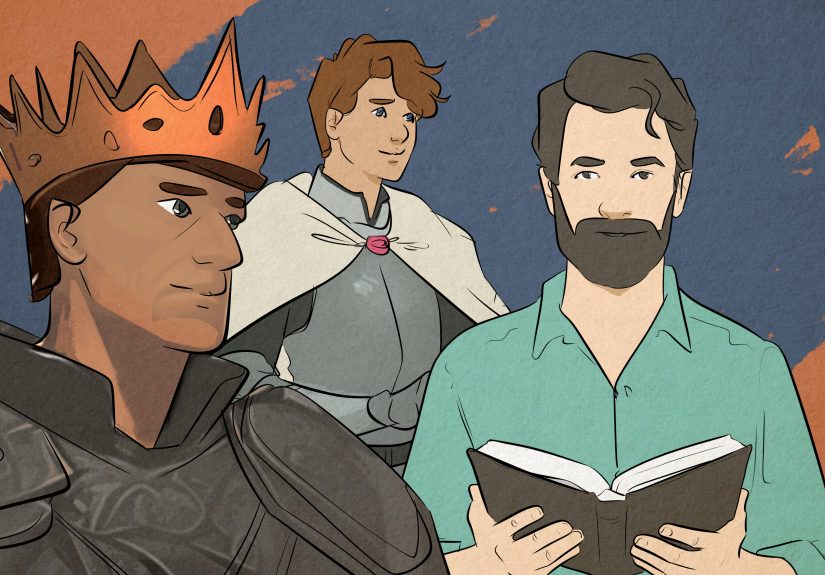
Soldier
The soldier is seen as brave, protective, stubborn, direct, and willing to act under pressure. In online language, this is the person who goes first, takes the hit, keeps the promise, and absolutely has a spreadsheet for the group project.
Poet
The poet becomes the sensitive observer, the communicator, the idealist, or the emotional truth-teller. This archetype is often associated with empathy, language, creativity, and the ability to understand what everyone else is feeling before they do.
King
The king is framed as the leader, strategist, stabilizer, or burden-bearer. Online, kings are often described as people who had to mature quickly, take responsibility early, or quietly hold everybody together while pretending they are “fine.” Which is internet language for “not fine at all, but organized.”
These definitions are not official explanations from the band. They are internet reinterpretations. But they caught on because they are flexible, flattering, and just specific enough to make people feel seen.
How the TikTok Trend Started
The song’s big viral wave came in early 2023, when a uQuiz personality test inspired by “Soldier, Poet, King” began spreading online. The quiz explicitly said it was heavily inspired by the song, and the trend took off as users posted their results, debated what each archetype meant, and assigned labels to friends, romantic interests, and fictional characters.
From there, the trend snowballed. BuzzFeed published its own “Soldier, Poet, or King?” material, character-sorting quizzes multiplied, and the audio circulated in the sped-up, emotionally heightened format that social platforms love. The song became one of those rare older tracks that did not merely resurface. It got recontextualized.
And here is the especially charming part: the band noticed. Years after the original release, The Oh Hellos highlighted an official “Soldier, Poet, King” music video on their site, a sign that the song had clearly developed a second life beyond its original album cycle.
Why TikTok Fell in Love With It
TikTok loves three things: identity, aesthetics, and emotionally oversized labels. “Soldier, Poet, King” delivers all three in under three minutes.
The phrase is instantly sortable. It turns personality into a neat little mythological costume rack. You can answer serious questions with it, like how you react to conflict, or unserious ones, like which member of your friend group would survive a fantasy quest and still be annoyingly hot by chapter twelve.
The song also sounds cinematic without being overproduced. It has an old-world, indie-folk texture that feels handmade and mystical. That made it perfect for edits, book content, fandom culture, cosplay circles, and “this is my exact emotional category” posts.
Most importantly, it gives people a framework. Human beings adore frameworks. We sort ourselves by zodiac signs, Hogwarts houses, attachment styles, and coffee orders. Of course we were going to start classifying ourselves as soldier, poet, or king. The internet saw three shiny archetypes and said, “Excellent, let us overidentify immediately.”
What the Trend Gets Right and What It Misses
The trend gets one major thing right: the titles really do feel archetypal. The song invites listeners to experience these identities as emotionally loaded categories, not random nouns pulled from a medieval hat.
But the trend also flattens the song a little. In the album’s context, the titles are not mainly a personality quiz. They are part of a larger vision of confrontation, salvation, judgment, and liberation. The viral version turns a symbolic, possibly theological figure into a self-branding tool.
Still, that is not necessarily a disaster. It is just what the internet does. It grabs symbols, personalizes them, and keeps them moving. In this case, the simplification probably introduced thousands of listeners to a song they never would have found otherwise. Some stayed for the quiz. Others stayed for the full album. A surprising number discovered that beneath the trend was an unusually rich piece of songwriting.
So, What Is the Real Meaning of “Soldier, Poet, King”?
The real meaning is best understood in layers.
On the surface, the song names three archetypes of power: force, language, and authority.
In the context of Dear Wormwood, it sounds like the arrival of deliverance and the downfall of a tormenting power.
In the band’s broader artistic world, it carries strong Christian and literary resonance, which is why many listeners interpret the song as describing Jesus through three roles rather than three separate characters.
And in internet culture, it became a playful but emotionally sticky way for people to describe themselves and others.
So if you are asking what “Soldier, Poet, King” means, the best answer is this: it is a song about a figure powerful enough to fight, speak truth, and rule rightly and it became a trend because those same titles are irresistible shorthand for the ways people imagine identity, purpose, and power.
That is why the song endured. It did not have to choose between being thoughtful and being shareable. It became both.
Experiences Related to “Soldier, Poet, King” and Why the Song Sticks With People
One of the most common experiences around “Soldier, Poet, King” starts with total confusion and ends with emotional overinvestment. You hear the audio in a TikTok, maybe attached to a fantasy edit or a “which archetype are you?” post, and at first it just sounds dramatic in a pleasing, vaguely medieval way. Then you take a quiz for fun. Then your result feels weirdly personal. Then you start assigning the three roles to everyone you know. Then, before you realize what happened, you are listening to the full song at midnight and reading about Dear Wormwood like you are studying for a final exam in indie-folk symbolism.
That pattern says a lot about how people experience the track. It does not simply enter your playlist. It tends to pull you into a small world. Friends compare results. Readers sort fictional characters into soldier, poet, or king. Couples joke about who takes charge, who overthinks everything, and who communicates in haunting one-liners. In fandom spaces, the song becomes a shorthand for dynamics: the protector, the dreamer, the ruler, the heart, the strategist, the one with the burden no one sees.
There is also a more personal side to the experience. Many listeners connect with the song because one archetype feels like the role they were forced into. Some people hear “soldier” and think of surviving difficult years by becoming tough and practical. Others hear “poet” and think of using language, art, or humor to process pain. Others hear “king” and recognize the exhaustion of always being the responsible one. The trend can be lighthearted, but the identification underneath it can be surprisingly real.
And then there is the listener experience of discovering the song’s deeper context. That can be the biggest plot twist of all. A person may arrive through the quiz, expecting a cute internet label, only to find a much richer song rooted in symbolism, faith, literature, and the longing for deliverance. That discovery changes the listening experience. The track starts to feel less like an aesthetic sound and more like a signal flare.
Maybe that is why the song has remained so sticky. It works at different emotional altitudes. It can be playful, spiritual, literary, dramatic, or deeply personal depending on what the listener brings to it. Some songs survive because they are catchy. “Soldier, Poet, King” survives because it gives people language for identities they already feel but cannot always explain. It lets them be serious and theatrical at the same time, which, frankly, is one of the internet’s favorite hobbies.
And that may be the most relatable experience of all: finding a song you thought was just a trend, only to realize it has been quietly waiting to read you for filth the entire time.
Conclusion
“Soldier, Poet, King” is one of those rare songs that became more interesting after going viral. Its TikTok life did not erase its original meaning; it added another layer. Beneath the quizzes and archetypes is a song with real literary structure, spiritual symbolism, and emotional force. It comes from a concept album about escape, confrontation, and liberation. It uses three titles to describe a figure who can fight evil, speak truth, and rule with rightful authority. That is why so many listeners hear more than fantasy aesthetics in it.
At the same time, the internet was never going to leave a phrase this good alone. TikTok turned it into a personality game because the words are irresistible. Soldier, poet, king: three roles, three energies, three ways of moving through the world. The viral trend may simplify the song, but it also helps explain why it lasted. People recognized themselves in the titles, then went back to discover the song that made those titles matter in the first place.
So whether you came here through indie folk, theology, literary analysis, or a suspiciously accurate quiz result, the meaning of “Soldier, Poet, King” is bigger than any one interpretation. It is about power, identity, rescue, and the strange magic of a song that can sound like prophecy in one era and personality theory in the next.