Table of Contents >> Show >> Hide
- Thought #1: The crisis was never just one crisis
- Thought #2: Uncertainty became its own form of damage
- Worry #1: Job loss did not fall evenly, and neither did recovery
- Worry #2: School disruption may have left a longer shadow than many adults realized
- Worry #3: Mental health became a quieter emergency hiding inside the louder one
- Question #1: Why did markets rebound while everyday life still looked awful?
- Question #2: Did policy help? Yes. Did it solve everything? Absolutely not.
- Question #3: What changed permanently?
- What the crisis revealed about inequality
- Additional reflections: what the crisis felt like in everyday life
- Conclusion
Every crisis arrives carrying two bags: one full of facts and one full of feelings. The facts are measurable. The feelings are the ones pacing around your kitchen at 2:11 a.m., asking whether the world is broken, whether the stock market has lost its mind, and whether your child is learning algebra or just becoming very skilled at muting Zoom. In this article, “the crisis” refers to the COVID-era public-health and economic shock that turned ordinary American life upside down and made uncertainty feel like the only stable thing in the room.
What made this crisis so strange was not just its scale, though the scale was enormous. It was the way it hit everything at once. Health became an economic story. Work became a housing story. School became a technology story. Markets became a psychology experiment wearing a necktie. One minute people were trying to understand infection curves and emergency orders, and the next they were trying to decode why stocks were rebounding while small businesses were gasping for air. If that felt confusing, congratulations: your instincts were working perfectly.
So here are some thoughts, worries, and questions about the crisis, written with the benefit of hindsight but still with respect for the bewilderment people felt in the middle of it. Because if a crisis teaches anything, it is that numbers matter, but so do the questions people ask while staring at those numbers and wondering what on earth comes next.
Thought #1: The crisis was never just one crisis
It is tempting to describe the period as a health emergency followed by an economic emergency. Cleaner timeline. Better chart. Easier headline. But that is not really what happened. The crisis worked more like a chain reaction. A virus disrupted public life. Public-health measures disrupted business activity. Business disruption triggered layoffs, wage cuts, and fear. Fear changed consumer behavior. Changes in consumer behavior transformed cities, office culture, schools, and even dinner table conversations. The result was not one crisis but a stack of crises, each leaning dangerously on the next.
That matters because it explains why so many people felt as if the ground kept moving under them. A family could be medically safe and financially stressed. A worker could keep a job but lose childcare. A teacher could be employed and exhausted at the same time. A business owner could receive relief and still have no idea whether customers would come back. The crisis resisted neat categories. It was a public-health event with the personality of an economic tornado.
Thought #2: Uncertainty became its own form of damage
People often focus on the visible losses of a crisis: jobs lost, income reduced, schools closed, routines shattered. But uncertainty itself can do a remarkable amount of damage. It changes how people spend, save, plan, and sleep. It can make sensible people wildly cautious in the morning and recklessly optimistic by dinner. When households do not know whether paychecks will continue, they pull back. When employers do not know whether demand will return, they freeze hiring. When parents do not know what school will look like in three months, they live in permanent logistical Sudoku.
That uncertainty also helps explain why the emotional tone of the period felt so inconsistent. Some people were stockpiling canned beans. Others were day-trading like the market was a video game with a caffeine problem. Both reactions, in their own way, were responses to the same thing: a desperate need to regain control.
Worry #1: Job loss did not fall evenly, and neither did recovery
The labor-market shock was dramatic, but the burden was not evenly shared. Lower-income workers, service-sector employees, hourly staff, and many workers without the option to go remote absorbed the earliest and hardest blows. That is one of the central truths of the crisis: it was often easiest to say “stay home” to the people whose jobs could follow them there. For millions of others, work either disappeared or remained in-person and risky. There was not one American experience of the crisis. There were many, and they were separated by income, occupation, housing, health, and access to flexibility.
This unevenness shaped the recovery as well. Aggregate indicators can improve while individual households still feel like they are wrestling an alligator in the dark. A market rebound is not the same thing as rent getting easier. A rising GDP number does not automatically solve childcare, burnout, or the exhaustion of spending months making emergency decisions with incomplete information. Macro recovery can look impressive while micro life still looks like a pile of unpaid invoices and nervous group texts.
The human side of labor-market pain
Imagine two workers in the same city. One logs into a laptop from a spare bedroom and discovers the weird joy of wearing slippers during meetings. The other watches a restaurant, salon, hotel, store, or event business go quiet almost overnight. Both lived through the same national crisis, but the daily reality was completely different. That gap matters because crises are remembered not only by national statistics, but by who had cushions and who had concrete floors.
Worry #2: School disruption may have left a longer shadow than many adults realized
School closures were never only about lesson plans. Schools provide structure, supervision, meals, social development, counseling, and, for many families, the scaffolding that makes work possible. When education moved online, millions of households suddenly had to become mini school districts with mediocre IT departments and terrible coffee. Some students adapted. Some families created calm routines. Others faced broadband gaps, device shortages, crowded homes, or the simple reality that a child cannot learn well while adults are panicking nearby.
The long-term worry is not just learning loss in the academic sense, though that matters. It is also opportunity loss. Kids do not only learn from instruction; they learn from rhythm, community, repetition, and the thousand ordinary interactions adults barely notice until they disappear. The crisis exposed how much schools do outside the syllabus and how fragile equal access becomes when education depends on bandwidth, devices, and calm home space. If ever there was a moment when America discovered that “log in and do your best” is not an education policy, this was it.
Worry #3: Mental health became a quieter emergency hiding inside the louder one
One of the most unsettling features of the crisis was how normal distress began to look. Trouble sleeping? Of course. Racing thoughts? Naturally. Feeling emotionally flattened by Wednesday? Welcome to Tuesday. People were not merely processing bad news. They were living through prolonged unpredictability, isolation, grief, exposure risk, income stress, and disrupted routines. That combination is not just hard; it is corrosive.
The phrase “we’re all in this together” sounded nice and fit beautifully on branded graphics, but it was only partly true. People were in the same storm, yes, but they were absolutely not in the same boat. Some had support systems, savings, and space. Others had cramped apartments, fragile finances, and an inbox full of cancellations. Mental-health strain reflected that inequality. The quieter truth of the crisis is that many people were functioning and unraveling at the same time. They kept going. They also paid for it.
Question #1: Why did markets rebound while everyday life still looked awful?
This may have been the question that made the average person feel like they had accidentally wandered into an economics escape room. Why would markets recover when unemployment was soaring, GDP had cratered, and daily life still looked like a canceled flight board? Part of the answer is that markets price expectations, not current misery. Investors were looking ahead to policy support, future earnings, reopening hopes, and the possibility that the worst of the panic might pass before the economy fully stabilized.
Another part of the answer is less comforting: markets are not morality plays. They do not rise and fall to validate how people feel. They are forward-looking, imperfect, and often detached from the lived experience of households. That does not make them evil. It makes them limited. A stock rebound can coexist with food-bank lines, just as corporate resilience can coexist with family-level fragility. If that felt offensive, it is because crises reveal how different “the economy” and “people’s lives” can be.
Question #2: Did policy help? Yes. Did it solve everything? Absolutely not.
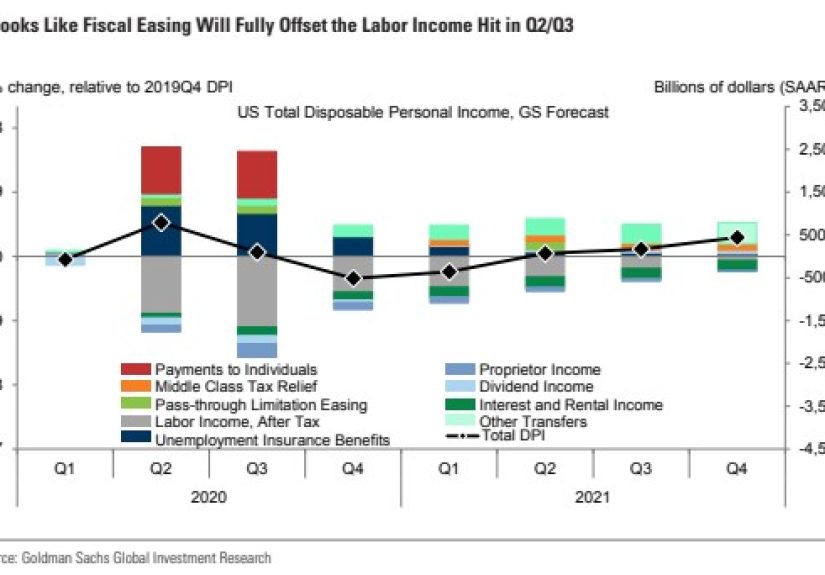
Relief measures mattered. Direct payments helped families bridge immediate gaps. Emergency lending and credit support helped calm markets. Small-business support offered lifelines to employers trying to preserve payrolls. In a moment of cascading fear, policy acted as a shock absorber. That is the good news.
The more complicated news is that emergency policy is designed to buy time, not create perfection. It can stabilize, but it cannot eliminate tradeoffs. Relief can arrive late, miss some people, or interact awkwardly with administrative systems that were never built for stress at this scale. Support can keep a business alive on paper while demand remains weak in real life. Policy can reduce the blast radius without making the explosion feel pleasant. A crisis is still a crisis, even when the government successfully prevents it from becoming even worse.
Question #3: What changed permanently?
Some changes look temporary until they settle into the furniture. The crisis accelerated remote work, normalized digital services, exposed the importance of broadband, and made flexibility feel less like a perk and more like economic infrastructure. It also forced institutions to reconsider resilience. Employers rethought location. Families rethought savings. Schools rethought contingency planning. Many workers rethought what a job is actually for if it consumes your entire nervous system.
But not every change was elegant or empowering. Remote work improved life for some and blurred every boundary for others. Home became office, classroom, daycare, gym, and emotional weather station. Convenience increased. So did loneliness for many people. The lasting legacy of the crisis is not simply that technology advanced. It is that Americans got a crash course in what flexibility can do and what it cannot fix.
What the crisis revealed about inequality
If the crisis had a harsh talent, it was making existing inequities impossible to ignore. Health disparities, income disparities, housing disparities, childcare disparities, and technology disparities did not suddenly appear. The crisis simply turned up the lights. People with stronger finances could absorb shocks longer. People with more job autonomy could reduce exposure more easily. Students with devices, quiet study space, and adult support had different odds than students without them. In that sense, the crisis was not only a disruption. It was a diagnostic test.
That may be the most uncomfortable lesson of all. A society does not become unequal because a crisis exposes inequality. The inequality was already there, quietly doing push-ups in the basement. The crisis just invited it upstairs.
Additional reflections: what the crisis felt like in everyday life
Beyond the charts and official statements, the crisis lived in small, stubborn moments. It lived in the way people wiped down groceries with the focus of bomb technicians. It lived in the awkward silence before unmuting on a video call, in the strange intimacy of seeing co-workers’ kitchens, children, and laundry baskets. It lived in the sudden need to calculate risk for activities that had once required no thought at all. Going to the store became a strategic operation. Visiting family became a debate. Coughing in public turned into a social event, and not the fun kind.
For parents, the experience could feel like doing three jobs badly at once and then feeling guilty for all three. They were expected to work, supervise learning, manage emotions, and keep the household functioning while the future kept changing shape. For people living alone, the quiet could become enormous. Days blurred together. Weekends lost their costume. Time no longer marched; it sort of wandered around the house in sweatpants.
For essential workers, the crisis often felt especially unfair. While others spoke earnestly about sourdough starters and home-office upgrades, many people were still commuting, serving, cleaning, stocking, caring, driving, delivering, and exposing themselves to risk so daily life could continue at all. A lot of the country called them heroes, which was true, but heroism is not a substitute for safety, paid leave, or predictable support. Applause is nice. Functional systems are better.
There was also a peculiar emotional split that many people recognized. On one hand, the crisis clarified priorities. People called relatives more often. They noticed neighbors. They valued health, time, and ordinary routines with new intensity. On the other hand, it also made people tired in a bone-deep way. Decision fatigue became a lifestyle. Every plan came with a disclaimer. Every headline threatened to rewrite the week. It was possible to feel grateful and depleted, connected and isolated, hopeful and frightened, sometimes before lunch.
Then there was the weirdness of watching public numbers improve while private life still felt fragile. Maybe the market had bounced. Maybe the unemployment rate had come down from its worst point. Maybe offices were discussing return-to-work plans with heroic confidence and tragic slide decks. But households were still carrying the memory of disruption. Savings had been tapped. Milestones had been delayed. Grief had accumulated. People do not snap back just because a chart does.
If there is a shared experience worth naming, it is this: the crisis taught many Americans how much of normal life depends on invisible systems working quietly in the background. Schools. Supply chains. Childcare. Public health. Credit markets. Broadband. Trust. Once those systems wobble, ordinary life becomes surprisingly hard to assemble. And once people learn that lesson, they do not completely unlearn it. Even after the emergency phase passes, the memory remains. The crisis may end on paper before it ends in the body.
Conclusion
So what should we take from all these thoughts, worries, and questions about the crisis? First, crises are rarely tidy. They spill across categories and expose weaknesses that looked manageable in calmer times. Second, recovery is not a single event. It arrives unevenly, often looking strong in national data before it feels real in household life. Third, the most important questions are not only about what happened, but about what we learned when pressure tested as a country.
The COVID-era crisis showed how fast modern life can change, how deeply inequality shapes outcomes, and how difficult it is to separate public health from economics, education, work, and mental well-being. It also showed that people are more adaptable than they think and institutions are often less prepared than they pretend. If that sounds a little bleak, here is the brighter ending: hard lessons are still lessons. The point is not to romanticize the crisis. It is to remember it clearly enough that the next emergency does not catch us wearing the exact same blindfold.