Table of Contents >> Show >> Hide
- What Is a Spinning Top Chair?
- The Design Story Behind the Spun Chair
- Why the Spinning Top Chair Still Feels Fresh
- Form Meets Function: Is It Actually Comfortable?
- The Role of Active Seating
- A Sculpture You Can Sit On
- Materials, Manufacturing, and Durability
- Where the Spinning Top Chair Works Best
- Styling Tips for a Spinning Top Chair
- Pros and Cons of the Spinning Top Chair
- Why Designers Keep Returning to Play
- Buying Considerations Before You Choose One
- Spinning Top Chair Revisited: Personal Experience and Real-World Impressions
- Conclusion
The first time you see a spinning top chair, your brain may need a second. Is it a chair? A sculpture? A giant toy that escaped from a very stylish kindergarten? The answer, delightfully, is yes. The spinning top chairbest known through Thomas Heatherwick’s Spun Chair for Magisturns the simple act of sitting into a tiny performance. It rocks, rotates, balances, and dares the user to stop behaving like furniture must be boring.
Revisiting the spinning top chair today is more than a nostalgic design detour. It is a chance to look at how playful furniture, active seating, rotational design, and sculptural interiors have changed the way people think about comfort. In a world full of ergonomic task chairs with more levers than a spaceship, the spinning top chair offers a different message: movement can be joyful, and a seat can be both useful and wonderfully unserious.
What Is a Spinning Top Chair?
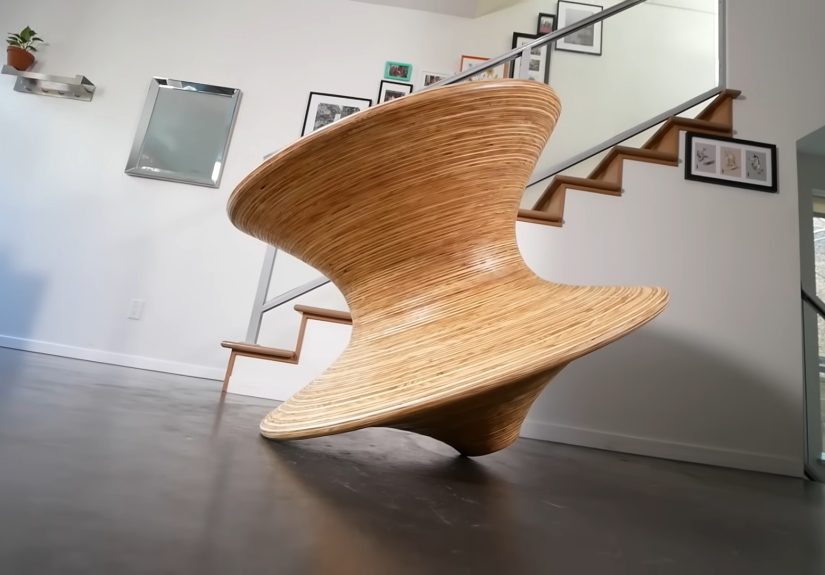
A spinning top chair is a seat shaped like a rounded, rotational object. Instead of standing on four legs, it rests on a curved body that allows the sitter to rock, swivel, and spin. The best-known modern example is the Spun Chair, designed by Thomas Heatherwick and produced by Magis. Its form resembles a spinning top, a cotton reel, a vessel, or a piece of pottery shaped on a wheel. Upright, it looks like a sculptural object. Tipped onto its side, it becomes a functional chair.
The cleverness is in the geometry. A traditional chair separates its duties: legs hold it up, a seat supports the body, and a backrest catches the spine. A spinning top chair folds those roles into one continuous form. It is furniture reduced to a single rotational profile, then spun into a three-dimensional object. That sounds very technical, but the result is easy to understand once someone sits in it and immediately starts grinning like they have discovered recess for adults.
The Design Story Behind the Spun Chair
Thomas Heatherwick’s studio approached the project with a wonderfully simple question: could a symmetrical spinning object also be comfortable to sit in? That question led to full-scale experiments, refinements, and prototypes. The challenge was not merely to create something that looked cool in a showroom. The chair had to support a real body from multiple angles while still keeping the clean rotational shape that made the concept so unusual.
The original exploration was tied to metal spinning, a manufacturing process in which metal is formed over a rotating mold. Early versions included highly finished metal pieces, while the wider production model was developed with Magis using rotational-molded plastic. The plastic version added fine ridges across the surface, giving the chair texture, comfort, and visual rhythm. Those grooves also make the chair look a bit like an oversized vinyl record, which is fitting because the whole object seems ready to play a tune called “Please Do Not Sit Still.”
Why the Spinning Top Chair Still Feels Fresh
Many furniture trends age like milk left in a sunny window. The spinning top chair has aged more like a cult film: still strange, still charming, and still capable of starting a conversation. Its staying power comes from the fact that it does not simply decorate a room. It changes behavior. People do not just sit on it; they test it, turn it, laugh at it, photograph it, and ask whether it is safe before trying it anyway.
That interactive quality matters in contemporary interiors. Homes, offices, galleries, hotel lobbies, libraries, and outdoor terraces increasingly value pieces that create moments. A spinning top chair does not disappear into the background. It invites curiosity. It breaks the invisible rule that furniture should be obedient and silent. In a minimalist room, it becomes the personality. In a colorful room, it becomes the ringleader.
Form Meets Function: Is It Actually Comfortable?
The big question is obvious: can a chair shaped like a toy top truly be comfortable? Surprisingly, yeswithin the expectations of its category. A spinning top chair is not trying to replace a high-performance office chair for eight-hour spreadsheet marathons. It is closer to a lounge chair, rocking chair, or playful accent seat. It supports relaxed sitting, short breaks, conversation, and movement.
When the sitter leans into the chair’s curved form, the body finds a supported pocket. The chair can rock from side to side and rotate in a circular motion. That movement changes the experience from passive sitting to active sitting. Your core, balance, and posture respond naturally. You are not frozen in place, which may be one reason people find the chair so engaging. It feels less like being parked and more like gently orbiting your own good mood.
The Role of Active Seating
Active seating is a broad design idea that encourages small movements while sitting. Balance stools, wobble chairs, kneeling chairs, rocking seats, and swivel chairs all belong somewhere in this conversation. The spinning top chair takes the concept and adds theater. Instead of hiding movement inside a discreet ergonomic mechanism, it celebrates movement openly.
For adults, active seating can make informal spaces feel more dynamic. In creative studios, a chair that rocks and rotates can encourage looser conversation. In a living room, it becomes a guest magnet. In a waiting area, it can make the atmosphere feel less stiff. For children, rotating and rocking furniture can connect to sensory play, though supervision and safe use are essential. The best spinning top chair experience is fun, not a living-room audition for an emergency room story.
A Sculpture You Can Sit On
One of the reasons the spinning top chair attracts designers and collectors is its dual identity. It is useful furniture, but it also behaves like sculpture. When standing upright, it does not immediately announce itself as a chair. It looks like an abstract vessel or a mysterious object from a design museum. Only when tilted into position does the seat reveal itself.
This transformation gives the chair a sense of wit. Many iconic furniture pieces are admired because they are beautiful. The spinning top chair is admired because it is beautiful and mischievous. It asks viewers to reconsider what a chair can be. Does furniture need legs? Does comfort have to look predictable? Can a domestic object be both practical and silly? The chair answers by spinning politely in a circle.
Materials, Manufacturing, and Durability
The production versions of the Spun Chair are commonly associated with molded plastic, especially rotational-molded polyethylene or similar durable materials depending on the edition. This manufacturing approach makes sense for a rounded, hollow, continuous form. It allows the chair to be produced as a single sculptural body rather than assembled from separate parts.
Plastic also gives the chair indoor-outdoor versatility. A spinning top chair can work on patios, terraces, playrooms, modern lounges, and gallery-like interiors. Its surface is generally easy to clean, and its bold shape can withstand visual clutter better than delicate furniture. Of course, placement matters. Smooth, level surfaces are best. A dramatic chair plus a sloped floor is not interior design; it is bowling with guests.
Where the Spinning Top Chair Works Best
Modern Living Rooms
In a living room, a spinning top chair works as an accent piece. It pairs especially well with low sofas, sculptural coffee tables, clean-lined shelves, and open floor plans. Because the chair has such a strong silhouette, it does not need much help. Give it breathing room and let it do its charming little spin routine.
Creative Offices and Studios
In a design studio, advertising agency, architecture office, or coworking lounge, the spinning top chair can signal creativity without using a motivational poster that says “Think Outside the Box.” It encourages informal interaction and gives visitors something to remember. It is not ideal as a desk chair, but it is excellent for breakout zones, brainstorming corners, and reception areas.
Outdoor Patios and Terraces
Because many versions are suitable for outdoor use, the chair can add personality to a patio or terrace. Its rounded shape contrasts nicely with plants, stone, concrete, and wood decking. It is especially effective in spaces where people gather casually rather than dine formally. Nobody wants to spin into a plate of pasta, no matter how good the pesto is.
Kids’ Spaces and Family Rooms
The chair’s playful movement makes it attractive for family rooms, but adults should treat it as furniture, not playground equipment. One person should use it at a time, and the surrounding area should be clear. Used sensibly, it can become a favorite reading, rocking, and spinning spot.
Styling Tips for a Spinning Top Chair
The easiest styling mistake is crowding the chair. A spinning top chair needs space around it because movement is part of its purpose. Place it where it can rotate safely without bumping into walls, tables, lamps, or unsuspecting ankles. Think of it as a chair with a personal bubble.
Color also matters. White or neutral versions feel sculptural and gallery-like. Red, purple, gray, or bold finishes make the chair more playful. In minimalist interiors, a bright spinning top chair becomes a focal point. In eclectic interiors, it can join the party without looking shy. Pair it with simple rugs, durable flooring, and furniture that does not compete too aggressively for attention.
Pros and Cons of the Spinning Top Chair
Pros
The spinning top chair is visually unforgettable. It encourages movement, creates conversation, and brings humor into design. It can serve as both furniture and sculpture, which makes it useful for people who want a room to feel curated rather than merely furnished. Its molded construction also makes many versions practical for both indoor and outdoor environments.
Cons
It is not the best choice for long work sessions, formal dining, or very compact rooms. People with balance issues may prefer more stable seating. Fast spinning is not recommended, and the chair should be used with care. Also, because it is a recognizable design object, authentic versions can be expensive compared with ordinary accent chairs. Then again, ordinary accent chairs rarely make guests say, “Wait, can I try that?”
Why Designers Keep Returning to Play
The spinning top chair belongs to a larger design tradition that treats play as serious business. Playful furniture does not mean childish furniture. It means furniture that understands human curiosity. People touch rounded forms. They test balance. They enjoy motion. They remember objects that surprise them.
In that sense, the spinning top chair is not just a novelty. It is a reminder that design can solve emotional problems too. A room may need seating, but it may also need warmth, movement, humor, and a reason for people to interact. A chair that spins can loosen the social temperature of a space. It says, without words, “Relax. This room is allowed to be fun.”
Buying Considerations Before You Choose One
Before buying a spinning top chair, measure the available space carefully. Do not measure only the chair’s diameter; account for the movement radius. The chair should have enough clearance to rock and rotate comfortably. Check the material, weight, finish, and whether the chair is rated for outdoor use if you plan to place it outside.
Authenticity is another consideration. Well-known designer furniture is frequently copied, and copies may not match the safety, balance, finish, or durability of the original. If the chair is meant for heavy use in a public or commercial space, buying from reputable retailers and checking manufacturer specifications is especially important. A spinning chair should be whimsical, not wobbly in a legally concerning way.
Spinning Top Chair Revisited: Personal Experience and Real-World Impressions
Spending time with a spinning top chair changes how you think about sitting. At first, most people approach it cautiously. They circle it like it might be a modern art object with a hidden alarm. Then someone sits down, shifts their weight, and the chair begins to rock. The reaction is almost always the same: surprise, laughter, and a second attempt with more confidence.
The most interesting experience is how quickly the chair turns adults into experimenters. People test how far they can lean, how slowly they can rotate, and whether they can stop facing the exact direction they intended. It becomes less about sitting and more about negotiating with gravity. The chair is stable when used correctly, but it still gives the body enough motion to feel alive. That balance between control and play is the magic.
In a home setting, the chair works best when it is treated as a special seat rather than everyday seating. Guests notice it immediately. Children want to try it. Adults pretend they are above such things, then quietly ask for a turn. It is a natural icebreaker because it removes the seriousness from a room. A living room with a spinning top chair feels less like a catalog page and more like a place where something might happen.
There is also a sensory quality that standard chairs cannot match. The slow rocking motion can feel calming, while the circular rotation adds a playful sense of orientation and discovery. You notice the ceiling, the window, the bookshelf, and the people around you from shifting angles. It is a small change, but it makes the surrounding space feel new. For anyone who spends too much time in rigid chairs, that gentle freedom can be refreshing.
Of course, the experience is not perfect for every person or every room. Some users may feel dizzy if they spin too quickly. Others may prefer a chair with arms, legs, and a clear promise not to move. The spinning top chair also needs space. Put it too close to a coffee table and the experience becomes less “design icon” and more “shin injury waiting to happen.” Proper placement turns the chair from risky novelty into delightful furniture.
What stands out most is the emotional memory it creates. Many chairs are comfortable, but forgettable. The spinning top chair is memorable even when nobody is sitting in it. It has presence. It looks poised, as if waiting for permission to move. That sense of potential is rare in furniture. It makes the chair feel alive without needing electronics, apps, motors, or a charging cable. In a world where everything seems to require a software update, a chair that simply spins because physics says so feels beautifully honest.
Revisiting the spinning top chair today reveals why it still matters. It proves that furniture can be practical without being predictable, sculptural without being untouchable, and playful without being disposable. It is not the chair everyone needs, but it may be the chair many rooms secretly want. Sometimes the best design does not ask us to sit properly. Sometimes it asks us to sit, spin, laugh, and look at the room from a new angle.
Conclusion
The spinning top chair remains one of modern furniture design’s most joyful experiments. It challenges the traditional idea of a chair by blending sculpture, motion, balance, and comfort into one continuous form. Whether used in a modern home, creative office, outdoor terrace, or design-focused public space, it brings personality wherever it lands.
More than a novelty, the spinning top chair shows how design can invite movement and curiosity. It reminds us that furniture does not always have to sit still just because we do. Revisited today, it feels surprisingly relevant: a playful answer to static interiors, stiff posture, and rooms that take themselves a little too seriously.