Table of Contents >> Show >> Hide
- What Gives a Parisian Living Room Its Staying Power?
- Start with the Bones: Architecture, Real or Borrowed
- Mix Furniture Like You Mean It
- Layer Materials the Parisian Way
- Lighting: The Quiet Superstar
- Styling Without Over-Styling
- How to Re-Create the Look in a Real American Home
- Mistakes That Undercut the Look
- The Experience of Living with a Parisian Look
- Conclusion
- SEO Tags
Some living rooms chase trends the way toddlers chase pigeons: loudly, enthusiastically, and with very little long-term planning. A truly Parisian living room does the opposite. It strolls. It edits. It acts like it has nowhere urgent to be, even though every single detail has been considered. That is the secret of enduring Parisian style: it feels effortless, but it is never accidental.
If you love rooms that balance elegance with comfort, history with freshness, and polish with personality, this look is worth borrowing. The classic Parisian living room is rarely about buying a complete “French set” and calling it a day. Instead, it is a carefully layered mix of architecture, texture, vintage finds, modern shapes, soft color, thoughtful lighting, and just enough imperfection to keep the whole space from feeling like a museum that charges admission.
In other words, this style has standards, but it is not a snob.
What Gives a Parisian Living Room Its Staying Power?
The enduring appeal of a Parisian living room comes from tension done well. Old meets new. Formal bones meet relaxed living. A room can have ornate moldings, a stone or marble fireplace, and a grand mirror, then turn around and welcome a low, modern sofa, a sculptural lamp, and a stack of art books that look like they have actually been opened. That contrast is what makes the room memorable.
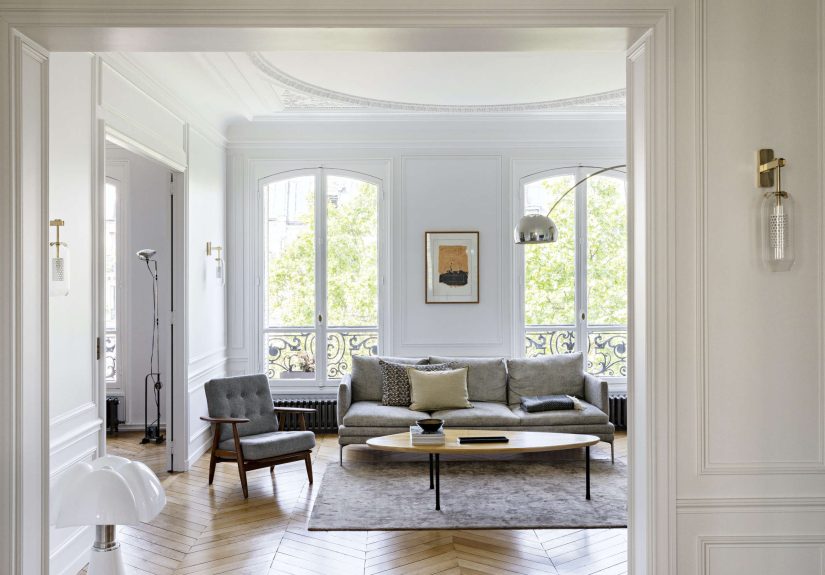
Many iconic Parisian interiors start with strong architecture: tall ceilings, detailed trim, French doors, parquet floors, and fireplaces that anchor the room. But even if your house was not blessed by a 19th-century architect with excellent taste, you can still borrow the formula. The goal is not to re-create an apartment on the Left Bank board for board. The goal is to capture the mood: collected, restrained, luminous, and confidently personal.
A timeless Parisian room also avoids looking too matched. Matching furniture sets have their place, but that place is usually a furniture showroom with too many throw pillows. Parisian style feels curated over time. Pieces relate to one another through proportion, tone, material, or mood rather than strict sameness. That is why the room feels lived in and lasting instead of trendy and temporary.
Start with the Bones: Architecture, Real or Borrowed
Celebrate classic details
If your living room already has ceiling medallions, crown molding, wall trim, tall windows, or an old fireplace, congratulations: your room has done part of the work for you. Highlight those details rather than competing with them. Paint walls and trim in warm whites, creams, soft greiges, or pale mushroom tones so the architectural lines read clearly without turning the room icy.
If your space is newer or simpler, you can still hint at Parisian structure. Applied picture-frame molding, oversized curtains mounted close to the ceiling, a substantial mantel, and an elegant mirror can instantly add that sense of verticality and grace. No, it is not the same as inheriting a Haussmann apartment. But it is dramatically cheaper, and your contractor may even smile at you once.
Use a restrained backdrop
One reason Parisian interiors age so well is that their backdrop is usually calm. Warm neutrals, chalky whites, muted taupes, and soft gray-beiges allow antiques, art, textiles, and lighting to do the talking. The room feels composed rather than busy. Even when color appears, it tends to arrive with discipline: an oxblood ceiling, a smoky accent wall, faded green velvet, or deep blue drapery instead of rainbow chaos.
This kind of palette is not boring. It is strategic. It creates visual breathing room and makes collected objects feel intentional. In a style built on mixing eras and textures, a quiet envelope helps everything coexist peacefully.
Mix Furniture Like You Mean It
One hero antique, one clean modern anchor
If you want the quickest route to a French-inspired living room, start with one vintage or antique piece that has real presence. It might be a gilt mirror, a marble-top table, an old chest, a carved side chair, or a flea-market coffee table with good bones. Then balance that piece with a cleaner, more contemporary anchor such as a tailored sofa, a modern club chair, or a minimalist side table.
This mix matters. Too many antiques can make the room feel heavy or theatrical. Too much modern furniture can erase the soul. The sweet spot is a conversation between periods. Think of it as interior design diplomacy: everyone gets a seat at the table, and nobody throws a candlestick.
Favor curves, patina, and comfort
Parisian rooms often soften their formal architecture with curved silhouettes and tactile surfaces. A rounded armchair, a skirted sofa, a scalloped lamp shade, or an oval pedestal table can keep the room from feeling rigid. Patina is also important. Wood that shows age, brass that is not aggressively polished, stone with variation, and linen with visible texture all help a room feel real.
And let us say this clearly: enduring style must still be comfortable. A Parisian living room is elegant, but it should also be somewhere you want to sit with coffee, a book, or an overly ambitious cheese plate. Choose upholstery that invites use. The room should not feel like it might scold you for leaning back.
Layer Materials the Parisian Way
Build depth through texture
Texture is where this look becomes irresistible. You want contrast, but not confusion. Start with foundational materials such as wood, linen, wool, marble, plaster, cotton velvet, and aged metal. A wool rug underfoot, linen curtains, a marble mantel or tabletop, brass sconces, and a velvet accent chair can make even a modest room feel richly layered.
Rugs deserve special attention. A vintage-style rug is one of the easiest ways to add depth, color, and a sense of history. It grounds the room and helps bridge traditional architecture with modern seating. The best ones do not look freshly born five minutes ago. They look like they have survived a little life and improved because of it.
Let materials do the decorating
One hallmark of timeless interior design is that the room does not rely only on accessories to feel finished. Beautiful materials carry much of the visual interest. A stone fireplace, oak flooring, plaster-like paint, mohair or velvet upholstery, antique frames, and unlacquered brass all age more gracefully than novelty decor. They also help the room feel luxurious without shouting about it.
Lighting: The Quiet Superstar
If there is one thing that instantly separates a flat room from a memorable one, it is lighting. A Parisian living room rarely depends on a single overhead fixture doing all the heavy lifting like a tired employee on a Friday afternoon. Instead, it layers light.
Begin with a ceiling fixture that has presence: a chandelier, pendant, or sculptural flush mount. Add wall sconces if you can. Then bring in at least one table lamp and one floor lamp. The result is softer, warmer, and far more flattering to both the room and the people in it.
Warm bulbs are non-negotiable. This style thrives on glow, not glare. Light should skim moldings, warm up art, and make textiles feel inviting. It should suggest that dinner might be served soon, even if dinner is just toast eaten over the sink.
Styling Without Over-Styling
Use art, mirrors, and books with restraint
A Parisian living room usually includes art, but not in a way that feels aggressively curated for social media. Leaned artwork, mixed frames, black-and-white photography, modern abstracts, oil portraits, and a few meaningful objects tend to work better than wall-to-wall trend prints. The room should reveal taste, not a panic-buying session.
Mirrors are especially useful in this look. A gilded or antique-style mirror above a mantel brings height, reflects light, and adds a sense of history. Books also matter. Stacked books, design monographs, novels, and old hardcovers make a room feel inhabited. A living room without books can still be beautiful, of course, but books do bring instant intelligence. Even if one of them is mostly there because the cover matches the sofa.
Bring in flowers, branches, and one slightly dramatic object
Fresh flowers, leafy branches, or a simple arrangement in a ceramic or glass vase are practically a Parisian love language. They add movement and softness. You do not need giant bouquets every week. A few stems with good shape will do more than a crowded arrangement trying too hard.
Then add one object with drama: a sculptural lamp, a bold tapestry, an oversized artwork, a dark accent wall, or an antique console with serious personality. Enduring rooms are often calm, but they are not bland. They know when to raise one elegant eyebrow.
How to Re-Create the Look in a Real American Home
Focus on the formula, not the fantasy
You do not need soaring French doors, original parquet de Versailles flooring, or a Paris address to make this style work. Instead, borrow the structure of the look:
Choose a warm neutral wall color. Add long curtains. Anchor the room with a rug that feels storied. Mix one or two vintage pieces with a comfortable modern sofa. Include brass or bronze lighting. Use natural textures. Keep clutter edited. Display art and books in a way that looks personal. Let a mirror or fireplace create a focal point.
That is the formula. It works in an old townhouse, a suburban living room, a condo, or an apartment with questionable rental carpet and a landlord who thinks “character” means “drafty.”
Spend where it counts
If you are budgeting, invest first in the pieces that shape the room most: the sofa, rug, lighting, and drapery. Then mix in affordable accents, flea-market finds, vintage frames, and secondhand side tables. A Parisian-inspired room should feel collected, which is great news for your wallet. Perfection is not the point. Taste is.
Mistakes That Undercut the Look
The first mistake is overdoing the theme. If every object screams “French,” the room loses sophistication fast. Skip the cliches, go easy on overt motifs, and avoid turning your living room into a stage set for a baguette commercial.
The second mistake is decorating too quickly. Enduring style usually develops over time. Leave space for the right mirror, the right chair, the right lamp. Rooms gain depth when they are allowed to evolve.
The third mistake is making the room too precious. Parisian interiors are polished, yes, but they also breathe. There is often an ease to the arrangement, a little asymmetry, a book left open, a chair angled slightly off-center, a vase that is not trying to be the main character. Real style can survive a little life.
The Experience of Living with a Parisian Look
What makes this style especially satisfying is not just how it photographs, but how it feels to live in day after day. A well-done Parisian living room has a quiet confidence that changes the mood of a home. In the morning, soft light catches the mirror over the mantel and makes the whole room feel awake before you are. In the evening, lamps turn the edges warm, and suddenly the room feels like the kind of place where conversations stretch longer than expected.
There is also a special pleasure in how forgiving this look becomes over time. Because it is built on layering rather than matching, you can add pieces gradually without breaking the room. A flea-market side table picked up on a weekend trip can work beside a newer sofa. A worn brass lamp can sit happily next to crisp drapery. A stack of old books, a ceramic bowl, or a slightly crooked framed sketch somehow makes the room better, not messier. The style gives you permission to be collected instead of perfect.
One of the most enjoyable parts of creating this kind of space is learning how much mood comes from materials. Linen curtains shift beautifully when a window is cracked open. A wool rug softens footsteps. Velvet changes tone through the day. Marble catches light in a way flat surfaces never do. Even a humble plaster-colored wall starts to feel elegant when it sits beside aged brass and dark wood. The room becomes interesting before you have added many accessories at all.
People often assume a Parisian-inspired room would feel formal, but the real experience is usually the opposite. It can be deeply welcoming. Guests know where to look because the room has a clear focal point, but they also know where to sit because the furniture invites it. There is enough beauty to make the space memorable and enough comfort to make them stay. That balance is harder to achieve than buying a trendy sectional and a viral coffee table, but it pays off every single day.
Another quiet joy is that the room starts reflecting your life instead of some catalog fantasy. The mirror may be elegant, but perhaps it was found secondhand after three disappointing antique-store visits and one excellent iced coffee. The art might include a serious abstract, a flea-market sketch, and a framed postcard you loved too much to hide in a drawer. The room begins to feel layered not because a stylist dropped it from the heavens, but because you kept making good decisions over time.
There is also something reassuring about living with a style that does not become obsolete every six months. When the trend cycle starts shouting about whatever color, shape, or novelty object is suddenly “essential,” a Parisian living room simply adjusts its lamp and carries on. It has bigger priorities. It values proportion, warmth, craftsmanship, and atmosphere. It does not need to perform newness all the time.
Perhaps that is why the look endures. It is aspirational, yes, but it is also livable. It asks for attention, not perfection; beauty, not stiffness; personality, not clutter. And once the room is in place, you feel it. You notice that you read there more. You linger longer. You enjoy your coffee more slowly. You become, in the least dramatic but most satisfying way, the kind of person who lights a lamp at dusk because the room deserves it.
Conclusion
To steal this look successfully, think less about copying a single Paris apartment and more about adopting a design mindset. Favor architecture, whether original or added. Choose a calm palette. Mix antique and modern furniture with confidence. Layer textures generously. Use lighting like a secret weapon. Decorate with enough restraint that the room feels personal, not overproduced.
An enduring Parisian living room is not flashy. It is clever, warm, edited, and quietly luxurious. It lets history and modern life share the same sofa without argument. And that, frankly, is a level of harmony most of us would love to borrow.