
Table of Contents >> Show >> Hide
- Why Organization Works (Even If You’re “Not an Organized Person”)
- Start With a Plan That Won’t Make You Hate Your House
- The Golden Rules of Storage (So Your Systems Actually Stick)
- Room-by-Room Storage & Organization Ideas
- Entryway: Create a “drop zone” that prevents clutter from entering the house
- Kitchen & Pantry: Make it easy to see, grab, and restock
- Closets: Stop treating your closet like a storage unit
- Bathroom: Make morning routines smooth, not a scavenger hunt
- Linen & Cleaning Closets: Give towels and supplies a system
- Living Room: Hide storage in plain sight
- Garage: Use vertical and ceiling space (and keep it safe)
- Small-Space Storage Tricks That Feel Like Cheating
- How to Keep Your Home Organized (Without Becoming a Full-Time Sorter)
- Common Organizing Mistakes (and What to Do Instead)
- Conclusion
Storage and organization sound like the kind of grown-up hobby you “get into someday,” right after you start making your bed every morning and remember where you left your reusable grocery bags. Then real life happens: mail multiplies, socks reproduce without permission, and the kitchen drawer becomes a museum exhibit titled “Objects I Might Need During an Emergency (That Never Comes).”
The good news: you don’t need a celebrity closet system or a label maker that costs more than your microwave. You need a simple plan, a few repeatable rules, and storage solutions that match how you actually livenot how you wish you lived on a perfectly styled Instagram feed.
This guide walks you through practical, room-by-room organization strategies, how to choose the right containers, and how to keep your home from “re-cluttering” itself by next Tuesday. Spoiler: the secret isn’t buying more bins. It’s building small systems that are easy to maintain.
Why Organization Works (Even If You’re “Not an Organized Person”)
Organization isn’t a personality type. It’s a setup. When your space has a clear “home” for things, you spend less time searching, less money rebuying duplicates, and less energy doing the nightly ritual of moving clutter from one surface to another like a tiny, exhausted archaeologist.
Good organization also reduces friction. If it’s easier to put something away than to leave it out, your home stays tidy without constant willpower. That’s the goal: less effort, more order.
Start With a Plan That Won’t Make You Hate Your House
Pick one “pain point” to fix first
Choose the area that annoys you the most on a normal day. Maybe it’s the pantry avalanche, the entryway shoe pile, or the closet that eats hangers like popcorn. When you start where the frustration is highest, you feel the payoff fasterand momentum matters.
Use the “Keep / Donate / Trash” triage
Before you organize, you have to edit. Grab three bags or boxes and sort quickly. Don’t overthink: if it’s broken, expired, or you actively dislike it, it’s not earning rent in your home. The biggest mistake people make is trying to create perfect storage for things they don’t even want.
Work in short bursts
If a whole-room project makes you want to nap forever, do organization sprints. Set a timer for 15–30 minutes. Finish one micro-zone (a single drawer, one shelf, one category). Stopping after a clear win is better than starting big and quitting mid-chaos.
The Golden Rules of Storage (So Your Systems Actually Stick)
Rule 1: Store by frequency, not fantasy
Put daily-use items where your hands naturally reach: eye level, front of shelves, easiest cabinets. “Special occasion” items can live higher up or further back. Your space should match your habits, not the story you tell yourself about becoming a person who makes homemade pasta every Tuesday.
Rule 2: Create zones (your brain loves neighborhoods)
Zones are simple groupings: baking, snacks, breakfast, pet care, first aid, charging cables, etc. When you always store like-with-like, you stop scattering items across the houseand you can see what you already own.
Rule 3: Containers don’t create orderboundaries do
A bin is a boundary. It’s basically a polite little fence that says, “This is where the markers live.” Use bins, trays, baskets, and drawer dividers to prevent categories from blending into a chaotic soup.
Rule 4: Label for your future self (and everyone else)
Labels reduce decision fatigue. You don’t have to remember where something goesyou just follow the sign like a functional adult at an airport. This is especially helpful for shared spaces (pantry, linen closet, kids’ supplies).
Rule 5: Choose the right container for the job
Not all storage is created equal. Clear bins are great for visibility, especially in closets, garages, and pantries. Opaque baskets can look calmer in living spaces. Sturdy, stackable plastic bins work well for dusty, damp, or high-traffic areas (garage, basement). Vacuum-seal bags can shrink bulky textiles when you’re storing off-season items.
Room-by-Room Storage & Organization Ideas
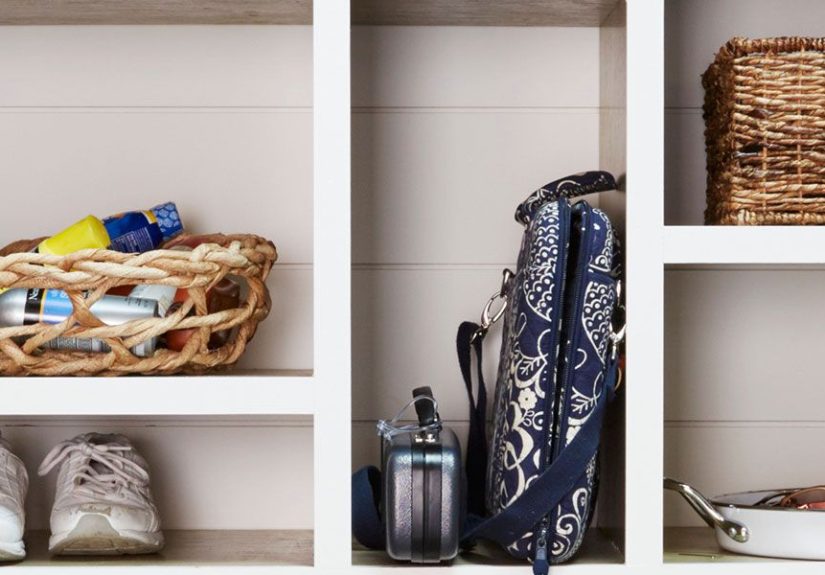
Entryway: Create a “drop zone” that prevents clutter from entering the house
The entryway is where chaos shows up first. Give it a job:
- Hooks at eye level: One per person for jackets, backpacks, and keys.
- A tray or bowl: For pocket items (wallet, earbuds, lip balmaka the “tiny treasures of modern life”).
- Shoe boundary: A slim rack or a boot tray so shoes stop migrating into your living room like they pay rent.
- Mail control: A sorter with three slots: “Act,” “File,” “Recycle.” If it doesn’t fit, it’s too much mail.
Kitchen & Pantry: Make it easy to see, grab, and restock
Kitchens go off the rails because they’re high-traffic and full of categories. The fix is zones plus visibility.
Step-by-step pantry reset:
- Empty one shelf at a time (or the whole pantry if you’re brave).
- Trash expired food and wipe shelves.
- Group by category: snacks, baking, breakfast, dinner basics, canned goods, kid items, etc.
- Use organizers that “pull clutter forward”: turntables (lazy Susans), tiered risers, clear bins, and shelf dividers.
- Label zones so everyone can put things back without a committee meeting.
- Use FIFO: “first in, first out” so older items get used before the new stash hides them.
Smart kitchen storage ideas:
- Door space: Over-the-door racks for spices, wraps, snacks, or cleaning sprays.
- Drawer dividers: For utensils, foil, bags, and the dreaded “random tools drawer.”
- Pot-lid management: A vertical rack or a shelf solution so lids stop clanging like a cymbal section.
- Under-sink strategy: Use a pull-out caddy and a small bin for backup sponges and trash bags. Keep items in leak-proof trays so spills don’t become a science experiment.
Closets: Stop treating your closet like a storage unit
A closet works best when it holds what you actually wear and use. If your closet is also storing extra linens, mystery cables, holiday decor, and a treadmill you “totally use,” it’s not a closetit’s a crisis.
Closet organization moves that pay off fast:
- Use matching hangers: They save space and make your closet feel instantly calmer.
- Group by type, then color: Shirts with shirts, pants with pants. Finding outfits becomes a lot easier.
- Go vertical: Add shelf bins for categories (workout gear, swim, accessories). Stackable bins turn empty shelf space into usable storage.
- Try “seasonal swaps”: Store off-season clothes in labeled bins up high or under the bed.
- Make shoes behave: A shoe cabinet or rack keeps them visible and contained. Bonus: less “shoe pile shame.”
Small closet tricks: Use the back of the door, add a second rod if you have lots of shorter items, and consider slim profile hangers. If you’re constantly fighting the space, a basic modular system can add shelves and drawers without a full renovation.
Bathroom: Make morning routines smooth, not a scavenger hunt
Bathrooms collect tiny items that multiply in clutter: hair ties, travel minis, half-used skincare. Keep it simple:
- Daily essentials: One bin or tray for the products you use every day.
- Backups: A labeled bin (toothpaste, soap, razors) so you stop buying duplicates.
- Small items: Drawer organizers for cotton swabs, makeup, and tools.
- Medicine sanity: Store safely and check dates regularly. Keep categories broad so the system is easy to maintain.
Linen & Cleaning Closets: Give towels and supplies a system
For linens, shelf dividers help stacks stay upright, and labels keep items grouped by room (guest, bath, kitchen). For cleaning closets, use hooks on the door for smaller tools, store sprays in a tray or bin to catch drips, and keep the “everyday cleaners” within easy reach.
Living Room: Hide storage in plain sight
Living rooms often look cluttered because items don’t have a home. Create one:
- Baskets: Throw blankets, kids’ toys, or game controllerscontained and quick to tidy.
- Furniture with storage: Ottoman, console, or coffee table with compartments.
- Cable control: A small bin, cord labels, and a charging zone so cables don’t become modern art.
Garage: Use vertical and ceiling space (and keep it safe)
Garages get messy because they’re the “miscellaneous” zone. Fix that by turning the garage into categories: tools, sports, seasonal decor, automotive, gardening.
- Pegboards and wall rails: For tools and frequently used gear.
- Ceiling storage: Great for seasonal bins and bulky items if installed safely.
- Clear, labeled totes: For holiday decor, camping gear, or kids’ outdoor toys.
- Create a mini mudroom: Hooks and bins near the garage entry for shoes, backpacks, and coats.
Small-Space Storage Tricks That Feel Like Cheating
- Go up, not out: Tall shelves, bookcases, and wall-mounted storage increase capacity without stealing floor space.
- Use “forgotten” areas: Under the bed, behind doors, above cabinets, and inside cabinet doors.
- Multipurpose furniture: Storage benches, bed frames with drawers, nesting tables with hidden compartments.
- Rolling carts: Perfect for crafts, snacks, or cleaning suppliesespecially in apartments where closets are… optimistic.
How to Keep Your Home Organized (Without Becoming a Full-Time Sorter)
Do a 10-minute daily reset
Set a timer. Put away the obvious strays. This is maintenance, not a deep clean. Daily resets prevent “small mess” from turning into “weekend project.”
Adopt one simple rule: one in, one out
If you bring in a new candle, donate an old one. New hoodie? Old hoodie goes. This prevents slow-motion clutter creep.
Make putting things away ridiculously easy
If an item’s “home” is too hard to access, people won’t use it. Choose open bins, low shelves, and clear categoriesespecially for kids’ items and shared household supplies.
Schedule quick seasonal check-ins
Every few months, pick one area: pantry, closet, garage. Remove expired food, donate clothes you didn’t wear, consolidate duplicates, and refresh labels if needed. It’s like changing the oil in your carboring, but it prevents breakdowns.
Common Organizing Mistakes (and What to Do Instead)
- Mistake: Buying containers first.
Instead: Declutter and measure before you shop. - Mistake: Creating 37 micro-categories.
Instead: Keep categories broad enough to maintain easily. - Mistake: Storing donation bags “for later.”
Instead: Get them out of the house quickly so clutter doesn’t boomerang. - Mistake: Hiding everything in opaque bins with no labels.
Instead: Label clearly or use clear bins for long-term storage. - Mistake: Organizing a space without considering how you use it.
Instead: Store by frequency and create zones that match your routine.
Conclusion
Storage and organization aren’t about making your home look like a showroom. They’re about making daily life smoother: fewer frantic searches, fewer duplicate purchases, fewer piles that silently judge you. Start with one pain point, declutter first, use containers as boundaries, label for clarity, and build simple systems you can keep up witheven on busy weeks.
What It Looks Like in Real Life: 5 Everyday “Experience” Scenarios
1) The “I swear I just cleaned” kitchen. This is the classic experience: you tidy the counters, feel accomplished, and then the next day the kitchen looks like a snack tornado touched down. What usually fixes it isn’t more cleaningit’s defining homes for the high-frequency items that never stop moving. When snacks have a labeled bin, lunch containers have one shelf, and papers have a single landing zone, mess stops spreading. The biggest “aha” moment people describe is realizing they were organizing surfaces instead of organizing categories. Once categories get a home, counters stay clear longer without heroic effort.
2) The closet that works Monday through Friday… and collapses Saturday. A common experience is having a closet that seems fine until laundry day. Then suddenly, everything is everywhere, and you’re wearing the same three shirts because they’re the only ones you can see. The solution that tends to feel most “real” is grouping clothes by type and using one bin for each small category (workout gear, swim, accessories). People often report that matching hangers and one simple folding style reduce decision fatigueless “Where does this go?” and more “Oh, right, it goes there.” If you share a closet, labels and zones prevent the slow drift into chaos.
3) The pantry where food goes to disappear. You buy rice, then find three open bags behind cereal six months later. That experience is incredibly normal in deep cabinets and crowded shelves. What typically changes the game is visibility: decanting staples into clear containers, using risers so cans aren’t stacked like a Jenga tower, and adding a turntable for bottles. People also tend to love one surprisingly simple habit: keeping “backstock” (extras) in a single, labeled bin. That way, you don’t accidentally build a private ketchup museum in the back corner.
4) The garage that becomes a “miscellaneous life archive.” The garage often starts with good intentions and ends with mystery boxes labeled “Stuff.” A relatable turning point is switching from vague storage to clear categories: holiday decor, tools, sports, auto, gardening. Once categories exist, the garage stops being a dumping ground and becomes a functional warehouse. The experience most people mention is the relief of open floor spacewhen bikes go on wall hooks or a pulley system, and seasonal items move up onto safe overhead storage, it suddenly feels like you gained a room in your house.
5) The family system that only works if it’s easy. If multiple people live in the home, the “best” system is the one everyone can follow on a tired day. Real life is messy, and people don’t read mindsor labelsunless the system is obvious. That’s why open bins, broad categories, and one-step put-away zones tend to last. A common experience: once you add a drop zone by the door (hooks + tray + shoe boundary), the whole house gets cleaner because clutter stops traveling room to room. It’s not magic. It’s logisticswith a tiny bit of label-maker confidence.






 Close
Close