
Table of Contents >> Show >> Hide
- What Is Sweet Potato Casserole?
- Why This Sweet Potato Casserole Recipe Works
- Ingredients for Classic Sweet Potato Casserole
- How to Make Sweet Potato Casserole Step by Step
- Best Topping Ideas for Sweet Potato Casserole
- Fresh Sweet Potatoes vs. Canned Yams
- Make-Ahead Sweet Potato Casserole
- Can You Freeze Sweet Potato Casserole?
- How to Store and Reheat Leftovers
- Common Mistakes to Avoid
- Easy Recipe Variations
- What to Serve with Sweet Potato Casserole
- Kitchen Experience: What I’ve Learned Making Sweet Potato Casserole
- Conclusion
Sweet potato casserole is the holiday side dish that refuses to stay in its lane. It sits next to the turkey like a responsible vegetable, then shows up wearing brown sugar, butter, pecans, and sometimes a toasted marshmallow hat. Is it a side dish? Is it dessert? Is it secretly pie without the crust? Yes, yes, and please pass the spoon.
This guide covers how to make sweet potato casserole from scratch, how to choose the best topping, how to prep it ahead, and how to fix the little problems that can turn a dream casserole into sweet potato soup. Whether you love the classic marshmallow version, a brown sugar pecan streusel, a buttery cornflake crunch, or a more savory Thanksgiving casserole, the goal is the same: creamy sweet potatoes underneath, golden texture on top, and happy silence around the table because everyone is too busy eating.
What Is Sweet Potato Casserole?
Sweet potato casserole is a baked dish made with cooked and mashed sweet potatoes mixed with butter, sugar or maple syrup, warm spices, eggs or milk for structure, and a topping that adds contrast. The most famous versions are topped with mini marshmallows or pecan streusel, but modern sweet potato casserole recipes may include breadcrumbs, cornflakes, coconut, orange zest, bourbon, maple syrup, cayenne, herbs, cheese, or even a homemade marshmallow-style meringue.
The dish is strongly associated with Thanksgiving and Southern cooking, but it has become a national comfort-food classic. Its appeal is simple: sweet potatoes already taste naturally rich and earthy, and baking them into a casserole turns them into something soft, cozy, and celebration-ready. Add a crunchy topping and suddenly everyone at dinner has “just one more bite” syndrome.
Why This Sweet Potato Casserole Recipe Works
The best sweet potato casserole balances four things: sweetness, creaminess, seasoning, and texture. Too much sugar makes it heavy. Too little salt makes it flat. Too much liquid makes it loose. No topping makes it feel unfinished, like a holiday sweater without sleeves.
This recipe uses roasted or boiled sweet potatoes, butter, brown sugar, vanilla, cinnamon, nutmeg, eggs, and a pinch of salt. The topping can go in three directions: classic marshmallows, pecan streusel, or a half-and-half topping for families that refuse to agree peacefully. The result is a casserole that tastes nostalgic without being cloying, rich without being gluey, and sweet enough to feel special without requiring a dessert fork.
Ingredients for Classic Sweet Potato Casserole
For the Sweet Potato Filling
- 3 pounds sweet potatoes, peeled and cut into chunks
- 1/2 cup unsalted butter, melted
- 1/2 cup packed light brown sugar
- 1/3 cup milk, half-and-half, or evaporated milk
- 2 large eggs, lightly beaten
- 1 teaspoon vanilla extract
- 1 teaspoon ground cinnamon
- 1/4 teaspoon ground nutmeg
- 1/2 teaspoon kosher salt
- Optional: 1 tablespoon orange juice or maple syrup for extra depth
For a Pecan Streusel Topping
- 1 cup chopped pecans
- 1/2 cup packed brown sugar
- 1/3 cup all-purpose flour
- 4 tablespoons unsalted butter, melted or softened
- 1/2 teaspoon cinnamon
- Pinch of salt
For a Marshmallow Topping
- 2 to 3 cups mini marshmallows
- Optional: 1/2 cup chopped pecans for crunch
How to Make Sweet Potato Casserole Step by Step
Step 1: Cook the Sweet Potatoes
Peel and cut the sweet potatoes into even chunks. Place them in a large pot, cover with water, and boil until fork-tender, usually 15 to 25 minutes depending on the size of the pieces. Drain well. Excess water is the enemy of a good casserole, so let the potatoes sit in the colander for a few minutes to steam dry.
You can also roast the sweet potatoes instead. Roasting concentrates their flavor and gives the filling a deeper, caramel-like taste. To roast, prick whole sweet potatoes with a fork, place them on a lined baking sheet, and bake at 400°F until soft, usually 45 to 60 minutes. Cool slightly, then scoop out the flesh.
Step 2: Mash Until Smooth
Transfer the cooked sweet potatoes to a large bowl. Mash with a potato masher for a rustic texture, or use a hand mixer for a smoother, fluffier filling. If you want the silkiest possible casserole, press the potatoes through a ricer or blend briefly in a food processor. Do not overmix, though. Sweet potatoes are forgiving, but they do not want to become orange wallpaper paste.
Step 3: Add Flavor and Structure
Stir in melted butter, brown sugar, milk, vanilla, cinnamon, nutmeg, and salt. Taste the mixture before adding the eggs. Adjust sweetness or spice if needed. Once the flavor is right, mix in the beaten eggs. Eggs help the casserole set so it slices or scoops cleanly instead of spreading across the plate like holiday lava.
Step 4: Fill the Baking Dish
Grease a 9-by-13-inch baking dish or a 2- to 3-quart casserole dish. Spread the sweet potato mixture evenly into the dish. Smooth the top with a spatula so the topping bakes evenly.
Step 5: Add the Topping
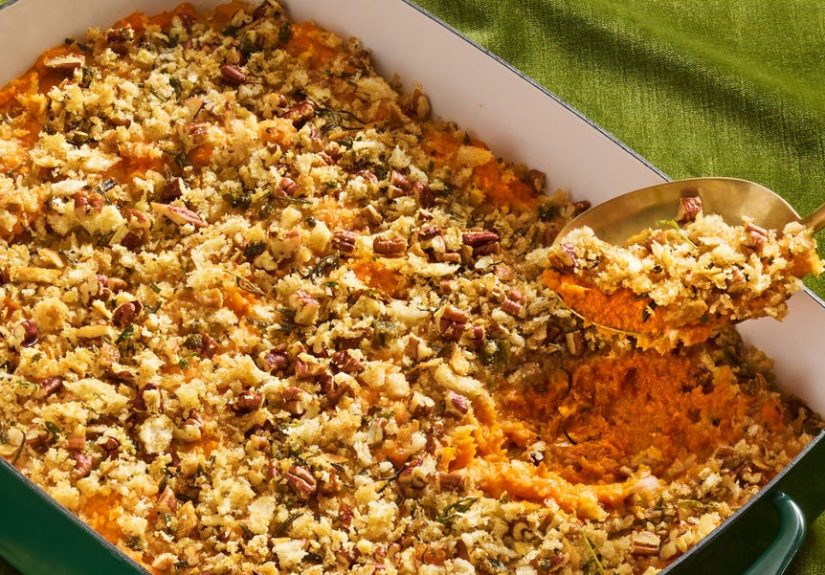
For pecan streusel, combine pecans, brown sugar, flour, butter, cinnamon, and salt until crumbly. Sprinkle evenly over the sweet potato filling. For marshmallows, wait until the casserole is almost done baking before adding them, or they may melt too much and disappear into sticky sugar fog. For a combination topping, use streusel first, bake, then add marshmallows during the final 8 to 10 minutes.
Step 6: Bake Until Golden
Bake at 350°F for 30 to 40 minutes, or until the filling is hot and the topping is golden. If using marshmallows, add them near the end and bake until puffed and lightly browned. Watch closely because marshmallows go from golden to “campfire incident” very quickly.
Best Topping Ideas for Sweet Potato Casserole
Classic Marshmallow Topping
Mini marshmallows create the nostalgic version many families expect on Thanksgiving. They melt, puff, brown, and turn the top into a sweet, gooey blanket. This topping is ideal for kids, traditionalists, and adults who pretend they are above marshmallows but somehow take the corner piece.
Brown Sugar Pecan Streusel
A pecan streusel topping adds crunch, buttery richness, and a caramel-like flavor. It is less sugary than a full marshmallow layer and gives the casserole a more polished texture. Pecans also pair beautifully with cinnamon, nutmeg, maple syrup, and browned butter.
Cornflake Crunch
Cornflakes are a clever option when you want crunch without relying entirely on nuts. Toss crushed cornflakes with melted butter, brown sugar, and a pinch of salt. The topping bakes up crisp, sweet, and slightly salty, making it a great match for creamy sweet potatoes.
Savory Breadcrumb Topping
Not every sweet potato casserole has to taste like dessert. For a savory version, reduce the sugar in the filling and top the casserole with buttered breadcrumbs, herbs, Parmesan, toasted pecans, or Gruyere. Fresh sage, thyme, rosemary, black pepper, and shallots can turn the dish into a sophisticated side that pairs beautifully with turkey, ham, roasted chicken, or pork.
Fresh Sweet Potatoes vs. Canned Yams
Fresh sweet potatoes give you the best flavor and texture, especially if you roast them. They taste earthy, naturally sweet, and full-bodied. Canned yams or canned sweet potatoes are convenient and still work well, especially when time is short. Just drain them thoroughly and reduce the added sugar because canned versions are often packed in syrup.
Also, a quick grocery-store note: many cans labeled “yams” in the United States are actually sweet potatoes. True yams are starchier, drier, and less common in standard American supermarkets. For this casserole, orange-fleshed sweet potatoes are the dependable choice.
Make-Ahead Sweet Potato Casserole
Sweet potato casserole is a gift to busy cooks because the filling can be made ahead. Prepare the sweet potato mixture, spread it into the baking dish, cover tightly, and refrigerate for up to two days. Keep the topping separate so it stays crisp. When ready to bake, let the dish sit at room temperature for about 30 minutes, add the topping, and bake until hot all the way through.
If you are making it for Thanksgiving, this one step can save your oven schedule from becoming a group project with no manager. Prepare the filling the day before, store the topping in a bag or small container, and bake the casserole while the turkey rests.
Can You Freeze Sweet Potato Casserole?
Yes, but freeze the sweet potato filling without the topping for best results. Toppings like marshmallows, breadcrumbs, cornflakes, and pecans can lose their texture in the freezer. Prepare the filling, place it in a freezer-safe dish, wrap tightly, and freeze. Thaw overnight in the refrigerator, add the topping, and bake until heated through.
For mashed sweet potatoes, a little citrus juice can help prevent darkening before freezing. Use airtight containers, label the date, and avoid freezing a fully topped casserole unless you are comfortable with a softer topping later.
How to Store and Reheat Leftovers
Refrigerate leftover sweet potato casserole within two hours of serving. Store it in an airtight container or cover the baking dish tightly. For best quality, eat leftovers within three to four days. Reheat individual servings in the microwave or warm a larger portion in a 325°F oven until hot. If the topping starts browning too much, cover loosely with foil.
Because this casserole often contains eggs, dairy, and cooked vegetables, do not leave it sitting on the counter all afternoon while everyone watches football and argues about pie rankings. Food safety is not glamorous, but neither is explaining to guests that the casserole became a science experiment.
Common Mistakes to Avoid
Using Watery Sweet Potatoes
If you boil sweet potatoes, drain them thoroughly. Let them steam dry before mashing. Watery potatoes create a loose filling that never quite sets.
Skipping the Salt
Even sweet dishes need salt. A small amount sharpens the flavor and keeps the casserole from tasting flat.
Adding Marshmallows Too Early
Marshmallows brown quickly. Add them near the end of baking so they toast instead of melting into a sugary puddle.
Overloading the Sugar
Sweet potatoes already bring natural sweetness. Start with a moderate amount of sugar, taste the filling, and adjust. A good casserole should taste rich and balanced, not like candy wearing a vegetable costume.
Easy Recipe Variations
Maple Pecan Sweet Potato Casserole
Replace part of the brown sugar with pure maple syrup. Add pecans, cinnamon, and a tiny pinch of cayenne for warmth. This version tastes cozy, woodsy, and slightly more grown-up.
Orange Vanilla Sweet Potato Casserole
Add orange zest and a splash of orange juice to the filling. The citrus brightens the sweet potatoes and keeps the casserole from feeling too heavy.
Bourbon Sweet Potato Casserole
Add one to two tablespoons of bourbon to the filling for a deeper holiday flavor. Keep it subtle; the goal is warmth, not a casserole that needs a designated driver.
Savory Herb Sweet Potato Casserole
Cut the sugar down to one or two tablespoons. Add sautéed shallots, sage, thyme, black pepper, and a breadcrumb-Parmesan topping. This is excellent for guests who prefer savory sides.
Gluten-Free Sweet Potato Casserole
Use gluten-free flour or almond flour in the streusel, or skip flour and combine pecans, butter, brown sugar, and cinnamon. Always check labels on packaged toppings such as cereal or marshmallows.
What to Serve with Sweet Potato Casserole
Sweet potato casserole is most famous as a Thanksgiving side dish, but it works beyond November. Serve it with roast turkey, baked ham, roasted chicken, pork tenderloin, green beans, Brussels sprouts, cranberry sauce, cornbread dressing, collard greens, or a crisp fall salad. The sweetness also pairs well with salty and savory foods, which is why ham and sweet potato casserole are such good friends. They are basically the holiday buddy comedy of the dinner table.
Kitchen Experience: What I’ve Learned Making Sweet Potato Casserole
After making sweet potato casserole for holiday meals, potlucks, weeknight experiments, and the occasional “I bought too many sweet potatoes and now must become a casserole person” situation, one lesson stands above the rest: texture matters more than people think. The difference between a good casserole and a great one is usually not a secret ingredient. It is whether the filling is smooth, the topping has contrast, and the dish has enough salt to wake everything up.
Roasting the sweet potatoes gives the deepest flavor, especially when there is time. Boiling is faster and perfectly fine, but roasted sweet potatoes taste more concentrated. They also make the kitchen smell like you have your life together, which is a pleasant bonus even if the dining table is currently covered in mail.
I have also learned not to add the topping too early when using marshmallows. The first time you watch marshmallows go from pale to perfect to dramatic black bubbles in the span of a few distracted minutes, you become a more humble cook. Add them at the end, keep an eye on them, and remember that the broiler is not your friend unless you are standing right there.
Another useful experience: make the filling less sweet than you think it should be if you are adding a sugary topping. A spoonful of plain filling may taste only mildly sweet, but once you add brown sugar pecans or marshmallows, the whole dish becomes richer. Balance is the magic trick. A little cinnamon, vanilla, butter, and salt can do more for flavor than another scoop of sugar.
For big gatherings, I prefer making two smaller casseroles instead of one enormous dish. Smaller dishes heat more evenly, fit into crowded refrigerators more easily, and give you topping flexibility. One can be marshmallow-topped for the traditional crowd, while the other gets pecan streusel for the crunch people. This strategy also reduces the risk of someone saying, “Wait, no marshmallows?” with the heartbreak of a person betrayed by root vegetables.
Leftovers are surprisingly versatile. A scoop can be reheated with breakfast eggs, tucked beside roasted chicken, or turned into a quick dessert with a spoonful of whipped cream. If the casserole has a pecan topping, it can taste almost like sweet potato pie filling with crumble on top. If it has marshmallows, it becomes softer after refrigeration but still delicious. The best reheating method is the oven because it revives the topping, but the microwave wins when patience is unavailable.
Finally, sweet potato casserole is one of those dishes that welcomes personality. Some families insist on marshmallows. Some believe pecans are nonnegotiable. Some add pineapple, coconut, orange zest, bourbon, or a savory herb topping. None of these versions are wrong if they make people happy. The best sweet potato casserole recipe is the one that disappears from the table first and gets requested again next year.
Conclusion
Sweet potato casserole is a classic because it delivers comfort, flexibility, and just the right amount of holiday drama. You can make it sweet with marshmallows, crunchy with pecan streusel, modern with cornflakes, or savory with herbs and cheese. Start with tender sweet potatoes, season them well, avoid excess liquid, and choose a topping that matches your crowd. Whether you serve it at Thanksgiving, Christmas, Sunday dinner, or a cozy weeknight meal, this casserole proves that humble sweet potatoes can absolutely steal the spotlight.




 Close
Close