Table of Contents >> Show >> Hide
- What Is Thai Drunken Fish?
- Why This Recipe Works
- Best Fish for Thai Drunken Fish
- Thai Drunken Fish Recipe Ingredients
- How to Make Thai Drunken Fish
- Flavor Notes: What It Should Taste Like
- Easy Substitutions
- Common Mistakes to Avoid
- What to Serve With Thai Drunken Fish
- Storage and Reheating Tips
- Final Thoughts
- Experiences With Thai Drunken Fish: What Cooking It Actually Feels Like
- SEO Tags
Some dishes whisper. Thai drunken fish absolutely does not. It struts onto the table smelling like garlic, chiles, basil, and the kind of confidence usually reserved for people who own very expensive knives. The fish is crispy, the sauce is loud in the best possible way, and the whole thing tastes like your weeknight dinner made a reckless but charming decision.
If you have ever loved Thai basil, fish sauce, spicy stir-fries, or any meal that makes plain rice suddenly feel like a luxury item, this one is for you. Thai drunken fish is the kind of recipe that sounds dramatic, looks restaurant-worthy, and is surprisingly doable at home. Best of all, despite the name, you do not need to pour booze into the pan. You just need heat, aromatics, and the nerve to let basil do its thing.
What Is Thai Drunken Fish?
Thai drunken fish is a spicy, savory fish dish inspired by the same bold flavor family that makes drunken noodles so addictive. Think garlic, fresh chiles, fish sauce, a little sweetness, a punch of basil, and aromatic extras like lemongrass, lime leaves, fingerroot, or green peppercorns if you can find them. Some versions use a whole crispy fried fish topped with sauce; others use bite-size pieces or fillets for a faster home-cook approach.
That flexibility is exactly why the dish works so well. If you want the dramatic centerpiece moment, go whole fish. If you want dinner without a wrestling match with hot oil, use fillets. Either way, the signature move is the same: crisp fish first, then a fast, fragrant sauce that clings to every nook like it has unfinished business.
Why This Recipe Works
Crispy fish meets a fast sauce
The fish gives you texture; the sauce gives you personality. Dusting the fish lightly with starch helps it brown and stay crisp, while the sauce builds a classic Thai-style balance of salty, spicy, savory, and slightly sweet.
Thai basil is the closer
Thai basil is sturdier than sweet basil, so it can handle heat without instantly collapsing into sad green confetti. It brings a slightly spicy, licorice-like aroma that makes this dish taste unmistakably Southeast Asian.
It is customizable without becoming chaos
You can keep the recipe simple with garlic, chiles, fish sauce, oyster sauce, and basil, or dress it up with cherry tomatoes, lemongrass, makrut lime leaves, green peppercorns, and fingerroot. Even the shortcut version still tastes exciting.
Best Fish for Thai Drunken Fish
Use a firm, mild white fish that can stand up to frying and sauce. Cod, snapper, sea bass, grouper, halibut, and catfish all work well. If you are cooking for a crowd or want the classic presentation, a whole red snapper is a beauty. If you want the easiest route, thick fillets are the friendliest option.
Whatever fish you choose, pat it dry before seasoning. Moisture is the mortal enemy of crispness. Not a rival. Not a mild inconvenience. A full villain.
Thai Drunken Fish Recipe Ingredients
For the fish
- 4 firm white fish fillets, about 6 ounces each
- 1 teaspoon kosher salt
- 1/2 teaspoon black pepper
- 1/2 cup cornstarch or rice flour
- Neutral oil, for pan-frying
For the drunken sauce
- 1 1/2 tablespoons neutral oil
- 5 garlic cloves, thinly sliced
- 2 to 4 Thai chiles, sliced
- 1 small shallot, thinly sliced
- 1 teaspoon minced lemongrass, optional
- 1 tablespoon sliced fingerroot, optional
- 4 makrut lime leaves, finely sliced, optional
- 1 tablespoon green peppercorns, optional
- 1 cup cherry tomatoes, halved
- 1 1/2 tablespoons fish sauce
- 1 tablespoon oyster sauce
- 1 tablespoon light soy sauce
- 2 teaspoons brown sugar or palm sugar
- 1/3 cup chicken stock or water
- 1 packed cup Thai basil leaves
- Lime wedges, for serving
How to Make Thai Drunken Fish
1. Prep the fish
Pat the fillets very dry with paper towels. Season both sides with salt and pepper, then dust lightly with cornstarch or rice flour. Shake off the excess. You want a thin coat, not a winter jacket.
2. Fry until crisp
Heat a large skillet over medium-high heat and add enough neutral oil to coat the bottom generously. When the oil is hot, cook the fish for about 3 to 4 minutes per side, depending on thickness, until golden and crisp outside and just cooked through inside. Transfer to a rack or paper towels.
3. Build the sauce fast
Pour off most of the oil, leaving about 1 1/2 tablespoons in the pan. Add garlic, chiles, and shallot. Stir for 30 seconds until fragrant. Add lemongrass, fingerroot, lime leaves, and green peppercorns if using. Toss in the tomatoes and cook for another minute.
4. Balance the flavor
Stir in fish sauce, oyster sauce, soy sauce, sugar, and stock. Let the mixture bubble for 30 to 60 seconds until slightly glossy. You are not making a heavy gravy here. This is a quick, punchy sauce, not a beige commitment.
5. Finish with basil
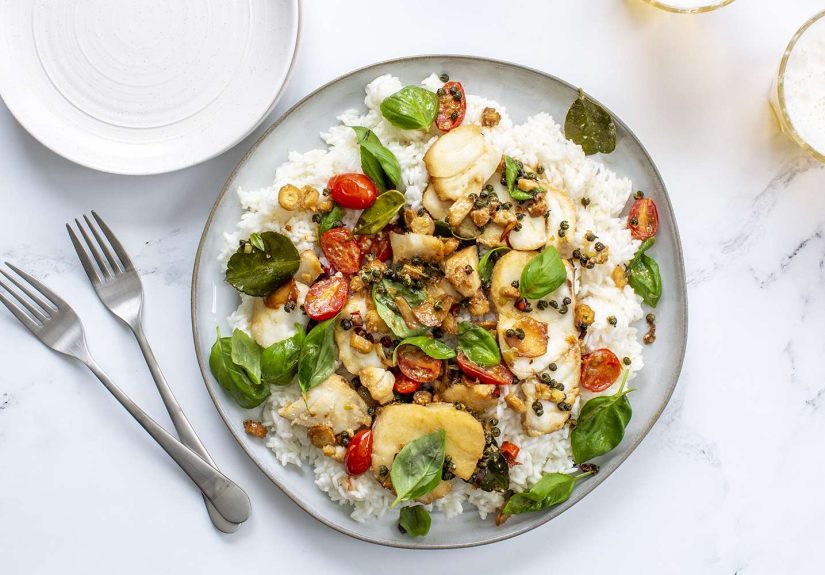
Turn off the heat and stir in the Thai basil just until wilted. Spoon the sauce over the crispy fish or return the fish to the pan very briefly if you want it more coated. Serve immediately with rice and lime wedges.
Flavor Notes: What It Should Taste Like
A good Thai drunken fish recipe should hit four notes quickly and clearly: salty from the fish sauce, savory from oyster sauce, heat from fresh chiles, and fragrance from basil and aromatics. The sugar rounds everything out instead of making the dish sweet. The tomatoes soften the edges and add juiciness, while lime at the end wakes the whole plate back up.
The fish itself should stay the star. The sauce is there to flatter it, not bury it under a blanket of over-seasoned drama. If the final dish tastes flat, it usually needs either more fish sauce, a squeeze of lime, or one more handful of basil.
Easy Substitutions
If you cannot find Thai basil
Use sweet basil plus a little mint. It will not be identical, but it will still be delicious and closer in spirit than skipping basil entirely.
If fingerroot is impossible to find
Leave it out or add a little extra ginger and a bit more lime leaf. Fingerroot has a distinct flavor, but the dish will still work without it.
If you want less heat
Use fewer Thai chiles, swap in Fresno chiles, or remove the seeds. This is supposed to be lively, not a reckless personal challenge.
If you prefer whole fish
Score the fish, season it well, dust lightly with flour, and fry until deeply crisp before topping with the sauce. It is more dramatic, more traditional-looking, and slightly more likely to make you feel like a television chef for seven glorious minutes.
Common Mistakes to Avoid
- Using wet fish: damp fillets steam instead of crisp.
- Overcrowding the pan: the oil temperature drops and the crust suffers.
- Adding basil too early: it loses its punch if cooked too long.
- Oversaucing the fish: you want some crisp texture left.
- Underseasoning: fish is mild, so the sauce needs confidence.
What to Serve With Thai Drunken Fish
Jasmine rice is the obvious partner because it catches every drop of sauce without asking questions. Coconut rice is a richer option if you want a dinner that feels a little extra. On the side, cucumber salad, stir-fried greens, or a crunchy slaw work beautifully because they cool things down and keep the meal from turning into an all-spice monologue.
If you are serving guests, bring the fish to the table whole on a platter, scatter extra basil and sliced chiles over the top, and let everyone admire it before destroying it with enthusiasm. That is good hosting.
Storage and Reheating Tips
This dish is best the day it is made, when the fish is still crisp and the basil still bright. If you have leftovers, store the fish and sauce separately when possible. Reheat the fish in a hot oven or air fryer to bring back some texture, then spoon the reheated sauce over the top right before serving.
And yes, cold leftovers eaten over the sink are still technically a valid culinary experience. Not elegant, perhaps. But valid.
Final Thoughts
Thai drunken fish is one of those recipes that feels restaurant-fancy without demanding restaurant-level suffering. It is bold, aromatic, and gloriously unshy. The fish stays crisp, the basil stays fragrant, and the sauce tastes like it has better stories than most dinner recipes.
If you want a seafood dinner that is fast enough for a weeknight but flashy enough for company, this is it. Make it once, and you will understand why dishes in the drunken family keep showing up on menus, in takeout cravings, and in your brain at inconvenient times the next day.
Experiences With Thai Drunken Fish: What Cooking It Actually Feels Like
The first time I made Thai drunken fish at home, I made the classic mistake of thinking, “How hard can this be?” That is usually the sentence people say right before the kitchen teaches them humility. I had beautiful fish, a huge bunch of Thai basil, and exactly one plan: wing it with confidence. The fish was tasty, but not crisp enough, the sauce was too shy, and I had used the basil like an afterthought instead of the star herb it clearly wanted to be. It was not a disaster, but it was the culinary equivalent of showing up to a party in socks when everyone else is wearing sequins.
The second time was the breakthrough. I dried the fish properly, dusted it lightly, and heated the pan like I meant it. Suddenly the crust happened. Not theoretical crispness. Real crispness. The kind that crackles when a spoonful of hot sauce hits the surface. That was also the moment I understood why so many Thai-inspired fish dishes feel bigger than the sum of their parts. Fish on its own can be mild, even polite. Garlic, chiles, basil, and fish sauce do not do polite. They turn a simple fillet into dinner with opinions.
What surprised me most was how much the basil changed everything. Sweet basil made a respectable dinner. Thai basil made the room smell like I actually knew what I was doing. It brought that spicy, licorice-like aroma that lingers above the plate and makes you hover around the stove “just to check on things” every thirty seconds. Once I learned to toss it in right at the end, the dish finally clicked. Too early, and it faded. Added late, it stayed bright and bossy in exactly the right way.
I have also learned that Thai drunken fish is an excellent recipe for people who like cooking to feel a little dramatic. The sizzle when the aromatics hit the pan. The fast swirl of sauce. The basil collapsing into the heat. The final spoon-over moment when everything suddenly looks far more expensive than it is. It is a fun dish to cook for friends because it smells impressive before anyone even takes a bite. You can see people perk up as soon as the garlic and chiles get going.
And then there is the rice. Nobody talks enough about the rice in meals like this. A plate of Thai drunken fish without rice is like a great band without speakers. The fish is exciting, sure, but the rice carries the sauce, catches the drips, and saves you from chasing slippery basil leaves around the plate with increasingly desperate fork maneuvers. I have eaten it with jasmine rice, coconut rice, and once with leftover cold rice reheated in a hurry. All good. Some more glamorous than others.
If there is a final lesson, it is this: Thai drunken fish is not about perfection. It is about contrast and energy. Crisp fish. Hot chiles. Savory sauce. Fragrant herbs. Bright lime. Make those things happen, and the dish feels alive. That is why it keeps pulling me back. It is not just dinner. It is dinner with a pulse.