
Table of Contents >> Show >> Hide
- Why Fusion Keeps Chasing Tritium
- So Where Does Nuclear Waste Enter the Story?
- The New Idea: Upcycling Waste Into Tritium
- Why This Is Bigger Than a Cool Lab Concept
- Fusion-Fission Hybrids: The Not-So-New Backstory
- The Engineering Reality Check
- What Success Would Actually Look Like
- The Real Takeaway
- Experience and Perspective: Why This Topic Feels Different in the Real World
- SEO Tags
Fusion has been sold for decades as the ultimate clean-energy upgrade: no smokestacks, no endless fuel trains, and no carbon guilt trip every time you turn on the air conditioner. The catch, of course, is that fusion has a long history of being “just around the corner” in the same way some people say they are “five minutes away” while still in the shower.
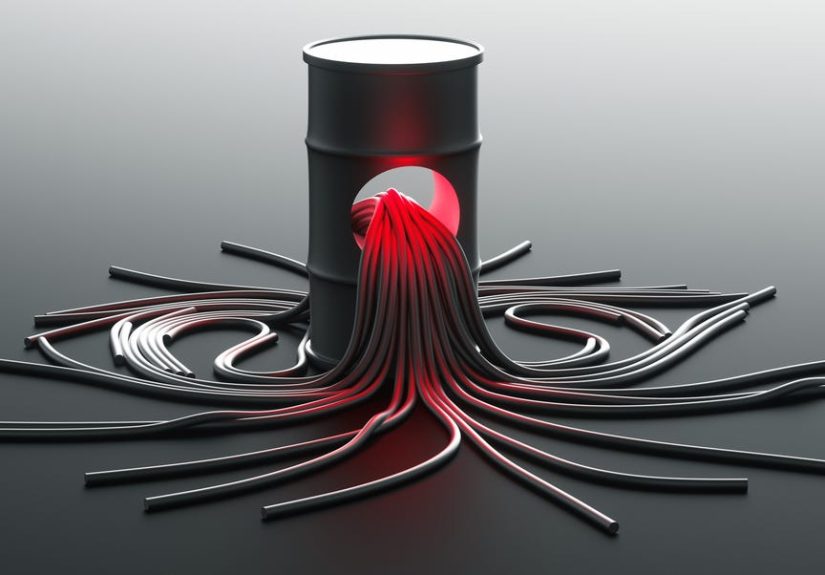
Now a provocative idea is giving the conversation a fresh jolt: what if one of fusion’s biggest missing ingredients could come, at least in part, from nuclear waste? That sounds like a plot twist written by a screenwriter who had too much coffee and a chemistry textbook open at the same time. But behind the dramatic headline is a serious scientific question. Researchers are exploring whether used nuclear fuel and waste-related systems could help solve one of fusion’s most stubborn problems: getting enough tritium, the rare isotope needed for the most practical fusion designs.
That does not mean tomorrow’s fusion plants will simply shovel old waste into a tokamak and call it innovation. Real life is ruder than that. Still, the concept matters because it points to a fascinating possibility: the future of fusion may depend not only on hotter plasmas and better magnets, but also on smarter ways to use materials we already treat as a burden.
Why Fusion Keeps Chasing Tritium
Most serious near-term fusion plans focus on deuterium-tritium fusion, often shortened to D-T fusion. Engineers like it because this reaction is the easiest to ignite compared with other fusion pathways. In plain English, if fusion is a locked door, deuterium and tritium are the key combination most likely to work without requiring the universe’s most ridiculous amount of heat and pressure.
Deuterium is the easy part. It is abundant and can be extracted from water. Tritium is the diva of the relationship. It is radioactive, scarce, expensive, and not naturally available in useful quantities. That is why fusion developers do not just need a reactor. They need a full fuel strategy.
For years, the standard answer has been the tritium breeding blanket. This blanket is not cozy, knitted, or sold in a home décor aisle. It is the layer that surrounds the fusion chamber, captures high-energy neutrons, helps produce heat, and breeds tritium from lithium. If that system works well enough, a fusion plant can in theory keep feeding itself the tritium it needs.
In theory, that is elegant. In engineering terms, it is a beast.
The blanket has to survive intense neutron bombardment, help extract heat, manage corrosive or tricky materials, limit tritium losses, and do all of this with safety and efficiency. That is why experts keep saying fusion is not only a plasma problem. It is also a materials problem, a fuel-cycle problem, a chemistry problem, and a “please do not let the regulatory paperwork become a second solar system” problem.
So Where Does Nuclear Waste Enter the Story?
Here is the headline-friendly version: some researchers think nuclear waste could help produce tritium, the fuel that future fusion plants need.
Here is the more precise version: used nuclear fuel, paired with accelerator-driven and molten-salt systems, may be able to generate neutron-rich environments that support tritium production. That makes waste not the fusion fuel itself, but part of a larger machine that could help create one of fusion’s most valuable inputs.
This distinction matters. Calling nuclear waste “fusion fuel” is catchy, but it blurs the science. A better way to say it is this: nuclear waste might become part of fusion’s supply chain.
That is still a big deal. Fusion’s commercial future depends on solving the tritium bottleneck. If existing radioactive material can help produce tritium economically and at scale, the entire fusion roadmap starts to look a little less like science fiction and a little more like industrial planning.
The New Idea: Upcycling Waste Into Tritium
Recent modeling work from Los Alamos National Laboratory has drawn attention because it frames the challenge in refreshingly practical terms. Instead of treating used nuclear fuel only as a long-term disposal problem, the concept asks whether that material can help drive reactions that support tritium production. The proposed setup uses an accelerator-driven system and molten-salt technology, with lithium playing a critical role in the tritium side of the equation.
What makes the idea so appealing is that it tries to address two headaches at once. First, nuclear waste is expensive to manage over long periods. Second, commercial tritium is hard to source in the quantities fusion would need. Put them together and you get a rare energy-industry moment when one problem may partially bully another problem into usefulness.
Scientists like this approach because accelerator-driven systems can be more controllable than a conventional chain-reaction design. Turn the beam off, and the reaction environment changes dramatically. That does not erase safety concerns, but it gives engineers a potentially valuable control feature.
Just as important, this concept borrows from technology families that already exist in adjacent fields: particle accelerators, molten salts, fission fuel-cycle expertise, and tritium handling. The breakthrough is not that someone discovered a wizard crystal hidden in a reactor basement. It is that researchers are trying to combine known tools in a new way.
Why This Is Bigger Than a Cool Lab Concept
The waste-to-tritium idea matters because fusion has moved beyond the era when pretty renderings and shiny investor decks were enough. The sector is now being judged by a more annoying standard: whether the machines can actually operate as power plants.
And power plants need logistics. They need supply chains. They need startup inventories. They need maintenance plans. They need regulatory clarity. They need boring systems that work every Tuesday, not just dramatic breakthroughs that trend on social media for one weekend.
That is why the tritium question is so central. A fusion company can have brilliant magnets, attractive computer graphics, and a charismatic founder. But if it cannot secure and manage fuel safely, it is not building an energy system. It is building a really expensive conversation starter.
Nuclear waste enters the picture because it could help make that fuel problem less painful. It also creates a bridge between the fission world and the fusion world. For decades, those fields have often been discussed as separate camps: old nuclear versus new nuclear, splitting atoms versus smashing them together. In practice, the industries may end up sharing more than people expected, especially in materials science, salts, neutron management, and tritium processing.
Fusion-Fission Hybrids: The Not-So-New Backstory
The idea of linking fusion with nuclear waste is not brand new. Researchers have studied fusion-fission hybrid concepts for decades. In these systems, fusion does not just produce energy. It also provides neutrons that can interact with surrounding fission material, including used fuel or fertile materials in a blanket. That can support energy amplification, fuel breeding, or waste transmutation.
In other words, scientists have long wondered whether fusion could become less of a standalone hero and more of a powerful teammate.
Lawrence Livermore and other institutions explored versions of this logic in hybrid concepts that aimed to reduce long-lived waste burdens or use subcritical systems more safely. The appeal is obvious. Fusion provides neutrons. Fission materials respond very enthusiastically to neutrons. Somebody in a lab eventually says, “Well, what if we let these two talk?”
But hybrids come with trade-offs. They can simplify some fusion requirements while importing fission-style complexity, fuel-cycle concerns, and public acceptance issues. Critics have argued that hybrids risk becoming complicated machines that inherit the difficulties of both worlds instead of the elegance of either one.
That criticism is fair. Still, hybrid ideas remain relevant because they show there is more than one way for “waste” to help fusion. It can support tritium production, serve in subcritical blankets, or create technological overlap between advanced fission and fusion systems.
The Engineering Reality Check
This is the point where the article removes its party hat and puts on safety goggles.
There are good reasons the National Academies, DOE, NRC, and major fusion institutions keep emphasizing the fuel cycle instead of making grand promises. Tritium is difficult to contain. It can permeate materials. It must be tracked closely. Blanket technologies remain at relatively low technical readiness. Extraction systems still need proof at practical scales. And every promising material introduces its own headaches, whether that is corrosion, chemistry, neutron performance, toxicity, or heat-management complexity.
Even the most exciting waste-to-tritium proposal is still early. Modeling is not deployment. A clever design is not a licensed facility. And “could” is doing a lot of cardio in this part of the energy world.
There is also the public perception issue. “Nuclear waste” in a headline gets attention, but not always the helpful kind. Some readers hear “recycling radioactive material” and think progress. Others hear it and picture a villain origin story. Any real-world version of this technology would need unusually strong communication, unusually strong regulation, and unusually strong evidence that it improves safety and economics rather than just sounding futuristic.
What Success Would Actually Look Like
If this field progresses, success will probably not look like one giant cinematic moment. It will look like a sequence of smaller wins.
1. Better Tritium Production
The first milestone would be proving that waste-linked systems can produce tritium reliably, efficiently, and affordably enough to matter for a commercial fusion market.
2. Stronger Blanket Designs
Research from fusion labs and national laboratories suggests the path to commercial fusion still runs through better blankets. Waste-derived concepts may complement that path, but they are unlikely to replace blanket engineering entirely.
3. Shared Infrastructure Between Fission and Fusion
The most practical breakthrough may be industrial crossover: molten-salt experience, materials testing, neutron analysis, and fuel-handling systems that benefit both advanced fission and fusion.
4. A Clear Regulatory Framework
No matter how exciting the science becomes, nothing large-scale happens without a licensing path that investors, engineers, and communities can understand.
The Real Takeaway
So, is the key to nuclear fusion really nuclear waste?
Not exactly. That headline is fun, but it overshoots the science.
A more accurate answer is this: nuclear waste could become part of the toolkit that helps make fusion practical. It may help produce tritium. It may fit into hybrid systems. It may accelerate the development of blanket and fuel-cycle technologies by borrowing from advanced fission know-how. And it may turn a liability into something closer to a strategic resource.
That is still a remarkable possibility. Fusion has always been sold as the energy source of the future. What is changing now is the realization that its future may depend on the leftovers of the nuclear past.
And honestly, that has a certain poetic symmetry. Humanity split atoms, got a waste problem, then spent decades trying to fuse atoms for clean power. If the solution to the second challenge partly comes from cleaning up the first, that is not just good engineering. That is the kind of plot twist energy history loves.
Experience and Perspective: Why This Topic Feels Different in the Real World
One reason this story resonates so strongly is that it connects two very different public emotions. Fusion inspires wonder. Nuclear waste inspires caution. Put them in the same sentence and people lean in, because it feels like someone just crossed a science fair with a policy hearing.
For people who have followed energy news for years, the experience is almost surreal. Fusion headlines usually come in one of two flavors. Either researchers make a legitimate technical advance and the media translates it into “unlimited power is basically here,” or critics roll their eyes so hard they nearly discover a new particle. The waste angle changes the mood. Suddenly the conversation is not only about plasma performance or magnet strength. It becomes about inventories, storage sites, supply bottlenecks, and the practical messiness of building an energy economy. That actually makes the topic feel more real.
There is also a human experience hidden inside the technical language. Communities that live near existing nuclear infrastructure often hear the word “waste” as a permanent responsibility. Researchers hear it as a material challenge. Investors hear it as an opportunity if someone can convert cost into value. Regulators hear it as a long list of questions that must be answered before anyone gets clever at industrial scale. These are not abstract reactions. They shape what technologies move forward and which ones stay stuck in white papers.
Another striking part of this topic is how often it humbles people who think energy systems can be solved with a single breakthrough. In reality, the experience of working in or around energy is that progress usually comes from integration. Magnets matter. Materials matter. Heat exchangers matter. Chemical separations matter. Licensing matters. Logistics matter. Fusion is not one invention. It is a giant group project where every teammate is difficult and several of them are radioactive.
That is why the waste-to-tritium concept feels different from a flashy science headline. It reflects a more mature phase of thinking. Instead of asking only, “Can we make fusion happen?” it asks, “How do we feed it, support it, and make it industrially useful?” That shift is important. It suggests the field is slowly moving from physics triumphs toward system design.
There is also a strange optimism in the idea of upcycling nuclear waste. Not naive optimism, but engineering optimism. The kind that says a difficult legacy problem may contain useful structure if people are patient enough to understand it. History is full of materials that were once considered inconvenient byproducts and later became valuable inputs. That does not guarantee success here, but it explains why the idea keeps attracting serious attention.
For readers outside the lab world, the biggest experience may simply be a change in perspective. Nuclear waste is usually framed as the end of the story, the thing left behind after the useful energy is gone. Fusion research flips that script. It asks whether some of that “ending” can become the beginning of another energy chapter. Even if the answer ends up being only partial, it is still a powerful way to think about technological progress.
In the end, this topic stands out because it feels honest about how energy transitions actually work. They are rarely clean swaps from old to new. More often, the future is assembled from awkward overlaps: legacy infrastructure, new tools, borrowed expertise, and ideas that sound improbable right up until they become practical. Nuclear waste helping fusion is one of those ideas. It may not be the whole key, but it is a clue, and in fusion research, a good clue is worth a lot.







 Close
Close