
Table of Contents >> Show >> Hide
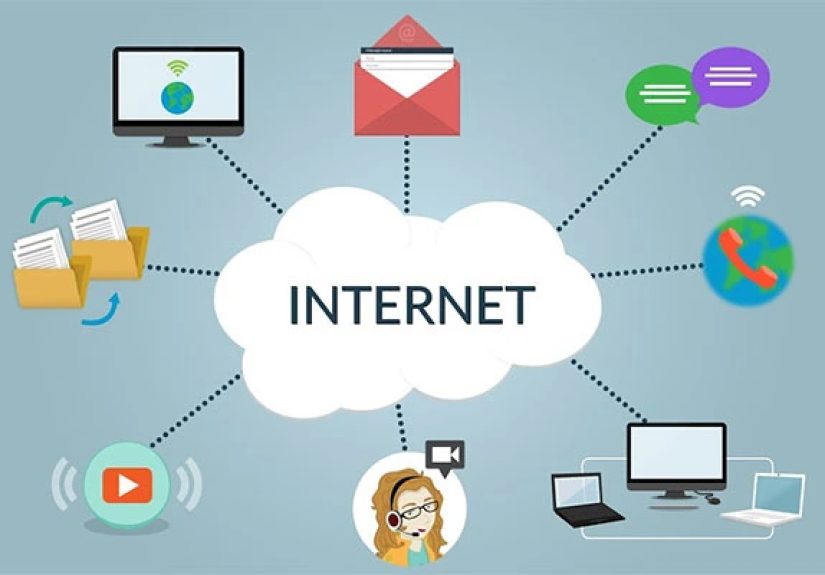
The internet did not invent lies. Humans were already very capable of being dramatically wrong long before Wi-Fi showed up and started blinking in the corner of the room. What the internet did invent, or at least supercharge, was speed, scale, and weirdly confident delivery. A rumor that once would have died in a grocery store line can now sprint across the country before breakfast, pick up a podcast by lunch, and get turned into a screenshot by dinner.
That is the heart of the misinformation wars. This is not one single fight with one villain, one platform, or one easy fix. It is a messy conflict unfolding across politics, public health, education, disaster response, finance, and everyday social life. It is a war over attention, trust, emotion, and credibility. It is also a war over who gets believed when facts are complicated, institutions are distrusted, and every phone doubles as a printing press.
And that is why the subject matters so much. Misinformation is not just “bad content.” It can shape elections, discourage people from seeking medical care, fuel scams, deepen social division, and make real emergencies harder to survive. When falsehood becomes part of the environment, even careful people start breathing it in.
What the Misinformation Wars Really Are
At the simplest level, misinformation is false or misleading information shared without necessarily intending harm. Disinformation is more deliberate: falsehood designed or amplified to mislead for political, financial, or social gain. In real life, those categories often blur. One person may create a fake claim for profit or influence, while ten thousand others pass it along because it sounds plausible, flattering, or infuriating. The original spark may be cynical. The wildfire is usually human.
That is what makes the misinformation wars so difficult. The problem is not only bad actors. It is also normal behavior in an abnormal information environment. People share things that confirm what they already suspect. They trust friends more than institutions. They respond faster to outrage than to nuance. They skim headlines, miss context, and forward screenshots like they are doing community service. In other words, the battlefield is not somewhere “out there.” It runs through family texts, neighborhood groups, office chats, and social feeds.
Why Falsehood Travels So Well
Emotion beats caution
False claims often arrive wearing emotional costumes. Some are frightening. Some are flattering. Some make people feel like they have uncovered a hidden truth that the so-called experts do not want them to know. That emotional charge is powerful because people are not just consuming information. They are reacting to it, performing identity through it, and sometimes building community around it.
A boring correction that says, “Actually, the evidence is mixed and the timeline is still developing,” rarely wins a cage match against a post that screams, “They lied to you again.” The first sounds responsible. The second sounds exciting. Guess which one gets screenshotted and sent to three cousins before dessert?
Algorithms love engagement, not wisdom
Digital platforms are very good at detecting what keeps people clicking, commenting, and arguing. They are not naturally built to reward calm accuracy. That does not mean platforms are secretly plotting world chaos in a dimly lit room. It means their systems often amplify material that triggers strong reactions, and misinformation is excellent at doing exactly that.
In that environment, the loudest claim can appear to be the strongest claim. Repetition starts to feel like evidence. Visibility starts to look like legitimacy. By the time a correction arrives, the original falsehood may already have done its work.
Trust is fractured
The misinformation wars are also trust wars. When confidence in government, media, scientific authorities, and even neighbors weakens, people go shopping for certainty elsewhere. Sometimes they land on credible specialists. Sometimes they end up taking advice from a man in a trucker hat explaining geopolitics next to a ring light. The internet is democratic that way.
Distrust does not always come from ignorance. Sometimes it grows from real past failures, political polarization, unequal treatment, or communities feeling ignored. That is why simply telling people to “trust the experts” often fails. Trust is not a button. It is a relationship, and relationships do not improve when one side sounds annoyed.
The Main Battlefields
Politics and elections
Election misinformation gets attention for good reason. False claims about voting rules, candidate statements, ballot procedures, and election legitimacy can weaken public faith even when they do not change a single vote. The goal is often not to prove something true. It is to make everything feel suspect.
Artificial intelligence has added a flashy new weapon to this fight. Deepfake audio, video, and images have lowered the cost of deception and raised the drama. Still, AI did not invent political lies. It made them cheaper to produce, easier to scale, and harder to dismiss at a glance. That means voters now face a double problem: some media are fake, and some authentic media get dismissed as fake when they are inconvenient. Welcome to the era of “nothing is real, pass the chips.”
Health and medicine
Health misinformation is where the stakes stop feeling theoretical. During major health crises, false claims can spread alongside fear, confusion, and changing guidance. That mix is combustible. People want certainty when the truth is still developing, and bad information happily fills the gap.
The damage can be immediate. Misleading medical claims can delay treatment, undermine vaccination campaigns, erode trust in clinicians, and leave families confused about what advice to follow. Public health leaders increasingly talk about the information environment itself as part of the health challenge, which is exactly right. If people cannot tell what to trust, even good care struggles to reach them.
Money, scams, and consumer fraud
Not all misinformation is ideological. A lot of it is simply trying to empty your wallet. Fraudsters use fake urgency, fake authority, fake scarcity, and fake expertise to push people into bad decisions. Phishing emails, bogus health products, fake investment opportunities, and impersonation scams all rely on information manipulation.
That is why consumer misinformation deserves more attention in this conversation. When people hear “misinformation,” they often think of elections or conspiracy theories. But a false text that tricks someone into handing over bank details is misinformation with a billing department. It is propaganda wearing a customer service smile.
Disasters and emergencies
Disaster misinformation may be the cruelest version because it hits when people are already scared. Rumors after hurricanes, wildfires, disease outbreaks, or other emergencies can misdirect survivors, create panic, and interfere with relief efforts. In those moments, clarity saves time, and time can save lives.
That is why rumor control matters. Emergency agencies increasingly have to answer not only the disaster itself, but also the blizzard of falsehood surrounding it. In the misinformation wars, every crisis now has two fronts: the event on the ground and the narrative online.
AI Changed the Weapons, Not Human Nature
It is tempting to treat AI as the whole story. It is not. Generative AI makes certain forms of deception easier, faster, and more convincing. That matters. But the deeper problem remains deeply human: bias, fear, tribal loyalty, boredom, and the irresistible thrill of being the first person in the group chat to say, “Look what they are hiding.”
AI expands the toolkit for manipulation, but it also magnifies an older weakness in public life: many people do not evaluate information carefully when it aligns with what they want to believe. A fake image can go viral because it looks real. A fake quote can go viral because it feels true. Sometimes emotion is doing more work than technology.
The result is not just more fake content. It is a more suspicious culture. People become uncertain about evidence, uncertain about institutions, and eventually uncertain about whether verification is even possible. Once that mindset takes hold, misinformation no longer needs to win every argument. It only needs to make reality feel negotiable.
How the Good Guys Fight Back
Prebunking beats late-stage panic
One promising approach is “prebunking,” which means preparing people before they encounter deceptive content. Instead of waiting for a lie to spread and then scrambling to clean it up, prebunking teaches people the common tricks of manipulation ahead of time. Think of it as mental vaccination, minus the waiting room magazines.
This works because pattern recognition matters. When people learn how fake experts, emotional bait, conspiracy framing, or manipulated visuals operate, they are more likely to slow down before sharing. It does not make anyone perfect, but it improves the odds that they will pause before turning nonsense into reach.
Trusted messengers matter
Facts travel better when carried by someone the audience already trusts. In health, that may be a local doctor, pharmacist, church leader, or community organizer. In civic life, it may be a county election office, local newsroom, or respected neighborhood voice. Credibility is not just about credentials. It is about relationship, familiarity, and whether people feel spoken to rather than spoken down to.
That is one of the most important lessons in the misinformation wars. Correct information must not only be accurate. It must be reachable, understandable, and delivered in places where people actually pay attention.
Fact-checking helps, but it is not enough
Fact-checking remains necessary, but it is reactive by nature. By the time a false claim gets thoroughly debunked, the emotional impression may already be lodged in memory. Corrections also do not always reach the same audience that saw the original lie. That does not make fact-checking useless. It makes it incomplete.
The most effective response is usually layered: good journalism, clear public communication, smarter platform design, media literacy, community trust-building, and policies aimed at the most serious harms. No single tool wins this war because the problem is not single-source.
Policy has to walk a constitutional tightrope
Regulation is where everything gets spicy. Society has valid reasons to address deepfake abuse, coordinated deception, and dangerous falsehoods. But efforts to police speech can also collide with free expression, satire, dissent, and political disagreement. That tension is real. Pretending otherwise helps no one.
So the challenge is not choosing between freedom and truth as if they are rival sports teams. The challenge is designing interventions that reduce measurable harms without handing broad censorship powers to governments, platforms, or whichever loud faction claims to be the sole owner of reality that week.
What Ordinary Readers Can Actually Do
The misinformation wars can sound overwhelming, but ordinary habits still matter. The first is to slow down. Urgency is one of misinformation’s favorite disguises. If a post makes you feel instantly furious or triumphant, that is a good reason to inspect it, not a good reason to share it.
Second, verify the source, not just the screenshot. Cropped images, fake captions, and quote cards are the junk food of the information ecosystem. Easy to consume, terrible for judgment.
Third, look for corroboration. If a dramatic claim appears nowhere credible except on accounts that also sell miracle supplements and apocalypse merch, that is a clue. Not proof, but definitely a clue.
Fourth, resist the ego trap. Many people spread falsehoods because sharing feels like participation, vigilance, or status. It can feel good to be early. It is better to be right.
Finally, practice disagreement without contempt. People rarely crawl out of misinformation because someone mocked them into enlightenment. They move when trust, evidence, and patience make another path feel possible.
Conclusion: Truth Still Needs Defenders
The misinformation wars are not a passing internet phase. They are a defining struggle of modern public life. Every institution now operates inside an unstable information environment where speed often beats reflection, performance often beats evidence, and doubt can be manufactured at industrial scale.
But this is not a hopeless story. People can learn. Communities can build trust. Journalists can provide context. Educators can teach resilience. Public agencies can communicate more clearly. Platforms can make different design choices. Laws can target concrete harms without pretending to solve every argument on Earth.
The central lesson is simple: truth does not spread by magic. It needs systems, habits, institutions, and people willing to defend it before the lie gets comfortable. The misinformation wars may be exhausting, but surrender is a bad strategy. Reality, for all its imperfections, is still the only place where democratic life, public health, and ordinary human trust have a fighting chance.
Experiences From Inside the Misinformation Wars
One of the strangest things about living through the misinformation wars is how ordinary it feels while it is happening. It does not always arrive as a dramatic fake video or a headline with blinking red sirens. Sometimes it shows up as a friendly message from a relative who swears they are “just passing this along.” Sometimes it is a neighborhood post about a danger that never happened. Sometimes it is a confident voice on a short video explaining a complex issue with the swagger of a magician and the evidence of a napkin.
Most people have had the experience of reading something shocking, feeling that immediate jolt of adrenaline, and wanting to send it to someone before the feeling cools off. That moment is the whole game. Misinformation thrives in the gap between reaction and reflection. It counts on people being busy, emotional, distracted, and a little too confident in their own radar. To be fair, modern life trains us for speed, not verification. We are all expected to be readers, editors, analysts, and publishers while standing in line for coffee.
There is also a social pressure to keep up. In many communities, knowing the “real story” has become a kind of status symbol. People bond over suspicion. They perform awareness. They do not just want information; they want the feeling of being less fooled than everyone else. Ironically, that desire can make them easier to fool. Some of the most durable falsehoods do not spread because they are persuasive in a scholarly sense. They spread because they make people feel clever, righteous, or included.
Another common experience is exhaustion. After a while, the constant flood of claims, corrections, counterclaims, and accusations can make people tune out completely. That may be misinformation’s most underrated victory. Not belief, but burnout. Not conversion, but confusion. When people start saying, “Who knows what is true anymore,” the damage is already done. Public life becomes harder because shared reality becomes thinner.
And yet there are encouraging experiences too. There are moments when someone pauses before reposting. When a local expert explains something clearly enough that panic recedes. When a family member changes their mind after a calm conversation instead of a shouting match. When a community learns to ask better questions. Those moments are less flashy than viral lies, but they matter more. They suggest that the misinformation wars are not only about what technology is doing to us. They are also about what habits we are willing to build in response.


 Close
Close