
Table of Contents >> Show >> Hide
- What Is Irn-Bru, Exactly?
- How Did It Outsell Coca-Cola In Scotland?
- The Secret Sauce: Why Irn-Bru Feels Bigger Than Soda
- The Big Recipe Change That Could Have Gone Very Wrong
- How Irn-Bru Spread Beyond Scotland Without Losing Its Accent
- What Marketers Can Learn From Irn-Bru
- Conclusion: The Soda, the Symbol, the Legend
- Experiences Related to The Soda That Outsells Coca Cola In Scotland: The Legend Of Irn-Bru
If you tried to invent a national icon in a lab, you would probably not land on a neon-orange soda with a flavor people describe as “bubble gum,” “cream soda,” “citrus,” “rust,” and “what on earth is happening?” all in the same breath. And yet, Scotland did exactly that. Its name is Irn-Bru, and it has pulled off something that feels almost mythological in the modern beverage world: it became the hometown soda that could stare down Coca-Cola and not blink.
That alone would make a good story. But Irn-Bru is more than a soft drink with an impressive sales flex. It is part nostalgia machine, part branding masterclass, part cultural badge, and part deliciously weird conversation starter. It is the drink people grow up with, joke about, argue about, defend passionately, and hand to visitors like a fizzy orange citizenship test. In Scotland, ordering Irn-Bru is not just a beverage decision. It is, at times, a personality choice.
This is the story of how a brightly colored soda became a national legend, why it keeps beating global giants on home turf, and why its appeal goes far beyond what is inside the can.
What Is Irn-Bru, Exactly?
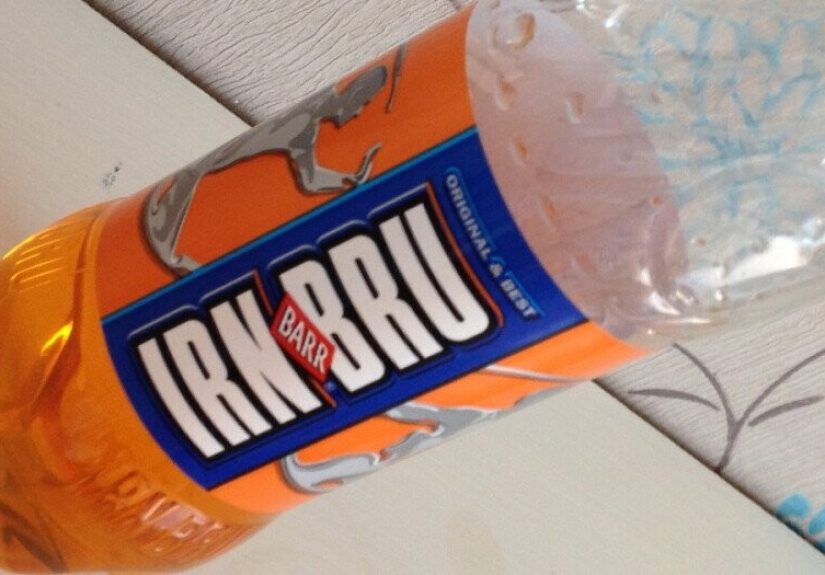
Irn-Bru is a carbonated soft drink made by A.G. Barr, a Scottish company that launched it in 1901. It is famous for its blazing orange color, secret recipe, and hard-to-pin-down flavor. Officially, the drink is built around a secret essence with 32 flavors, which sounds less like a soda and more like something a wizard would keep in a locked cabinet next to dragon paperwork.
The name is pronounced like “iron brew,” which is your first clue that Irn-Bru has never had much interest in behaving like a normal brand. It began life as Iron Brew, but the spelling changed after postwar labeling rules pushed food and drink makers toward names that were more literally accurate. Since the drink was not actually brewed, A.G. Barr leaned into a brilliantly odd solution: drop a few vowels, keep the attitude, and turn a legal nuisance into unforgettable branding.
That accidental genius matters. “Irn-Bru” does not sound polished or focus-grouped. It sounds sturdy, local, and slightly mischievous. In other words, it sounds Scottish.
How Did It Outsell Coca-Cola In Scotland?
Let’s start with the headline claim. In most of the world, Coca-Cola is the king of carbonated drinks. In Scotland, Irn-Bru built a reputation as the local challenger that could do what most regional sodas never manage: hold the home market against a global giant. That status gave Irn-Bru a near-mythic aura. It was not just a drink people liked. It was the drink that refused to be flattened by international sameness.
1. It Became a Symbol of National Identity
Plenty of drinks are popular. Far fewer become shorthand for a place. Irn-Bru crossed that line years ago. It is often called “Scotland’s other national drink,” trailing only Scotch whisky in symbolic power. That nickname matters because it positions the soda as more than refreshment. It becomes part of the country’s self-image: funny, tough, distinctive, and not remotely interested in blending into the crowd.
When a product becomes cultural shorthand, people do not buy it only for flavor. They buy it because it feels familiar, because it reminds them of home, because it shows up at family gatherings, chip shops, football trips, convenience stores, fast-food counters, and late-night runs after an evening that got a little too enthusiastic. Brands spend billions trying to become habit. Irn-Bru became memory.
2. It Never Tried to Be Universally Polite
One reason global brands travel well is that they are carefully smoothed out. Their tone is recognizable almost everywhere. Irn-Bru took the opposite route. For decades, its advertising leaned into cheeky, irreverent humor and a very local sense of personality. Some campaigns were beloved. Some were controversial. All of them helped make the brand feel like it had a pulse.
That matters more than people think. A product can win because it tastes good. It can last because it has character. Irn-Bru’s ads often felt like they were written by someone who had rolled their eyes at corporate blandness and decided to have a little fun instead. The result was a brand voice that felt alive, memorable, and unmistakably homegrown.
3. It Owns the “You Had to Be There” Taste Experience
Ask ten people what Irn-Bru tastes like and you may get eleven answers. Some say bubble gum. Others say orange cream soda. Some detect citrus. Some swear there is a metallic edge. A few people drink it for the first time, pause dramatically, and then look around the room like someone has hidden the punchline.
Normally, flavor confusion would be a branding problem. For Irn-Bru, it became a superpower. The drink is so hard to describe that trying it becomes an event. It is not “another orange soda.” It is an experience. That mystery keeps the brand in conversation and helps it stand apart from competitors whose flavor profiles are almost aggressively familiar.
The Secret Sauce: Why Irn-Bru Feels Bigger Than Soda
Irn-Bru’s legend is not built on one thing. It is built on several forces stacking together over time: heritage, local pride, weirdness, humor, ritual, and a genuinely distinctive product. That combination is rare.
Heritage That Still Feels Useful
Some old brands feel dusty. Irn-Bru feels inherited. There is a difference. Its long history gives it credibility, but the brand has kept finding ways to stay relevant, from new product variants to fresh campaigns to the revival of Irn-Bru 1901, a version inspired by the drink’s earliest recipe. That balance between nostalgia and reinvention is tricky, and Irn-Bru handles it better than most heritage brands do.
The “Made in Scotland from Girders” Mythos
Irn-Bru has long played with a tongue-in-cheek industrial image, especially through the famous “Made in Scotland from Girders” slogan. It is one of those lines that works because it is ridiculous and somehow emotionally true at the same time. No, people do not literally think the soda is forged on a construction site by muscular orange alchemists. But the slogan captures the brand’s personality in a single swing: strong, funny, a little absurd, and proudly local.
That slogan also helped turn the drink’s unusual taste and vivid color into assets. Instead of apologizing for being different, Irn-Bru made difference the whole point.
The Hangover Legend
Every great national drink seems to collect folklore, and Irn-Bru is no exception. For years, it has been talked about as a cure for rough mornings after rougher nights. Whether people swear by it for sugar, fizz, comfort, ritual, or pure emotional optimism is almost beside the point. The legend stuck. And once a product becomes part of a country’s collective recovery strategy, that is not just market share. That is citizenship.
The Big Recipe Change That Could Have Gone Very Wrong
In 2018, A.G. Barr reformulated Irn-Bru in response to the U.K.’s sugar levy. That kind of move is dangerous for any beloved legacy brand. Mess with a cult favorite and consumers can react like you have bulldozed a childhood memory. The company reduced sugar while keeping the drink’s signature identity at the center of the brand.
Was everyone thrilled? Of course not. Fans of iconic foods and drinks are rarely known for their mellow acceptance of change. But the interesting part is that Irn-Bru survived the moment without losing its myth. In fact, the reformulation almost reinforced how emotionally attached people were. The public reaction proved the point the brand had been making all along: this soda mattered more than a soda should.
That is the hidden strength of cultural brands. Even when they change, people argue because they care.
How Irn-Bru Spread Beyond Scotland Without Losing Its Accent
Irn-Bru is sold beyond Scotland and has fans in other parts of the U.K. and abroad, especially wherever Scottish communities have carried a taste for home with them. It also pops up in places travelers do not expect, including Scottish McDonald’s fountain machines, imported-food aisles, novelty soda lists, and the occasional “you have got to try this” social-media moment.
But here is the key difference between being available and being native. Irn-Bru may travel, but Scotland is where it makes emotional sense. In the same way that certain songs sound better in the city where they were born, Irn-Bru hits differently in the place that taught generations to love it.
That is part of what keeps the legend intact. The brand can expand without becoming generic. It can reach outsiders while still feeling like an insider’s drink.
What Marketers Can Learn From Irn-Bru
Irn-Bru is a case study disguised as a soda can. It shows that a regional brand does not have to beat global rivals everywhere. It only has to become irreplaceable somewhere. That means building emotional loyalty, not just distribution. It means sounding like a real voice instead of polished wallpaper. It means giving people a product they can identify in one sip and a brand they can identify in one sentence.
Most of all, it proves that local identity is not a weakness to sand away. It can be a moat. Global giants often win through scale, consistency, and reach. Local legends win through belonging. Irn-Bru belongs to Scotland in a way Coca-Cola never can, no matter how many cans it chills, ships, or sponsors.
That is why the legend endures. Not because Irn-Bru is bigger than Coke in the world. It is not. But because in Scotland, it became something Coke could not easily copy: a drink that feels like home and behaves like folklore.
Conclusion: The Soda, the Symbol, the Legend
Irn-Bru’s story is not really about beating Coca-Cola. That is just the flashy headline. The real story is how a local soda turned into a national emblem by being boldly itself for more than a century. It embraced its weirdness, protected its mystery, played with its image, survived recipe changes, and stayed wired into everyday life. It became the kind of brand people inherit before they fully understand it, then defend long after they do.
In a world full of interchangeable products, Irn-Bru remains gloriously, stubbornly specific. It is bright. It is odd. It is iconic. It tastes like a debate. And that may be the most Scottish triumph of all.
Experiences Related to The Soda That Outsells Coca Cola In Scotland: The Legend Of Irn-Bru
The experience of Irn-Bru is one of those rare food-and-drink moments that begins before the first sip. It starts with the color. The can comes at you in a bright orange that feels less “subtle refreshment” and more “construction cone with charisma.” Even before opening it, you get the sense that this is not a soda trying to behave itself. It is introducing itself loudly, as if to say, “You came all this way. Let’s not waste time pretending I’m normal.”
For first-time drinkers, that first sip usually comes with a pause. Not a bad pause. More like a recalibration pause. Your brain starts flipping through familiar categories and rejecting them one by one. Orange soda? Not really. Cream soda? Sort of. Bubble gum? A little. Citrus? Maybe. Metal shop nostalgia? Somehow, emotionally, yes. Irn-Bru creates the strangely joyful experience of not quite knowing what you are tasting while still wanting another sip to investigate. It turns drinking soda into detective work.
Then there is the social experience, which may be even more fun. Irn-Bru is a drink people like to watch other people try. Friends hand it to visitors with the same energy normally reserved for local dares, family recipes, or deeply loved songs. Everyone waits for the reaction. There is always a grin somewhere in the room. That is because trying Irn-Bru is not just personal taste; it is cultural theater. The drink invites commentary, comparison, disbelief, and a lot of “No, no, take another sip. Now tell me what it tastes like.”
In everyday life, the drink also carries a powerful sense of place. Imagine grabbing a cold can with fish and chips, or spotting it in a convenience store fridge after a rainy walk through Glasgow or Edinburgh. Suddenly, Irn-Bru stops being an abstract “famous Scottish soda” and becomes part of a whole atmosphere: gray skies, quick wit, football chatter, takeaway food, and the low-key joy of finding something unmistakably local in a world of familiar chains. It is the kind of product that makes travel feel less like sightseeing and more like actual contact with a culture.
There is also the comfort factor. For many people, Irn-Bru is tied to memory in the way the strongest food icons usually are. It is the drink from childhood lunches, family outings, road trips, corner shops, and lazy weekends. For others, it is linked to recovery, whether from a long night out, a rough morning, or simply a day that needs rescuing by cold sugar, fizz, and faith. That emotional range is part of why the soda feels legendary. It can be playful and practical at the same time.
And maybe that is the deepest experience Irn-Bru offers: it gives people a sense that a soda can carry personality. Not just flavor, not just branding, but personality. It feels funny, scrappy, local, and a little rebellious. You do not just drink it; you meet it. And once you do, you understand why a global titan can dominate almost everywhere else and still get outshined in Scotland by a can of bright orange confidence.




 Close
Close