
Table of Contents >> Show >> Hide
- What Was the Wagner Act, Exactly?
- Why America Got the Wagner Act
- What the Wagner Act Actually Did
- Why the Wagner Act Mattered So Much
- The Supreme Court Test: NLRB v. Jones & Laughlin Steel
- Examples of the Wagner Act’s Real-World Impact
- The Wagner Act Was Powerful, but It Was Not Perfect
- How Later Changes Reshaped the Law
- Why the Wagner Act Still Matters Today
- Experiences Related to the Wagner Act: What It Looks Like in Human Terms
- Conclusion
The Wagner Act of 1935, formally known as the National Labor Relations Act, is one of those laws that sounds like a dusty item buried in a filing cabinet labeled “Important, But Boring.” In reality, it helped reshape the relationship between workers and employers in the United States. That is not a small trick for a piece of legislation born during the Great Depression, when the economy was shaky, tempers were short, and many workers had about as much bargaining power as a paper straw in a hurricane.
Passed in July 1935 and championed by Senator Robert F. Wagner of New York, the law gave many private-sector workers the legal right to organize, join unions, bargain collectively, and take concerted action to improve wages and working conditions. It also created the National Labor Relations Board, or NLRB, to enforce those rights. In plain English, the Wagner Act tried to answer a very American question: what happens when workers want a real voice on the job and management would prefer they keep that voice on mute?
The answer was not perfect, and it certainly was not neat. But the Wagner Act became a cornerstone of modern U.S. labor law. To understand why it still matters, you have to look at the chaos that came before it, the rights it created, the battles it triggered, and the legacy it left behind in workplaces that still argue over pay, power, and who gets to speak for whom.
What Was the Wagner Act, Exactly?
The Wagner Act, signed by President Franklin D. Roosevelt on July 5, 1935, was designed to reduce labor conflict that burdened interstate commerce. That legal phrase sounds very polished, but the underlying problem was messy: strikes, lockouts, blacklists, intimidation, company-dominated unions, and employers who often treated organizing like a contagious disease. The law stepped in and said, in effect, that employees had rights, those rights mattered, and the federal government was no longer going to stand around pretending this was all a misunderstanding over coffee.
At its heart, the law declared that employees had the right to self-organization, to form, join, or assist labor organizations, to bargain collectively through representatives of their own choosing, and to engage in concerted activities for mutual aid or protection. It also made clear that the federal government wanted to encourage collective bargaining because lawmakers believed that a severe imbalance of power between employers and workers could damage both industrial peace and the wider economy.
Why America Got the Wagner Act
The Great Depression Changed the Stakes
The Great Depression was not merely an economic downturn. It was a national stress test. Factories closed, unemployment soared, and workers who managed to keep jobs often faced wage cuts, long hours, and unsafe conditions. Before the Wagner Act, labor law in the United States was weak, fragmented, and often tilted toward employers. Workers could try to organize, but plenty of companies answered with surveillance, firings, strikebreakers, or “company unions” that looked like representation but acted more like management’s pet goldfish.
Earlier New Deal policy had hinted at labor rights. Section 7(a) of the National Industrial Recovery Act gave workers a form of collective bargaining protection, but enforcement was weak and many employers dodged it with impressive creativity. When the Supreme Court struck down the NIRA in 1935, labor protections seemed to wobble. Congress responded by backing a stronger, standalone law with real machinery behind it. That machinery was the Wagner Act.
Strikes Forced the Issue
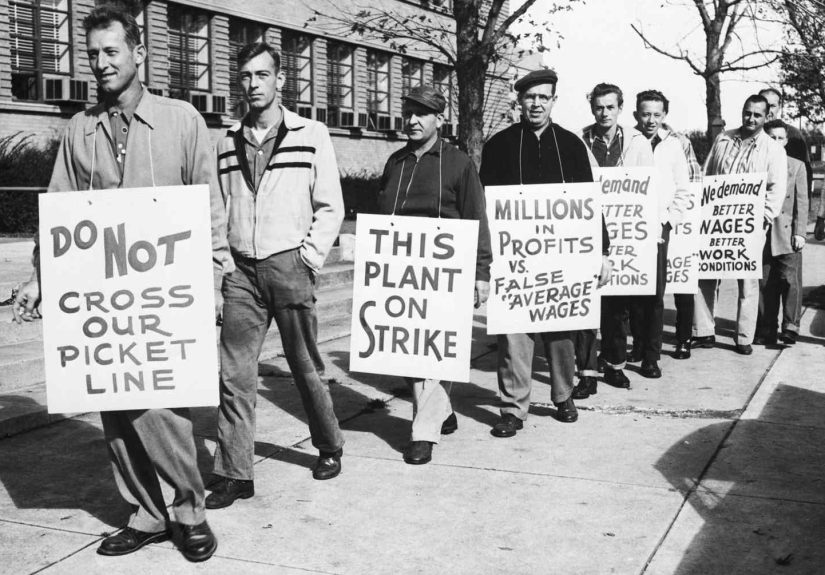
The early 1930s saw major strikes and organizing drives across industries. Workers were not quietly submitting résumés to history; they were fighting in steel mills, auto plants, trucking centers, and citywide labor actions. Lawmakers understood that labor unrest was not an isolated workplace spat. It affected production, transportation, purchasing power, and public order. The Wagner Act was meant to channel conflict into a legal process instead of a street battle or a factory occupation.
What the Wagner Act Actually Did
It Protected Core Worker Rights
The most famous part of the Act is Section 7. This is the part labor-law professors love, union organizers quote, and exam writers probably frame above their desks. Section 7 gave covered employees the right to:
- Organize with co-workers
- Form, join, or assist a union
- Bargain collectively through chosen representatives
- Act together for mutual aid or protection
- Refrain from those activities as well
That last point matters. The law was not written to force union membership on everyone. It was meant to protect employee choice and provide a framework for collective representation where workers wanted it.
It Created the National Labor Relations Board
Rights on paper are lovely. Rights with an agency behind them are far more useful. The Wagner Act established the NLRB, an independent federal agency charged with administering the law. The Board’s job was to investigate unfair labor practice charges, conduct representation elections, determine appropriate bargaining units, and issue orders when employers broke the law.
In other words, the government finally built a referee for a contest that had long been played with no whistle, no rulebook, and a suspiciously biased scoreboard.
It Outlawed Major Employer Unfair Labor Practices
The original Act identified several employer behaviors as unfair labor practices. These included:
- Interfering with or coercing employees in the exercise of their labor rights
- Dominating or supporting a labor organization
- Discriminating against employees because of union activity
- Retaliating against workers for filing charges or giving testimony
- Refusing to bargain collectively with the employees’ chosen representative
These rules were a direct assault on some of the most common anti-union tactics of the era. If a company had been using intimidation, puppet unions, or selective firing to crush organizing, the Wagner Act was written with that exact behavior in mind.
Why the Wagner Act Mattered So Much
The Wagner Act mattered because it changed the default setting of workplace power. Before it, employers often had the upper hand not only economically but legally. After it, many workers gained a federally protected path to organize and negotiate. That did not mean they suddenly won every fight. It did mean the fight had rules.
The law also promoted majority rule and exclusive representation. If a union won the right to represent a group of employees, it became the bargaining representative for all employees in that unit, not just dues-paying members. This structure reduced the chaos of multiple rival negotiators and gave employers one bargaining counterpart rather than a dozen competing voices yelling over one another like a Thanksgiving dinner gone off the rails.
The broader impact was enormous. Union membership grew sharply in the late 1930s and 1940s. Mass-production industries such as steel, auto, and rubber saw major organizing drives. Collective bargaining agreements spread rules around wages, hours, grievance procedures, seniority, discipline, and safety. The law helped normalize the idea that labor relations should be governed by procedure rather than by raw economic muscle alone.
The Supreme Court Test: NLRB v. Jones & Laughlin Steel
The Wagner Act was powerful, and powerful laws rarely glide into history without someone trying to tackle them. Employers challenged the statute, arguing that the federal government had gone too far by regulating labor relations that were supposedly local matters. The big showdown came in 1937 in NLRB v. Jones & Laughlin Steel Corp.
The Supreme Court upheld the Act. That decision was huge. It confirmed that labor strife in major industries could affect interstate commerce enough to justify federal regulation. Without that ruling, the Wagner Act might have become a very elegant piece of legislative décor. With it, the law gained constitutional staying power and the NLRB’s authority became far more secure.
This case also marked a broader shift in constitutional law during the New Deal era. The Court became more willing to accept federal regulation of economic life, especially when the consequences of industrial conflict reached well beyond one local factory gate.
Examples of the Wagner Act’s Real-World Impact
In practical terms, the Wagner Act helped make union organizing more than a brave gesture. It became a process with legal recognition. Workers in auto manufacturing, for example, organized with new confidence during the rise of the Congress of Industrial Organizations. In steel and other heavy industries, the law gave employees leverage to demand formal bargaining rather than pleading for management kindness and hoping someone in the corner office had discovered empathy that morning.
Over time, collective bargaining produced contracts covering wages, overtime rules, grievance systems, seniority rights, health and safety language, and procedures for layoffs and recalls. The law did not guarantee good contracts, but it guaranteed a framework in which workers could seek them. That distinction is important. The Wagner Act opened the door; it did not carry everyone through it on a velvet pillow.
The Wagner Act Was Powerful, but It Was Not Perfect
No serious history of the Wagner Act should treat it as a flawless monument. It was transformative, but it had limits from the start. The law chiefly covered private-sector employment tied to interstate commerce and left out major groups of workers. Agricultural laborers, railway and airline employees under separate labor law systems, government workers, and others outside the statute’s reach did not receive the same protections. These exclusions mattered deeply, especially in parts of the country where farm labor and public employment shaped everyday life.
The Act also did not directly solve racial discrimination within unions or the wider labor market. That weakness was not small. In practice, many Black workers and other marginalized groups faced barriers that labor law alone did not erase. So while the Wagner Act expanded worker rights, it did not automatically make the labor movement equally open, fair, or inclusive. History, as usual, refused to tie itself up with a neat ribbon.
Employers also argued that the law tilted too far toward organized labor. That criticism helped drive later amendments, especially the Taft-Hartley Act of 1947, which added restrictions on unions, defined union unfair labor practices, and limited some organizing tools. The Landrum-Griffin Act of 1959 later added more regulations involving internal union governance and labor-management reporting.
How Later Changes Reshaped the Law
When people say “the Wagner Act” today, they often mean the original 1935 law and the legal framework it created, even though that framework has been amended. Taft-Hartley in 1947 was the biggest turning point. It prohibited the closed shop, authorized states to pass right-to-work laws, imposed new rules on strikes and boycotts, and formally added unfair labor practices by unions. It also clarified that supervisors were not covered as ordinary employees under the Act.
Even with those changes, the Wagner Act remains the foundation of U.S. private-sector labor relations. The modern National Labor Relations Act still carries the original idea that workers should be able to act together and bargain collectively without unlawful interference.
Why the Wagner Act Still Matters Today
The Wagner Act is not only a historical artifact from black-and-white photographs and smoke-filled committee rooms. Its core principles still shape disputes over organizing drives, union elections, employer retaliation, workplace speech, and collective action. Even nonunion workers can sometimes benefit from the Act’s protection of concerted activity when they act together over working conditions.
That continuing relevance is part of the law’s genius. It recognized something basic about work: the paycheck may be individual, but workplace power is often collective. One employee complaining alone can be ignored. Fifty employees raising the same complaint together are suddenly described as “a matter requiring immediate review,” which is corporate language for “uh-oh.”
The Wagner Act also still matters because it asks a bigger democratic question: should workers have a meaningful say in the conditions under which they labor? The law answered yes, at least within important parts of the private economy. That answer remains controversial, contested, and very much alive.
Experiences Related to the Wagner Act: What It Looks Like in Human Terms
To really understand the Wagner Act, it helps to move away from legal vocabulary and picture human experience. Imagine a factory worker in the mid-1930s. He shows up before sunrise, works long hours, fears sudden dismissal, and knows that speaking up alone could cost him his job by lunchtime. Before legal protections became meaningful, a worker in that position had very little room to negotiate. A foreman’s mood could matter more than fairness. A rumor about union sympathies could be enough to end a paycheck. The Wagner Act did not create courage, but it did give courage a legal channel.
Now imagine the first organizing conversation in a break room after the Act became law. It is still tense. Nobody suddenly turns into a fearless movie hero with a trumpet soundtrack. Workers still whisper. They still wonder who can be trusted. But there is a new idea in the room: maybe organizing is not just rebellion; maybe it is a right. That shift matters. When people believe the law recognizes their voice, even imperfectly, they stand a little straighter. The conversation changes from “Can we dare?” to “How do we do this right?”
Think about an election supervised by the NLRB. For workers, that experience can feel like a strange mix of civics class and emotional roller coaster. There is campaigning, pressure, hope, and fear. Some workers see a union as a path to dignity and predictable rules. Others worry about conflict, dues, or retaliation. The Wagner Act does not erase disagreement, but it creates a method for deciding representation through a formal process instead of raw intimidation. In that sense, it brings a democratic habit into the workplace, where democracy has not always been welcome.
Then there is the bargaining table itself. A first contract is rarely glamorous. Nobody enters chanting poetry about grievance procedures. Yet for workers, the experience can be life-changing. Suddenly issues that used to depend on management grace alone can be written into a binding agreement: wages, schedules, overtime, seniority, safety equipment, discipline, and time off. The table becomes a place where ordinary frustrations get translated into enforceable language. That may sound dry, but dry can be beautiful when it means your supervisor cannot rewrite the rules every Tuesday.
Even today, experiences connected to the Wagner Act often begin with something simple: employees talking to each other about unfair treatment. Maybe it is unstable scheduling, unsafe conditions, impossible production quotas, or retaliation after someone speaks up. Many workers do not start with ideology. They start with exhaustion. The Act matters because it recognizes that when employees act together over workplace conditions, that action may deserve legal protection. In human terms, the law turns isolated frustration into potential collective power.
There is also an emotional side to all of this that legal summaries rarely capture. Organizing can be scary. Bargaining can be slow. Filing charges can feel intimidating. Losing an election can sting. Winning one can feel historic. The experience of labor rights is not just legal; it is personal. It touches dignity, identity, fear, solidarity, and the stubborn human desire not to be treated like a replaceable part in a machine. That is why the Wagner Act still has energy as a topic. It is not merely about statutes. It is about whether working people get to be participants in the story of their own jobs.
Conclusion
The Wagner Act of 1935 changed American labor law by giving many private-sector workers enforceable rights to organize and bargain collectively, by creating the NLRB, and by restricting employer tactics that had long undermined unions. It helped shift labor conflict from brute force to legal process, boosted union growth, and became a defining pillar of the New Deal order.
At the same time, the law had limits, exclusions, and later amendments that narrowed parts of its reach. Still, its central idea remains powerful: democracy should not stop at the workplace door. That principle is why the Wagner Act still matters nearly a century later. For a law passed in 1935, that is a pretty solid retirement plan.






 Close
Close