Table of Contents >> Show >> Hide
- How #ThisIsOurLane changed the conversation
- Gun violence is a national problem, but not an equal-opportunity disaster
- Why racism is not a side issue but a root issue
- What happens when the movement avoids racism
- What success would actually look like
- Can the movement succeed without addressing racism?
- Experiences from the front lines: what this debate feels like in real life
- Conclusion
When doctors, nurses, surgeons, and other health professionals rallied around the hashtag #ThisIsOurLane, they were not auditioning for cable news. They were reacting to what they see in trauma bays, emergency departments, pediatric units, and morgues: gun violence is not some abstract political debate floating above real life like a smug little cloud. It lands in bodies, families, schools, and neighborhoods. The movement helped reframe gun violence as a public health crisis. That was powerful. It still is.
But here is the harder question, and it is the one that refuses to stay politely in the waiting room: can the movement to end gun violence succeed without addressing racism? The short answer is nonot if “succeed” means reducing harm in a meaningful, lasting, and equitable way. A movement can pass some good laws without confronting racism. It can raise awareness. It can win headlines. It can even save lives around the edges. But if it ignores structural racism, it will miss where much of the harm is concentrated, why that harm persists, and which communities have been asked to survive America’s gun crisis with one hand tied behind their back.
That does not mean every gun violence conversation must become a graduate seminar in public policy vocabulary. It does mean the movement has to be honest. Gun violence in America is not distributed randomly. It follows patterns of segregation, disinvestment, inequality, over-policing, under-protection, housing discrimination, and political neglect. If the movement wants to treat the wound, it also has to stop pretending the knife arrived by magic.
How #ThisIsOurLane changed the conversation
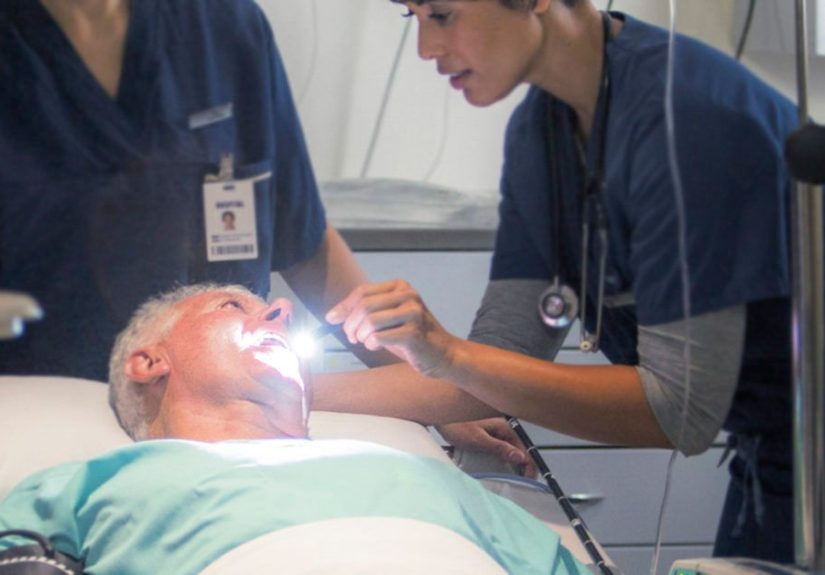
The #ThisIsOurLane movement rose to national prominence in 2018 after the National Rifle Association told doctors to “stay in their lane” following a medical publication on firearm injury prevention. The backlash from clinicians was immediate, emotional, and unforgettable. Physicians posted stories and images from their work treating gunshot wounds, arguing that firearm injury prevention was very much part of their lane. In other words: if you are the one trying to keep a teenager from bleeding out, you have earned the right to discuss prevention.
That moment mattered because it did two things at once. First, it rejected the idea that medicine should remain silent about preventable injury. Second, it brought moral credibility to the gun violence debate. Doctors were not talking like campaign consultants. They were talking like people who had held pressure on wounds, called time of death, and gone home with blood on their shoes. Public health language gave the movement a larger frame: gun violence was not just a crime issue, or a rights issue, or a culture-war issue. It was a health issue, a prevention issue, and a systems issue.
That frame still works. In fact, it works even better when paired with a racial justice lens. Public health is at its best when it asks not only what is happening, but who is affected most, why, and what upstream conditions are driving the pattern. Once you ask those questions about gun violence in the United States, racism is no longer a side topic. It is right there in the middle of the chart, wearing a name tag.
Gun violence is a national problem, but not an equal-opportunity disaster
America’s gun violence problem is broad, but its burdens are not evenly shared. That distinction matters. It matters for diagnosis, and it matters for policy. National conversations often swing between two incomplete pictures: suburban mass shootings that dominate headlines and rural gun suicides that shape mortality totals. Both are important. Neither tells the full story.
Data repeatedly show that firearm death in the United States breaks along stark racial lines. Among white Americans, firearm deaths are far more likely to be suicides. Among Black Americans, firearm deaths are far more likely to be homicides. Those are not just statistical curiosities. They reflect different exposures, different neighborhood conditions, different relationships to institutions, and different failures of prevention.
When people say, “Gun violence affects everyone,” they are technically right in the same way it is technically true that rain falls on every roof. But some people live under a few drips, and some are trying to sleep through a collapsed ceiling. A serious movement has to respond to that difference.
Why the disparity matters
If policy is shaped only by the most publicly visible forms of gun violence, it will miss the daily violence concentrated in historically marginalized communities. If advocacy centers only the fears of people newly anxious about guns, it can ignore people who have been living with that anxiety for decades. And if reforms are designed without listening to Black, Latino, Indigenous, and other overburdened communities, they can drift into symbolism instead of solutions.
This is where the racism question becomes unavoidable. It is not simply about prejudice in individual hearts, though that exists too. It is about structures: who gets investment, who gets safe housing, who gets quality schools, who gets trauma care, who gets mental health access, who is protected, who is surveilled, and who gets described by the media as tragic, threatening, or disposable. Gun violence prevention that ignores these conditions is like trying to fix a leaky pipe by complimenting the wallpaper.
Why racism is not a side issue but a root issue
Structural racism helps explain why some communities face higher exposure to shootings, more severe trauma, fewer resources, and slower recovery. Research has linked present-day firearm violence to long-term patterns of segregation, redlining, neighborhood deprivation, and racialized disinvestment. That means the movement cannot think only in terms of individual behavior. It has to think in terms of place, history, and policy.
Consider what happens when a neighborhood is systematically denied wealth-building opportunities, reliable housing investment, economic stability, and political responsiveness. Vacant lots increase. Community institutions weaken. Stress compounds. Violence interruption becomes harder. Trust in government drops. Witness cooperation falls. Young people face more exposure to violence, not because harm is somehow “natural” there, but because policy made vulnerability easier to reproduce.
That is why many public health experts argue that reducing shootings requires more than criminal penalties or broad messaging campaigns. It requires investment in community violence intervention, trauma-informed care, stable housing, youth employment, greening and maintenance of neglected spaces, and support for neighborhoods that have long been managed as problems instead of served as communities.
Some advocates get nervous at this point. They worry that talking about racism will divide the coalition. But avoiding racism does not create unity; it creates vagueness. It asks the people most affected by gun violence to participate in a movement that declines to fully describe their reality. That is not coalition-building. That is branding with better manners.
What happens when the movement avoids racism
If the movement to end gun violence refuses to address racism, several things happenand none of them are especially helpful.
1. It misdiagnoses the problem
A movement that talks only about firearms and not about conditions can end up treating gun violence as a generic national emergency with generic national causes. But the causes are not generic. Firearm suicide, domestic violence, police violence, mass shootings, and community gun violence overlap, yet they do not arise in identical ways. Racial inequity shapes who faces which risk, and where.
2. It centers the most visible victims, not always the most affected communities
Headline attention often follows spectacular tragedy. Daily shootings in disinvested neighborhoods rarely receive equal urgency, even when their cumulative toll is enormous. When racism is left out, that imbalance becomes easier to ignore. The result is a public narrative that treats some deaths as national alarms and others as local weather. That is morally corrosive and politically disastrous.
3. It confuses punishment with prevention
Without a racial justice framework, some “gun safety” proposals can slide toward over-criminalization. Communities already overexposed to both violence and aggressive policing do not need another round of policies that promise safety while increasing surveillance, arrests, and distrust. Prevention must be evidence-based and community-informed, not a fresh coat of paint on old inequities.
4. It leaves trust on the table
Movements succeed when the people most affected believe they are seen, heard, and respected. Black communities, in particular, have long experienced both disproportionate exposure to gun violence and unequal treatment from institutions claiming to protect them. If advocates avoid talking about racism, they also avoid talking about trust. And without trust, policy can exist on paper while legitimacy disappears in practice.
What success would actually look like
A successful gun violence prevention movement would not choose between universal policy and targeted equity. It would do both. It would support stronger measures such as background checks, safer firearm storage, domestic violence protections, and sensible licensing where evidence supports them. At the same time, it would invest heavily in the neighborhoods and groups that experience the greatest burden of shootings.
That means taking community violence intervention seriously. It means funding hospital-based violence intervention programs that connect survivors with counseling, case management, and practical support after injury. It means expanding trauma recovery services, especially for young people repeatedly exposed to violence. It means pairing public safety with housing, employment, education, and neighborhood infrastructure. And it means listening to local leaders who have been doing this work long before national hashtags arrived with their ring lights and good intentions.
It also means changing the narrative. The movement should stop dividing victims into “innocent” and “complicated,” as if some lives become less grievable after a background check by public opinion. Public health should know better. Human dignity is not a loyalty program.
Can the movement succeed without addressing racism?
If success is defined narrowlysay, by passing a few reforms, shifting media language, or expanding physician advocacythen yes, the movement can make partial progress without directly confronting racism. But if success means durably reducing gun deaths, narrowing disparities, building trust, and protecting the communities most harmed, then the answer is no.
Racism is not an optional add-on to the gun violence debate. It shapes exposure, vulnerability, trauma, response, and recovery. It influences whose pain is visible, whose neighborhoods are resourced, whose children are treated as children, and whose deaths are framed as inevitable. A movement that refuses to name those realities may still speak loudly, but it will not be speaking clearly.
#ThisIsOurLane began as a demand for medical professionals to claim moral and practical authority in the fight against gun violence. The next step is broader and braver: to say that prevention requires not only stopping bullets, but also dismantling the systems that make some people stand in their path more often than others. That is still medicine. That is still public health. And yes, that is still very much their lane.
Experiences from the front lines: what this debate feels like in real life
One reason #ThisIsOurLane resonated so widely is that it put lived experience in plain view. The movement was not built on abstract theory alone. It was built on the exhausted testimony of people who have watched gun violence arrive again and again in places that are supposed to heal. Trauma surgeons described the grim routine of trying to save patients with catastrophic injuries. Emergency physicians talked about the split-second shift from normal workflow to organized chaos. Pediatric specialists spoke about the particular heartbreak of treating children whose lives changed before they had even learned algebra, which feels like an unfair life policy, if not a cosmic clerical error.
But the experience of gun violence is not limited to hospitals. In many Black communities, it is also the experience of parents who hear popping sounds and instantly begin mental geometry: Where are the kids? Which room has no windows? Is that fireworks, or am I lying to myself because it is easier? It is the experience of young people who learn which blocks to avoid, which corners feel tense, and which routes to school are “safe” only in the loose American sense of the word. It is the experience of witnesses who want to cooperate, but do not trust that institutions will protect them afterward. It is the experience of survivors carrying trauma in bodies that may have healed on paper but not in reality.
There is also the experience of unequal attention. Families in heavily impacted neighborhoods often see national outrage flare brightly after a mass shooting and then dim just as quickly when the victims are poor, urban, or Black. That imbalance leaves a bruise all its own. It tells communities that their losses are acknowledged, but not always amplified; counted, but not always centered. For advocates working in these neighborhoods, racism is not an academic sidebar. It is part of the daily explanation for why the response has been so uneven.
Clinicians connected to the movement have increasingly argued that prevention must look different when the burden is different. A child repeatedly exposed to neighborhood shootings may need counseling, school support, and a family with economic stability just as much as a lecture about danger. A violently injured young adult leaving the hospital may need conflict mediation, employment help, transportation, and trauma carenot merely discharge papers and a sincere wish for the best. Communities facing both concentrated violence and concentrated disinvestment often need investment that feels durable, not experimental, and certainly not symbolic.
These experiences also reveal something hopeful. People closest to the problem often already know what safety requires: credible messengers, trusted local programs, clean and cared-for public spaces, better access to opportunity, and policies that reduce firearm risk without criminalizing entire neighborhoods into submission. In that sense, the central lesson of #ThisIsOurLane is bigger than medicine. It is that expertise includes lived experience. If the movement listens only to the loudest institutions and not the people carrying the heaviest burden, it will keep mistaking volume for wisdom. And in a crisis this old, that would be one more preventable tragedy.
Conclusion
The movement to end gun violence has already changed the national conversation by insisting that prevention belongs in medicine, public health, and civic life. That achievement matters. But the next chapter cannot be written with selective honesty. Gun violence in America is inseparable from racial inequity in exposure, trauma, protection, and recovery. A movement that aims to reduce deaths while ignoring racism may still produce good slogans and partial wins, but it will struggle to deliver justice, trust, or durable change.
To succeed, #ThisIsOurLane must keep widening the lane. That means combining evidence-based firearm policy with serious investment in communities harmed by redlining, segregation, poverty, and chronic disinvestment. It means treating community violence intervention as core infrastructure, not optional charity. It means listening to survivors, clinicians, local organizers, and families whose experience with gun violence is not episodic but constant. And it means understanding that the fight is not only about guns in the abstract. It is about who gets safety in America, who has historically been denied it, and whether this movement is bold enough to say so out loud.