
Table of Contents >> Show >> Hide
- What Is Bakewell Pudding?
- A Short (and Sweet) History from Derbyshire
- Ingredients for a Classic Bakewell Pudding
- Step-by-Step: How to Make Bakewell Pudding
- Tips, Variations, and Troubleshooting
- Where Bakewell Pudding Fits in the British Dessert Lineup
- Traditional British Recipes: Bakewell Pudding in Everyday Life (Experience & Serving Ideas)
- Conclusion: A Classic British Dessert Worth Learning
If you’ve ever thought British desserts begin and end with sticky toffee pudding and scones, allow Bakewell pudding to politely crash the party. This old-fashioned dessert from Derbyshire is buttery, jammy, a little wobbly in the middle, and exactly the sort of thing you want to eat warm on a rainy afternoon with a cup of tea (or coffee, we don’t judge).
In this guide, we’ll walk through what makes a traditional Bakewell pudding special, how it differs from the more famous Bakewell tart, and give you a detailed, step-by-step Bakewell pudding recipe that’s friendly to American home kitchens. We’ll also talk about how this pudding fits into the world of traditional British recipes and share some real-world tips to help your first bake turn out beautifully.
What Is Bakewell Pudding?
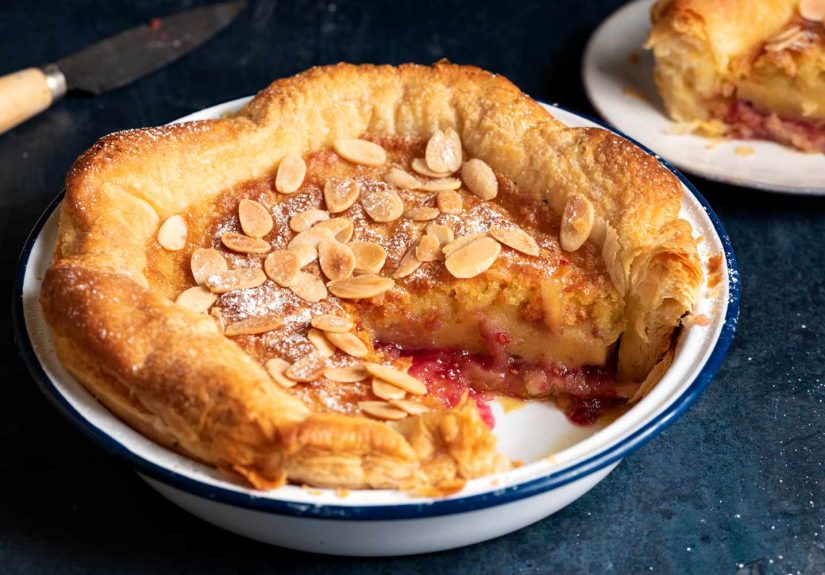
Bakewell pudding is a classic English dessert made with a flaky puff pastry base, a generous layer of jam, and a rich egg-and-almond custard baked on top. The result is a dessert that’s part tart, part custard, and totally comfort food.
At its core, a Bakewell pudding usually includes:
- Puff pastry – buttery and flaky, forming the base.
- Jam – traditionally raspberry, strawberry, or apricot, but you can experiment.
- Egg-rich almond custard – a mixture of eggs or egg yolks, melted butter, sugar, and ground almonds.
It’s humble in looks but big in flavor: sweet but not cloying, with contrast between crisp pastry, bright jam, and soft, custardy filling.
Bakewell Pudding vs. Bakewell Tart
Americans are often more familiar with Bakewell tart, which shows up in British cookbooks, TV baking shows, and bakery cases. But locals in the town of Bakewell will be quick to point out that pudding and tart are not the same thing.
- Pastry base: Bakewell pudding uses puff pastry; Bakewell tart typically uses shortcrust pastry.
- Filling texture: The pudding has a soft, custard-like almond filling; the tart has a sponge-like frangipane filling.
- Appearance: Pudding is usually plain on top; tarts are often topped with flaked almonds and sometimes a layer of icing.
- Serving style: Pudding is classically served warm; tarts are often served at room temperature.
Think of Bakewell pudding as the rustic, historic original and the tart as its pretty, pastry-shop cousin.
A Short (and Sweet) History from Derbyshire
Like many great recipes, Bakewell pudding supposedly began as a kitchen mistake in the 19th century. The story goes that a cook at an inn in the town of Bakewell mis-read or mis-understood instructions for a jam tart. Instead of mixing the eggs into the pastry, she poured an egg-and-almond mixture over jam in a pastry shell. The result was so popular that it became a house specialty and eventually a regional classic.
Historical recipes from the 1800s describe a flaky or puff pastry base filled with a mixture of melted butter, sugar, and egg yolks, sometimes with almonds and lemon added for flavor. Over time, almonds became a defining ingredient, and today the combination of jam, puff pastry, and almond custard is what most people recognize as a traditional Bakewell pudding.
In modern Bakewell, specialty bakeries still guard their own versions of the recipe. Home bakers, meanwhile, happily adapt it using store-bought puff pastry and whatever jam they have on hand.
Ingredients for a Classic Bakewell Pudding
Below is a version tailored for a standard 9-inch (23 cm) pie plate. You can use cup measures or grams, depending on your comfort level.
For the pastry base
- 1 sheet all-butter puff pastry (about 8–10 oz / 225–280 g), thawed if frozen
- 1–2 teaspoons softened butter, for greasing the dish
For the jam layer
- 4–5 tablespoons good-quality raspberry, strawberry, or apricot jam
- (Optional) 2–3 tablespoons finely chopped candied citrus peel for extra flavor
For the almond custard topping
- 1 stick (1/2 cup / 115 g) unsalted butter, melted and slightly cooled
- 3/4 cup plus 2 tablespoons (about 175 g) granulated sugar
- 4 large egg yolks
- 1 large whole egg
- 1/3 cup (about 30 g) finely ground almonds (almond meal)
- 1/2 teaspoon almond extract
- 1/2 teaspoon pure vanilla extract
- Pinch of fine salt
- (Optional) Finely grated zest of 1/2 lemon, for brightness
This style of recipe stays close to many historic and modern Bakewell pudding versions that use lots of egg yolks, melted butter, sugar, and a modest amount of ground almonds in the filling.
Step-by-Step: How to Make Bakewell Pudding
1. Prepare the pastry shell
- Preheat your oven to 400°F (200°C).
- Lightly grease a 9-inch pie plate or shallow tart dish with softened butter.
- On a lightly floured surface, roll the puff pastry sheet just enough to fit your dish with a little overhang. You don’t need it super thin; the layers are part of the charm.
- Press the pastry gently into the dish, making sure it reaches up the sides. Trim any extreme overhang, but leave a small rim.
- Dock (prick) the base lightly with a fork to help prevent too much puffing.
- Line the pastry with parchment and fill with pie weights or dry beans. Blind bake for 10–12 minutes, just until it starts to look set and lightly golden at the edges. Remove parchment and weights.
Pre-baking keeps the puff pastry from going soggy under the jam and custard.
2. Add the jam layer
- Reduce the oven temperature to 375°F (190°C).
- While the pastry is still warm, gently spread the jam over the base in an even layer. Aim for a thin-but-visible layer, not a thick jam sandwich.
- If using, sprinkle the chopped candied citrus peel evenly over the jam.
Don’t worry if the jam looks slightly streaky; the custard will bake on top and everything will meld together.
3. Make the almond custard filling
- In a medium bowl, whisk together the egg yolks and whole egg until smooth.
- Add the sugar and whisk until the mixture looks slightly thickened and pale.
- Whisk in the melted, cooled butter in a thin stream. It should blend into the eggs rather than scrambling them.
- Stir in the ground almonds, almond extract, vanilla, salt, and lemon zest (if using).
- The mixture will be pourable but slightly thick, somewhere between batter and custard.
The key here is gentle mixing and making sure the butter isn’t too hot. You want a smooth, glossy mixture that will bake into a soft, just-set pudding.
4. Bake to wobbly perfection
- Carefully pour the almond custard mixture over the jam layer in the pastry shell.
- Place the dish on a baking sheet (for easy transfer and to catch any drips).
- Bake at 375°F (190°C) for about 30–35 minutes, or until:
- The edges are puffed and golden.
- The center is mostly set but still has a slight wobble when you gently jiggle the pan.
- If the top is browning too quickly, tent loosely with foil for the last 5–10 minutes.
Over-baking will make the pudding dry and eggy instead of custardy, so err on the side of a soft set. It will firm up slightly as it cools.
5. Cooling, serving, and storing
- Let the Bakewell pudding cool for at least 20–30 minutes before slicing. It’s best served warm or at room temperature.
- Serve with lightly whipped cream, pouring cream, or a scoop of vanilla ice cream. Many British sources recommend cream over custard, since the pudding already has a rich custard-like filling.
- Leftovers can be stored, covered, in the fridge for up to 3 days. Reheat gently in a low oven (about 300°F / 150°C) until just warm.
Tips, Variations, and Troubleshooting
Choosing your jam
Raspberry is probably the most classic choice, but strawberry, cherry, or apricot all work beautifully. A slightly tart jam balances the richness of the almond custard and butter.
- Tart and bright: Raspberry, red currant, or sour cherry jam.
- Sweet and mellow: Strawberry, apricot, or plum jam.
- Fancy twist: A layer of marmalade plus a bit of extra lemon zest for a citrusy Bakewell pudding.
Texture issues
- Center too runny: Next time, bake a few minutes longer, but keep an eye on the top. A slight wobble is fine; visible liquid is not.
- Dry or rubbery: This usually means over-baking or oven temperature running hot. Lower the temperature by 25°F or shorten the baking time.
- Soggy bottom: Make sure to blind bake the puff pastry and avoid pouring very hot custard onto the jam. You can also move your oven rack a bit lower so the base cooks more.
Flavor upgrades
- Add a spoonful of amaretto or another almond liqueur to the filling for a deeper almond note.
- Sprinkle a tiny pinch of nutmeg or cardamom over the top before baking for a modern twist.
- Swap part of the sugar for light brown sugar for a slightly caramel flavor.
Where Bakewell Pudding Fits in the British Dessert Lineup
Bakewell pudding sits comfortably alongside other traditional British desserts like sticky toffee pudding, treacle tart, spotted dick, and bread-and-butter pudding. What sets it apart is the combination of jam and almond custard in a pastry shell, rather than a sponge cake or steamed suet base.
It’s also flexible enough to appear in different settings:
- Sunday lunch dessert: Serve warm with cream after a roast dinner.
- Afternoon tea: Slice into smaller wedges and pair with tea, coffee, or even a dessert wine.
- Celebrations: Dress it up with a dusting of powdered sugar and some fresh berries on the side.
If you’re exploring traditional British recipes and want something that feels authentic but manageable in an American kitchen, Bakewell pudding is a fantastic starting point.
Traditional British Recipes: Bakewell Pudding in Everyday Life (Experience & Serving Ideas)
Once you’ve baked a Bakewell pudding a couple of times, it starts to become “that dessert” people ask you for. It’s just different enough from standard American pies and cakes that guests are curious, but familiar enough that they’re not afraid to try it.
Imagine you’re planning a cozy, British-inspired dinner at home. You might roast a chicken with root vegetables, serve some buttered peas, maybe a Yorkshire pudding or two for funand then bring out a warm Bakewell pudding for dessert. The reaction is almost always the same: someone asks, “What is this?” and then they take a bite and immediately stop talking for a second. That moment of surprised silence is your victory as the cook.
From a hosting perspective, Bakewell pudding is also practical. You can blind bake the pastry and prep the filling earlier in the day, then assemble and bake before dinner, letting it rest while you eat your main course. By the time everyone is ready for something sweet, the pudding is at that perfect warm-but-not-hot stage where the filling is set but still tender.
It’s also a great dessert for experimenting with regional jams or preserves. Have a jar of homemade blackberry jam from a farmers’ market? Turn it into a “Blackberry Bakewell.” Got a friend who brings you jars of orange marmalade from their trips to the UK? Use it as your base layer and lean into the citrus with extra lemon zest or even a little orange zest. Each variation keeps the traditional structure but gives you a new flavor profile.
If you’re cooking for people who are a bit nervous about “pudding” as a concept (Americans often hear “pudding” and think of chilled custard cups), you can simply describe it as a “jam and almond custard pie in puff pastry.” Once they see the slice, they’ll understand. You can also cut smaller wedges for tasting plates, especially if you’re doing a dessert board with other British classics like shortbread, Victoria sponge, or mini trifles.
Bakewell pudding also plays well with the seasons. In winter, serve it warm with heavy cream or vanilla ice cream and maybe an extra spoonful of jam on the side. In spring and summer, you can pair it with fresh berries and a lighter whipped cream. Because the base flavors are relatively simplealmond, butter, sugar, fruitit complements a wide range of toppings without feeling overdone.
From a “learning to bake British” perspective, Bakewell pudding teaches some useful skills: handling puff pastry, blind baking, making a simple custard, and balancing sweetness with acidity from the jam. Once you’re comfortable with it, you’ll find that other traditional recipes, like treacle tart or custard tart, feel less intimidating. Bakewell pudding becomes your gateway bake: a little slice of Derbyshire that opens the door to a whole world of traditional British recipes.
Most importantly, it’s a dessert with a story. When you tell people it was created by accident in a 19th-century inn and has been part of English food history ever since, you’re not just serving something sweetyou’re inviting them into a tradition. And that’s part of what makes this dish so satisfying to bake and share.
Conclusion: A Classic British Dessert Worth Learning
Traditional Bakewell pudding may not be as famous as sticky toffee pudding or as flashy as a towering trifle, but it’s a deeply comforting, history-rich dessert that deserves a spot in your repertoire. The combination of puff pastry, jam, and almond custard is simple in theory, yet surprisingly nuanced in flavor. It’s the kind of bake that feels homey and special at the same time.
Whether you’re building a British-themed menu, exploring classic European desserts, or just looking for a new way to use that fancy jar of jam in your pantry, this Bakewell pudding recipe is a fantastic place to start. One bake, and you may find yourself firmly on Team Pudding.







 Close
Close