
Table of Contents >> Show >> Hide
- What Is Tuscan Steak?
- Why This Tuscan Steak Recipe Works
- Recipe Snapshot
- Ingredients
- How to Make Tuscan Steak
- Best Cut of Beef for a Tuscan Steak Recipe
- What Makes the Flavor Taste Tuscan?
- What to Serve with Tuscan Steak
- Common Mistakes to Avoid
- Storage and Leftovers
- Experiences Related to a Tuscan Steak Recipe
- Conclusion
If a steak dinner could book a villa, wear linen, and casually mention it “summered in Florence,” this would be the one. A great Tuscan steak recipe is all about bold simplicity: a thick, beautiful cut of beef, plenty of heat, olive oil, rosemary, garlic, lemon, salt, and the confidence to not mess with a good thing too much. In other words, this is not the time for mystery marinades, bottled glazes, or anything neon.
Classic Tuscan steak is inspired by bistecca alla Fiorentina, the famous Florentine steak traditionally cooked over fierce heat and served simply, often rare, with olive oil and lemon. This home-friendly version keeps that rustic spirit but adapts it for an American kitchen. It uses ingredients you can actually find, methods you can pull off without a stone farmhouse in the hills of Tuscany, and flavors that feel elegant without becoming fussy.
The result is a juicy, deeply savory steak with a crisp crust, fragrant herbs, and a bright finish that cuts through the richness. It tastes dinner-party fancy, but it is also completely doable on a regular weeknight if you happen to believe that Tuesday deserves a little drama.
What Is Tuscan Steak?
When people search for a Tuscan steak recipe, they usually mean one of two things. The first is an authentic or near-authentic take on bistecca alla Fiorentina, which is traditionally a very thick T-bone or porterhouse steak cooked over high heat and served with minimal adornment. The second is a broader “Tuscan-style” steak, which leans into Italian pantry flavors such as extra-virgin olive oil, rosemary, garlic, black pepper, lemon, and sometimes a touch of balsamic.
This recipe sits happily between those two worlds. It respects the minimalist spirit of Florentine steak, but it also borrows the rosemary-garlic-lemon profile that shows up again and again in American interpretations of Tuscan beef dishes. The point is not to bury the steak. The point is to make it taste like the best possible version of itself.
Why This Tuscan Steak Recipe Works
- It uses a thick-cut steak so you get a browned crust outside and a juicy center inside.
- The seasoning is simple, which lets the beef stay front and center.
- Rosemary, garlic, olive oil, and lemon bring unmistakable Tuscan character without overpowering the meat.
- It works on a grill or cast-iron skillet, so you do not need a wood-fired setup to make it sing.
- The finishing touches matter: resting, slicing properly, and adding lemon at the end make the whole dish taste more polished.
Recipe Snapshot
- Recipe: Tuscan Steak Recipe
- Yield: 2 to 4 servings
- Prep time: 15 minutes
- Resting time: 30 to 45 minutes for the steak to lose its chill, plus 10 minutes after cooking
- Cook time: 10 to 16 minutes, depending on thickness and doneness
- Best cuts: Porterhouse, T-bone, bone-in ribeye, or thick strip steak
Ingredients
For the Steak
- 1 large porterhouse or T-bone steak, about 2 to 2 1/2 pounds and 1 1/2 to 2 inches thick
- 2 tablespoons extra-virgin olive oil
- 3 cloves garlic, finely grated or minced
- 1 tablespoon finely chopped fresh rosemary
- 1 teaspoon lemon zest
- 1 1/2 teaspoons kosher salt, plus more to taste
- 1 teaspoon freshly ground black pepper
- 1 pinch crushed red pepper flakes, optional
- 1 lemon, halved
- Flaky sea salt, for finishing
Optional for Serving
- Warm cannellini beans with olive oil and black pepper
- Roasted potatoes
- Sautéed spinach or broccoli rabe
- A few shavings of Parmesan
- A drizzle of very good olive oil
How to Make Tuscan Steak
1. Bring the steak closer to room temperature
Take the steak out of the refrigerator about 30 to 45 minutes before cooking. This helps it cook more evenly. It does not need to sit around long enough to start a memoir; it just needs to lose that refrigerator shock.
2. Make the Tuscan seasoning paste
In a small bowl, mix the olive oil, garlic, rosemary, lemon zest, kosher salt, black pepper, and red pepper flakes if using. Rub the mixture all over the steak, pressing it into both sides and the edges. Let the steak sit while your grill or skillet heats up.
Unlike a heavy marinade, this paste gives you concentrated flavor without turning the outside wet or making the steak steam. That is important, because a good crust is half the joy of eating steak in the first place.
3. Heat your cooking surface aggressively
If grilling, preheat the grill to high heat and oil the grates. If using a cast-iron skillet, heat it over medium-high to high until it is seriously hot. Open a window, turn on the vent, and emotionally prepare for a little sizzle-related chaos.
4. Cook the steak
Place the steak on the grill or in the skillet. Cook for about 4 to 6 minutes per side for a 1 1/2-inch steak, depending on thickness and your desired doneness. If you are using a porterhouse, remember that the tenderloin side may cook a little faster than the strip side.
For a thick steak, it often helps to sear both sides first, then move it to a slightly cooler part of the grill or lower the heat a bit to finish gently. You can also stand the steak on its fat edge for 30 to 60 seconds to render a little of that richness and build more flavor.
5. Char the lemon
During the last minute or two of cooking, place the lemon halves cut-side down on the grill or in the pan. A charred lemon is one of those tiny moves that makes dinner feel much more expensive than it was.
6. Check for doneness
Use an instant-read thermometer if possible. That is the easiest way to avoid either undercooking or turning a gorgeous steak into an edible apology. For many steak lovers, medium-rare is ideal. If you prefer to follow USDA guidance for whole cuts of beef, cook to 145°F and let it rest for at least 3 minutes.
7. Rest before slicing
Transfer the steak to a cutting board and let it rest for about 10 minutes. Then squeeze a little charred lemon over the top, drizzle lightly with olive oil, and finish with flaky salt.
8. Slice the right way
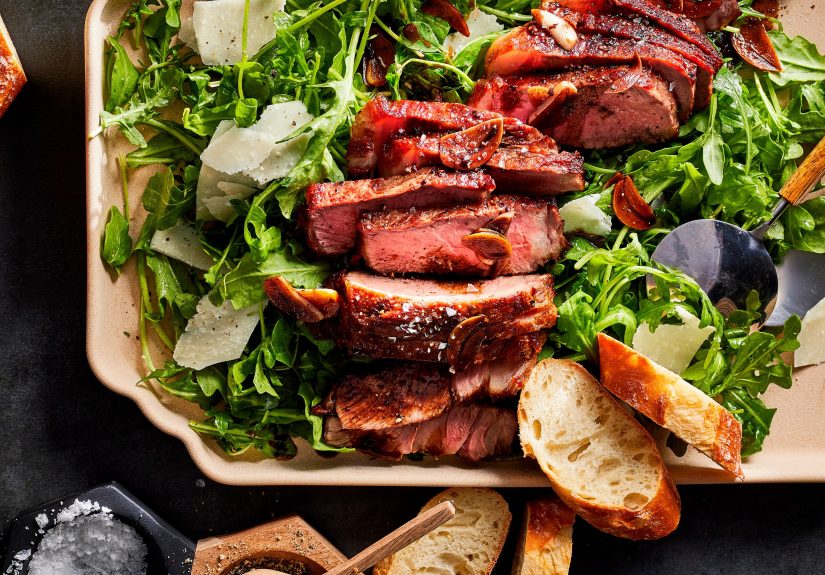
For serving, slice the meat off the bone and cut it against the grain into thick strips. If you are using a porterhouse or T-bone, separate the strip side and tenderloin side before slicing. Arrange everything on a platter and spoon any juices over the top. That is not mess. That is strategy.
Best Cut of Beef for a Tuscan Steak Recipe
The most traditional choice is a thick porterhouse or T-bone, because Tuscan steak is closely linked to Florentine steak. That cut gives you the best of both worlds: strip steak on one side, tenderloin on the other, and a bone in the middle contributing flavor and visual flair.
If you cannot find a giant porterhouse, a bone-in ribeye or thick New York strip works beautifully. The key is thickness. Thin steaks cook too fast, leaving you with a narrow window between “nice crust” and “well, that escalated.” A steak around 1 1/2 to 2 inches thick is ideal for developing color outside while keeping the center juicy.
What Makes the Flavor Taste Tuscan?
It is the combination of simplicity and structure. Tuscan cooking is famous for treating great ingredients with restraint. With steak, that usually means you are not building a sticky sauce or hiding the meat under twenty seasonings. Instead, you use a few powerful accents:
- Olive oil for richness and fruitiness
- Rosemary for piney, savory aroma
- Garlic for depth and warmth
- Lemon for acidity and brightness
- Salt and pepper to sharpen everything else
Some American versions also use balsamic vinegar. That can be delicious, especially with flank or skirt steak, but for a thick Tuscan-style steak, a lighter hand is usually better. Too much balsamic can burn fast and compete with the beef. Think accent, not avalanche.
What to Serve with Tuscan Steak
A good Tuscan steak recipe does not need much on the side, but a few simple dishes turn it into a full meal. White beans are a classic partner because they are creamy, earthy, and absorb steak juices like little overachievers. Roasted potatoes are always welcome. Bitter greens such as broccoli rabe or sautéed spinach balance the richness. A peppery salad with lemon dressing also works well if you want the plate to feel lighter.
For a dinner-party version, serve the sliced steak on a large platter with cannellini beans, grilled lemon, and a few scattered rosemary leaves. It looks rustic, impressive, and intentionally unfussy, which is a very nice place for food to live.
Common Mistakes to Avoid
Using a thin steak
This is the fastest route to disappointment. Thin steaks are fine for other recipes, but they are not the best choice here. Tuscan steak should feel substantial.
Starting with a cold pan or weak grill
The steak needs high heat to build that flavorful crust. If the pan is only mildly warm, the meat will gray before it browns, which is a depressing little tragedy.
Overcomplicating the seasoning
Do not throw in soy sauce, brown sugar, Worcestershire, smoked paprika, and half the spice rack unless you are deliberately making a different recipe. Tuscan steak shines because it is restrained.
Skipping the rest
Cutting immediately after cooking sends juices all over the cutting board instead of keeping them in the steak where they belong.
Slicing with the grain
Always slice against the grain for the most tender bite. This matters especially with the strip side of a porterhouse.
Storage and Leftovers
Store leftover steak in an airtight container in the refrigerator for up to 3 days. Slice it thin for steak sandwiches, toss it over arugula with lemon and shaved Parmesan, or add it to a warm white bean salad. Reheat gently if needed, but honestly, cold slices stolen straight from the fridge are not exactly a hardship.
Experiences Related to a Tuscan Steak Recipe
Cooking a Tuscan steak at home is one of those kitchen experiences that teaches more than the recipe itself. It teaches restraint, timing, confidence, and the fine art of leaving good ingredients alone. At first glance, the dish can seem almost too simple. People are often suspicious of simple food, as though flavor only counts if it required three mixing bowls, a blender, and a level of emotional commitment usually reserved for tax season. But Tuscan steak quietly proves the opposite.
The first experience many home cooks have with this recipe is realizing how much the smell matters. As soon as rosemary hits hot oil and garlic warms up, the entire kitchen changes personality. Suddenly the room feels cozy, hungry, and slightly more sophisticated than it did ten minutes earlier. Even before the steak is done, the meal begins doing its job. It creates anticipation. It tells everyone nearby that something serious, and probably delicious, is happening.
Another common experience is learning to trust high heat. Steak can make people nervous because it cooks quickly and feels expensive. Nobody wants to ruin a beautiful cut of beef. But Tuscan steak rewards decisiveness. Once the pan or grill is hot, the process becomes less about fussing and more about paying attention. You listen to the sizzle. You watch the crust develop. You notice how the meat firms up. It is less like following a strict script and more like learning the rhythm of a song.
There is also the experience of discovering that finishing touches matter far more than many cooks expect. A squeeze of charred lemon right at the end wakes everything up. A final drizzle of olive oil adds softness and shine. Flaky salt on sliced steak brings little bursts of texture that make each bite feel more complete. None of these are dramatic gestures on their own, but together they create that “restaurant-quality” effect people chase without always understanding.
Tuscan steak is also a wonderful dish for sharing, and that changes the experience in the best way. A whole porterhouse or T-bone set on a board or platter feels generous and celebratory. It invites conversation. It encourages passing plates, stealing the best slice, and pretending not to notice who took the extra tenderloin piece. Even in a very normal dining room, the meal has a slightly festive energy. It says, “Tonight we are eating well,” without demanding white tablecloth behavior from anybody.
Perhaps the most valuable experience this recipe offers is learning the difference between complicated and impressive. Many cooks assume that the most memorable meals are the ones with the longest ingredient list. Tuscan steak is proof that a dish can be deeply memorable because it is focused. Great beef, correct heat, thoughtful seasoning, and proper resting do more work than a dozen unnecessary add-ins. That is a lesson that carries into every other kind of cooking.
And then, of course, there is the simple joy of slicing into it. The crust gives way, the juices gather, the rosemary and lemon rise with the steam, and suddenly everyone at the table gets a little more attentive. That moment is the real experience at the center of a Tuscan steak recipe. Not just eating steak, but creating something that feels rustic, confident, and generous all at once.
Conclusion
This Tuscan steak recipe proves that a handful of strong ingredients can create a seriously memorable dinner. With a thick cut of beef, hot cooking surface, rosemary, garlic, olive oil, and lemon, you get a steak that feels classic, bold, and just fancy enough to make a regular evening feel upgraded. Keep the technique simple, respect the meat, and let the flavors do their thing. Tuscany would probably approve. Loudly, and with excellent wine.






 Close
Close