
Table of Contents >> Show >> Hide
- What Was HUD 3.0?
- Why the Army Wanted Augmented Reality for Troops
- From Tactical Augmented Reality to HUD 3.0
- The Role of ENVG-B and Night Vision
- Why 2019 Was a Big Target Year
- Microsoft HoloLens and the IVAS Connection
- What Soldiers Could See Through Battlefield AR
- The Training Advantage
- The Hard Problems: Weight, Power, Weather, and Trust
- Cybersecurity and Data Overload
- The Ethics Debate Around Military AR
- From 2019 Testing to Today’s IVAS Evolution
- Why This Technology Matters
- Experience-Based Perspective: What Battlefield AR Feels Like as an Idea
- Conclusion
For decades, soldiers have carried maps, radios, night-vision goggles, GPS units, weapon sights, batteries, cables, and enough “mission-essential” gear to make a hiking influencer faint. Then came a deceptively simple idea: what if the most important battlefield information could appear directly in a soldier’s field of view?
That was the promise behind the U.S. Army’s push to test augmented reality for troops by 2019. The system often discussed under the nickname HUD 3.0 aimed to bring a fighter-pilot-style heads-up display to infantry soldiers. Instead of looking down at a map, checking a handheld GPS, asking over the radio where everyone is, and hoping the answer arrives before the situation changes, a soldier could theoretically look forward and see key information layered over the real world.
In plain English, military augmented reality is not about giving troops floating dragons or turning combat into a video game, despite what every science-fiction movie poster would like us to believe. It is about giving soldiers faster answers to three urgent questions: Where am I? Where are my teammates? Where is the threat? Those questions sound basicuntil you are in a dark building, under stress, with smoke, noise, bad weather, and exactly zero time to unfold a paper map like you are planning a charming picnic.
What Was HUD 3.0?
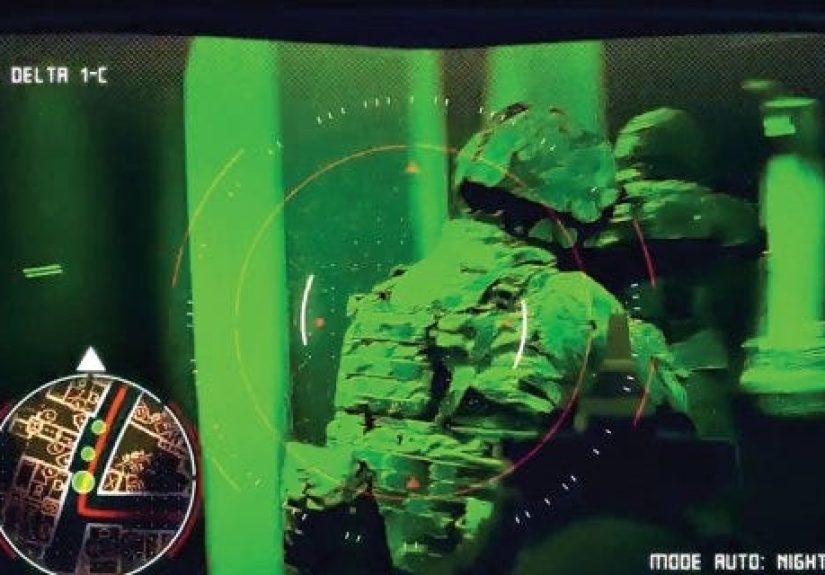
HUD 3.0 was described as a helmet-mounted augmented reality display designed to project tactical information into a soldier’s line of sight. The Army’s goal was to help troops navigate, identify friendly forces, locate potential threats, and train against virtual targets without constantly shifting attention between the real world and separate screens.
The concept borrowed heavily from aircraft heads-up displays. Fighter pilots have long relied on HUDs to see altitude, speed, targeting data, heading, and weapons status without looking down at cockpit instruments. The Army wanted a similar “eyes up” advantage for ground troops, who often operate in places much messier than the sky: alleys, stairwells, forests, tunnels, rooftops, and urban rooms where the enemy does not politely stand under good lighting.
The big leap was not simply putting a tiny screen near the eye. The real challenge was connecting multiple streams of useful data: GPS position, friendly-force tracking, digital maps, weapon sights, night vision, thermal imaging, training simulations, and possibly AI-assisted recognition. That combination is what makes battlefield AR both exciting and extremely difficult. A bad smartphone notification is annoying. A bad combat display could be dangerous.
Why the Army Wanted Augmented Reality for Troops
The U.S. Army’s interest in augmented reality grew from a larger modernization effort focused on “soldier lethality,” survivability, and decision speed. Modern infantry teams are expected to move quickly, coordinate across complex terrain, and fight in multi-domain environments where drones, sensors, cyber systems, aircraft, vehicles, and ground units all contribute to the same fight.
That is a fancy way of saying the battlefield has become crowded with information. The problem is no longer just getting data. The problem is getting the right data to the right person at the right moment without turning the soldier’s vision into a Times Square billboard after three energy drinks.
Augmented reality can help solve that problem by placing mission-critical information where soldiers are already looking. A squad leader could see a digital waypoint. A rifleman could receive a warning about a friendly unit nearby. A trainee could move through a real training site while virtual enemy positions appear through the display. In theory, the result is faster orientation, faster communication, and fewer mistakes caused by confusion.
From Tactical Augmented Reality to HUD 3.0
Before HUD 3.0 became the buzzworthy phrase, the Army had already been developing related technology under the name Tactical Augmented Reality, or TAR. TAR was designed to help soldiers locate themselves and identify the positions of friends and foes. It used a small heads-up display attached to a helmet, roughly resembling night-vision equipment.
The TAR concept was especially important because it aimed to replace or combine several separate tools. Soldiers commonly relied on GPS devices, night-vision goggles, weapon optics, and radio updates. TAR suggested a future in which some of that information could be fused into one visual system. That does not mean the humble map disappears foreverpaper maps are stubborn little survivorsbut it does mean troops could spend less time looking down and more time scanning the environment.
Another key feature was weapon-sight integration. If a soldier could see a weapon-mounted camera feed in the headset, the soldier might observe or aim from behind cover with less exposure. That is the sort of capability that sounds like science fiction until you remember that a doorframe is not exactly generous protection when someone is shooting back.
The Role of ENVG-B and Night Vision
HUD 3.0 did not appear out of nowhere. It built on earlier advances in night vision and soldier-worn electronics, including the Enhanced Night Vision Goggle–Binocular, commonly known as ENVG-B. This system combines image intensification and thermal imaging, helping soldiers see in low light, smoke, dust, fog, and other miserable conditions where ordinary eyesight clocks out early.
ENVG-B matters because battlefield AR is only useful if the soldier can still see the battlefield. Thermal imaging can reveal heat signatures. Image intensification can improve visibility in darkness. Wireless connections can link goggles to weapon sights and other soldier systems. Together, those capabilities formed a stepping stone toward more ambitious augmented reality systems.
Think of ENVG-B as the Army learning to walk before trying to sprint in mixed reality goggles while carrying a rucksack, radio, rifle, body armor, and the emotional burden of keeping every battery charged.
Why 2019 Was a Big Target Year
The 2019 testing timeline mattered because it showed how quickly the Army wanted to move. Traditional defense acquisition can take many years. For fast-changing digital technology, that can be a disaster. By the time a system clears the paperwork mountain, the commercial world may have already released three better versions and a cheaper one with a nicer user interface.
The Army’s rapid modernization approach used soldier feedback earlier in development. Instead of waiting until a nearly finished product reached troops, the Army began emphasizing “soldier touchpoints,” where real users could test prototypes and tell engineers what worked, what failed, and what made them want to throw the device into a swamp.
This approach became central to the Integrated Visual Augmentation System, or IVAS, which followed the same broad idea: a soldier-worn mixed reality system for fighting, rehearsing, and training. By 2019, soldiers were testing Microsoft-designed IVAS prototype goggles in hands-on exercises, giving direct feedback to shape the design.
Microsoft HoloLens and the IVAS Connection
In late 2018, Microsoft won a major Army contract related to HoloLens-based augmented reality headsets. The contract was widely reported at roughly $480 million and was tied to prototype systems for training and battlefield use. The military version was not simply a consumer headset with camouflage tape slapped on it. It needed thermal sensing, night vision, ruggedness, secure networking, and integration with military systems.
The later IVAS program grew into a much larger production effort. In 2021, Microsoft announced a deal to provide the Army with augmented reality headsets based on HoloLens technology and supported by Azure cloud services. Reuters reported that the contract could be worth up to $21.88 billion over ten years. That number made people sit up very straight, including defense analysts, tech investors, and anyone who has ever tried to buy one replacement charging cable from an official store.
The size of the contract showed that the Army saw AR not as a novelty, but as a potential foundation for future soldier systems. IVAS was meant to combine situational awareness, training, navigation, targeting support, and information sharing into a single platform.
What Soldiers Could See Through Battlefield AR
A practical military AR display has to be selective. More information is not always better. Anyone who has opened a laptop with 47 browser tabs knows that information overload is real, and nobody is even firing at your spreadsheet.
The most useful battlefield AR data would likely include friendly-force locations, waypoints, compass direction, mission graphics, alerts, weapon-sight feeds, thermal overlays, and training cues. A squad leader might see a route through a building. A soldier might receive a warning not to fire toward a friendly position. A trainee might face simulated enemies in a real training area without needing expensive physical props.
In combat, the key is speed. If a soldier can understand the situation a few seconds faster, that can affect movement, communication, and survival. But the system has to be simple enough to use under stress. A beautiful interface that requires five menu taps and a software update is not a battlefield solution. It is a customer-support ticket wearing a helmet.
The Training Advantage
One of the most practical uses for augmented reality is training. Live-fire exercises are expensive, logistically complicated, and limited by geography, safety rules, ammunition costs, and available training ranges. AR can create realistic mission rehearsal without requiring every scenario to be physically rebuilt.
With augmented reality, troops could train against virtual enemies projected into real spaces. They could rehearse building entry, convoy movement, target identification, casualty evacuation, and communication drills. Commanders could repeat scenarios, adjust difficulty, and review decisions afterward.
This is where AR has an advantage over pure virtual reality. VR places users inside a fully digital environment. AR keeps users in the real world and adds digital layers. For soldiers, that distinction matters. Movement, terrain, lighting, walls, stairs, and physical fatigue all remain real. The virtual layer adds complexity without removing the body from the environment.
The Hard Problems: Weight, Power, Weather, and Trust
Battlefield augmented reality sounds sleek in a briefing room. In the field, everything gets rude. Devices get wet. Lenses fog. Batteries die. Cables snag. Dust appears from nowhere like a villain with excellent timing. A soldier may crawl, run, fall, climb, sweat, and bang the headset against a vehicle door before breakfast.
That is why “soldier-proofing” became one of the biggest challenges. A headset must be rugged, comfortable, balanced, and reliable. If it is too heavy, it causes fatigue. If it blocks vision, it becomes a liability. If the battery life is poor, it becomes dead weight. If the information is inaccurate, soldiers stop trusting it.
Trust is especially important. A soldier must know whether a blue-force marker is current, whether a waypoint is accurate, and whether a warning is worth attention. In civilian life, a GPS error might send you to the wrong coffee shop. In combat, bad location data can have severe consequences.
Cybersecurity and Data Overload
Military AR also creates cybersecurity concerns. A networked headset is not just a display; it is a computer, sensor platform, communications node, and data receiver. If adversaries can jam, spoof, intercept, corrupt, or manipulate that data, the system could become dangerous.
Army University Press analysis has warned that AR and mixed reality systems must be studied not only for their tactical value, but also for what happens when they partially fail. A headset that works perfectly in a demo but becomes unreliable under electronic attack, poor connectivity, or sensor confusion could shift from helpful tool to mission hazard.
Then there is the human brain. Soldiers already manage stress, noise, fatigue, fear, physical exertion, and rapid decision-making. A display that adds too many icons, alerts, outlines, messages, arrows, and pop-ups could create cognitive overload. Battlefield AR must be disciplined. The best interface may be the one that knows when to shut up.
The Ethics Debate Around Military AR
The Army’s augmented reality push also triggered public debate, especially after Microsoft’s HoloLens-related defense work became widely known. Some Microsoft employees objected to the use of AR technology in military systems, arguing that tools originally associated with education, medicine, design, and enterprise work were being adapted for warfare.
The ethical debate is not simple. Supporters argue that better information can help soldiers make better decisions, avoid friendly-fire incidents, identify threats more accurately, and reduce risk to civilians. Critics worry that making combat feel more like a digital interface could distance users from the human consequences of force.
Both concerns deserve attention. A system designed for soldiers should improve judgment, not replace it. Augmented reality can highlight information, but it cannot carry moral responsibility. The human in the loop remains essential, and the interface should support careful decision-making rather than encourage reflexive action.
From 2019 Testing to Today’s IVAS Evolution
The 2019 testing period was not the finish line. It was part of a longer story. IVAS continued through multiple design iterations, soldier touchpoints, delays, redesigns, and debates about comfort, reliability, fielding schedules, and operational usefulness.
By the mid-2020s, the IVAS program had evolved again. Microsoft and Anduril announced a partnership in 2025 to advance the Army’s IVAS program, with Anduril expected to take on greater responsibility for production and future hardware and software development, pending Department of Defense approval. The newer direction emphasized drones, mission command, AI-enabled data integration, and beyond-line-of-sight awareness.
That shift shows where military AR is heading. The headset is no longer just a fancy display. It is becoming part of a larger battlefield network involving sensors, unmanned systems, cloud infrastructure, AI, and tactical communications. In other words, the goggles are only the visible part of a much bigger digital iceberg.
Why This Technology Matters
The idea behind U.S. troops testing augmented reality by 2019 was bigger than one headset. It represented a change in how armies think about information. In previous generations, the main challenge was seeing farther, shooting more accurately, or communicating over longer distances. Those challenges still matter. But now the challenge is also how to merge information into usable awareness at the squad level.
For infantry soldiers, seconds matter. If AR can reduce confusion, speed navigation, improve training realism, and help units coordinate in darkness or dense terrain, it could become a major advantage. But if the system is heavy, distracting, unreliable, or vulnerable, it could frustrate the very people it is meant to help.
That is why field testing is so important. Soldiers are brutally honest product testers. They do not care whether a feature looked impressive in a PowerPoint deck. They care whether it works in rain, mud, darkness, fatigue, and stress. If it does not, the feedback will be swift, colorful, and probably not suitable for a family-friendly brochure.
Experience-Based Perspective: What Battlefield AR Feels Like as an Idea
To understand the appeal of military augmented reality, imagine trying to navigate an unfamiliar neighborhood at night while carrying heavy equipment, communicating with several people, avoiding danger, and making decisions faster than your opponent. Now imagine someone removes your phone screen, map, compass, and radio notes and places only the most important cues directly into your vision. That is the dream: less fumbling, less guessing, and fewer moments where attention drops at exactly the wrong time.
In practical terms, the experience would probably feel less like Iron Man and more like a disciplined, minimalist dashboard. The best version would not flood the eye with neon graphics. It would quietly show a direction arrow, a friendly marker, a boundary line, or a warning only when needed. Good AR should feel like a calm assistant, not a carnival announcer with a tactical font.
For training, the experience could be even more transformative. A unit could walk through a real building while the headset adds simulated enemy positions, civilian role-players, danger zones, or mission prompts. Afterward, leaders could review who moved where, who saw what, and when decisions were made. That turns training from “we think this happened” into “let’s replay the moment and learn from it.”
There is also a confidence factor. Soldiers who repeatedly train with visual overlays, digital waypoints, and simulated threats may become more comfortable processing complex information under pressure. The technology could make rehearsals more frequent and more varied. Instead of waiting for a perfect training range, units could practice scenarios in more places with fewer physical resources.
But the experience would also come with friction. Wearing head-mounted technology for long periods can be tiring. Displays can cause eye strain. Poor balance can create neck fatigue. Too much brightness can interfere with natural night vision. Too many alerts can become annoying, and annoying alerts eventually become ignored alerts. Anyone who has dismissed a “low storage” warning for six months understands this deeply.
The psychological side matters too. A soldier must remain aware of the real world, not just the overlay. If the headset becomes the center of attention, it defeats the purpose. The display should support perception, not hijack it. The most successful military AR experience would probably be one that disappears into the task: visible when useful, invisible when not.
Another experience-related issue is teamwork. If every soldier sees the same shared map and friendly locations, coordination can improve. But if data updates slowly, displays differ, or one soldier sees information others do not, confusion can increase. The system must create shared understanding, not private little bubbles of tactical uncertainty.
Finally, there is the emotional experience of trusting technology in dangerous conditions. Trust is earned through repetition. Soldiers would need to see that the system works in heat, cold, rain, dust, darkness, and chaos. They would need to know what happens when GPS drops, the battery runs low, or the network gets jammed. A good AR system should fail gracefully. A blank screen is bad; a misleading screen is worse.
That is why the Army’s 2019 testing milestone was so important. The point was not merely to prove that augmented reality could display cool graphics. The point was to discover whether real soldiers could use it, trust it, break it, improve it, and eventually make it part of ordinary operations. The future of military AR depends less on Hollywood-style visuals and more on mud-tested usefulness.
Conclusion
The story of U.S. troops testing augmented reality by 2019 is the story of a military trying to make information faster, clearer, and more useful at the soldier level. HUD 3.0, TAR, ENVG-B, HoloLens-based prototypes, and IVAS all belong to the same broad movement: bringing digital awareness into the field of view without forcing troops to look away from the fight.
The technology has enormous potential. It could improve navigation, training, communication, target awareness, and decision-making. It could help soldiers rehearse missions with greater realism and operate more effectively in darkness or complex terrain. But the challenges are just as real: weight, power, durability, cybersecurity, ethics, data overload, and human trust.
Augmented reality will not magically solve the confusion of combat. No headset can delete fog, fear, friction, or Murphy’s Law, who remains undefeated in military history. But if developed carefully, tested honestly, and designed around the people who actually wear it, battlefield AR could become one of the most important soldier technologies of the modern era.
The future infantry display will not be judged by how futuristic it looks. It will be judged by whether tired soldiers in difficult places say the most powerful words in military procurement: “Yes, this actually helps.”







 Close
Close