Table of Contents >> Show >> Hide
- What Is the Viking Designer Series Cooking Range?
- Why the Designer Series Still Gets Attention
- Key Features of the Viking Designer Series Range
- Design and Kitchen Aesthetics
- How It Compares With Newer Viking Ranges
- Buying a Viking Designer Series Range: What to Check
- Installation and Ventilation Matter
- Who Is the Viking Designer Series Cooking Range Best For?
- Maintenance Tips for Long-Term Performance
- Real-World Cooking Experience With the Viking Designer Series Cooking Range
- Final Verdict
- SEO Tags
A Viking Designer Series Cooking Range is not the kind of appliance that quietly hides in the kitchen like a shy toaster. It arrives with stainless steel confidence, pro-style attitude, and the subtle suggestion that your weeknight pasta sauce deserves better lighting, better heat, and perhaps a dramatic soundtrack. For homeowners who love the look of a professional kitchen but do not necessarily want a full commercial setup, the Viking Designer Series has long been an appealing middle ground: serious cooking power wrapped in a cleaner, more residential-friendly design.
The Designer Series has included gas and dual-fuel ranges, with some of the most commonly discussed 30-inch models offering sealed burners, continuous grates, convection cooking, self-cleaning ovens, and Viking’s recognizable stainless steel presence. Many Designer Series models are now discontinued or replaced by newer Viking 3 Series, 5 Series, 7 Series, and contemporary color collections, but the name still matters to shoppers, remodelers, appliance collectors, and homeowners comparing used or remaining inventory. In other words, this range may no longer be the newest Viking on the showroom floor, but it still shows up in real kitchens, real renovation plans, and real “should we buy this?” conversations.
What Is the Viking Designer Series Cooking Range?
The Viking Designer Series Cooking Range was created for homeowners who wanted a premium, built-in kitchen look without going all-in on the most industrial Viking Professional models. The Designer Series leaned toward a sleeker appearance while still borrowing the brand’s pro-style DNA: strong burners, heavy grates, durable finishes, and ovens designed for more than frozen pizza emergencies.
A typical 30-inch Viking Designer Series dual-fuel model, such as the DSCD13014BSS, paired a gas cooktop with an electric oven. That combination is popular because gas gives fast visual control on the surface, while electric heat is often favored for steady baking. On the cooktop, models commonly included four sealed burners with varied outputs, allowing the range to move from a serious sear to a gentle simmer. In the oven cavity, features such as Vari-Speed Dual Flow Convection, Rapid Ready preheat, and self-cleaning functionality gave home cooks tools that felt upscale without turning dinner into a science project.
Why the Designer Series Still Gets Attention
The phrase “Viking range” carries weight in American kitchen design. Viking helped popularize the idea that a home kitchen could have the presence and performance cues of a restaurant kitchen. The Designer Series built on that reputation while offering a slightly less aggressive visual style than the boldest professional models.
That matters because not every kitchen needs a range that looks like it wandered in from a steakhouse. Some homeowners want a luxury range that complements marble counters, shaker cabinets, modern slab doors, or a transitional remodel. The Designer Series appealed to that buyer: someone who wants premium cooking performance but does not want the appliance to shout over the backsplash.
Key Features of the Viking Designer Series Range
Sealed Burners for Easier Cleanup
One of the practical strengths of many Viking Designer Series ranges is the sealed burner cooktop. Sealed burners help contain spills on the surface instead of letting sauce, soup, or that one rebellious oatmeal bubble fall into the burner assembly. Anyone who has ever tried to clean burnt tomato sauce out of a complicated cooktop knows this is not a small feature. It is a quality-of-life upgrade.
On certain 30-inch Designer Series dual-fuel models, the burner lineup included different power levels, such as a high-output burner for boiling and searing, midrange burners for everyday cooking, and a lower-output burner for sauces or delicate tasks. This variety is important because good cooking is not only about maximum heat. Sometimes the best burner is the one that does not bully your hollandaise into scrambled eggs.
Continuous Grates for Real Cooking Flow
Continuous grates are another feature that separates premium ranges from basic stoves. Instead of lifting heavy pots from one burner to another, you can slide cookware across the surface. This is especially helpful when managing multiple pans: a skillet of chicken, a saucepan of rice, a Dutch oven full of chili, and a small pot of something mysterious that everyone insists is “almost done.”
For serious home cooks, continuous grates improve rhythm. You can move from high heat to low heat quickly, reposition cookware safely, and use the whole cooking surface more efficiently. It sounds simple, but in daily use, simple is exactly what you want.
Dual-Fuel Performance
Many shoppers look for a Viking Designer Series dual-fuel range because it combines gas burners with an electric oven. Gas burners are responsive and intuitive. You see the flame, you adjust the knob, and the heat responds immediately. Electric ovens, meanwhile, are often appreciated for even baking, stable temperature control, and convection performance.
This makes the dual-fuel configuration especially appealing for households that cook a little bit of everything. If you sear steaks, simmer sauces, bake bread, roast vegetables, and occasionally make cookies as a personality trait, dual fuel offers flexibility. It is not automatically better for every household, but for many enthusiastic cooks, it feels like having the best tool for each side of the job.
Convection Oven Technology
Viking Designer Series ovens commonly emphasized convection cooking. Convection uses a fan system to circulate hot air, helping food cook more evenly. For roasting, it can encourage better browning. For baking, it can reduce hot spots when used properly. For reheating pizza, it may even restore enough dignity to yesterday’s slice that you stop calling it “leftovers” and start calling it “lunch.”
Some Designer Series models featured Viking’s Vari-Speed Dual Flow Convection system, designed to move air consistently throughout the oven cavity. In practical terms, this can help with multi-rack baking, roasting poultry, or achieving more uniform results. Like any convection oven, it may require small adjustments to time or temperature, but once a cook learns the pattern, the feature becomes very useful.
Self-Cleaning Convenience
A self-cleaning oven is one of those features people forget about until the lasagna erupts like a small dairy volcano. Many Viking Designer Series dual-fuel ranges included a self-cleaning oven, which can reduce the need for harsh scrubbing. That said, owners should still read the use-and-care guidance for their specific model. Premium appliances reward proper maintenance, and ignoring the manual is not a personality trait worth developing.
Design and Kitchen Aesthetics
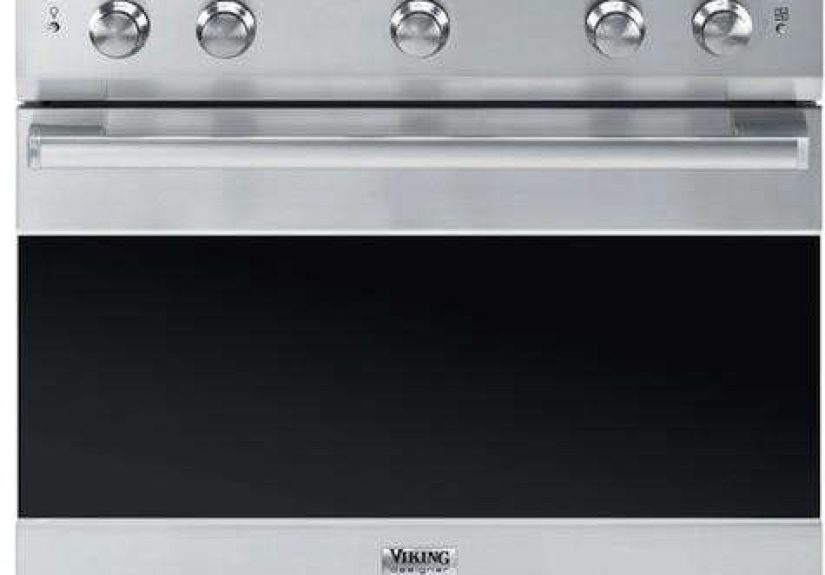
The Viking Designer Series Cooking Range is attractive because it balances presence and restraint. Stainless steel, bold handles, substantial knobs, and a professional silhouette create a luxury look, but the line was generally styled to feel smoother and more residential than some heavy-duty commercial-inspired ranges.
In a kitchen remodel, this matters. A range often becomes the visual anchor of the cooking wall. Pair it with a matching hood, stone backsplash, and well-planned lighting, and the entire kitchen can feel more custom. Even if the rest of the room is not huge, a 30-inch Viking range can give the space a chef-focused identity.
However, the same visual strength can become a design challenge. Stainless steel appliances need balance. Too much stainless without warm materials can make a kitchen feel cold. Wood shelves, soft cabinet colors, handmade tile, brass accents, or natural stone can help the Viking range feel integrated rather than dropped into the room like a shiny spaceship.
How It Compares With Newer Viking Ranges
Since many Designer Series models are discontinued, buyers often compare them with newer Viking lines. The current Viking range family includes options with stronger burners, larger configurations, new finishes, improved feature sets, and more contemporary design choices. Newer Viking 3 Series, 5 Series, and 7 Series ranges may offer updated burner layouts, different oven capacities, modern color choices, and additional convenience features.
The Designer Series still has appeal if you find a well-maintained model at a fair price, especially if you want a Viking look without paying full current-model pricing. But the comparison should be practical. A newer range may offer warranty coverage, easier parts availability, updated performance, and a cleaner service history. A used Designer Series range may offer value, but only if it has been cared for and can be serviced locally.
Buying a Viking Designer Series Range: What to Check
Confirm the Exact Model Number
“Viking Designer Series” is a broad label. Before buying, confirm the exact model number, fuel type, width, burner configuration, oven capacity, and electrical requirements. A 30-inch gas model is not the same as a 30-inch dual-fuel model. A natural gas unit is not the same as a liquid propane unit unless it has been properly converted with the correct kit and professional installation.
Check Parts and Service Availability
Because many Designer Series ranges are no longer current production models, service matters. Before purchasing a used or open-box unit, call local appliance service providers and ask whether they work on that specific Viking model. Also check whether common parts such as igniters, knobs, grates, oven racks, control components, and door parts are still available.
Inspect the Burners and Ignition
On a used range, test every burner. Flames should ignite reliably, burn evenly, and respond to adjustment. Clicking that never stops, uneven flame patterns, weak ignition, or burners that go out at low settings can indicate maintenance needs. Some issues may be minor; others may be expensive. Either way, surprise appliance repairs are about as fun as finding out your dinner guests are “mostly gluten-free” after you made pasta.
Test the Oven
The oven deserves equal attention. Test bake mode, broil mode, convection, preheat timing, oven lights, door seal, racks, and self-cleaning if safe to do so. Use an oven thermometer to compare actual temperature with the selected setting. A premium range should feel solid, but age, heavy use, and poor maintenance can affect performance.
Measure the Space Carefully
A Viking range is not something you “just squeeze in.” Measure width, depth, height, gas line location, electrical outlet, ventilation clearance, cabinet openings, countertop overhang, and hood capacity. Dual-fuel models may require a dedicated electrical circuit. Gas models require proper supply and installation. This is professional territory, not a “my cousin has a wrench” situation.
Installation and Ventilation Matter
A powerful range needs proper ventilation. Even a beautiful Viking range can become frustrating if the hood is underpowered, too narrow, too high, or badly ducted. Cooking smoke, steam, grease, and odors need somewhere to go. If you sear meat often, use high heat, or cook with oil, ventilation becomes even more important.
For the best experience, pair the range with a hood that fits the cooking style and the kitchen layout. Wall-mounted hoods, under-cabinet hoods, and custom inserts all have their place, but airflow, duct path, and capture area matter more than looks alone. A gorgeous hood that cannot handle a steak night is basically kitchen jewelry with a fan attached.
Who Is the Viking Designer Series Cooking Range Best For?
The Viking Designer Series Cooking Range is best for homeowners who value design, brand heritage, and serious cooking capability. It suits people who cook frequently, entertain often, or want a kitchen centerpiece with premium appeal. It also fits remodelers who want a recognizable luxury appliance without necessarily choosing the most aggressive professional-style range available.
It may not be the best choice for every buyer. If you rarely cook, a premium range may be more appliance than you need. If you want the latest smart features, a discontinued Designer Series model may feel too analog. If local service is limited, ownership may become inconvenient. And if you are buying used, condition matters far more than brand prestige.
Maintenance Tips for Long-Term Performance
Keep the cooktop clean, especially around burner caps and ignition points. Avoid using abrasive cleaners that damage stainless steel or porcelainized surfaces. Remove spills after the surface cools, and clean grates regularly to prevent buildup. For the oven, wipe small spills before they bake into geology, and use the self-cleaning cycle according to the manual.
Also, protect the door gasket, avoid slamming the oven door, and do not line the oven floor with foil unless the manual specifically allows it. Foil can trap heat, affect airflow, and damage finishes. If burners click constantly, flames look irregular, or oven temperature swings dramatically, schedule service before the problem grows.
Real-World Cooking Experience With the Viking Designer Series Cooking Range
Living with a Viking Designer Series Cooking Range feels different from using a standard builder-grade stove. The first thing most people notice is the physical confidence of the appliance. The grates feel substantial. The knobs feel deliberate. The oven door has weight. Even before food hits the pan, the range gives the impression that cooking is not a chore squeezed between emails, but an event worth showing up for.
In everyday cooking, the sealed burners are the most immediately useful feature. A high-output burner can bring water to a boil quickly for pasta, corn, or a seafood boil. That saves time, especially on busy evenings when dinner needs to happen before everyone starts grazing like unsupervised raccoons. The medium burners are excellent for sautéing vegetables, pan sauces, and one-skillet meals. The lower-output burner is the quiet hero, useful for warming soup, melting butter, holding gravy, or simmering tomato sauce without turning the backsplash into modern art.
The continuous grates make a bigger difference than many buyers expect. When cooking a full meal, you can slide a heavy Dutch oven from the front burner to the back without lifting it. That is helpful when making chili, braised short ribs, or a large batch of Sunday sauce. It also makes the cooktop feel more flexible. Instead of four isolated burner islands, the surface behaves like one connected workspace.
The oven experience is where dual fuel earns its keep. For baking cookies, roasting vegetables, or cooking a tray of chicken thighs, convection can improve consistency once you learn how the oven behaves. Many cooks find that convection roasting gives better browning on potatoes, Brussels sprouts, carrots, and poultry skin. For baking, it may require lowering the temperature slightly or checking a few minutes early, but the payoff is more even results. The first batch of cookies is the test pilot. The second batch is usually the victory lap.
A Viking Designer Series range also changes how people use the kitchen socially. Guests tend to notice it. During dinner parties, the range becomes part of the room’s personality. Someone will ask about it. Someone else will tap the grates and say, “This thing is serious.” And the owner, even if pretending to be humble, will probably smile. Premium ranges are functional tools, but they are also emotional purchases. They make people feel more invested in cooking.
The ownership experience is not perfect, and that honesty matters. Stainless steel shows fingerprints. Heavy grates are durable but not feather-light. A powerful gas cooktop needs real ventilation. Repairs can be expensive if parts or qualified technicians are hard to find. Older Designer Series models should be evaluated carefully before purchase, especially if they have lived through years of heavy use. The best experience comes when the buyer treats the range like a serious appliance, not a decorative trophy.
For the right household, however, the Viking Designer Series Cooking Range can make cooking feel more intentional and satisfying. It encourages bigger meals, better prep, and more confidence at the stove. It is the kind of range that makes you want to learn a new sauce, roast the chicken properly, or finally stop apologizing for uneven pancakes. No appliance can make someone a chef overnight, but a capable range can remove friction, and that is often where better cooking begins.
Final Verdict
The Viking Designer Series Cooking Range remains a compelling name because it combines luxury design, practical cooking features, and Viking’s pro-style heritage. It is especially interesting for homeowners considering a kitchen remodel, comparing premium used appliances, or looking for a high-end 30-inch range with a more refined profile.
The smartest approach is to treat it as both a cooking tool and a long-term ownership decision. Look beyond the badge. Confirm the model, inspect the condition, check service options, plan ventilation, and compare it honestly with newer Viking ranges and competing luxury brands. When everything lines up, the Designer Series can still deliver a rewarding cooking experience. When it does not, even the shiniest stainless steel can become an expensive place to rest a dish towel.
Note: Specifications, availability, warranty terms, and service support can vary by exact Viking Designer Series model and production year. Always verify the model number, fuel type, installation requirements, and local service options before purchasing.