
Table of Contents >> Show >> Hide
- Why Vintage Silver Trays Still Matter
- Sterling Silver vs. Silverplate: The First Big Distinction
- How to Identify a Quality Vintage Silver Tray
- Popular Styles of Vintage Silver Trays
- How to Use Vintage Silver Trays in Modern Homes
- How to Clean and Care for Vintage Silver Trays
- Common Buying Mistakes to Avoid
- The Emotional Appeal of Vintage Silver Trays
- Experience: Living With Vintage Silver Trays
- Final Thoughts
Some home accessories whisper. Vintage silver trays make an entrance.
They catch the light, bounce it around the room, and somehow make even a humble coffee table look like it has opinions about art history. A vintage silver tray can be practical, decorative, sentimental, and just a tiny bit dramaticall at once. That is a pretty impressive résumé for a piece of metal that often begins its second life at a thrift store, estate sale, or the back shelf of Grandma’s dining room cabinet.
In today’s design world, vintage silver trays are having a very deserved moment. Collectors love them for their craftsmanship, decorators love them for their polish and patina, and everyday homeowners love them because they can do actual work. They organize perfumes, elevate a bar cart, anchor a centerpiece, and rescue clutter from looking like clutter. Suddenly, the mess is a “styled vignette.” Thank you, tray.
This guide explores what makes vintage silver trays special, how to identify the good stuff, what styles to look for, how to buy wisely, and how to care for your tray without accidentally scrubbing away its charm. We will also talk about the experience of living with vintage silver traysbecause beyond the hallmarks and polish cloths, these pieces bring a certain feeling into a home that stainless steel simply cannot fake.
Why Vintage Silver Trays Still Matter
Vintage silver trays have staying power because they sit at the perfect intersection of beauty and usefulness. Historically, trays and salvers were made for serving food and drink, protecting delicate tables, and creating a sense of ceremony around entertaining. Today, they still do those jobs, but they also moonlight as decor stars.
That is part of their magic. A tray is never just a tray. It can be a breakfast-in-bed fantasy, a cocktail-party workhorse, a display platform for candles, or a landing zone for keys and mail. In a world filled with disposable everything, vintage silver trays feel refreshingly permanent. They were made to be handled, used, admired, polished, ignored for a few months, and then rediscovered with renewed excitement. Much like great jazz records and leftover pie.
They also bring depth to interiors. A room with one vintage silver tray instantly feels more layered and more personal. It suggests that the homeowner did not just click “add to cart” at 2:14 a.m. after seeing a social media ad. It suggests a story, a hunt, a taste for character.
Sterling Silver vs. Silverplate: The First Big Distinction
Before buying vintage silver trays, it helps to know the difference between sterling silver and silverplate. This is the collector’s version of knowing whether you are buying leather boots or “leather-inspired boots.” Both can look great, but they are not the same.
Sterling Silver
Sterling silver is an alloy made primarily of silver and is traditionally marked “sterling” or “925”. It tends to be more valuable, more collectible, and often heavier in both literal and financial terms. If you find a sterling silver tray with strong design, a known maker, and good condition, congratulations: you may have found the grown-up version of hidden treasure.
Silverplate
Silverplate is made from a base metaloften copper, nickel, or another alloywith a thin layer of silver applied over it. Silverplated trays can still be gorgeous, elegant, and highly decorative. In fact, many vintage trays people use in everyday decor are silverplate because they are more affordable and easier to find. They are the democratic heroes of the silver world: beautiful enough to impress, practical enough to use, and usually less likely to make you gasp at the price tag.
For many buyers, silverplate is the smartest entry point. It offers the look and much of the charm of vintage silver without requiring a collector’s budget. Sterling is usually the dream; silverplate is often the gateway. Both deserve respect.
How to Identify a Quality Vintage Silver Tray
Buying a vintage silver tray is part art, part detective work, and part resisting the urge to declare every shiny object “rare.” Here is what to look for.
1. Check the Marks
Turn the tray over and inspect the underside. Marks matter. You may see “sterling,” “925,” maker’s names, pattern numbers, or symbols. Silverplated pieces may be marked with brand names or terms that indicate plate rather than solid silver. The underside is where the tray stops being mysterious and starts telling on itself.
2. Look at the Wear
A little wear is normal and often desirable. It signals age and use. But extreme wear, deep scratches, or visible base metal peeking through on a silverplated tray can lower both value and beauty. Think “graceful patina,” not “survived three wars and an angry scouring pad.”
3. Examine the Rim and Handles
Decorative edges, pierced galleries, scroll handles, and piecrust rims often add visual appeal and collectible interest. Handles should feel secure, and the tray should sit evenly without wobbling like it has had too much champagne.
4. Notice the Weight
Quality trays usually feel substantial. Flimsy metal can be a sign of lower craftsmanship. A tray should feel sturdy enough to serve or display objects without flexing under pressure.
5. Consider the Maker
Well-known makers can increase value and appeal, but lesser-known makers can still produce beautiful trays. For most homeowners, design, condition, and authenticity matter as much as the name stamped on the bottom.
Popular Styles of Vintage Silver Trays
One reason vintage silver trays stay interesting is that they are not all the same. Some are formal, some are playful, and some look like they absolutely expect you to serve tea with posture.
Salvers
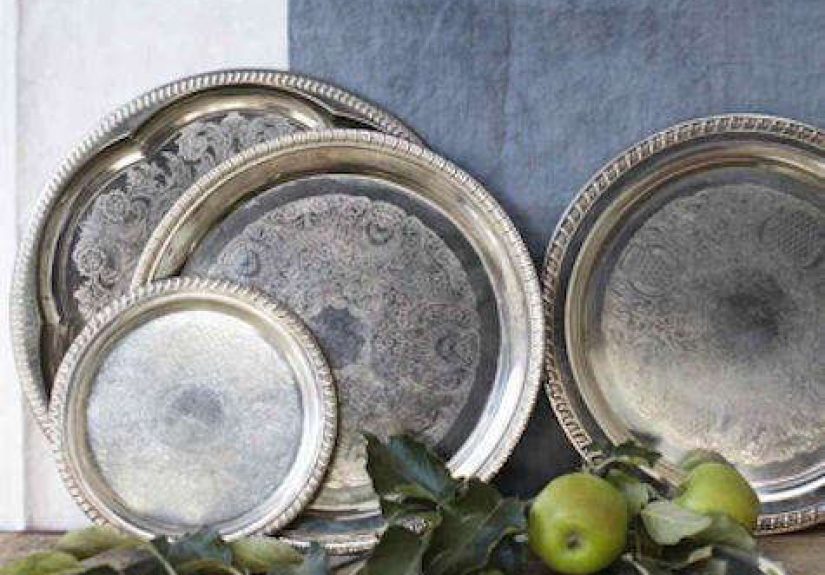
Salvers are among the classic early tray forms. They are often round, raised on feet, and elegant in a way that says, “Please do not put a plastic water bottle on me.” These trays have deep roots in entertaining history and remain especially appealing to collectors and traditionalists.
Gallery Trays
Gallery trays have raised, often pierced edges that help hold glasses and bottles in place. They are ideal for bar carts, coffee service, or corralling perfume bottles. They are also the trays most likely to make a shelf look far more intentional than it really is.
Handled Butler’s Trays
These larger trays are practical, handsome, and excellent for serving. They bring old-school hospitality energy to a room, even if all they are carrying is iced coffee and your phone charger.
Engraved and Ornate Trays
Floral engraving, repoussé details, shell motifs, and rococo flourishes appeal to buyers who love traditional or maximalist interiors. These trays are not shy. They want to be seen.
Minimal and Midcentury Trays
Not every vintage silver tray is ornate. Some feature cleaner lines, sleeker silhouettes, and subtler decoration. These work beautifully in modern homes where one reflective vintage piece can soften an otherwise crisp, contemporary room.
How to Use Vintage Silver Trays in Modern Homes
The best thing about vintage silver trays is that they are ridiculously versatile. They can dress up a formal dining room, but they also look right at home in casual spaces.
On a Bar Cart
This is the obvious classic, and it works for a reason. A silver tray instantly gives bottles, glassware, and cocktail tools a polished base. Even club soda looks a little fancier when introduced on silver.
On a Coffee Table
Use a tray to group candles, coasters, a small vase, and one or two books. Suddenly the table looks styled rather than randomly inhabited.
In a Bedroom or Bathroom
Vintage silver trays are excellent for jewelry, perfume bottles, hand mirrors, and skincare. They add glamour without trying too hard. Think “old Hollywood,” not “I decorated this space exclusively from a clearance bin.”
In an Entryway
A tray on a console table is a beautiful place for keys, sunglasses, and mail. It is functional, elegant, and slightly judgmental about your tendency to drop receipts everywhere.
At the Table
Of course, a vintage silver tray can still serve food and drinks. Imagine pastries at brunch, glasses of lemonade on a porch, or a holiday centerpiece built around candles and greenery. Some traditions survive because they still work brilliantly.
How to Clean and Care for Vintage Silver Trays
Silver care does not have to be scary. The main rule is simple: be gentle. Silver, especially older and plated pieces, does not respond well to aggressive scrubbing, harsh abrasives, or the kind of cleaning confidence that usually begins with the phrase, “I saw this hack online.”
Start with Mild Soap and Warm Water
For light dirt or dust, wash the tray gently with mild dish soap and warm water. Use a soft cloth or non-abrasive sponge, rinse carefully, and dry immediately. Letting water sit is asking for spots and annoyance.
Use Silver Polish Sparingly
When tarnish appears, use a mild silver polish and a soft cloth. Polish in straight, gentle motions rather than scrubbing in circles like you are trying to erase a bad decision. On ornate trays, use cotton swabs or a very soft brush to reach crevices.
Be Careful with Tarnish-Removal Baths
Foil-and-baking-soda methods are popular, but they should be used with caution. They can strip away desirable darkening in crevices and may be too harsh for delicate or heavily decorated pieces. Fast is not always better in the world of antiques.
Store Smart
To slow tarnish, keep silver dry and protected. Tarnish-resistant cloth, acid-free tissue, or careful storage away from excess humidity can help. If you use your tray frequently, simple routine wiping often does more good than dramatic deep-cleaning sessions.
Common Buying Mistakes to Avoid
Even stylish people make questionable thrift-store decisions. Here are the mistakes to avoid when shopping for vintage silver trays.
- Buying only for shine: Tarnish can be cleaned. Bad shape cannot.
- Ignoring the underside: Marks, repairs, dents, and plate loss usually tell the real story.
- Overvaluing “old”: Age alone does not guarantee value. Condition, maker, material, and design all matter.
- Assuming all silver-looking trays are silver: Nickel silver and other look-alikes exist. Read the marks.
- Forgetting your lifestyle: A heavily ornate tray may be stunning, but if you want everyday function, a simpler form may serve you better.
The Emotional Appeal of Vintage Silver Trays
There is something wonderfully human about vintage silver trays. They are useful, yes, but they are also emotional objects. They often arrive with scratches from past dinners, tiny signs of polishing, or engraving that hints at another family, another table, another era. They are survivors of ordinary life, which may be why they feel so warm even when they look cool and metallic.
A vintage silver tray can make daily rituals feel more intentional. Morning coffee becomes a little ceremony. Guests feel welcomed. A bedside carafe feels romantic. Even your perfume collection suddenly looks like it has representation.
That emotional pull is why people keep buying them. Not because every tray is museum-worthy, but because each one adds a small dose of history, glamour, and usefulness to everyday life. It is decor with a memory.
Experience: Living With Vintage Silver Trays
Living with vintage silver trays is not like owning ordinary decor. They change the way a home behaves. At first, you may buy one because it looks elegant in a shop or because it is surprisingly affordable. Then you bring it home, place it on a table, and realize it has quietly upgraded the entire room.
That is the first experience many people have with vintage silver trays: surprise. Surprise at how much light they reflect. Surprise at how beautifully they work with wood, marble, books, glass, flowers, and candlelight. Surprise at how a tray that is technically “old” can make a room feel fresher, not stuffier.
Then comes the ritual aspect. A silver tray invites use. It encourages little acts of care that modern life often skips. You start arranging coffee cups more neatly. You place a small vase in the center. You fold a napkin instead of tossing paper towels on the table. None of this is required, of course, but the tray seems to suggest that the moment deserves a touch more effort. Strangely, that effort feels pleasant rather than fussy.
There is also the thrill of the hunt. Finding the right vintage silver tray at a flea market or estate sale is a particular kind of joy. You spot it from across the room under a layer of tarnish, half hidden behind chipped plates and suspicious figurines. Everyone else sees a dull object. You see possibility. You turn it over, check the marks, feel the weight, and suddenly your pulse does a tiny happy dance. It is one of the more civilized forms of treasure hunting.
Over time, the tray becomes part of your routines. It holds cocktail glasses during holidays, perfume bottles in spring, and pinecones or ornaments in winter. It adapts. Unlike trend-based accessories that demand a full room redesign every season, a vintage silver tray simply participates. It works in formal spaces, casual spaces, moody spaces, and “I am still figuring this room out” spaces.
Another experience people often mention is the connection to memory. Vintage silver trays feel familiar even when they are new to you. They may remind you of a grandparent’s house, holiday dinners, old movies, wedding gifts, or a certain kind of gracious living that seems slower and more thoughtful. You do not need to be nostalgic to appreciate that feeling. The tray carries it anyway.
And yes, there is maintenance. Silver tarnishes. That is part of the deal. But even that can become oddly satisfying. Polishing a tray is one of those chores that rewards you immediately. A dull, sleepy surface becomes luminous again in your hands. Few household tasks offer such dramatic before-and-after results without involving a power tool.
Perhaps the best experience of all is that vintage silver trays make hospitality easier. Set out glasses on one, arrange dessert on another, or place a water carafe and two tumblers on a bedside table for guests. The tray does a lot of the visual work for you. It says, “Welcome, I planned this,” even if the truth is, “I planned this about six minutes ago.”
In the end, living with vintage silver trays is about more than style. It is about creating moments that feel a little more considered, a little more beautiful, and a little less disposable. Not bad for an object that mostly just sits there looking fabulous until needed.
Final Thoughts
Vintage silver trays endure because they combine function, craftsmanship, and atmosphere better than almost any other decorative object. Whether you choose sterling silver or silverplate, ornate rococo or sleek midcentury, a good tray earns its place quickly. It can organize, decorate, serve, reflect light, and tell a storyall before lunch.
If you are just beginning, start with one tray that genuinely appeals to you. Check the marks, inspect the condition, and imagine how you will actually use it. Then bring it home and let it do what vintage silver does best: make everyday life feel just a little more special.







 Close
Close