
Table of Contents >> Show >> Hide
If modern healthcare had a group chat, it would be chaos: a surgeon trying to explain prior authorization, a family doctor debunking a viral supplement trend, a public health expert asking everyone to please read the data before posting, and a lawmaker wondering why nobody warned them this policy would backfire in three states by Tuesday.
That’s exactly the point. We do not have a shortage of opinions in America. We have a shortage of clinically informed voices in the places where opinions become laws, headlines, hashtags, and public behavior. If we want better health outcomes, smarter policy, and less misinformation, we need more physicians in politics and more physicians in social media and mass media.
This is not a “doctors should run everything” argument. It is a “doctors should be in the room” argument. A healthy democracy needs economists, teachers, journalists, engineers, patients, and yes, physicians. Right now, medicine is often downstream of decisions made by people who have never had to explain to a family why the nearest specialist is three hours away, or why a medication was approved by science but denied by paperwork.
Why this matters now
Healthcare policy is getting more complicated while physician shortages are getting worse
The United States is dealing with a structural problem, not a temporary headache. We are aging as a population, chronic diseases are rising, and care delivery is becoming more complex. At the same time, the physician workforce pipeline is under pressure. That means every policy decision about training slots, reimbursement, rural access, immigration pathways, telehealth rules, and administrative burden now has a very real consequence at the bedside.
This is why physician participation in politics matters. Doctors see what happens when policy language collides with real people. They see where “cost containment” becomes delayed care. They see where “efficiency” becomes burnout. They see where “choice” exists only on paper because the nearest primary care doctor is not taking new patients.
In other words, physicians are not just healthcare workers. They are field researchers in the largest, messiest, most important system in America.
Americans still trust doctors more than many public figures
Here is the awkward truth nobody in politics or media loves to say out loud: public trust is uneven, and credibility matters. Americans may disagree about policy, but many still see physicians as more trustworthy than the average political operative or talking-head pundit.
That trust is not unlimited, and it has slipped in recent years. But it is still a major civic asset. If physicians are absent from public conversations, that trust does not magically transfer to the next loud person with a ring light and a confident tone. It often gets replaced by noise.
We need to treat physician credibility like a public utility: valuable, imperfect, and worth protecting through responsible participation.
Why we need more physicians in politics
Doctors translate policy into human consequences
Most legislation is written in abstractions: eligibility thresholds, reimbursement formulas, utilization controls, reporting requirements, risk pools, and compliance frameworks. Physicians live in the consequences of those abstractions. They know which rules improve care and which rules simply create another portal login and a new kind of delay.
A physician in politics can do something rare and incredibly useful: connect policy design to clinical reality in real time. That means asking better questions before a bill passes, not after a hospital system, an insurer, and thousands of patients are already stuck with the fallout.
Think about common issues:
- Primary care workforce shortages
- Rural hospital closures
- Mental health access bottlenecks
- Insurance prior authorization delays
- Medical education debt and specialty choice
- Public health emergency communication
A physician-legislator will not automatically solve these. But they can spot unrealistic assumptions fast, and that alone can save years of bad policy.
Physicians bring a systems mindset that politics badly needs
Medicine trains people to work in uncertainty. Good physicians make decisions with incomplete information, update their thinking when new evidence appears, and collaborate across disciplines. That is not a bad template for public leadership.
Clinical practice also teaches something politics often forgets: the outcome is what matters, not the speech. A beautiful press conference does not lower blood pressure. A viral clip does not improve vaccination rates. Physicians are trained to care about what happens after the meeting, after the announcement, after the applause.
That mindset can improve committee hearings, statehouse debates, and local board decisions where health policy often takes shape long before it reaches national news.
There are physician lawmakers already, but not enough
This is not a hypothetical. The United States has a history of physicians serving in public office, and there are physician members in Congress today. That includes physicians in the Senate and House who bring direct clinical experience into legislative work. Professional advocacy organizations also actively track and support physician engagement in public policy.
But the broader problem remains: healthcare is too central to American life for clinically trained voices to be a niche category in politics. When healthcare policy affects nearly every family, physician representation should be normal, not exceptional.
No, doctors should not become “partisan mascots”
Let’s address the concern people whisper and tweet: “Won’t doctors in politics become partisan and lose trust?”
Sometimes, yes. That risk is real. Physicians are humans, not lab coats with Wi-Fi. Some will communicate poorly, overstate evidence, or drift into culture-war performance. The answer is not to keep doctors out of politics. The answer is to expect the same standards we expect in clinics: humility, transparency, evidence, and accountability.
The goal is not physician celebrity. The goal is physician literacy in public life.
Why we need more physicians in (social) media
The public is already learning about health on social platforms
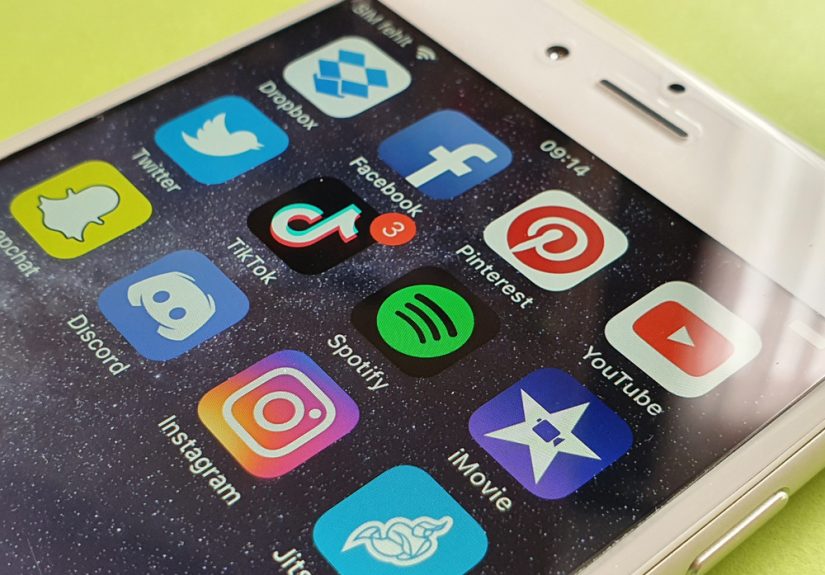
Whether clinicians like it or not, social media is part of the health information ecosystem. People do not wait for a clinic visit to ask health questions anymore. They search, scroll, share, and compare. They see nutrition claims on short-form video, medication advice in comment threads, and “wellness” recommendations dressed up like science.
If physicians are not present in those spaces, the conversation does not become neutral. It becomes crowded with influencers, brands, grifters, and highly motivated amateurs. Some are helpful. Many are not.
That is why physician participation in social media is not vanity. It is public servicewhen done well.
Physician voices can reduce misinformation, not just react to it
Health misinformation is not just “wrong facts.” It is a trust problem, a speed problem, and a communication problem. Bad information often spreads faster than corrections because it is simpler, more emotional, and more shareable.
Physicians can help because they bring both expertise and context. They can explain what is known, what is uncertain, and what should happen next. That middle partwhat is uncertainis especially important. One reason misinformation spreads is that uncertainty feels uncomfortable. Skilled physician communicators can make uncertainty understandable instead of scary.
Good physician communication online usually shares a few traits:
- Plain language instead of jargon
- Clear distinction between evidence and opinion
- Context for new studies (especially preprints)
- Respectful tone, even when correcting errors
- Consistency over time, not just crisis posting
And yes, design matters too. Public health communication is not just a content problem. It is also a packaging problem. If accurate information is harder to understand and uglier to share than a misleading meme, the meme wins.
Social media needs more physicians, but also better physician training
Here is the part nobody likes to admit: not every physician is automatically good at public communication. Being right and being understandable are not the same skill.
Medical training teaches diagnosis, treatment, and documentation. It does not always teach camera presence, headline framing, audience psychology, or platform dynamics. That is why more physicians in media must go hand in hand with media training.
The best physician communicators are not just knowledgeable. They are translators. They understand that a 45-second video may be someone’s first step toward appropriate care, not the place to deliver a full textbook chapter.
This is also why newsrooms and health organizations should work together more intentionally. Journalists need credible local sources. Physicians need help communicating clearly and quickly. That is a partnership opportunity, not a turf war.
What keeps physicians out of politics and media
Burnout is real, and civic engagement takes time
It is hard to ask physicians to “do more public service” when many are already exhausted. Between documentation, staffing shortages, insurance friction, and emotional load, many doctors are protecting the little energy they have left. That is not apathy. That is survival.
Burnout is one of the biggest barriers to physician participation in public life. A doctor who spends all day fighting a broken process may not be eager to spend the evening on a policy panel or correcting misinformation online. If we want more physicians in politics and media, we cannot ignore clinician well-being.
In fact, these issues are connected. Better physician representation can improve policy. Better policy can reduce burnout. Less burnout can free physicians to participate. It is a loop, and right now the loop is working against us.
Harassment and reputational risk scare people away
Online visibility comes with risk. Physicians who post publicly about vaccines, mental health, reproductive care, addiction, obesity, or infectious disease may face harassment, trolling, and organized attacks. Some also worry about being misunderstood, clipped out of context, or dragged into political identity battles they never signed up for.
These concerns are not dramatic. They are practical. Hospitals, medical groups, and professional societies need to stop acting like “use your voice” is enough. If they want physicians to engage publicly, they should provide support:
- Media and social media training
- Clear professionalism guidelines
- Legal and institutional backup when harassment occurs
- Protected time for advocacy and communication work
- Templates and toolkits for crisis communication
Asking physicians to step into public spaces without support is like asking them to staff an ICU with no monitors. Technically possible, strategically terrible.
Medicine has a culture problem around public engagement
Some physicians still hear an outdated message: “Stay in your lane.” But health does not stay in one lane. It intersects with housing, transportation, education, labor policy, media systems, and technology platforms. A physician who speaks about these intersections is not being “too political.” They are being accurate.
Professionalism should not mean silence. It should mean responsible speech.
How to build a stronger physician-to-public pipeline
Start earlier: medical school and residency
Civic communication and policy literacy should be part of physician development, not an optional hobby for the unusually energetic. Medical schools and residency programs can teach the basics:
- How laws and regulations shape clinical care
- How to explain evidence to non-specialists
- How to engage media without overclaiming
- How to use social media professionally and ethically
- How to advocate at local, state, and federal levels
Not every physician needs to run for office. But every physician should understand how policy and public communication affect patient outcomes.
Make advocacy and communication a legitimate career path
Healthcare systems often celebrate clinical productivity and research output while treating media work or policy engagement like side quests. That has to change. If a physician helps improve vaccination uptake, clarifies a harmful rumor, or informs a better state policy, that is not extracurricular. That is mission work.
Organizations should build real pathways for this:
- Physician spokesperson programs
- Community health media fellowships
- Protected advocacy rotations
- Promotion criteria that include public impact
- Cross-training with communications teams and journalists
Support local physician voices, not just national celebrities
America does not only need more famous doctors on cable news. It needs more trusted local physicians in city councils, county boards, school meetings, radio interviews, and community Facebook groups. Local trust is often more durable than national visibility.
A family physician explaining measles vaccination at a school district forum may do more practical good than a viral national debate clip with five panelists and one person shouting. The internet loves conflict. Public health needs credibility.
Use a team model: physicians + journalists + community leaders
Physicians should not carry the communication burden alone. The best public information work is collaborative. Journalists know storytelling and audience habits. Community leaders know local trust networks. Public health professionals know outreach strategy. Physicians bring clinical knowledge and frontline reality.
Put those together, and you get communication that is accurate, human, and actually heard.
Extended experiences from the front lines (500-word add-on)
The strongest argument for more physicians in politics and media is not theoretical. It comes from what happens in everyday practice. Consider the common experience of a primary care doctor who spends ten minutes discussing blood pressure control and twenty minutes explaining insurance rules. The patient leaves thinking the doctor “didn’t do much,” when in reality the physician just navigated a maze of prior authorization, formularies, and referral restrictions. That doctor understands something many policymakers do not: access problems are often disguised as paperwork. A physician who has lived that every day will speak differently in a legislative hearing about reimbursement reform or administrative burden. The testimony is sharper, more grounded, and harder to ignore because it is tied to patient consequences, not abstract ideology.
Another common experience happens online. A pediatrician posts a short video explaining why a fever after vaccination can be normal and when parents should actually worry. The comments fill with anxiety, misinformation, and a few conspiracy claims. It is exhausting, but then a parent replies, “I almost skipped the shot, but this helped.” That one comment is the whole case for physician presence in social media. The platform is messy, the algorithm is unpredictable, and the comment section can resemble a food fight at a debate club. But a clear, calm, evidence-based physician voice can change behavior in real time. It can reduce panic, improve decisions, and build trust before the next clinic visit.
There is also the experience of public silence. Many physicians have seen false health claims spread in local communities and chosen not to respond because they fear harassment, employer concerns, or professional backlash. That fear is understandable. Some doctors have watched colleagues get clipped out of context or targeted online for discussing routine public health guidance. The lesson here is not that doctors should stay quiet. The lesson is that institutions need to back them up. Physicians are more likely to speak publicly when they know their hospital, clinic, or medical society has a clear policy, a communications team, and a plan if things get ugly.
And finally, there is the “small room” experience: a school board meeting, county health forum, or statehouse committee hearing where one physician shows up and changes the tone of the conversation. Not by dominating it, but by clarifying it. They explain what the evidence says, what it does not say, and what tradeoffs are realistic. They answer questions in plain English. They acknowledge uncertainty without sounding evasive. People may still disagree, but the discussion becomes more honest. That is what physician participation in public life can do. It does not eliminate conflict. It improves the quality of decision-making inside the conflict.
In the end, more physicians in politics and media means more real-world clinical experience in the public square. And frankly, the public square could use a little more diagnosis before treatment.
Conclusion
America does not need physicians to become full-time politicians or content creators. It needs more physicians who are willingand supportedto engage where public decisions are made and where public beliefs are shaped.
Politics determines healthcare capacity, funding, access, and incentives. Media and social media determine what people believe about health before they ever enter a clinic. If physicians are underrepresented in both, we should not be surprised when policy feels disconnected and misinformation spreads faster than care.
The fix is not complicated, even if the work is hard: train physicians to communicate, support them when they speak, protect them when they are targeted, and make public engagement part of the profession’s core mission. More physicians in politics and (social) media will not solve every healthcare problembut it will make our public conversations smarter, our policies more realistic, and our health system more human.





 Close
Close