
Table of Contents >> Show >> Hide
- Blade Steak in Plain English
- Where Blade Steak Comes From: The Chuck and the “Top Blade”
- Blade Steak vs. Top Blade vs. Flat Iron: The One Detail That Changes Everything
- Other Names for Blade Steak (Because Beef Needed More Nicknames)
- What Blade Steak Tastes Like
- The Best Ways to Cook Blade Steak (Choose Your Adventure)
- How to Buy Blade Steak Without Regret
- Prep Tips That Make Blade Steak Better
- Nutrition Snapshot (What You’re Getting Besides Deliciousness)
- FAQ: Quick Answers About Blade Steak
- Experiences People Commonly Have With Blade Steak (The “500-Word Reality Check”)
- Conclusion
“Blade steak” sounds like something you’d order from a medieval tavern right before a duel. In reality, it’s a
hardworking, budget-friendly beef cut that can taste downright luxuriousif you cook it the right way.
Cook it the wrong way, and you’ll be chewing long enough to finish an entire podcast series.
This guide breaks down what blade steak is, where it comes from, why it’s often confused with flat iron steak,
how to buy it without getting bamboozled by labeling, and exactly how to cook it so it turns out tender and juicy.
At the end, you’ll also find a longer “real-world experiences” sectionbecause blade steak is one of those cuts
you learn best by living with it a little.
Blade Steak in Plain English
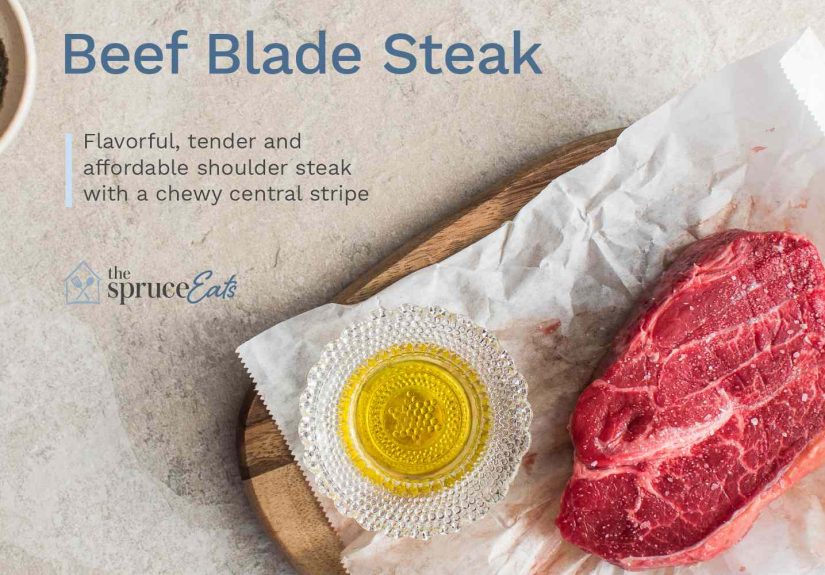
Blade steak is a cut from the beef chuck (the shoulder area). It’s known for big, beefy flavor and good marbling,
but it often includes a strip of tough connective tissue running through the middle. That connective tissue is
the main reason blade steak has a reputation that ranges from “hidden gem” to “why is my jaw sore?”
If you love steak flavor but don’t love steak prices, blade steak is worth knowing. It’s commonly sold as an
everyday steak option, and it can be excellent for braising, smoking, or other low-and-slow cooking methods.
With a little technique, it can also work for quicker cookingespecially if you trim it like a butcher would.
Where Blade Steak Comes From: The Chuck and the “Top Blade”
Blade steak typically comes from the “top blade” area of the chuck, associated with the
infraspinatus muscle. That muscle sits near the shoulder blade, which is why you’ll see “blade”
pop up in the name. The chuck is a heavily used part of the animal, which is why many chuck cuts are flavorful
but can be tougher unless cooked thoughtfully.
Modern butchery often separates chuck into individual muscles so each one can be sold as a specific steak with a
specific best-use cooking style. Blade steak is part of that story: same general neighborhood as the famous
flat iron steak, but not always trimmed the same way.
Blade Steak vs. Top Blade vs. Flat Iron: The One Detail That Changes Everything
Here’s the secret that clears up most confusion:
blade steak and flat iron steak often come from the same muscle area, but the trimming and cutting style differs.
The “seam” (connective tissue) is the whole plot
The top blade muscle naturally has a seam of connective tissue (sometimes described as gristle or fascia)
running through it. When a butcher slices straight across the muscle without removing that seam, the result can
be sold as a blade steak or top blade steak. That seam won’t magically melt away
in a quick sear.
But when the butcher removes the internal connective tissue (or cuts the muscle in a way that avoids it),
you get flat iron steakknown for being impressively tender for a chuck cut and often described as
one of the most tender steaks you can buy outside the rib/tenderloin “fancy neighborhood.”
How to spot the difference at the store
- Flat iron steak is usually flatter, more uniform, and does not have a thick strip of gristle down the center.
- Blade/top blade steak often looks like it has a “line” or seam running through itsometimes obvious, sometimes subtle.
- If it’s labeled “flat iron” but you see a thick internal seam, it may actually be top blade/blade steak that wasn’t trimmed like a true flat iron.
Other Names for Blade Steak (Because Beef Needed More Nicknames)
If you’ve ever stared at a package and thought, “Is this a steak or a password reset question?”you’re not alone.
Blade steak can be marketed under several names, and different stores use different habits.
Depending on the butcher and region, you might see:
top blade steak, boneless top chuck steak, book steak, butler steak, oyster blade steak, charcoal steak,
and other variations. Some names overlap with flat iron steak naming conventions, which is why the seam detail
matters more than the label.
What Blade Steak Tastes Like
Flavor is where blade steak shines. The chuck is known for a robust, beef-forward taste, and blade/top blade cuts
can be nicely marbled. That marbling helps keep the meat juicy and flavorful, especially with the right method.
Texture depends on (1) whether the connective tissue is removed and (2) how you cook it:
- Quick-cooked with the seam intact: you’ll get tender sections on either side, plus a chewy “speed bump” in the middle.
- Low-and-slow: the connective tissue can soften, turning the whole steak into something fork-tender and rich.
- Trimmed like a flat iron: it can eat like a much more expensive steak.
The Best Ways to Cook Blade Steak (Choose Your Adventure)
Blade steak is flexible, but it’s not a “do anything, anytime” cut. Pick the method that matches your specific piece of meat.
If you’re not sure whether the connective tissue has been removed, assume it hasn’tand choose a method that forgives.
Method 1: Braise It (The Foolproof Favorite)
Braising is the classic solution for cuts with connective tissue. You get deep flavor, tender texture, and the kind
of comfort-food aroma that convinces neighbors you secretly went to culinary school.
- Season generously with salt and pepper. Optional: add garlic powder or smoked paprika.
- Sear in a hot pan with a little oil, 2–3 minutes per side, until browned.
-
Build the braise: add sliced onions, a splash of broth (or a mix of broth and tomato),
and herbs like thyme or bay leaf. -
Cover and cook low-and-slow:
- Oven: about 300°F for 2–3 hours
- Stovetop: gentle simmer until tender
- Slow cooker: low for 6–8 hours
- Slice or shred (depending on tenderness) and serve with the sauce.
Best uses: tacos, sandwiches, rice bowls, mashed potatoes, or anything that deserves a rich, beefy upgrade.
Method 2: Smoke It (Blade Steak’s “BBQ Glow-Up”)
Smoking works beautifully because it’s basically braising’s outdoorsy cousin. The low heat gives connective tissue
time to relax, while smoke adds depth.
- Season: salt, pepper, garlic powder, and a touch of paprika or chili powder.
- Smoke low (often in the 225–275°F range) until tender.
- If it’s not tender yet, don’t panicwrap it (foil or butcher paper) with a splash of broth and keep going until it softens.
Pro tip: blade steak can handle bold rubs. It’s chuckit’s not shy.
Method 3: Grill or Pan-Sear (Only If You Manage the Seam)
You can grill blade/top blade steak, but you need to be realistic about that center connective tissue.
Your options:
-
Option A: Trim it out before cooking. Use a sharp knife to separate the two “halves” along the seam.
Then cook each piece like a smaller steak. - Option B: Cook it, then slice around it. Not elegant, but it works (and honestly, many people do this).
- Option C: Choose flat iron instead. Same neighborhood, fewer problems.
For quick cooking, aim for medium-rare to medium for the best texture. Use a thermometer if you can,
rest the meat 5–10 minutes, and always slice against the grain.
Method 4: Sous Vide (The “Science Fair” Way to Tender)
Sous vide is a great match for blade steak because it lets you control tenderness without overcooking.
It’s also the method most likely to make you say, “Wait… this is chuck?”
Basic idea: season, bag, cook at a controlled temperature long enough to tenderize, then finish with a fast sear.
Time depends on thickness and how much connective tissue you’re working with. If you want steak-like slices,
go shorter; if you want braise-like tenderness, go longer.
How to Buy Blade Steak Without Regret
Blade steak can be a stealor a “learning opportunity.” Here’s how to stack the odds in your favor:
Look for marbling
Choose pieces with visible intramuscular fat (thin white lines). Marbling helps juiciness and flavor,
especially when cooking low-and-slow.
Check the thickness and shape
More uniform pieces cook more evenly. If you plan to grill, you want a piece thick enough to sear without
turning into overcooked sadness.
Ask one question at the butcher counter
“Does this have the connective tissue seam in the middle, or is it trimmed like a flat iron?”
That single sentence can save your dinner.
Prep Tips That Make Blade Steak Better
Marinate strategically (especially for quick cooking)
If you’re grilling or broiling a blade/top blade steak, a marinade can help with perceived tenderness and flavor.
Think acidic components (vinegar, citrus, yogurt) plus oil and seasoning. You don’t need a complicated recipe:
even a simple mix of vinegar + oil + garlic + salt + pepper can do good work.
Don’t skip the rest
After cooking (especially searing), rest the steak 5–10 minutes so juices redistribute.
This isn’t “chef drama.” It’s physics with snacks.
Slice against the grain
Blade steak can be flavorful and tender, but slicing with the grain can make it feel tougher than it is.
Identify the direction of the muscle fibers and slice across them.
Nutrition Snapshot (What You’re Getting Besides Deliciousness)
Exact nutrition depends on portion size and trimming, but blade/top blade and flat iron cuts are generally
protein-forward. Many cut guides list servings in the neighborhood of roughly
23–24 grams of protein and around 160–180 calories per serving for top blade/flat iron-style cuts,
with values varying by leanness and grade.
Translation: it’s a satisfying, high-protein dinner that can fit into many eating stylesespecially if you pair it
with vegetables and a smart cooking method.
FAQ: Quick Answers About Blade Steak
Is blade steak the same as chuck steak?
Blade steak is from the chuck, but “chuck steak” can mean multiple cuts from the chuck. Blade/top blade is a
more specific label tied to a particular muscle area and trimming style.
Why is it sometimes tough?
Because of connective tissue. If it hasn’t been removed (like it is for flat iron), quick cooking won’t break it down.
Use braising/smoking/sous vide, or trim the seam out before grilling.
Is blade steak good for fajitas or stir-fry?
It can beespecially if you slice it thin against the grain and use a marinade. For super-quick high-heat cooking,
some people prefer flat iron or other naturally tender cuts, but blade steak can absolutely work with good technique.
Experiences People Commonly Have With Blade Steak (The “500-Word Reality Check”)
Blade steak tends to create the same set of “first-time moments” for a lot of home cooks. If you’re new to it,
here are some realistic experiences you might recognizeplus how to turn each one into a win.
1) The Great Flat-Iron Mix-Up
A very common experience: you buy something labeled “flat iron,” throw it on the grill like a champion, and then
discover a chewy strip running right through the center. Suddenly, your “weeknight steak night” feels like a
jaw-strengthening fitness program.
The fix next time is simple: look closely before you buy. If you see that internal seam, treat it as top blade/blade steak.
If you already bought it, you can still save dinnereither trim the seam out before cooking (two steaks for the price of one!)
or switch to braising. The biggest lesson most people take away: labels aren’t always consistent, but anatomy is.
2) The Braise That Turns Skeptics Into Fans
Another classic: someone tries blade steak once, decides it’s “too tough,” and writes it off foreveruntil they
try a slow braise. That’s often when blade steak’s reputation flips. The same cut that felt stubborn on the grill
becomes fork-tender in a pot with onions, broth, and time.
People often describe the moment like this: they expected “cheap steak,” but got something closer to rich pot roast
with deeper beef flavor. And because blade steak is so good at soaking up sauce, it becomes an ideal candidate for
tacos, rice bowls, and sandwich fillings. The most common follow-up thought is, “Why didn’t I do this sooner?”
3) The Leftover Glow-Up (Where Blade Steak Really Shines)
Blade steak leftovers are frequently better than the original plan. That’s not a roast-beef-style exaggeration; it’s
just how chuck cuts behave when they’ve had time to relax. After a braise or long cook, leftovers slice easily,
reheat well, and keep their flavor.
A lot of cooks discover their favorite use on day two: shredded beef tacos with lime, chopped onions, and cilantro;
a “fancy” grilled cheese with melty provolone and caramelized onions; or a quick hash with potatoes and peppers.
Blade steak tends to be generous that waylike it’s trying to apologize for that one time it made you chew too long.
4) The “Oh… I Should’ve Sliced It Thinner” Moment
Even when blade steak is cooked properly, slicing technique matters. Many people cook it well, then slice it thick
with the grain by accident, and the texture feels tougher than it should. The next time they slice thin
and against the grain, it’s a completely different experiencemore tender, easier to eat, and way more “steak-like.”
5) The Upgrade Path: Blade Steak Teaches You How to Shop Smarter
Blade steak has a sneaky benefit: it makes you a better buyer. Once you learn to spot the seam, ask the right butcher
question, and match the cut to the method, you start applying that skill everywherechuck roast, short ribs,
sirloin, you name it. Blade steak is basically “Beef 101,” but delicious.
Conclusion
Blade steak is a flavorful chuck cut that rewards smart cooking. If you treat it like a premium grill steak without
checking for connective tissue, it can fight back. But if you braise it, smoke it, sous vide it, or trim it correctly,
it can deliver a hearty, beefy meal that feels like a bargain and tastes like you planned ahead.
In other words: blade steak isn’t “bad.” It’s just honest. Cook it with a little respect, and it’ll treat you right.







 Close
Close