Table of Contents >> Show >> Hide
- Why Swimming Lessons Matter So Much
- So, What Is the Best Age to Start Swim Lessons?
- Under 6 Months: Focus on Safety, Not Lessons
- 6 to 12 Months: Water Comfort With a Parent
- Around Age 1: Many Children Can Begin Swim Lessons
- Ages 2 to 3: Build Comfort, Safety Habits, and Simple Skills
- Ages 4 to 5: A Great Window for Formal Swim Skills
- Ages 6 and Up: Strength, Stamina, and Real-World Safety
- How to Know If Your Child Is Ready
- What Good Swim Lessons Should Include
- Swim Lessons Are Only One Layer of Protection
- Special Considerations for Children With Medical or Developmental Needs
- What Parents Should Avoid
- A Practical Age-by-Age Swim Plan
- Real-Life Experiences Parents Often Recognize
- Conclusion: Start Early, But Start Wisely
Few parenting questions arrive with the same mix of excitement and panic as: when should my child learn how to swim? On one hand, swimming is fun, healthy, confidence-building, and the closest many kids get to believing they are part dolphin. On the other hand, water safety is serious business. Pools, lakes, bathtubs, beaches, buckets, and even decorative fountains do not care how adorable your toddler looks in tiny goggles.
The best answer is both simple and slightly annoying: many children can begin swim lessons around age 1, but the right time depends on the child’s development, comfort, maturity, health, and access to safe instruction. The American Academy of Pediatrics supports swim lessons as one layer of drowning prevention beginning for many children after their first birthday. That does not mean every 12-month-old should be tossed into a class with a rubber duck and a dream. It means parents can begin thinking seriously about structured water safety once a child is developmentally ready.
Learning to swim is not a one-time milestone like losing a tooth or mastering the art of saying “no” with Oscar-worthy emotion. It is a gradual process. A baby may begin with water comfort. A toddler may learn to enter and exit safely. A preschooler may learn floating, kicking, and basic movement. An older child may build stamina, stroke technique, and real water judgment. The goal is not to create an Olympic swimmer by kindergarten. The goal is to raise a child who respects water, knows what to do around it, and understands that “I can swim” never means “I do not need supervision.”
Why Swimming Lessons Matter So Much
Drowning prevention is the heart of this topic. In the United States, drowning is a leading cause of death for young children, especially ages 1 to 4. It often happens quickly and quietly, not like the dramatic splashing scenes in movies. A child in trouble may not yell, wave, or perform a theatrical “save me” routine. That is why swim lessons, adult supervision, pool barriers, life jackets, and emergency readiness all work together as layers of protection.
Formal swim lessons can reduce drowning risk, but they do not eliminate it. That point deserves a pool-float-sized spotlight. A child who has taken swim lessons still needs close, constant, distraction-free adult supervision near water. Lessons are important, but they are not magic. They are more like seat belts: essential, protective, and still not a reason to drive with your eyes closed.
So, What Is the Best Age to Start Swim Lessons?
Under 6 Months: Focus on Safety, Not Lessons
For newborns and very young infants, formal swim lessons are not recommended as drowning prevention. Babies this young are still developing temperature regulation, immune defenses, head control, and basic physical strength. Water exposure should be limited, gentle, and closely supervised. Bath time is plenty of aquatic adventure at this stage.
Parents should focus on home water safety: never leave a baby alone in the bath, empty tubs and buckets immediately after use, keep toilet lids closed, and secure bathroom doors if needed. A baby can drown in very little water, and curiosity develops faster than common sense. Unfortunately, common sense usually arrives somewhere after algebra.
6 to 12 Months: Water Comfort With a Parent
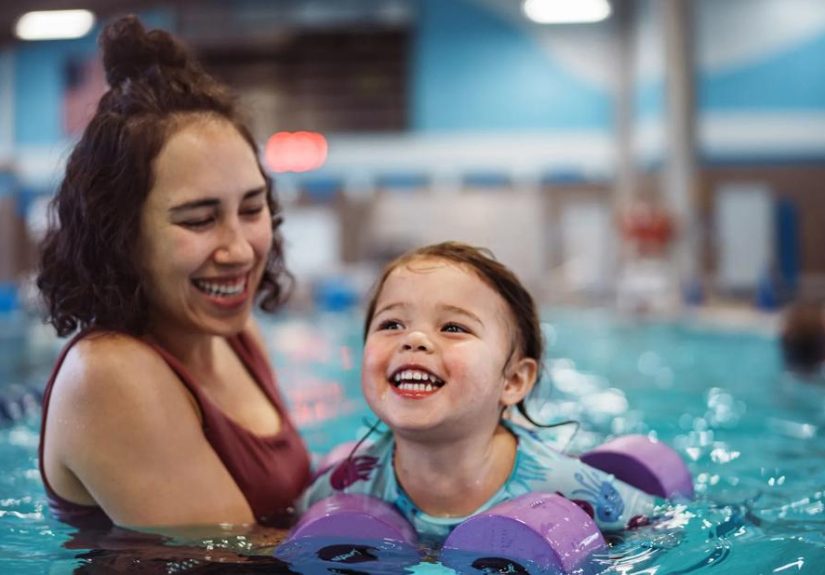
Some families introduce babies to the pool around 6 months, especially through parent-and-child water comfort classes. These are not true swimming lessons in the “my baby can swim laps” sense. They are gentle, playful sessions that help babies get used to water, songs, splashing, supported floating, and being held safely by a caregiver.
At this age, the value is mostly for comfort and parent education. Parents can learn safe holds, supervision habits, and how to stay calm in the water. Babies can learn that water is not terrifying. Everyone can learn that swim diapers are an act of mercy for the entire community.
Around Age 1: Many Children Can Begin Swim Lessons
For many children, age 1 is the earliest point when swim lessons may make sense as part of a broader water safety plan. This is the age when toddlers become more mobile, more curious, and more likely to wander toward water faster than adults expect. Lessons for 1-year-olds should be developmentally appropriate, gentle, and focused on water adjustment, safe entry, assisted floating, turning toward the wall, and basic safety routines.
Not every 1-year-old is ready. Some toddlers adore water and march into class like tiny CEOs. Others cling to a parent like the pool is full of tax forms. Readiness matters. A good instructor will not force a child, shame a child, or promise to “drown-proof” a child. The best toddler swim lessons build trust first and skills second.
Ages 2 to 3: Build Comfort, Safety Habits, and Simple Skills
By ages 2 and 3, many children are more coordinated and better able to follow simple directions. Lessons may include blowing bubbles, kicking, reaching, floating with help, climbing out, waiting for permission before entering, and practicing safe pool behavior. At this stage, children still need touch supervision, meaning an adult should stay close enough to reach them immediately.
Parents should avoid thinking, “My toddler took swim lessons, so we are good.” Toddlers are brave, fast, and famously overconfident. This is the same age group that believes pants are optional and crackers are a food group. They need adults to create the safety structure.
Ages 4 to 5: A Great Window for Formal Swim Skills
Many children are ready for more traditional swim instruction around ages 4 and 5. They may be able to listen, imitate movements, coordinate arms and legs, float more independently, put their face in the water, and practice short-distance swimming. Preschool swim lessons often work well because children are old enough to understand rules but young enough to build skills before pool parties, summer camps, and beach vacations become regular events.
This is also a good time to teach water competency, not just strokes. Water competency includes entering the water safely, resurfacing, floating or treading water, turning around, moving toward an exit, and getting out. A beautiful freestyle stroke is nice. Knowing how to stay calm and reach safety is better.
Ages 6 and Up: Strength, Stamina, and Real-World Safety
Children who start lessons at age 6 or older can still become excellent swimmers. In fact, some older beginners learn quickly because they have better coordination, attention, and body awareness. Lessons can focus on stronger strokes, breath control, floating, treading water, swimming longer distances, and understanding different water environments.
Older kids should also learn that pools, lakes, rivers, oceans, and water parks are not the same. A child who swims well in a calm pool may struggle in waves, currents, cold water, or murky lakes. Swimming ability must grow along with judgment. This is especially important for tweens and teens, who may overestimate their skills or underestimate risk when friends are watching.
How to Know If Your Child Is Ready
Age is helpful, but readiness is the real decision-maker. Before enrolling your child in swim lessons, consider these questions:
- Can your child separate from you or participate with you calmly?
- Does your child follow simple directions?
- Is your child comfortable being held in water?
- Can your child tolerate splashing, noise, and a group setting?
- Does your child have any medical condition that should be discussed with a pediatrician first?
- Is the class taught by a qualified instructor who understands child development?
If the answer to several of these is “not yet,” that is not failure. It is information. A fearful child can begin with bath play, sitting on pool steps, pouring water from cups, watching siblings, or attending parent-child classes. The goal is progress, not a viral video of a toddler doing butterfly stroke while everyone gasps.
What Good Swim Lessons Should Include
A strong children’s swim program should teach more than kicking and bubbles. Look for lessons that include water safety, safe entry and exit, floating, rolling, breath control, reaching for the wall, listening to adults, and age-appropriate rescue concepts. Children should learn never to swim alone, never to enter water without permission, and never to rely on inflatable toys as safety devices.
Qualified instructors should be patient, trained, and comfortable working with children at different developmental levels. The class should have a low student-to-teacher ratio, especially for toddlers and preschoolers. The pool should be clean, warm enough for young children, and properly supervised. Parents should be allowed to observe. If an instructor promises your child will be “drown-proof,” treat that as a red flag wearing goggles.
Swim Lessons Are Only One Layer of Protection
The safest families use multiple layers of water protection. Swim lessons are one layer. Adult supervision is another. Barriers, alarms, life jackets, CPR training, and water rules all matter. No single strategy is enough by itself.
Use Active Supervision
When children are in or near water, an adult should be assigned as the water watcher. That person should not scroll, read, nap, grill burgers, or get pulled into a passionate debate about sunscreen brands. Watching the water is the job. For younger children and weak swimmers, the adult should stay within arm’s reach.
Secure Pools With Barriers
Home pools should have four-sided fencing that separates the pool from the house and yard. Gates should be self-closing and self-latching. Pool covers, door alarms, and pool alarms can add protection, but they do not replace fencing or supervision. Backyard pools are wonderful, but they require serious safety planning.
Use the Right Life Jacket
For boating, lakes, rivers, docks, and open water, children should wear a properly fitted U.S. Coast Guard-approved life jacket. Water wings, inflatable rings, and foam noodles are toys, not lifesaving equipment. They can slip off, deflate, or give children and adults a false sense of security.
Learn CPR
Parents, caregivers, grandparents, babysitters, and frequent pool hosts should learn CPR. In an emergency, seconds matter. CPR is one of those skills you hope you never need, but if you do need it, you will be very glad you did not skip the class.
Special Considerations for Children With Medical or Developmental Needs
Children with autism, epilepsy, heart conditions, mobility differences, sensory sensitivities, or developmental delays may need a more individualized swim plan. Some children are drawn strongly to water and may wander toward it. Others may fear noise, splashing, or crowded classes. A pediatrician, occupational therapist, adaptive swim instructor, or local disability-focused recreation program may help families choose the right approach.
Adaptive swim lessons can be excellent. They may use quieter pools, one-on-one instruction, visual supports, gradual exposure, and extra repetition. The core message remains the same: every child deserves access to water safety skills, but the path may look different.
What Parents Should Avoid
Parents should avoid any program that uses fear, force, shame, or unrealistic promises. A child should not be repeatedly dunked without consent or pushed past panic in the name of “toughening up.” Confidence grows from trust. A terrified child may learn to hate water instead of respect it.
Parents should also avoid relying on swim lessons alone. Children can forget skills, panic in unexpected situations, become tired, or behave impulsively. Even strong swimmers need supervision. Adults should also avoid alcohol when responsible for children near water, especially around pools, boats, and beaches.
A Practical Age-by-Age Swim Plan
Baby Stage: Birth to 12 Months
Keep water exposure safe, gentle, and supervised. Focus on bath safety, secure bathrooms, and never leaving a baby unattended around water. Around 6 months, parent-child water comfort classes may be appropriate for some families.
Toddler Stage: 1 to 3 Years
Consider swim lessons if your child is ready. Choose a gentle program focused on water comfort, safe habits, floating support, wall skills, and parent education. Keep supervision close and constant.
Preschool Stage: 4 to 5 Years
This is often an excellent time for structured swim lessons. Children may learn floating, kicking, breath control, safe entry and exit, and short-distance swimming. Reinforce rules every time you visit water.
School-Age Stage: 6 Years and Older
Build stronger swimming skills, stamina, treading water, stroke technique, and safety judgment. Teach children how pools differ from lakes, rivers, and oceans. Continue lessons until your child is truly competent, not just comfortable.
Real-Life Experiences Parents Often Recognize
Many parents discover that swim readiness is less like flipping a switch and more like convincing a cat to enter a bathtub: possible, but timing matters. One family may have a 14-month-old who laughs through every splash and eagerly reaches for the wall. Another may have a 3-year-old who treats the pool steps like the edge of a volcano. Both children can learn. They just need different starting points.
A common experience is the “first lesson freeze.” A child who loved hotel pools suddenly refuses to move when a real instructor appears. This is normal. A class has structure, new sounds, other children, and an unfamiliar adult. Parents should not panic after one rough lesson. Often, the first few classes are about learning the routine: where to sit, when to enter, how to listen, and whether the instructor is trustworthy. Progress may look like a child putting one ear in the water after three weeks. Celebrate it. That ear worked hard.
Another familiar situation is the fearless toddler. This child charges toward water with the confidence of a stunt performer and the planning skills of a potato. For fearless children, early lessons can be especially helpful because they teach boundaries: stop, wait, ask permission, hold the wall, climb out, and respond to adult instructions. Parents of fearless kids should be extra serious about pool fences, door locks, alarms, and supervision because bravery without skill is not adorable near deep water.
Then there is the cautious child, the one who wants to watch six lessons before putting in a toe. This child is not “behind.” Cautious children often become thoughtful swimmers once they feel secure. Parents can help by visiting the pool outside lesson time, letting the child sit on the edge, playing pouring games in the bathtub, reading picture books about swimming, and using calm language. “You are safe; I am right here” works better than “There is nothing to be scared of.” To a child, there clearly is something to be scared of. It is large, wet, echoing, and full of children kicking like eggbeaters.
Parents also learn that consistency beats cramming. One week of daily vacation swimming can help, but steady lessons over time usually build stronger skills. Children forget between summers. A refresher class before pool season can make a big difference. Families who live near pools, lakes, canals, beaches, or ponds may want to prioritize lessons earlier and practice water rules year-round.
Finally, many parents realize that their own comfort matters. A nervous adult can accidentally transfer fear to a child. A distracted adult can miss danger. A non-swimming adult may feel helpless near water. Parent swim lessons, CPR training, and learning basic rescue skills can transform the whole family’s safety. Children do not need parents to be Olympic athletes. They need parents who are prepared, attentive, and willing to say, “No, you may not swim without an adult,” even when the child negotiates like a tiny lawyer in shark-print trunks.
Conclusion: Start Early, But Start Wisely
So, when should your child learn how to swim? For many children, swim lessons can begin around age 1, especially when the child is developmentally ready and the program is safe, gentle, and age-appropriate. Some babies may benefit from parent-child water comfort classes around 6 months, while many preschoolers are ready for more formal swim skills around ages 4 and 5. Older children can still learn successfully and should continue building strength, stamina, and judgment.
The most important takeaway is that swimming is a life skill, not a luxury activity. It belongs in the same mental category as car seats, bike helmets, and teaching children not to lick shopping cart handles. Swim lessons help, but they must be paired with active supervision, secure barriers, proper life jackets, CPR knowledge, and clear family water rules.
Your child does not need to become the fastest swimmer in the pool. Your child needs to become safer, calmer, smarter, and more capable around water. Start when your child is ready. Choose good instruction. Practice consistently. And remember: the best swim safety plan is layered, realistic, and supervised by an adult who is actually watching the waternot just physically present while mentally shopping for patio furniture.
Note: This article is based on current U.S. pediatric and water-safety guidance from reputable health and safety organizations, including pediatric, public health, drowning-prevention, and swim-instruction resources.