Table of Contents >> Show >> Hide
- The Fast Answer
- First, Clear Up the Tool Confusion
- What Actually Determines the Right Choice?
- The Main Types of Hammer Drill You’ll See
- Corded vs. Cordless: Which Matters More?
- SDS-Plus vs. SDS-Max: The Bit System You Should Actually Understand
- Features Worth Paying For
- What Most Buyers Get Wrong
- So, Which Type of Hammer Drill Do You Really Need?
- Experience-Based Notes: What Real Use Usually Teaches You
- Conclusion
If you have ever stood in the tool aisle staring at a wall of drills that all look vaguely aggressive, welcome to the club. One says hammer drill. Another says rotary hammer. A third insists it is a drill/driver with hammer mode. Then an impact driver struts into the conversation like it owns the place. Suddenly, buying one hole-making machine feels like applying for a mortgage.
Here is the good news: most people do not need the biggest, loudest, most concrete-punishing beast on the shelf. They need the right tool for the material, the number of holes, and how often the tool will actually leave the garage. That is the whole game.
If your projects involve occasional anchors in brick, light block, or the random concrete screw, a standard hammer drill/driver is usually enough. If you drill into cured concrete regularly, need faster progress, or want to chip tile or remove masonry, you are in rotary hammer territory. And if you are eyeing an SDS-Max rotary hammer for hanging one shelf in the basement, that is not ambition. That is tool overkill wearing a cape.
The Fast Answer
| Tool Type | Best For | You Probably Don’t Need It If… |
|---|---|---|
| Regular Drill/Driver | Wood, metal, plastic, household drilling | You plan to drill into concrete, brick, or block |
| Hammer Drill/Driver | Occasional masonry holes, anchors, concrete screws, all-around home use | Your work involves lots of concrete or repeated drilling |
| SDS-Plus Rotary Hammer | Frequent concrete drilling, tougher masonry, light chiseling, tile removal | You only need a few masonry holes a year |
| SDS-Max Rotary Hammer | Heavy-duty drilling, large holes, demolition, serious renovation | You are a typical homeowner doing normal punch-list jobs |
First, Clear Up the Tool Confusion
Regular Drill/Driver
This is your everyday tool for wood, drywall, plastic, and metal. It spins. It drills. It drives screws. It does not like concrete very much, and concrete does not like it back. You can sometimes bully it through soft masonry with the right bit, but that is the mechanical version of using a butter knife as a screwdriver.
Hammer Drill
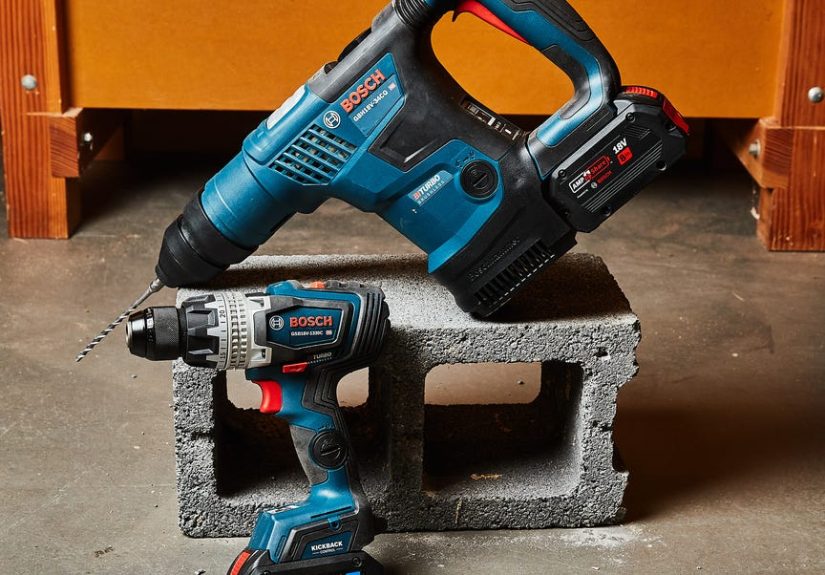
A hammer drill adds a forward pounding action while the bit rotates. That extra percussion helps the bit bite into masonry, brick, and light concrete. Many modern cordless models are drill/drivers with a switchable hammer mode, which is why they are such a popular one-tool solution for homeowners. Turn the hammer action off, and they behave like a normal drill for general work.
Rotary Hammer
A rotary hammer is a different animal. It is built specifically for masonry and concrete, and it hits harder with a more efficient hammering mechanism. It usually uses SDS bits, drills faster in concrete, requires less user force, and often adds a hammer-only mode for chiseling. That means it can do things a hammer drill cannot do well, such as removing tile, chipping mortar, or making lots of holes in hard concrete without acting personally offended.
Impact Driver
An impact driver is for driving screws and lag bolts, not drilling masonry. It delivers rotational impacts to turn fasteners more effectively. It is fantastic for decks, framing, and long screws. It is not a substitute for a hammer drill or rotary hammer. Yes, it sounds powerful. No, that does not mean it wants to meet your foundation wall.
What Actually Determines the Right Choice?
1. What Material Are You Drilling?
The material matters more than the marketing. Brick and concrete block are usually easier to drill than old, cured concrete with stone aggregate. If your job is mostly brick veneer, block walls, or occasional masonry anchors, a hammer drill may be perfect. If the job is structural concrete, slab drilling, basement walls, or repeated anchor holes, a rotary hammer will save time, frustration, and probably a few choice words.
2. How Many Holes Are You Making?
One shelf? One TV mount? One handrail? Buy or use a hammer drill. Twenty anchor holes in concrete? Rent or buy a rotary hammer. The more holes you drill, the more the stronger tool pays you back in speed and less fatigue.
3. How Big Are the Holes?
Small holes for plastic anchors or light-duty concrete screws are usually fine for a hammer drill with a masonry bit. As hole sizes increase, or as you move into harder concrete, rotary hammers become dramatically better. Bigger holes ask for more impact energy, more control, and better bit retention. That is exactly why SDS systems exist.
4. Do You Need to Chisel or Demo Anything?
If the answer is yes, stop shopping for a regular hammer drill. You want a rotary hammer that offers hammer-only mode. That opens the door to scraping thinset, popping tile, removing mortar, and light demolition work. A hammer drill can drill. A rotary hammer can drill and get a little destructive when the project demands it.
The Main Types of Hammer Drill You’ll See
Hammer Drill/Driver: The Best Choice for Most Homeowners
This is the smartest pick for the average buyer. A cordless hammer drill/driver handles wood and metal during normal use, then switches into hammer mode when you need to drill masonry. It is versatile, relatively compact, and easy to justify because it does many jobs well.
Buy this if: you want one primary drill, you occasionally drill into masonry, and most of your work is still ordinary home improvement.
Skip this if: your “occasional” concrete work is actually every weekend.
Corded Hammer Drill: The Budget Workhorse
Corded hammer drills are still relevant. They provide steady power, no battery drama, and solid value if you drill masonry often enough to care but not so often that you need a rotary hammer. They are especially attractive for DIYers who do renovation projects in bursts and do not want to buy into a battery platform.
Buy this if: you want lower cost, dependable runtime, and mostly stationary work around the house or shop.
Skip this if: you work in awkward places, outside often, or hate extension cords with the fire of a thousand suns.
SDS-Plus Rotary Hammer: The Sweet Spot for Serious Concrete Work
This is the rotary hammer most pros and serious remodelers reach for first. SDS-Plus tools are generally lighter and more compact than SDS-Max tools, but far more capable than a standard hammer drill when concrete is on the menu. They excel at repeated anchor holes, harder concrete, overhead work, and light chiseling.
Buy this if: you drill concrete regularly, install anchors often, or want one masonry tool that can also chip tile and thinset.
Skip this if: you only make a few masonry holes per year. Renting is probably smarter.
SDS-Max Rotary Hammer: For Heavy-Duty Jobs Only
SDS-Max tools use larger shanks, deliver more impact energy, and are built for bigger holes, harder material, and more aggressive demolition. They are excellent tools. They are also heavy, expensive, and unnecessary for most homeowners. Buying one for casual use is a little like purchasing a bulldozer because you planted three shrubs once.
Buy this if: you do contractor-grade concrete work, heavy chiseling, slab demolition, or frequent large-diameter drilling.
Skip this if: your projects involve shelves, TV mounts, small anchors, or occasional repairs.
Corded vs. Cordless: Which Matters More?
For hammer drills, cordless is usually the better everyday choice. Modern brushless cordless hammer drills are powerful, convenient, and perfect for general household use. If you already own batteries in a platform you like, the decision gets even easier.
For rotary hammers, cordless models are now very good, especially in SDS-Plus sizes. They are excellent for service work, ladders, punch lists, and job sites where portability matters. Corded models still make sense for long sessions, heavy drilling, and buyers who want nonstop runtime without thinking about battery capacity.
In plain English: cordless wins on convenience, corded wins on unlimited runtime, and the better choice depends on how long you drill in one stretch.
SDS-Plus vs. SDS-Max: The Bit System You Should Actually Understand
If you are shopping rotary hammers, pay attention to the chuck system. SDS bits lock into the tool and are designed to transfer hammering force more effectively than a standard three-jaw chuck.
- SDS-Plus: lighter, more compact, ideal for smaller to medium holes and most remodeling or anchoring work.
- SDS-Max: heavier-duty, built for bigger holes, tougher materials, and more aggressive drilling or chiseling.
For most non-commercial buyers, SDS-Plus is the smarter rotary-hammer choice. SDS-Max is for the jobs that make neighbors ask whether you are remodeling or excavating a tunnel.
Features Worth Paying For
Anti-Vibration Systems
Concrete drilling can be fatiguing, especially in rotary hammers. Anti-vibration features from major brands are worth real money if you drill often. They improve comfort, control, and endurance. This is one of those features that sounds boring until your hands are buzzing at dinner.
Kickback or Anti-Rotation Control
When a bit binds in concrete, the tool can twist hard. Safety features that help shut the tool down or reduce rotational force are especially valuable on more powerful rotary hammers. Bigger tools create bigger surprises, and this is one surprise you would rather skip.
Dust Extraction Compatibility
Drilling concrete creates dust, including silica-containing dust. If you drill indoors or drill often, look for a shroud, dust extractor, or compatible vacuum attachment. Cleaner holes, cleaner air, less cleanup, and less regret. That is a rare four-for-one deal in home improvement.
Three Modes on Rotary Hammers
The best rotary hammers often give you three settings: rotary-only, rotary hammer, and hammer-only. That flexibility is what lets one tool handle drilling, concrete work, and light demo without needing a separate dedicated demolition hammer for smaller jobs.
What Most Buyers Get Wrong
Mistake No. 1: Buying a regular drill and hoping for the best.
Hope is not a masonry accessory. If concrete is involved, get at least a hammer drill.
Mistake No. 2: Buying a rotary hammer for one project.
If you only need a handful of holes in concrete once a year, rent a rotary hammer or stick with a hammer drill.
Mistake No. 3: Ignoring bits.
The correct tool with the wrong bit is still the wrong setup. Use good masonry bits for hammer drills and SDS bits for rotary hammers.
Mistake No. 4: Confusing an impact driver with a hammer drill.
One drives screws brilliantly. The other drills masonry. They are not twins. They are not even cousins who look alike at family reunions.
So, Which Type of Hammer Drill Do You Really Need?
You need a hammer drill/driver if: you are a homeowner, you want one versatile drill, and your masonry work is occasional. This is the best all-around answer for most people.
You need a corded hammer drill if: you want solid masonry ability on a budget and do not care much about portability.
You need an SDS-Plus rotary hammer if: you drill concrete regularly, install a lot of anchors, or want to chisel tile and thinset without turning a simple job into an all-day fitness program.
You need an SDS-Max rotary hammer if: you do heavy-duty construction, larger concrete holes, or frequent demolition. Otherwise, admire it from a respectful distance.
Experience-Based Notes: What Real Use Usually Teaches You
The biggest lesson people learn from actual use is that frequency changes everything. A hammer drill can feel perfectly adequate when you make two holes in brick for a house number. It can feel absolutely miserable when you are on hole number fifteen in old concrete and the bit is heating up, dust is everywhere, and the drill seems to be advancing one molecule at a time. That is the exact moment many DIYers realize the “cheaper” choice was only cheaper at checkout.
Another common experience is discovering that rotary hammers reward technique, not brute force. People who are new to them often lean in hard, assuming more pressure equals faster drilling. In practice, a rotary hammer works best when you let the tool’s mechanism do the work. Hold it securely, keep the bit aligned, and stay steady. That usually drills faster than trying to body-slam the tool through the wall. By contrast, lighter hammer drills often do benefit from reasonable forward pressure. The feel is different, and once you notice it, you never forget it.
There is also the issue of fatigue. On paper, the difference between tools can sound technical: impact energy, vibration control, bit interface, mode selector. In real life, it feels like this: one tool leaves you mildly annoyed, and the other leaves your forearms questioning your life choices. That is why anti-vibration features and side handles matter more than they seem in store displays. If you are drilling overhead, on a ladder, or in a tight utility room, comfort becomes productivity very quickly.
Many buyers also report that the smartest move was not choosing between cheap and expensive, but choosing between buying and renting. If your project is one weekend of concrete drilling, renting an SDS-Plus rotary hammer often makes far more sense than buying a large tool that will sleep on a shelf for three years. On the other hand, if you renovate regularly, build decks with concrete anchors, mount equipment, or help friends with masonry projects, owning the right tool suddenly becomes a time-saving luxury that earns its keep fast.
Then there is the humble but powerful lesson of using the right bit. People love to blame the drill first, but dull or incorrect bits cause a huge share of bad experiences. A decent hammer drill with a sharp masonry bit can outperform a stronger tool wearing a tired accessory. The same goes for dust management. Cleaner holes drill better, anchors seat more reliably, and cleanup is dramatically easier when you use a vacuum attachment or dust extractor instead of pretending the floor will somehow apologize and clean itself.
In the end, experience tends to produce the same conclusion over and over: buy the tool that matches the work you do most often, not the fantasy version of yourself who may someday demolish a bunker before lunch. For most people, that means a quality hammer drill/driver. For regular concrete work, it means an SDS-Plus rotary hammer. And for the rare buyer tackling truly heavy masonry, SDS-Max is the right answer. Everyone else can keep their shoulders, budget, and storage space on friendlier terms.
Conclusion
If you strip away the labels and the tool-aisle drama, the answer is simple. A hammer drill/driver is the best choice for most homeowners because it covers everyday drilling and occasional masonry without hogging your budget or shelf space. A rotary hammer is the right upgrade when concrete becomes a regular part of your life, especially if speed, comfort, and chiseling matter. And an SDS-Max model is for truly heavy-duty work, not casual weekend tinkering.
So before you buy, ask three questions: What material am I drilling? How many holes am I making? Do I need to chisel anything? Answer those honestly, and the right hammer drill choice becomes a lot less mysterious. Also, possibly less expensive. Your wrists will be thrilled.