
Table of Contents >> Show >> Hide
- First, define “uncomfortable” (because it comes in many flavors)
- 12 Potential Reasons You Feel Uncomfortable Around Your Boyfriend
- 1) You’re experiencing normal “new relationship nerves”
- 2) Your body is reacting to stress (not him specifically)
- 3) You’re maskingtrying to be “cool” instead of being you
- 4) Your communication styles don’t match
- 5) You don’t fully trust him (and you’re not sure why)
- 6) He crosses boundarieseven “little” ones
- 7) You feel pressuredemotionally or physically
- 8) You’re picking up on controlling behavior (including “digital control”)
- 9) Your values don’t line up (and your brain is doing the math)
- 10) You’ve had past experiences that make closeness feel unsafe
- 11) You’re noticing emotional manipulation (like guilt, blame, or gaslighting)
- 12) Your gut is flagging a safety issue
- How to figure out which reason fits (without spiraling)
- Red flags that deserve extra attention
- Conclusion
- Extra: of Real-Life-Style Experiences (So You Can See It in Action)
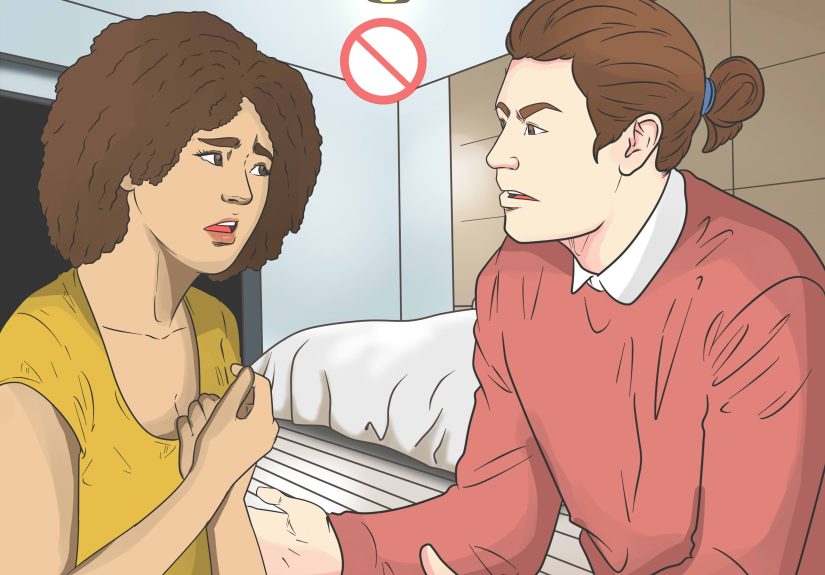
Feeling uncomfortable around your boyfriend can be confusingespecially when your brain keeps trying to file him under “cute” while your stomach
is loudly submitting a complaint ticket. The good news: discomfort isn’t automatically proof that the relationship is doomed. The more important news:
discomfort is information. And information is power (the non-supervillain kind).
Sometimes uneasiness shows up because you’re new to dating, stressed, or still learning how to be yourself around someone. Other times, it’s your mind
and body waving a little red flag that says, “Hey… something here isn’t working for me.” This article breaks down 12 common reasons you might feel
uneasy, plus what to do nextwithout turning your love life into a courtroom drama.
First, define “uncomfortable” (because it comes in many flavors)
“Uncomfortable” can mean a lot of different things, and each version points to a different solution:
- Awkward-nervous: You overthink what to say, worry about being judged, or feel stiff.
- Emotionally uneasy: You feel small, drained, or not quite safe being honest.
- Physically on-edge: Your heart races, you get tense, or you feel an urge to leave.
- Morally uncomfortable: Something about his jokes, values, or choices bothers you.
You don’t have to diagnose yourself like you’re on a reality TV therapy show. You just need to notice patterns: When does the discomfort happen?
What triggers it? What makes it better or worse?
12 Potential Reasons You Feel Uncomfortable Around Your Boyfriend
1) You’re experiencing normal “new relationship nerves”
Early dating can feel like you’re constantly being observedlike your life is a documentary called “Human Attempts Romance, Poorly.”
If you like him but feel jittery, you might simply be adjusting to new closeness, expectations, and social pressure.
Try this: Give it a little time, but keep it honest. If he’s kind, you can say, “I’m a little nervous sometimesI like you and I’m still getting comfortable.” A healthy partner won’t punish you for having a nervous system.
2) Your body is reacting to stress (not him specifically)
When you’re stressedschool, family stuff, friendships, sleepyour body can stay in “alert mode.” That can look like restlessness, muscle tension,
stomach upset, or feeling keyed up. Then your brain scans for a reason and may land on “boyfriend” because he’s the situation you’re in at the moment.
Try this: Run a quick basics check: Have you eaten? Slept? Hydrated? Had downtime? If your stress is high across the board, your relationship may be catching the blame for your overloaded schedule.
3) You’re maskingtrying to be “cool” instead of being you
If you feel like you have to perform a version of yourselfalways funny, always chill, always agreeablethat’s exhausting. You may feel uncomfortable
because you’re not actually relaxed; you’re managing an image.
Try this: Experiment with tiny “authenticity reps.” Mention a real opinion, share a weird hobby, say “I’d rather do X.” If he responds with respect and curiosity, your comfort level usually grows. If he mocks you, that’s useful data.
4) Your communication styles don’t match
Some people talk things out. Others go quiet. Some text constantly. Others disappear for hours. A mismatch can make you uneasy because you never know
what the “rules” areso your brain stays on standby.
Try this: Name what you prefer without blaming. For example: “I feel calmer when we’re clearcan we check in about plans instead of guessing?” Communication isn’t about winning; it’s about understanding.
5) You don’t fully trust him (and you’re not sure why)
Trust issues aren’t always dramatic. Sometimes it’s small inconsistencies, vague stories, secretive behavior, or broken promises. Even if nothing
“huge” happened, your mind might notice patterns your heart wants to ignore.
Try this: Keep it concrete: What exactly happened? How often? What was his response when you asked? Trust grows when actions match wordsreliably, not occasionally.
6) He crosses boundarieseven “little” ones
Boundaries can be physical (personal space), emotional (how you’re spoken to), digital (privacy), or time-based (your need for alone time). If you feel
uncomfortable, it may be because your boundaries are being treated like suggestions instead of real limits.
Try this: Set one clear boundary and watch the reaction. Example: “I’m not sharing my passwords.” A respectful partner doesn’t argue your right to say no.
7) You feel pressuredemotionally or physically
Pressure can be loud (“Come on, why not?”) or sneaky (“If you loved me…”). Either way, it makes you tense because it puts your comfort second and his
wants first. Consent and comfort should be clear, voluntary, and free of manipulation or fear.
Try this: Use a simple script: “I’m not ready for that.” If he tries to negotiate your no, that’s a serious sign to pause and reassess.
8) You’re picking up on controlling behavior (including “digital control”)
Constant checking-in, jealousy framed as “I just care,” getting mad when you spend time with friends, monitoring your social media, or making you feel
guilty for being independent can create constant discomfort. That feeling is your independence trying to breathe.
Try this: Pay attention to whether you feel more free or more managed in this relationship. Healthy love makes room for your life; it doesn’t shrink it.
9) Your values don’t line up (and your brain is doing the math)
You can like someone and still feel uneasy if your values clashhow you treat people, honesty, kindness, goals, substance use, school priorities,
respect for family, faith, or boundaries. Your discomfort might be the sound of your future self tapping you on the shoulder.
Try this: Ask values-based questions casually: “What’s a dealbreaker for you?” “What matters most to you in a relationship?” If the answers don’t fit, discomfort is a logical response.
10) You’ve had past experiences that make closeness feel unsafe
If you’ve been betrayed, bullied, pressured, or emotionally hurt before, your nervous system can treat closeness like a riskeven with a good person.
Triggers don’t mean you’re “broken.” They mean your brain learned to protect you.
Try this: Slow the pace. Notice what helps you feel grounded (breathing, taking breaks, meeting in public, having a plan to leave). If past experiences still feel heavy, talking with a counselor can genuinely help.
11) You’re noticing emotional manipulation (like guilt, blame, or gaslighting)
Emotional manipulation can sound like: “You’re too sensitive,” “That never happened,” “You always ruin everything,” or “Everyone thinks you’re dramatic.”
When someone pushes you to doubt your own memory or feelings, discomfort is a healthy alarm.
Try this: Keep a simple reality check: What did I see/hear? What did I feel? What would I tell a friend in my situation? You deserve a relationship where your reality is respected, not rewritten.
12) Your gut is flagging a safety issue
Sometimes discomfort isn’t subtleit’s dread, fear, or the sense that you have to “manage” his moods. If you’re worried about how he’ll react to a “no,”
if he intimidates you, threatens you, isolates you, or makes you feel trapped, treat that discomfort as serious.
Try this: Prioritize safety over politeness. Talk to a trusted adult, counselor, or someone trained in relationship support. If you feel in immediate danger, contact local emergency services.
How to figure out which reason fits (without spiraling)
Step 1: Track the pattern for one week
Write down (mentally or on paper): When did I feel uncomfortable? What happened right before it? How intense was it (1–10)? What did I do next?
Patterns are clearer than vibes.
Step 2: Ask: “Do I feel more myself with himor less?”
The healthiest relationships make you feel safer to be honest, not more afraid to speak.
Step 3: Have one calm, specific conversation
Use “I” statements: “I feel uncomfortable when you check my phone. I need privacy.” Notice his response. A good sign: listening, apologizing, changing.
A bad sign: mocking, blaming, rage, or turning it into your fault.
Step 4: Set one boundary and watch what happens next
Boundaries aren’t about controlthey’re about clarity. The reaction tells you a lot about whether this relationship is safe for you emotionally and physically.
Red flags that deserve extra attention
Discomfort becomes a “drop everything and take it seriously” signal if you notice patterns like:
- Extreme jealousy, possessiveness, or trying to isolate you from friends/family
- Constant monitoring (texts, social media, passwords) or accusations
- Insults, humiliation, threats, intimidation, or blaming you for their behavior
- Pressure for physical intimacy, ignoring your “no,” or guilt-tripping you into things
- Making you feel afraid to disagree or leave
If any of those sound familiar, consider reaching out for support. In the U.S., you can contact:
love is respect (call 866-331-9474, text LOVEIS to 22522),
The National Domestic Violence Hotline (call 1-800-799-SAFE, text START to 88788),
or RAINN (call 800-656-HOPE). If you’re outside the U.S., look for local crisis and relationship support services in your country.
Conclusion
Feeling uncomfortable around your boyfriend isn’t you being “too much” or “too sensitive.” It’s your mind and body communicating. Sometimes the message is:
“I’m anxious, tired, and new to this.” Sometimes it’s: “My boundaries aren’t being respected.” And sometimes it’s the simplest, bravest truth:
“This isn’t right for me.”
Your job isn’t to force yourself to feel comfortable. Your job is to listen, get curious about the pattern, and choose what protects your peace,
safety, and self-respect. A healthy relationship should feel like a place you can breathenot a place you have to constantly brace.
Extra: of Real-Life-Style Experiences (So You Can See It in Action)
Experience 1: The “I’m Fine” Trap. Maya kept saying “I’m fine” whenever her boyfriend asked what was wrong, but her shoulders stayed tense the whole time they hung out.
The discomfort wasn’t mysterious: he teased her in front of his friends, then told her she was “too sensitive” if she looked upset. Once she noticed the pattern,
she tried a clear boundary: “Don’t make jokes about me in front of other people.” He laughed and did it again. Her body wasn’t being dramaticher body was being accurate.
Experience 2: The Password “Proof of Love” Test. Jordan liked her boyfriend, but every time her phone buzzed, she felt nervous. He’d ask who she was texting and
wanted her passwords “so we don’t have secrets.” She felt guilty for hesitatinguntil she realized privacy isn’t secrecy. When she said no, he accused her of cheating.
That’s when she recognized the discomfort as a control issue, not a communication issue.
Experience 3: Anxiety Borrowing a Boyfriend’s Name Tag. Sam thought she was uncomfortable because something was “off” with her boyfriend. But she also felt sick
before tests, got shaky at crowded events, and couldn’t sleep. Her stress level was high everywhere. Once she started sleeping more, eating regularly, and talking to a counselor,
her relationship didn’t feel so scary. The boyfriend wasn’t the problemSam’s overloaded nervous system was.
Experience 4: The Values Mismatch That Felt Like Static. Talia couldn’t explain her discomforther boyfriend was nice to her, but mean to waitstaff and constantly
trashed his friends. She kept thinking, “Maybe I’m judging.” Over time she realized her values were different: kindness wasn’t optional to her. The discomfort was “values static”
not loud enough to be a fight, but steady enough to wear her down.
Experience 5: Pressure Disguised as Romance. Alex’s boyfriend was sweet in public and pushy in private. If Alex said she wasn’t ready for physical stuff,
he’d pout, get cold, or say, “Other couples do this.” She started dreading being alone with him. That dread was a boundary alarm. When Alex finally told a trusted adult,
she felt relief firstproof that her discomfort wasn’t random. It was protective.
Experience 6: The “Walking on Eggshells” Feeling. Priya noticed she planned her words carefully so her boyfriend wouldn’t get mad. She’d delete texts,
avoid certain topics, and apologize even when she didn’t understand what she did wrong. The relationship felt like a mood-management job she never applied for.
Once she named it, she saw the truth: healthy love doesn’t require you to shrink.





 Close
Close