Table of Contents >> Show >> Hide
- They Cost Luxury Money to Fix a Problem Most People Never Had
- They Solve a Tiny Problem and Create Several Big Ones
- Durability Has Improved, but the Worry Never Really Leaves
- Repairs Are Where the Dream Turns Into a Budget Meeting
- The Everyday Compromises Add Up Fast
- Software Still Has a Bit of Demo-Table Energy
- The Market Has Already Voted With Its Wallet
- Who Should Actually Buy a Foldable?
- My Foldable Phone Experience: The Daily Reality Nobody Mentions
- Conclusion
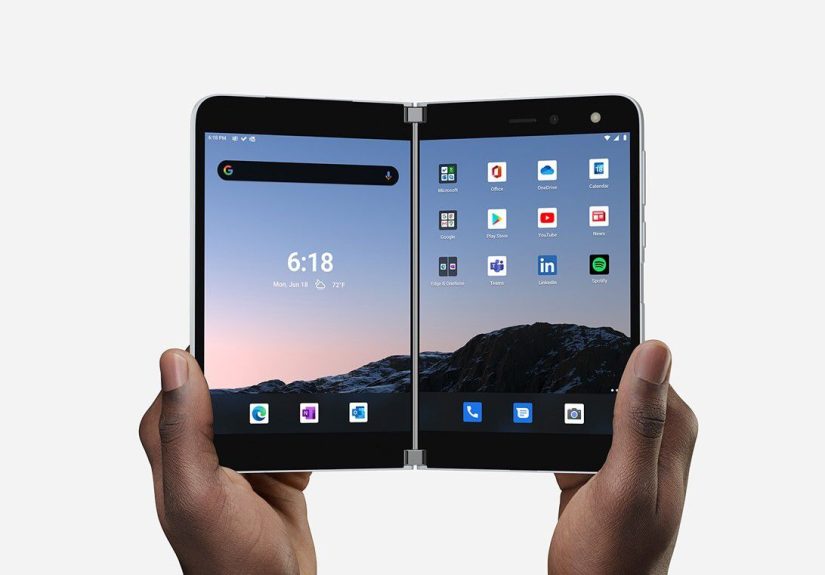
Foldable phones are one of those inventions that make perfect sense in a product launch video and much less sense in a jeans pocket. On stage, they look like the future: sleek hinge, giant screen, magical transition from phone to mini tablet. In real life, they often feel like an expensive compromise wearing a tuxedo. They cost more, weigh more, ask you to worry more, and somehow still manage to give you less in a few areas that actually matter every day.
That does not mean foldable phones are useless. They are clever. They are fun. They are undeniably impressive feats of engineering. But “impressive” and “smart purchase” are not the same thing. A grand piano is impressive too. I still would not carry one to Starbucks.
For most people, foldable phones are a dumb idea because they solve a niche problem while creating a whole pile of ordinary ones. They promise versatility, but they also bring price anxiety, repair anxiety, crease anxiety, dust anxiety, and the uniquely modern stress of babying a gadget that costs almost as much as rent in some cities. If your goal is to own the best phone for daily life, not the most interesting one at a coffee shop, foldables are still hard to justify.
They Cost Luxury Money to Fix a Problem Most People Never Had
The biggest argument against foldable phones is brutally simple: they are too expensive for what they do. A book-style foldable usually lives in premium-flagship territory or above it, while even flip-style models still ask you to pay extra for the privilege of bending your screen in half. That sounds futuristic until you remember that a regular flagship already gives you a great display, fast performance, excellent cameras, strong battery life, long software support, and zero hinge-related drama.
In other words, foldables charge you a novelty tax. You are not paying only for better utility. You are paying for engineering complexity, flexible materials, specialized hinges, and all the manufacturing weirdness required to make a phone pretend it is also a tablet. It is a little like buying a Swiss Army knife because you occasionally open a package. Very cool object. Wildly unnecessary for most people.
The sad comedy is that the extra money does not even buy you a clean win. In many cases, the pricier foldable still trails a traditional flagship in camera quality, durability, thickness, charging speed, or battery life. So the premium is not really paying for “more phone.” It is paying for “different phone,” and “different” is a dangerous thing to spend a lot of money on when you use the device every single day.
They Solve a Tiny Problem and Create Several Big Ones
The foldable pitch sounds reasonable enough: one device that works as both a phone and a tablet. But here is the question nobody asks loudly enough: how many people were actually miserable because their phone was not also a small tablet?
Most users want a phone that is easy to hold, easy to pocket, durable enough to survive daily life, and dependable enough to handle everything from maps to group chats to terrible photos of dinner. A slab phone already does that. A foldable adds complexity in exchange for more screen real estate that many owners use intensely for about a week before settling back into the same apps, the same scrolling habits, and the same notifications from apps that definitely did not need a bigger canvas.
Yes, reading on a larger inner display is nice. Multitasking can be nice. Watching video on a bigger screen is nice. But “nice” is not the same as transformative. For lots of buyers, the inner display becomes a feature they admire more than they truly need. It is a showroom superpower, not always a daily-life one.
Durability Has Improved, but the Worry Never Really Leaves
More moving parts, more things to go wrong
Traditional phones are simple by comparison. They are basically sealed rectangles with fewer mechanical parts, tougher front glass, and years of refinement aimed at surviving the chaos of ordinary human behavior. Foldables, by definition, are more complicated. The second you add a hinge, a flexible display, layered materials, and a folding mechanism, you increase the number of ways the device can age badly.
And that is the key point. Foldable phones are better than they used to be, but they still ask for more trust than regular phones. The soft inner display is not the kind of screen that inspires carefree ownership. It inspires the kind of ownership where you notice lint like a forensic investigator and close the phone as if you are tucking in a sleeping baby.
The crease is another issue. Some people stop noticing it. Others never do. Either way, it is still the visual reminder that you bought a screen whose central trick is also its most obvious flaw. On a regular flagship, the display is supposed to disappear and let the content shine. On a foldable, the hardware keeps politely raising its hand and saying, “Excuse me, I fold.”
Dust and daily wear are still part of the story
Foldables have gotten better with water resistance, and some newer devices have made real progress with dust resistance too. That is great news. It is also not the same as saying the problem is gone. A regular premium phone usually invites normal use. A foldable still invites a slightly more cautious relationship, especially over the long haul. That extra caution may not sound like a huge deal, but it becomes one when your phone is the object you touch hundreds of times a day.
A phone should fit your life. You should not have to fit your life around your phone’s emotional needs.
Repairs Are Where the Dream Turns Into a Budget Meeting
Now we arrive at the part that makes many foldable owners suddenly very interested in extended warranties: repair costs. The beauty of the foldable concept fades fast when the inner screen gets damaged, the protector starts peeling, or the hinge develops a personality disorder.
Repairs on foldables are not just inconvenient; they can be painfully expensive. That makes sense when you think about the hardware involved, but it does not make ownership feel any better. A traditional phone screen repair is annoying. A foldable repair can feel like a financial jump scare.
And it is not only the cost. It is also the repair ecosystem. With a regular iPhone or mainstream Android slab, repair paths are clearer and more familiar. With a foldable, the device often feels more specialized. Parts, procedures, and service availability can be less straightforward. That means more friction, more downtime, and more chances for the owner to mutter, “I bought this to make my life easier, remember?”
There is also a psychological tax here. When a device is expensive to fix, you enjoy it less freely. Every drop becomes a possible invoice. Every weird line on the screen becomes a mini horror film.
The Everyday Compromises Add Up Fast
They are often heavier and chunkier
One of the most underappreciated truths about foldable phones is that many of them feel less glamorous after a week in the real world. In your hand, in your pocket, in a bag, on a treadmill, during a long call, the extra weight and thickness become harder to romanticize.
A device can be exciting and still feel awkward. Foldables prove that almost daily. When closed, some book-style foldables still feel like you are carrying two phones stacked in a trench coat. Even when manufacturers slim them down, the category keeps fighting physics. Hinge plus second screen plus larger body equals bulk. That is not hate. That is math.
Battery life is still a compromise machine
Another inconvenient truth: two displays and a power-hungry form factor do not magically create battery excellence. Foldables have improved, but the category often still trades away battery endurance for design ambition. When you actually use the bigger inner display the way marketers want you to, the battery can start looking less like a premium flagship battery and more like a polite suggestion.
That makes the whole pitch wobble a little. The foldable’s superpower is supposed to be the large display. If the large display also nudges you toward the charger faster, the magic trick becomes somewhat self-defeating.
Cameras are often good, not class-leading
For the money, foldables should deliver the absolute best mobile photography available. Many do not. Some are perfectly good. A few are very good. But this is one of the places where a top-tier slab phone frequently makes more sense. Manufacturers have to balance thickness, thermals, weight, hinge structure, battery placement, and internal layout inside a folding design. Something usually gives, and camera hardware often ends up being one of the compromises.
That is a weird bargain for buyers. You spend more and sometimes get a camera system that is merely “pretty solid.” At these prices, “pretty solid” is not exactly the love song people expect.
Software Still Has a Bit of Demo-Table Energy
Foldables are at their best when software really takes advantage of the format. Split-screen productivity, floating windows, better app continuity, smarter multitasking, better cover-screen tools, and more tablet-style layouts can all make the experience feel special. But this is also where reality shows up carrying a clipboard.
Not every app feels perfectly at home on a foldable. Some apps scale beautifully. Some look fine. Some behave like they were invited to the party at the last minute and are still standing by the snack table pretending they know everyone. You can absolutely live with that, but it means the form factor still depends too heavily on the user’s willingness to forgive inconsistency.
That matters because mature gadgets are supposed to disappear into your life. Foldables still sometimes feel like they are asking for applause. When a device constantly reminds you how inventive it is, that can be exciting at first. After six months, it can get tiring.
The Market Has Already Voted With Its Wallet
If foldable phones were obviously the next great mainstream leap, their growth story would look more convincing by now. Instead, the category still behaves like a fascinating side quest. Analysts continue to describe foldables as a small slice of the smartphone market, and that tells you something important: plenty of people think foldables are cool, but not enough think they are worth the trade-offs.
That gap matters. Mainstream tech usually wins because it gets simpler, cheaper, sturdier, and easier to recommend. Foldables have improved, yes, but they are still working against the basic instincts of most buyers. People tend to love things that are easy, reliable, and hard to break. Foldables are still trying to become those things while also being weird little shape-shifters.
And to be fair, weird little shape-shifters can absolutely have an audience. They are just not automatically a smart purchase for everyone. Or even for most people.
Who Should Actually Buy a Foldable?
There is a real audience for foldable phones. If you love new hardware, multitask constantly, read a lot on your phone, travel light, and genuinely use the larger inner display every day, then a foldable can be a delight. If you view gadgets as hobbies as much as tools, foldables are easier to justify. You are not buying only utility. You are buying fun.
But that is also the point: foldables make the most sense as enthusiast devices. They are for people who enjoy the experiment, accept the compromises, and do not mind paying extra for a new kind of interaction. That is not the average phone buyer. That is the kind of person who watches launch events for entertainment and has opinions about hinge design before breakfast.
For everyone else, a great slab phone is still the smarter move. It will usually be cheaper, tougher, simpler, and better balanced. Which, in the smartphone world, is a pretty persuasive quartet.
My Foldable Phone Experience: The Daily Reality Nobody Mentions
Using a foldable phone feels a little like dating someone incredibly charming who is also always “going through a lot.” The first few days are thrilling. You open the device in public and suddenly you are the main character in a tech commercial. People notice. Friends ask questions. You keep unfolding it for no practical reason, just because it feels neat. It has the same energy as buying a convertible and immediately inventing errands.
Then real life begins.
You start noticing that the phone is heavier than what you were carrying before. Not “call a chiropractor” heavy, but heavy enough to become part of the conversation. During long reading sessions, it feels substantial. In a pocket, it feels present. In athletic shorts, it feels like a tiny hardcover book trying to escape. Suddenly the old boring rectangle you used to carry starts looking wise, disciplined, almost monk-like.
The second thing you notice is that you become weirdly protective of the device. You do not toss it down with the same confidence. You do not wipe the inner display quite as casually. You notice crumbs on a table with the intensity of a detective at a crime scene. If you live near sand, dust, or the ordinary messiness of human existence, a foldable can make you feel like the universe is personally conspiring against your hinge.
Then there is the behavior shift. At first, you open the phone constantly because that giant screen is the whole point. Email? Open it. Maps? Open it. News? Open it. A shopping list? Sure, why not, let us deploy the tablet. But after a while, the novelty cools. You start asking yourself whether you really need to unfold the device just to answer a text or check the weather. Often, the answer is no. So the magical big screen becomes something you use selectively, not continuously.
And that is where the category gets quietly awkward. The feature you paid the most for becomes a sometimes-feature. A very impressive sometimes-feature, yes, but still a sometimes-feature. Meanwhile, the compromises remain all day long. The size remains. The thickness remains. The caution remains. The quiet awareness that a repair could be unpleasant remains.
I also found that foldables create tiny frictions regular phones simply do not. Some apps feel fantastic on the larger screen; others just feel stretched. Some tasks feel luxurious; others feel like the device is overqualified. Watching video is better, but not always dramatically life-changing. Reading is nicer, but not necessarily enough nicer to justify the price. Multitasking feels powerful, but only if you are the sort of person who genuinely multitasks on a phone instead of just pretending to be productive while switching between apps and snacks.
That is the foldable experience in a nutshell: high ceiling, mixed reality. When it shines, it really shines. But on ordinary days, it can feel like an expensive answer to a question most people were not asking. And that, more than any single spec or repair bill, is why foldable phones still feel like a dumb idea for the average buyer. They are brilliant machines in search of a truly mainstream reason to exist.
Conclusion
Foldable phones are not dumb because the engineering is bad. Quite the opposite. The engineering is amazing. They are dumb because, for most buyers, the trade-offs still outweigh the benefits. You pay more to get a device that can be bulkier, softer, harder to repair, and less straightforward than a normal flagship. In return, you get a party trick that sometimes becomes a productivity tool and sometimes becomes a very expensive way to read email slightly larger.
That may still be worth it for enthusiasts. But if you want the smartest phone purchase instead of the flashiest one, the humble slab phone remains undefeated. It is cheaper, simpler, sturdier, and far easier to recommend without a long speech about hinges.