
Table of Contents >> Show >> Hide
- First: How Much Imbalance Is “Normal”?
- Quick Self-Checks: Is One Leg Really Stronger?
- Why One Leg Is Stronger: The Most Common Causes
- 1) Leg Dominance (Your Body Picks a Favorite)
- 2) Old Injuries That Quietly Changed Your Movement
- 3) Bilateral Lifts Let the Strong Side Do More Work Than You Think
- 4) Mobility Limits (Often the Ankle, Hip, or Foot)
- 5) Leg Length Discrepancy (Structural or Functional)
- 6) Neurological or Nerve-Related Issues
- 7) Sport-Specific or Job-Specific Loading
- Why It Matters: What an Imbalance Can Lead To
- The Fix: How to Balance Leg Strength Without Overthinking It
- Best Exercises to Balance Leg Strength (With Progressions)
- Mobility and Activation: The “Hidden” Fix for Many Imbalances
- Sample 4-Week Plan (2–3 Days/Week)
- Form Fixes That Make the Biggest Difference
- When to See a Pro (Don’t “Power Through” These)
- FAQ: Quick Answers People Actually Want
- Conclusion: Build Symmetry the Smart Way
- Experience Section: What Balancing a Stronger Leg Really Feels Like (And Why People Stick With It)
Ever notice one leg feels like it could carry groceries, your life problems, and a full-size couchwhile the other leg is basically there for moral support? You’re not imagining it. Most people have a “go-to” side, and the difference can show up in strength, balance, coordination, and even how you walk or run.
The good news: a stronger-leg/weaker-leg situation is usually fixable. The trick is figuring out why it’s happening and then using the right mix of unilateral strength training, mobility work, and movement practice to bring both legs back into the same group chat.
In this guide, we’ll break down the most common causes of leg strength imbalance, how to test it safely, and the best exercises to balance leg strengthwithout turning every workout into a dramatic one-legged circus act.
First: How Much Imbalance Is “Normal”?
Small left-right differences are common. Your body adapts to what you do mostsports, job tasks, driving, carrying a kid on one hip, always stepping up stairs the same way, and yes, that one “favorite” leg you always lead with.
But if the imbalance is big, getting worse, or comes with pain, numbness, repeated injuries, or obvious limping, it’s worth taking seriously. Strength imbalance can be both a result of a problem (like an old ankle sprain) and a cause of future problems (like knee irritation from poor control).
Quick Self-Checks: Is One Leg Really Stronger?
Before you “fix” anything, measure it. You don’t need a lab or a capejust consistency and good form. Try these simple checks 1–2 times per week (after a warm-up).
1) Single-Leg Balance (30 Seconds Test)
- Stand tall near a wall or counter for safety.
- Lift one foot slightly and hold for up to 30 seconds.
- Repeat on the other side.
Look for: wobbling, foot gripping the floor like it owes you money, hip dropping, or needing to touch down repeatedly.
2) Single-Leg Calf Raise Endurance
- Lightly touch a wall for balance.
- Rise up and down on one foot with control.
- Stop when your form breaks (you start bouncing, twisting, or losing height).
Compare sides: reps, control, and how steady your ankle feels.
3) Step-Down Control (The “Knee Cave” Check)
- Stand on a step (4–8 inches) on one leg.
- Slowly tap your other heel to the floor and come back up.
Look for: knee collapsing inward, pelvis dropping, foot rolling in, or a shaky descent. These often signal control or strength gaps at the hip/anklenot just “weak quads.”
4) Single-Leg Sit-to-Stand (From a Chair)
- Sit on a sturdy chair, one foot planted, the other hovering.
- Stand up and sit down with control.
Compare sides: can you do the same reps with the same smoothness?
Safety note: If any test causes sharp pain, swelling, or instability (like your knee feels like it might “give”), stop and consider a physical therapy evaluation.
Why One Leg Is Stronger: The Most Common Causes
1) Leg Dominance (Your Body Picks a Favorite)
Most people have a dominant legoften the one you’d use to kick a ball, step onto a curb first, or stabilize when you change direction. Dominance isn’t “bad,” but over years it can add up, especially if your activities always reinforce the same patterns.
2) Old Injuries That Quietly Changed Your Movement
An old ankle sprain, knee injury, hip pain, or back flare-up can cause your brain to “protect” one sidesometimes long after you feel “fine.” You may shift load to the other leg during squats, stairs, running, or even standing.
This is especially common after knee injuries and surgeries. Even after rehab, people can carry lingering deficits in strength, power, or confidence, and they unconsciously choose the safer-feeling side.
3) Bilateral Lifts Let the Strong Side Do More Work Than You Think
Back squats, deadlifts, leg presses, and bike workouts can be greatbut they can also hide imbalance. If one leg produces more force, your body will still complete the rep. The bar doesn’t tattle. It just goes up.
Common giveaway: when you film a squat, you shift slightly to one side at the bottom or on the way up.
4) Mobility Limits (Often the Ankle, Hip, or Foot)
Restricted ankle dorsiflexion (how far your knee can travel over your toes), stiff hips, or limited foot control can change your mechanics. Your body will “solve” the movement by rotating, shifting, or dumping into one side.
If one ankle is stiffer, for example, you may turn that foot out, collapse the arch, or cave the knee inward to find depth. That can make the other leg appear “stronger,” when the real culprit is movement access and control.
5) Leg Length Discrepancy (Structural or Functional)
Sometimes one leg truly is longer. Other times it acts longer because of pelvic tilt, hip tightness, or foot mechanics. Either way, discrepancies can influence gait, loading, and where your muscles do the most work.
Important: not every small difference needs “fixing.” The key is whether it’s linked to symptoms, recurring injuries, or clear movement compensations.
6) Neurological or Nerve-Related Issues
Less commonly, one-sided weakness can come from nerve irritation (like sciatica), neurological conditions, or post-stroke weakness. This category matters because it changes the “best next step.”
Get medical help promptly if weakness is sudden, progressive, or paired with red-flag symptoms (see “When to See a Pro” below).
7) Sport-Specific or Job-Specific Loading
Some sports load one side repeatedly (soccer kicking leg, skating push-off, tennis split steps, baseball batting). Some jobs do too (standing with weight on one hip, stepping into a truck, climbing ladders). Your body adaptsgreat for performance, not always great for symmetry.
Why It Matters: What an Imbalance Can Lead To
A mild imbalance isn’t automatically a disaster. But bigger differences can contribute to:
- Reduced performance (slower sprinting, less jump height, weaker direction changes)
- Overuse pain (knee, hip, low back irritation)
- Higher injury risk if control and fatigue tolerance differ side-to-side
- Frustrating plateaus (your squat stalls because one leg is carrying the “team”)
The Fix: How to Balance Leg Strength Without Overthinking It
Here’s the simple strategy that works for most people:
Principle #1: Use Unilateral Training (Single-Leg Work)
Single-leg exercises expose differences immediately (rude, but helpful) and force each side to contribute. They also train balance, hip stability, and coordinationskills your body uses in real life.
Principle #2: Start With the Weaker Leg
Do your sets on the weaker side first. Then match the same reps and weight on the stronger sideeven if the stronger side could do more. This keeps the stronger side from sprinting ahead like it’s late for a flight.
Principle #3: Add a Little Extra Volume (If Needed)
If the gap is obvious, add one extra set (or a few extra reps) for the weaker leg on 1–2 key exercises. Keep it modest. You’re restoring balance, not starting a civil war between your legs.
Principle #4: Pair Strength With Control
If your knee caves, your pelvis drops, or your foot collapses, pure strength won’t fully solve it. Include slower eccentrics (lowering phase), pauses, and balance drills so your nervous system learns the patternnot just brute force.
Best Exercises to Balance Leg Strength (With Progressions)
Pick 4–6 exercises, train them 2–3 times per week, and progress gradually. Focus on clean form, full range of motion you can control, and consistent tempo.
Level 1: Foundation (Control + Basic Strength)
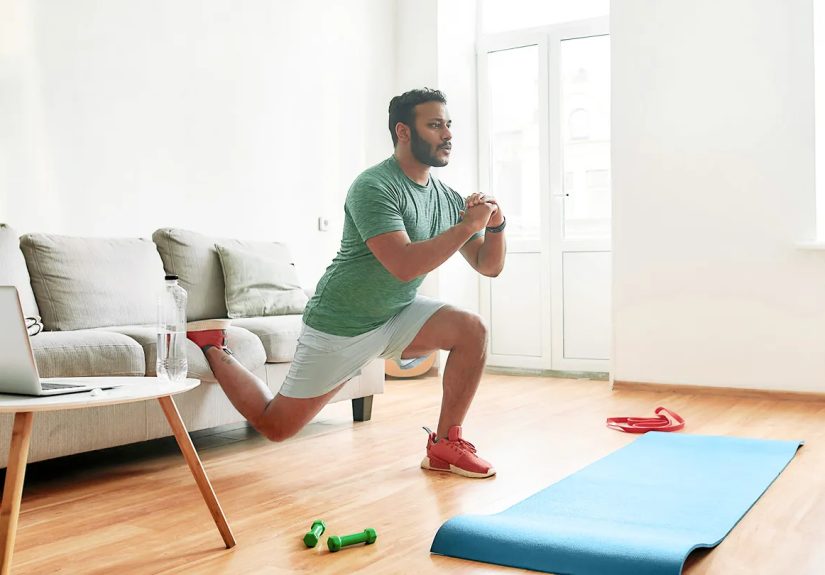
1) Supported Split Squat
Why it helps: trains quads and glutes with stability. Great if balance is a limiting factor.
- Hold a counter lightly for support.
- Lower for 3 seconds, pause 1 second, stand up.
- Sets/Reps: 2–4 sets of 8–12 per side
2) Step-Ups
Why it helps: builds single-leg strength and teaches hip/knee control through a very “life-like” movement.
- Use a step height that lets you keep control (start low).
- Drive through the full foot, avoid pushing off the back leg.
- Sets/Reps: 3 sets of 6–10 per side
3) Single-Leg Glute Bridge
Why it helps: targets glutes/hamstrings and improves pelvic stability.
- Keep pelvis level (no hip drop).
- Pause at the top for 1–2 seconds.
- Sets/Reps: 2–3 sets of 10–15 per side
4) Single-Leg Calf Raise (Slow)
Why it helps: calf strength affects ankle stability, running, jumping, and overall lower-leg endurance.
- 2 seconds up, 2 seconds down.
- Keep the heel tracking straight (avoid rolling outward).
- Sets/Reps: 2–4 sets of 8–15 per side
Level 2: Strength Builders (The “Balance the Scales” Moves)
5) Bulgarian Split Squat (Rear-Foot Elevated Split Squat)
Why it helps: a top-tier unilateral strength exercise for quads, glutes, and stability.
- Start bodyweight, then add dumbbells.
- Keep torso slightly forward, ribs stacked over hips.
- Sets/Reps: 3–5 sets of 5–10 per side
6) Single-Leg Romanian Deadlift (RDL)
Why it helps: strengthens hamstrings/glutes and trains hip hinge control and balance.
- Reach hips back, keep a soft knee.
- Keep hips square (avoid opening the pelvis).
- Sets/Reps: 3–4 sets of 6–10 per side
7) Lateral Lunge
Why it helps: builds side-to-side strength often missing from forward-only training.
- Sit back into the working hip, keep foot planted.
- Sets/Reps: 2–4 sets of 6–10 per side
8) Single-Leg Squat to Box
Why it helps: develops control, knee tracking, and confidence with a consistent depth target.
- Use a high box at first; lower it over time.
- Keep knee tracking over middle toes.
- Sets/Reps: 3 sets of 5–8 per side
Level 3: Power + Athletic Symmetry (Only After You Own Level 1–2)
If you run, play sports, or want your legs to feel equally “springy,” progress into controlled plyometrics:
- Single-leg pogo hops (small, quick ankle hops)
- Forward hops for distance (stick the landing)
- Lateral skater hops (control the knee and pelvis)
Programming: 2–3 sets of 3–6 reps per side, full recovery between sets. Quality over chaos.
Mobility and Activation: The “Hidden” Fix for Many Imbalances
If one side feels weaker because it moves worse, do this mini-sequence before workouts (5–8 minutes):
- Ankle dorsiflexion rocks (knee over toes, heel down) – 10 reps per side
- Hip flexor stretch (glute squeezed, ribs down) – 30 seconds per side
- Glute med activation (side-lying abduction or band walks) – 10–15 reps/steps per side
- Bodyweight split squat – 8 reps per side, slow and controlled
Sample 4-Week Plan (2–3 Days/Week)
This plan balances strength, control, and progression without living in the gym.
Week 1: Control and Clean Reps
- Supported Split Squat – 3×10/side
- Step-Up – 3×8/side
- Single-Leg Glute Bridge – 2×12/side
- Single-Leg Calf Raise – 3×10/side
Week 2: Add Load (Dumbbells or a Weighted Vest)
- Bulgarian Split Squat – 4×8/side
- Single-Leg RDL – 3×8/side
- Lateral Lunge – 3×8/side
- Single-Leg Calf Raise – 3×12/side
Week 3: Tempo + Pause (Teach the Pattern)
- Bulgarian Split Squat (3 sec down, 1 sec pause) – 4×6/side
- Single-Leg RDL (2 sec pause at bottom) – 3×6–8/side
- Single-Leg Squat to Box – 3×6/side
- Step-Up – 2×10/side
Week 4: Strength + Light Power (If Pain-Free)
- Bulgarian Split Squat – 5×5/side
- Single-Leg RDL – 4×6/side
- Skater Hop “Stick” (controlled landing) – 3×4/side
- Calf Raise – 3×10–15/side
Progress check: Retest single-leg balance, calf raises, and step-down control at the end of Week 4. Improvements usually show up as better control first, then more reps and load capacity.
Form Fixes That Make the Biggest Difference
- Foot tripod: big toe base, pinky toe base, heelkeep all three grounded.
- Knee tracking: aim knee over mid-foot (avoid collapsing inward).
- Pelvis level: don’t let one hip drop during single-leg work.
- Control the lowering: slow eccentrics build strength and better mechanics.
- Use support strategically: holding a wall lightly can improve form and loading early on.
When to See a Pro (Don’t “Power Through” These)
Talk to a clinician (sports medicine, physical therapist) if you have:
- Sudden or rapidly worsening one-leg weakness
- Numbness/tingling, foot drop, or pain shooting down the leg
- Frequent giving-way, locking, or swelling in a joint
- A noticeable limp that doesn’t improve
- Big asymmetry after an injury that isn’t closing with training
FAQ: Quick Answers People Actually Want
Is it bad if my dominant leg is stronger?
Not automatically. Dominance is normal. It becomes a problem when the gap affects your form, performance, or injury historyor when pain shows up.
How long does it take to balance leg strength?
Many people feel better control in 2–4 weeks and measurable strength changes in 6–12 weeks, depending on consistency, training history, and whether injury is involved.
Should I stop squatting and deadlifting?
Nounless pain demands it. Keep bilateral lifts, but add unilateral training so each leg is accountable. (Accountability: the least fun fitness feature, and the most effective.)
Do I need to train the weaker leg more?
Usually: yes, slightly. Start with the weaker side and consider 1 extra set on one or two key exercises until the gap narrows.
Conclusion: Build Symmetry the Smart Way
If one leg is stronger, your body is giving you feedbacknot a life sentence. The fix is rarely complicated: test, identify the likely cause, train unilaterally, clean up mechanics, and progress patiently. Think of it as teaching both legs to share the workload like mature adults.
Key takeaways:
- Small asymmetries are normal, but big gaps + pain deserve attention.
- Unilateral training is the most direct way to balance leg strength.
- Start with the weaker leg and match work on the stronger side.
- Mobility and control (especially ankle/hip) often unlock strength fast.
- Progress from control → strength → power for lasting balance.
Experience Section: What Balancing a Stronger Leg Really Feels Like (And Why People Stick With It)
People often assume a stronger leg is just a “gym problem,” like an annoying asymmetry you notice in the mirror and then ignore until shorts season. But in real life, it shows up in sneakier wayslike always feeling more stable turning one direction, or realizing your “good knee” is doing overtime every time you take the stairs.
One common story goes like this: someone sprains an ankle, rests a bit, then returns to normal life. Months later, workouts feel fineuntil single-leg movements enter the chat. Step-ups feel wobbly on the previously injured side, single-leg RDLs look like interpretive dance, and the calf on that side fatigues faster. It’s not that they’re “weak” as a person (let’s all unclench). It’s that the ankle lost some mobility and confidence, and the body started shifting load away from it. When they finally add slow calf raises and controlled step-downs, the improvement feels almost unfairlike, “Wait… this was the missing piece?”
Another classic experience is the “strong squat, weak single-leg” surprise. Someone can back squat decent weight, yet a Bulgarian split squat with light dumbbells lights up one side like a Christmas tree. The first few sessions are humbling: the weaker side shakes, the hip wants to drop, and balance seems wildly more difficult than it should be. But after a couple of weeks, something clicks. The reps look smoother, the knee tracks better, and the weaker leg stops panicking halfway down. This is often the moment people realize strength isn’t just about muscleit’s also about coordination and trust.
Runners and recreational athletes describe a different version: one leg feels “springy” and the other feels like it’s running through wet sand. They might not be in pain, but they feel less powerful pushing off on one side, especially when fatigued. Adding single-leg calf work, lateral lunges, and controlled hops tends to create a noticeable difference in how the weaker leg absorbs force. The first time they do a short run and both legs feel equally responsive, it’s like discovering your car has had a working suspension this whole time.
There’s also the desk-job reality: people who sit a lot, drive often, or always stand with weight on the same hip. They start training, notice one leg dominates, and then wonder why. Their “aha” moment is usually not an exotic diagnosisit’s realizing their daily posture has been quietly reinforcing asymmetry for years. When they add a simple warm-upankle rocks, hip flexor stretching, and glute activationplus consistent unilateral lifts, their movement suddenly feels more even. Less shifting in squats. Less knee annoyance on stairs. Less “why does my left hip always do that?”
The biggest experience-based lesson: balancing strength isn’t about punishing the stronger leg. It’s about making the weaker side more capable and confident. People who succeed treat it like skill-building. They focus on high-quality reps, stay patient with the awkward phase, and retest every few weeks. The end result isn’t perfect symmetry (humans aren’t photocopies). It’s better control, fewer aches, stronger performance, and the oddly satisfying feeling that both legs are finally on the same team.





 Close
Close