
Table of Contents >> Show >> Hide
- The Friday-Night Ritual Was the Product
- Browsing Wasn’t a Bug. It Was the Feature.
- The Clerk Was a Human Algorithm (But Like… Nice)
- Scarcity Made Movies Feel Like Events
- Streaming Is Convenient… and Somehow Also a Lot of Work
- “Blockbuster Nostalgia” Isn’t Really About Blockbuster
- Physical Media Didn’t Die. It Got Nicheand Then Got Cool Again.
- How to Recreate the Video Store Feeling (Without Owing $17.43 in Late Fees)
- Conclusion: You Don’t Just Miss a Store. You Miss a Feeling.
- Extra: of Video Store Experiences You Definitely Remember
You don’t miss late fees. You don’t miss the box that’s empty because someone “forgot” to rewind. You don’t miss the moment you realize the movie you hyped yourself up for is gone, and the shelf is basically laughing at you.
But you miss video stores anyway. And not just because you’re nostalgic, or because you like the smell of plastic clamshell cases (no judgment). You miss them because video stores solved a problem streaming still hasn’t: making movie night feel like a real event, not a 47-minute scroll-fest followed by settling for something you don’t even remember starting.
If that sounds dramatic, good. Movie night deserves drama. It’s literally the entire point.
The Friday-Night Ritual Was the Product
Streaming sells “instant access.” Video stores sold a ritual. You had to put on shoes, leave the house, and physically go somewhere dedicated to one beautiful mission: picking a movie. The trip turned entertainment into an occasion. You didn’t casually watch a film the way you casually check your email (which is how half of us consume “content” now).
The store gave the night a beginning, middle, and end:
- Beginning: the drive there, the anticipation, the debate in the car.
- Middle: the wandering, the browsing, the “fine, you pick, I picked last time.”
- End: the triumphant walk to the counter like you’d just hunted and gathered your own entertainment.
Even the “ugh” moments helped. The new release wall being wiped out forced you to improvise. And improvisation is secretly how a lot of great movie memories happen. When everything is available, nothing feels special. When you had to compromise, the choice felt earned.
Browsing Wasn’t a Bug. It Was the Feature.
Streaming wants you to search. Video stores wanted you to browse. That’s not a small differenceit’s a different brain mode.
Searching is goal-oriented. You type a title, you get a result, you press play. Browsing is discovery-oriented. You wander into an aisle, get seduced by cover art, read a ridiculous synopsis, laugh at the actor headshots, and end up renting a movie you didn’t even know existed 90 seconds ago.
In a store, the environment did “recommendations” without pretending to read your mind:
- Staff picks that reflected actual human taste, not what an algorithm is contractually obligated to push.
- Endcaps like “Best Courtroom Meltdowns” or “Rom-Coms Where Someone Definitely Runs Through Rain.”
- Genre aisles that taught you what kinds of movies even existed.
And yes, video stores were imperfect. Sometimes the “staff pick” was just a handwritten love letter to a three-hour black-and-white Hungarian film that made you question your life choices. But that was the charm: recommendations came with personality.
The Clerk Was a Human Algorithm (But Like… Nice)
Streaming knows what you clicked. A good video store clerk knew what you like. There’s a difference.
If you went to the same place often enough, a conversation started forming. The clerk might notice you rent a lot of thrillers but avoid anything “too gory.” Or that you love animation but always want something “not for little kids.” Or that you claim you’re “not into sci-fi,” while your rental history screams otherwise.
That interactiontiny, casual, and completely normal at the timewas a form of community. You weren’t just a username. You were a person who stood in front of the horror section for ten minutes, negotiating with your own fear tolerance.
Algorithms can mimic taste. They can’t replicate the moment someone behind the counter says, “If you liked that, try thistrust me.” It’s the “trust me” part. That’s the magic.
Scarcity Made Movies Feel Like Events
Here’s a truth we hate admitting in 2026: convenience is not the same as satisfaction.
Video stores had built-in scarcity. There were only so many copies. New releases had gravity. The empty slot on the shelf was a plot twist. And when you did snag the last copy, it felt like winning a tiny lottery.
Scarcity also created commitment. Once you rented something, you were probably going to watch it. You’d paid for it. You’d carried it home. You had limited time before returning it. The movie had a deadline, and deadlines are weirdly motivating.
Streaming removes frictionand along with it, it removes urgency. The result is what many people experience as “streaming fatigue”: endless options, less excitement, and a haunting feeling that you’re somehow always choosing wrong.
Streaming Is Convenient… and Somehow Also a Lot of Work
Streaming is amazing. Truly. It’s a miracle we can summon a movie like a wizard. But the modern streaming ecosystem has a few side effects that make the video store era look emotionally efficient:
1) The “What Do You Want to Watch?” Spiral
With physical shelves, you could see the universe of options in one space. With streaming, the universe is hidden behind menus, categories, and an interface that keeps moving the goalposts. You don’t browse the whole libraryyou browse what you’re being shown.
2) The Great Disappearing Movie Trick
Physical media is stable: if the store owns the disc, it’s there until it’s lost, broken, or “borrowed forever.” Streaming libraries shift based on licensing, strategy, and whatever mood the content gods are in this week. A title can be there today and gone tomorrow, which makes building a “movie tradition” oddly difficult.
3) Subscription Fragmentation
In the video store era, you had one “platform”: the store. Now, you can want one movie and discover it’s spread across three services, one rental add-on, and a suspicious “free” app that looks like it was designed by a raccoon with a keyboard.
Video stores were simpler not because the world was simpler, but because the experience was centralized. You could walk into one place and let the shelves do the heavy lifting.
“Blockbuster Nostalgia” Isn’t Really About Blockbuster
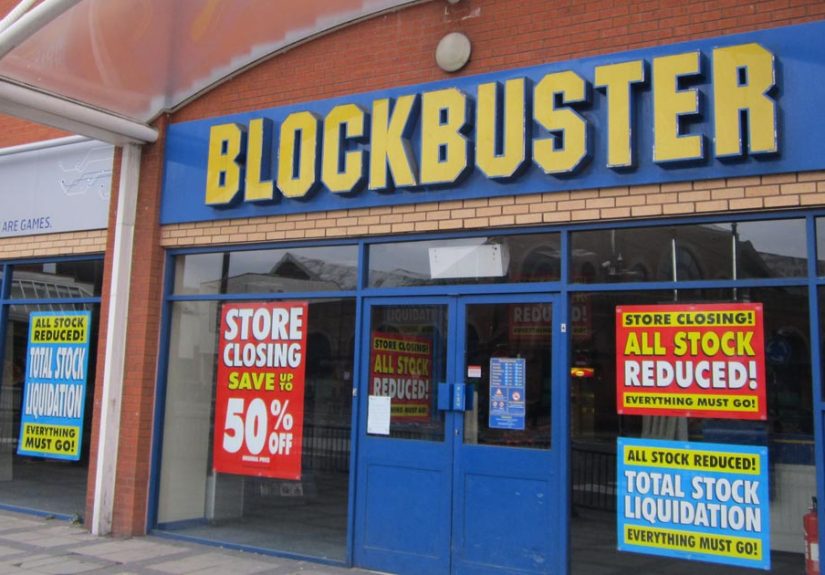
When people say “I miss Blockbuster,” half the time they mean the feeling, not the brand.
Big chains were part of the story, but the deeper nostalgia is for the entire ecosystem: the neighborhood shops, the weird little aisles, the indie stores that stocked the strange stuff, the “employee recommendations” that felt like contraband knowledge.
The fact that there’s still a famous last Blockbuster location people travel to isn’t just a quirky headlineit’s a clue. We don’t make pilgrimages to “the last remaining subscription login screen.” We make pilgrimages to places with texture, history, and a sense of play.
Physical Media Didn’t Die. It Got Nicheand Then Got Cool Again.
Physical media isn’t just a nostalgia prop. It’s also a practical answer to a real modern problem: access. If you care about film history, rare titles, director’s cuts, commentary tracks, or movies that never show up on major services, physical collections still matter.
That’s why some beloved video-store institutions didn’t just survivethey evolved. In a few cities, the video store isn’t merely a shop; it’s an archive, a community hub, a cultural center, and sometimes a nonprofit with a mission. Places like Seattle’s Scarecrow Video have built massive collections that function like living libraries for cinephiles, students, and anyone who’s ever said, “I swear this movie exists, I just can’t find it anywhere.”
Meanwhile, boutique Blu-ray labels keep releasing restored classics and cult favorites with thoughtful extrasthe kind of curated, intentional packaging that feels like the grown-up version of being hypnotized by a VHS box in aisle five.
The takeaway: video store culture didn’t vanish. It scattered. Parts of it moved into libraries, nonprofits, collector communities, and specialty labels. And parts of it live rent-free in your brain every time you spend 20 minutes browsing a menu and end up watching nothing.
How to Recreate the Video Store Feeling (Without Owing $17.43 in Late Fees)
You can’t fully recreate the old eratime travel remains frustratingly unavailablebut you can rebuild the parts that mattered: ritual, curation, and commitment.
Build a “Friday Shelf”
Pick 10–20 movies you already own (or borrow from the library). Put them in a visible spot. Every Friday, choose from that shelf. The constraint is the point. You’re creating your own new-release wall.
Do a “Staff Picks” Night
If you live with other people, everyone picks one movie, writes a one-sentence pitch, and posts it on the fridge. If you live alone, you’re still allowed to make a staff picks board. (You’re staff. Congratulations on the promotion.)
Borrow Like It’s 1999
Libraries often have deep DVD and Blu-ray sections, plus curated lists and staff recommendations. It’s one of the closest modern equivalents to a video store: a physical place with real people whose job is literally to help you find things.
Make “Start” Sacred
The video store experience began when you left the house. Recreate that “beginning” with a mini ritual: popcorn, dim the lights, phones away, and a hard rule that you can’t scroll while the opening scene is happening. Let the movie grab you.
Reclaim the Hangout
The best part of a video store wasn’t only the movie. It was the wandering conversation before the movie. Host that: invite friends over, lay out 8–12 options, and talk your way into a choice. The debate is entertainment, too.
Conclusion: You Don’t Just Miss a Store. You Miss a Feeling.
Video stores were a physical solution to a human problem: how to choose something you’ll love, share it with people, and make it matter. Streaming gives you access. Video stores gave you meaning.
You miss the small adventure. You miss the constraints that made choices satisfying. You miss the human curation. You miss the sense that movie night was something you did on purpose.
So yesyou miss video stores. Even if you won’t admit it. And honestly? It’s fine. Some things were better when you had to walk down an aisle to find them.
Extra: of Video Store Experiences You Definitely Remember
Picture it: you push open the door and that little bell goes ding, like the store is politely announcing your arrival to the entire universe. The carpet has that unmistakable “thousands of Fridays” vibesomewhere between popcorn, dust, and the faint echo of a spilled Slurpee from 2003. You don’t even go straight to the new releases. That would look too eager. You pretend you’re casual, like you’re just here to browse, when you absolutely came for the one movie everyone’s talking about.
The new release wall is a shrine. Rows of boxes face out, flashy and confident, each cover promising a life-changing 98 minutes. You scan for your target, and your stomach drops: the slot is empty. Not “one copy left.” Not “maybe behind the counter.” Empty. Someone out there is watching your movie without you, and you hope they’re having a slightly mediocre time. Then you pivot into bargaining: maybe you’ll try something else, something you’d never pick if your first choice hadn’t betrayed you. That’s how you end up discovering a random thriller with a dramatic tagline and a cast you’ve never heard ofexcept you have, because you recognize that guy. The one who’s always “that guy.”
You drift into the aisles and let the cover art do its hypnotic work. Horror is a carnival of questionable design decisions and loud typography. Comedy is all faces, all smiles, all “this will fix your week.” The foreign section feels like a secret door to a cooler version of yourself. You pick up boxes, read synopses, and quietly judge movies you’ve never seenbecause it’s your right as a customer standing under fluorescent lights.
Somewhere nearby, two people are negotiating a choice like diplomats trying to avoid war. A kid is begging for something wildly inappropriate. A couple is pretending they don’t want a rom-com. And behind the counter, the clerk is watching all of humanity unfold with the calm focus of someone who has seen every possible version of “we can’t decide.”
Eventually you commit. The box feels oddly important in your hands, like proof you made a decision in a chaotic world. You pay, you leave, and the walk to the car feels victorious. At home, the movie starts, and for a moment, everything is perfectbecause this wasn’t just watching something. This was movie night.






 Close
Close