
Table of Contents >> Show >> Hide
- What is Zenker’s diverticulum, exactly?
- Symptoms: What people actually notice
- Causes: Why does the pouch form?
- Diagnosis: How doctors confirm it
- Do you always need treatment?
- Surgery: The goal and the main options
- Endoscopic vs open: How to think about the decision
- Risks and possible complications
- Recovery: What to expect after surgery
- Questions to ask your ENT surgeon or gastroenterologist
- Frequently asked questions
- Conclusion
- Patient experiences : What it can feel like in real life
Zenker’s diverticulum (sometimes called a pharyngeal pouch) is one of those medical problems that sounds like a fancy wine pairing
but behaves more like a “secret storage compartment” your throat never asked for. It’s a pouch that forms near the top of the esophagus,
right where swallowing has to be smooth, coordinated, and drama-free. Unfortunately, Zenker’s diverticulum is… dramatic.
When the pouch gets big enough, it can trap food, mucus, and pills. Later, it may “return to sender” at inconvenient momentslike when you bend over,
laugh, or lie down. The good news: it’s treatable, and surgical options have come a long way.
Medical disclaimer: This article is for education only and does not replace care from a qualified clinician.
What is Zenker’s diverticulum, exactly?
Zenker’s diverticulum is an outpouching that develops at the junction of the throat (hypopharynx) and the upper esophagus.
It’s considered a “pulsion” diverticulummeaning it’s pushed outward by pressure during swallowing.
The pouch forms through a naturally weaker area in the wall, often discussed in anatomy as a vulnerable zone just above the upper esophageal sphincter.
Many people have small pouches that cause little trouble. But Zenker’s diverticulum can enlarge over time. As it grows, the pouch can act like a pocket
that collects leftoversexcept the leftovers are from your lunch, and the pocket is in your throat. Not ideal.
Symptoms: What people actually notice
Symptoms often begin subtly and progress slowly. Some people first notice they’re swallowing differentlyneeding extra sips of water,
taking longer to finish meals, or avoiding foods that used to be easy.
Common symptoms
- Trouble swallowing (dysphagia): Food feels like it sticks, especially solids.
- Regurgitation of undigested food: Food comes back up without nauseasometimes minutes or even hours after eating.
- Coughing or throat clearing: Often after meals, or when lying down.
- Bad breath (halitosis): Trapped food and secretions can create persistent odor.
- Gurgling or “wet” throat noises: Some people notice a gurgle in the neck/throat area.
- Hoarseness or voice changes: Usually from irritation or refluxed material affecting the throat.
Symptoms that suggest complications
One of the biggest concerns is aspirationfood or liquid entering the airway.
This can lead to choking episodes or recurrent lung infections (aspiration pneumonia).
If you’re dealing with coughing fits at night, unexplained fevers, or repeated “bronchitis” that always follows meals,
that’s a red flag worth discussing promptly with a clinician.
A concrete example
Imagine a 72-year-old who used to love steak and crusty bread. Over a year, steak turns from “delicious” to “dangerously clingy.”
They start cutting food into tiny pieces, sipping water after every bite, and avoiding restaurants because they’re embarrassed by coughing.
Then comes the weird part: undigested food shows up latersometimes when bending to tie shoes. That pattern is classic for Zenker’s diverticulum.
Causes: Why does the pouch form?
Zenker’s diverticulum is strongly linked to how the upper esophageal sphincter and nearby muscles behave during swallowing.
In many cases, the muscle (often discussed as the cricopharyngeus) doesn’t relax or open as well as it should.
When the “door” doesn’t open smoothly, pressure builds behind itlike trying to push furniture through a doorway that’s only half open.
Over time, that pressure can push tissue outward through the weak spot, creating the pouch.
This is one reason Zenker’s diverticulum is more common in older adults: age-related changes in muscle coordination and tissue elasticity may contribute.
It’s not something you “caused” by eating spicy food, talking too much, or being emotionally invested in crunchy tacos.
It’s a mechanical problem of swallowing dynamics.
Risk factors and who gets it
- Age: Most commonly diagnosed in older adults (often later decades of life).
- Swallowing muscle dysfunction: Reduced relaxation/compliance of the upper esophageal sphincter region.
- History of chronic swallowing issues: Not always present, but sometimes a clue.
Zenker’s diverticulum is not the same thing as cancer. However, any persistent swallowing difficulty deserves evaluation,
because clinicians need to rule out other causesespecially if symptoms are new, rapidly worsening, or associated with weight loss.
Diagnosis: How doctors confirm it
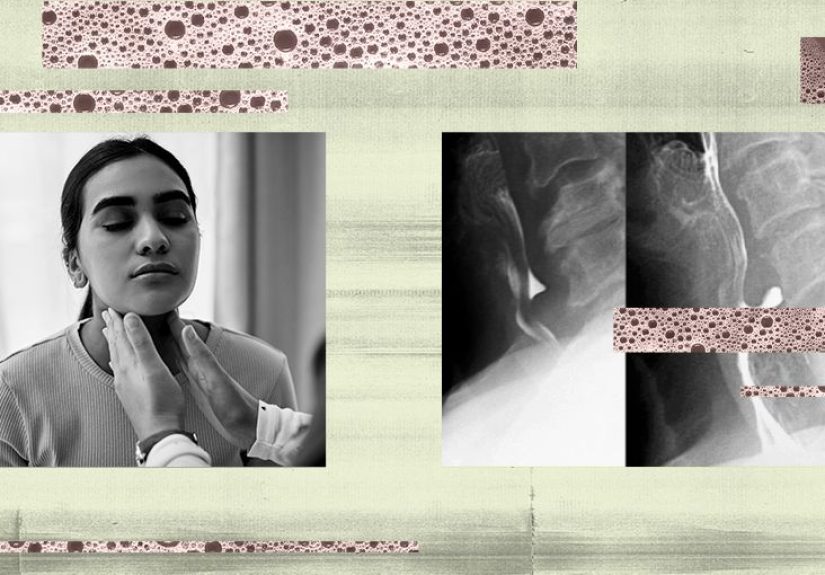
The most common and widely used test is a barium swallow (also called an esophagram, often with videofluoroscopy).
You swallow a contrast liquid, and X-ray imaging shows how material moves through the throat and esophagusand whether a pouch fills and empties.
This test can visualize the size and shape of the diverticulum and can reveal aspiration risk.
Other tests that may be used
- Endoscopy: A camera exam can help rule out other issues, though it’s performed carefully because the pouch can be present.
- Swallow evaluation by speech-language pathology: Especially helpful for assessing safety and mechanics of swallowing.
- Additional imaging/tests: Sometimes used depending on the case and surgical planning.
Do you always need treatment?
Not necessarily. If the pouch is small and not causing symptoms (or only minimal annoyance), clinicians may recommend observation and symptom management.
But Zenker’s diverticulum generally doesn’t “go away” on its own. If symptoms are significantespecially regurgitation, choking, weight loss,
or aspirationtreatment is usually recommended.
Non-surgical symptom strategies (when appropriate)
- Eat slowly; take smaller bites; chew thoroughly.
- Follow bites with sips of water as needed.
- Avoid foods that predictably stick (dry bread, tough meats) until evaluated.
- Work with a swallowing specialist if recommended.
These strategies can reduce discomfort, but they don’t remove the pouch. If the pouch is acting like a food-trapping “bonus pocket,”
surgery is usually the real solution.
Surgery: The goal and the main options
The core goal of treatment is to stop food from collecting in the pouch and reduce the outflow obstruction that created the problem.
In practical terms, that usually means addressing the wall between the esophagus and the pouch (often called the septum) and performing a
cricopharyngeal myotomy (cutting or dividing the tight muscle) so swallowing pressure doesn’t keep forcing the issue.
Surgical approaches fall into two broad categories:
endoscopic (through the mouth) and open (through an incision in the neck).
Which one is best depends on pouch size, anatomy, prior procedures, patient health, and surgeon/endoscopist expertise.
1) Endoscopic procedures (through the mouth)
Endoscopic techniques aim to create a common channel so that swallowed material flows into the esophagus rather than getting trapped.
These approaches are minimally invasive and often have faster recovery times.
-
Rigid endoscopic stapling or laser division:
Often performed by ENT surgeons using a rigid scope. A stapler or laser divides the septum so the pouch and esophagus share an opening. -
Flexible endoscopic septotomy/diverticulotomy:
Performed with a flexible endoscope (often by advanced endoscopists). The septum is divided using endoscopic tools. -
Z-POEM (Zenker’s per-oral endoscopic myotomy) and related “third-space” approaches:
Newer endoscopic techniques that focus on myotomy with careful closure, designed to improve access and outcomes in selected cases.
Pros: Less invasive, often shorter hospital stay, quicker return to eating (with a staged diet plan), and typically less external scarring.
Trade-offs: Not everyone’s anatomy is a good match; recurrence can occur, and there are risks like bleeding or perforation.
Some patients need repeat treatment over time.
2) Open surgery (transcervical approach)
Open surgery is performed through an incision in the neck (often on the left). Techniques vary, but commonly include
removal or repositioning of the diverticulum (diverticulectomy or diverticulopexy) combined with a cricopharyngeal myotomy.
Open surgery is often chosen for larger pouches, challenging anatomy, or when endoscopic access isn’t ideal.
Pros: Often considered a very definitive approach in appropriate patients, especially for large diverticula.
Trade-offs: More invasive, longer recovery, and risks associated with open neck surgery (including infection and potential nerve injury),
though outcomes can be excellent in experienced hands.
Endoscopic vs open: How to think about the decision
You’ll see people argue this like it’s a sports rivalry. In reality, it’s more like choosing between two good tools.
A screwdriver is greatunless you’re facing a nail.
Factors that often influence choice
- Pouch size and shape: Very small or very large pouches may push decision-making in different directions.
- Neck/jaw mobility and dental anatomy: Rigid endoscopy needs adequate exposure through the mouth.
- Medical risk profile: Some patients benefit from the least invasive approach possible.
- Prior procedures: Recurrence after endoscopic treatment sometimes leads to repeat endoscopy or an open approach.
- Local expertise: Outcomes tend to be best where the team performs the procedure regularly.
Evidence from reviews and meta-analyses suggests both open and endoscopic approaches can relieve symptoms well, with different trade-offs in invasiveness,
complication profiles, and recurrence risk. It’s common for clinicians to tailor the approach rather than declare a single “always best” technique.
Risks and possible complications
Any procedure in the throat/esophagus neighborhood demands respect. That said, many patients do very well.
Potential risks vary by technique and individual factors.
Possible risks (varies by procedure)
- Bleeding
- Perforation (a tear) and related infection risk
- Infection (including serious deep infections in rare cases)
- Aspiration during recovery if swallowing isn’t protected
- Voice changes (rare, but possibleparticularly with open approaches near nerves)
- Recurrence of symptoms, sometimes requiring repeat treatment
Your team may recommend imaging (like a postoperative swallow study) before advancing diet, depending on the procedure and their protocol.
Recovery: What to expect after surgery
Recovery varies, but most plans include some combination of pain control, diet progression, and follow-up.
Many people start with liquids, then soft foods, then return toward normal eating over days to weeksguided by symptoms and clinician instructions.
Common recovery themes
- Sore throat and temporary swallowing discomfort are common early on.
- Diet steps may feel slow, but they’re designed to protect healing tissue.
- Swallowing therapy may be recommended, especially if aspiration risk existed before surgery.
- Symptom relief (especially regurgitation and “food getting stuck”) is often noticeable once healing begins.
If you develop fever, severe chest/neck pain, difficulty breathing, inability to swallow liquids, or worsening cough after surgery,
contact your surgical team urgently or seek emergency care.
Questions to ask your ENT surgeon or gastroenterologist
- Based on my anatomy and pouch size, which approach do you recommend and why?
- How many Zenker’s procedures does your team perform each year?
- What are the main risks in my case (aspiration, perforation, recurrence)?
- What will my diet plan look like day-by-day after the procedure?
- If symptoms come back, what are the next options?
Frequently asked questions
Is Zenker’s diverticulum dangerous?
It can be. Many people live with mild symptoms, but significant Zenker’s can increase aspiration risk and cause weight loss or repeated infections.
That’s why evaluation matters, even if the symptoms feel “just annoying.”
Will it go away without surgery?
The pouch typically doesn’t disappear on its own. Lifestyle changes can reduce symptoms, but definitive treatment usually involves a procedure
if symptoms are meaningful or complications appear.
Does surgery cure it permanently?
Many patients have long-lasting relief, but recurrence is possibleparticularly after some endoscopic approaches.
If symptoms return, repeat endoscopic treatment or an open approach may be considered depending on the situation.
Conclusion
Zenker’s diverticulum is a swallowing disorder where a pouch forms near the top of the esophagus, often due to impaired opening of the upper esophageal
sphincter region. The most common symptoms include dysphagia, regurgitation of undigested food, coughing, and bad breathsometimes with serious risks
like aspiration.
Diagnosis is usually straightforward with a barium swallow study. Treatment ranges from observation and swallowing strategies for mild cases to
endoscopic or open surgery for symptomatic disease. With the right approach and an experienced team, many people regain comfortable, confident eating
without the surprise “food encore.”
Patient experiences : What it can feel like in real life
If you read clinical descriptions of Zenker’s diverticulum, you’ll see tidy phrases like “dysphagia” and “regurgitation.”
In real life, people describe it in much less tidy waysusually involving panic, frustration, and a deep mistrust of sandwiches.
A common story begins with subtle swallowing changes that are easy to rationalize: “Maybe I ate too fast,” or “This chicken is just dry.”
People often start adapting without realizing it. They take smaller bites. They avoid steak. They drink more water during meals.
They become experts in choosing “safe” restaurant foodssoups, yogurt, scrambled eggsbecause those are less likely to stick.
Over time, meals can shift from something relaxing to something tactical.
Then comes the symptom that tends to make people say, “Okay, this is officially weird”: undigested food returning later.
Because it’s not typical vomiting, it can feel confusing and alarming. Some patients describe bending to pick something up and suddenly tasting lunch again,
which is not the kind of nostalgia anyone wants. Others describe nighttime coughing or choking episodes, especially if the pouch empties when lying flat.
That’s not only unsettlingit can be dangerous if aspiration is involved.
The social side is real, too. Bad breath and throat clearing can make people self-conscious. Some patients say they stopped going to dinners,
avoided talking after meals, or always wanted a napkin “just in case.” It’s a private condition that can quietly shrink someone’s world,
even when the rest of their health seems fine.
Getting diagnosed is often a turning pointnot because the test is fun (it’s an X-ray, not a spa day), but because it explains the whole pattern.
Many people feel relief simply hearing, “This has a name, and it’s treatable.” After that, the next emotional hurdle is usually surgery.
Even people who are brave about medical stuff can feel anxious about anything involving the throat.
Post-procedure experiences vary, but a few themes show up again and again. People commonly report a sore throat and a “careful swallowing” phase.
Liquids and soft foods can feel boring fast. It’s normal to crave something crunchy on day three when your instructions say “still soft foods.”
(You can want a taco and also want your esophagus to heal. Both feelings are valid.)
Most patients say the diet progression is the trickiest part psychologicallybecause improvement may be noticeable, but you still have to take it slow.
Many people describe a momentoften within the first weekswhen they realize the regurgitation is gone. That moment can feel huge:
no more “food pocket,” less coughing after meals, and less fear of choking.
For some, swallowing doesn’t become instantly perfect (especially if swallowing function was reduced before treatment), but it often becomes
dramatically more manageable. People who had stopped eating in public sometimes reintroduce restaurants and family meals.
It’s not just about calories; it’s about normalcy.
A smaller group experiences partial symptom return months or years later. That can be discouraging, but many patients do well with repeat treatment,
depending on the cause of recurrence. The common thread in positive outcomes is follow-up and individualized care:
working with an experienced team, reporting symptoms early, and using swallow therapy when recommended.
If there’s one “experience-based” takeaway, it’s this: Zenker’s diverticulum can feel isolating and bizarre, but it’s a recognized condition with
real solutions. Getting evaluated is often the beginning of getting your mealsand your confidenceback.






 Close
Close