Table of Contents >> Show >> Hide
- 1. Super Size Me
- 2. Blackfish
- 3. Making a Murderer
- 4. The Social Dilemma
- 5. Seaspiracy
- 6. What the Health
- 7. The Game Changers
- 8. Planet of the Humans
- 9. Waiting for “Superman”
- 10. An Inconvenient Truth
- Why This Keeps Happening
- The Viewing Experience: When the Movie Hits First and the Fact-Checking Comes Later
- Conclusion
Note: This article covers documentaries that sparked public criticism, expert pushback, or direct accusations of being misleading. That does not automatically mean every film was “fake.” In several cases, the core message still landed even while individual claims, edits, or statistics drew fire.
Documentaries have a magical trick that fiction sometimes envies: they can make opinion feel like revelation. Add ominous music, one devastating quote, a chart sliding across the screen, and suddenly viewers are sitting on the couch thinking, “Well, that settles it.” But documentaries are still stories, and stories love a clean villain, a tidy takeaway, and a dramatic last act. Real life, by contrast, tends to wander around in sweatpants carrying contradictory evidence.
That is why some of the biggest documentaries ever made have also been accused of skewing facts, cherry-picking data, trimming context, or nudging viewers toward a conclusion with a not-so-gentle elbow. Sometimes the criticism came from corporations trying to defend themselves. Sometimes it came from experts in nutrition, climate science, education, or media studies. Sometimes courts even got dragged into the argument. The point is not that documentaries are useless. The point is that documentaries can be persuasive because they simplify, dramatize, and frame reality.
Here are 10 big documentaries that were accused of bending the truth just enough to make reality fit the script.
1. Super Size Me
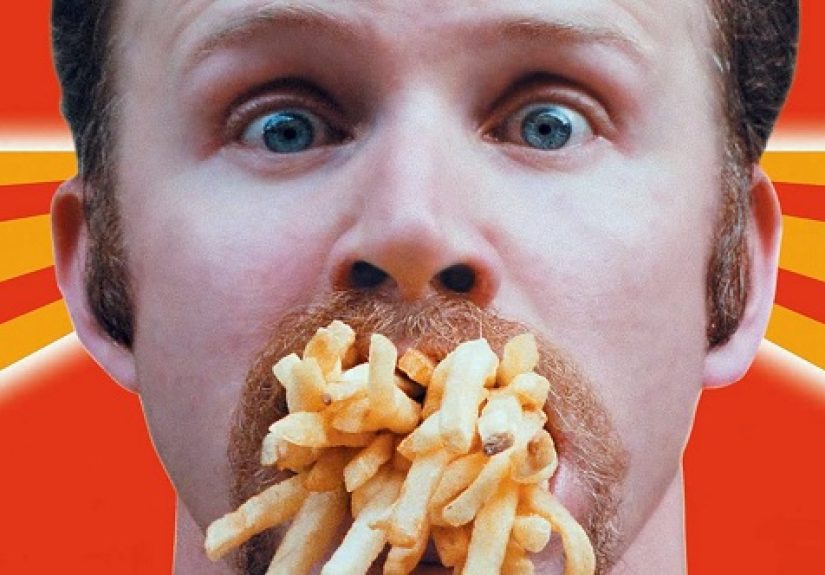
Morgan Spurlock’s fast-food grenade became one of the defining documentaries of the 2000s. Its setup was irresistible: one man eats only McDonald’s for a month and watches his health go sideways. The film was funny, gross, culturally sharp, and incredibly effective. It also became a giant neon sign pointing Americans toward the health costs of junk food.
But later criticism hit the movie where it hurt most: credibility. Years after the film’s release, Spurlock acknowledged serious alcohol abuse during the period surrounding the documentary, and critics argued that this raised obvious questions about whether his alarming liver results could be blamed entirely on burgers and fries. That did not erase the film’s influence, but it did make the central experiment look a lot less airtight. In other words, the movie may have been directionally right about fast food culture while still being messier in its own science than it first appeared.
2. Blackfish
Blackfish landed like a harpoon in the public image of SeaWorld. By focusing on Tilikum and the death of trainer Dawn Brancheau, the film pushed millions of viewers to rethink marine parks, captive orcas, and the cost of turning apex predators into performers. Its emotional power was enormous, and its cultural impact was undeniable.
SeaWorld, however, came out swinging and accused the film of being inaccurate and misleading. Critics sympathetic to the company argued that the documentary used selective footage, emotionally loaded editing, and a prosecution-style narrative rather than a fully balanced examination. Supporters of the film countered that corporate outrage did not erase the underlying ethical issues it exposed. That tension is exactly why Blackfish belongs here: it became a textbook example of a documentary celebrated as truth-telling by one side and blasted as manipulative framing by the other.
3. Making a Murderer
Netflix’s true-crime phenomenon did what all mega-hits do: it turned viewers into amateur experts overnight. Suddenly everybody had opinions about Steven Avery, Brendan Dassey, police conduct, confession tactics, and Wisconsin. The series was gripping, maddening, and bingeable in the way only a “this feels bigger than TV” story can be.
It was also accused of steering viewers too aggressively. Critics argued that the series omitted evidence, blurred important distinctions, and assembled material in a way that nudged audiences toward one conclusion: that Avery had been framed. Later, a detective featured in the series sued for defamation, claiming that edited testimony distorted his role. A judge ultimately ruled that the specific edits did not amount to defamation, which matters. Still, the broader criticism remained: the show was faulted for constructing a persuasive innocence narrative first and dealing with complexity second. Great television? Absolutely. Neutral map of the case? Many observers said not quite.
4. The Social Dilemma
If you watched The Social Dilemma and immediately felt the urge to throw your phone into a lake, the film did its job. The documentary turned platform design, recommendation systems, and attention economics into something between a horror movie and a public-service announcement. It translated big-tech anxiety into a story ordinary viewers could feel in their bones.
Then came the pushback. Critics said the documentary flattened a complicated ecosystem into a simpler “algorithms are mind-controlling us all” narrative. Some reviewers argued that it treated social media as an all-powerful villain while paying too little attention to politics, culture, economics, and human agency. Others thought the dramatized scenes made the film emotionally effective but intellectually thinner. So while the documentary captured real concerns about digital manipulation, it was accused of overselling one explanation and packaging a structural problem as if a few evil design tricks explained everything.
5. Seaspiracy
Seaspiracy arrived with the kind of punchy certainty that streaming platforms adore. It told viewers that industrial fishing is devastating the oceans and that common ideas about “sustainable seafood” can be misleading. The film made waves fast because it mixed undercover-style confrontation with apocalyptic claims and a moral bottom line that was brutally simple.
Marine scientists, organizations quoted in the film, and other participants soon argued that the documentary went too far. Critics said it used outdated or disputed statistics, took some interviews out of context, and made sweeping claims that sustainable fishing does not exist at all. That last point became one of the biggest flashpoints. Many experts agreed the documentary was right to spotlight overfishing, but wrong to bulldoze nuance in pursuit of a stronger shock effect. In short, Seaspiracy was praised for urgency and criticized for turning urgency into overstatement.
6. What the Health
Diet documentaries love a dramatic reveal, and What the Health served several of them on one very large plate. The film argues that animal products are central drivers of chronic disease and suggests viewers have been badly misled by both industry and public-health institutions. It is slick, direct, and designed to make your next grocery run feel morally loaded.
Nutrition experts were not shy about objecting. Critics said the film exaggerated weak evidence, blurred the difference between correlation and causation, and made comparisons that were scientifically reckless, such as treating eggs or processed meat as if they belonged in the same practical risk universe as cigarettes. Reviewers also objected to the film’s casual treatment of sugar and its tendency to grab the most alarming interpretation available. Even some people sympathetic to plant-based eating argued the documentary hurt its own case by reaching too far. Translation: the film had a serious argument buried inside it, but sometimes delivered that argument with a fog machine.
7. The Game Changers
The Game Changers took the plant-based documentary formula, gave it a protein shake, and marched it into the locker room. Rather than focusing mainly on long-term disease, it framed vegan eating as a performance advantage for athletes, soldiers, and high-achievers. That made it especially appealing to viewers who hear “plant-based” and immediately fear becoming weak enough to lose a fight with a throw pillow.
Critics argued that the documentary oversold the evidence. Reviews pointed out that the film often used broad claims, dramatic mini-experiments, and anecdotal examples to suggest that vegan diets are superior across the board. Some experts agreed that well-planned vegan diets can be healthy and effective, but said the documentary leaped from “can work well” to “is clearly best” without enough rigorous support. In other words, the film may have been strongest as motivational advocacy and weakest when it acted like the scientific debate had already been cleanly settled.
8. Planet of the Humans
This climate documentary hit a nerve because it challenged green orthodoxy rather than the usual fossil-fuel villains. Backed by Michael Moore and directed by Jeff Gibbs, the film argues that parts of the renewable-energy movement are compromised, ineffective, or misleading. For viewers tired of polished environmental branding, that skepticism felt bold and refreshing.
For many scientists and climate advocates, it felt badly outdated. Critics said the documentary relied on stale footage, old statistics, and misleading presentations of solar, wind, biomass, and electric-vehicle technology. Some also argued that the film’s broader conclusion slid away from policy critique and into fatalism, implying that human ambition itself is the real problem. That made the film catnip for people eager to dismiss clean energy altogether. So yes, it was provocative. But it was also accused of building a hard-hitting case on information that had already expired.
9. Waiting for “Superman”
Education documentaries rarely become mainstream conversation pieces, but Waiting for “Superman” managed it by focusing on families, children, and the lottery-driven heartbreak of school choice. The film framed failing public schools as an urgent crisis and cast charter schools and reform-minded outsiders as possible rescue heroes.
Its critics argued that the movie was less documentary than advocacy package. Education scholar Diane Ravitch and others said the film misused NAEP data, exaggerated the uniformity of school failure, minimized the role of poverty, and romanticized charter schools as if they were a broadly proven solution rather than a mixed bag. That critique mattered because the film did not just tell a story; it promoted a policy direction. When a documentary turns public policy into an emotional morality play, even a moving one, the accusation of skewed facts gets a lot harder to shrug off.
10. An Inconvenient Truth
Before climate communication became its own industry, An Inconvenient Truth helped drag global warming into popular culture with unusual force. Al Gore’s slideshow-driven documentary was hugely influential, and many scientists praised its core argument that climate change is real, serious, and largely human-driven.
At the same time, the film was accused of exaggeration in some of its specific claims. A British High Court judge famously described the film as broadly accurate while also identifying several significant errors and requiring balancing guidance notes for school use. That nuance matters. The criticism was not that the whole documentary was nonsense; it was that advocacy and alarm sometimes outran precision. And that may be the most revealing example on this list. A documentary can be right about the big picture and still get criticized for stretching the edges to make the warning feel hotter, nearer, and more cinematic.
Why This Keeps Happening
The recurring pattern is almost painfully human. Documentary filmmakers are rarely rewarded for saying, “Well, it’s complicated, the literature is mixed, and the answer depends on how you define the question.” They are rewarded for clarity, tension, emotion, and momentum. Viewers want the curtain ripped back. Platforms want urgency. Headlines want certainty. Nuance often gets left standing in the parking lot, wondering if anyone remembered to validate it.
That does not mean documentaries are untrustworthy by default. It means they should be watched the way adults read a very convincing opinion essay: alert, curious, and willing to separate the strength of the storytelling from the strength of the evidence. A documentary can spotlight a real problem and still mangle the details. It can tell emotional truth while finessing factual balance. It can also be unfair, selective, and still influential enough to change the culture. That is what makes the form so powerful, and so slippery.
The Viewing Experience: When the Movie Hits First and the Fact-Checking Comes Later
There is a particular experience many viewers know but do not always admit. You watch a documentary late at night, maybe with a snack you suddenly no longer trust, and by the end you feel transformed. You are angry. Inspired. Slightly nauseous. Convinced that the film has shown you what “they” did not want you to know. It is a strangely thrilling feeling, like you have escaped the Matrix but with worse lighting and more voice-over.
Then the next day happens.
You look up a review. Then another one. Maybe an expert thread. Maybe a court ruling. Maybe a fact check. Suddenly the story that felt so clean starts to fray at the edges. One statistic was outdated. One interview was clipped in a way that changed its meaning. One dramatic comparison was technically legal but scientifically goofy. One villain turns out to be guilty of some things, but not all the things the movie seemed to imply. That is the whiplash of modern documentary viewing: emotional certainty followed by informational cleanup.
And honestly, that experience is part of the lesson. The best documentaries do not just deliver information; they shape perception. They decide what deserves close-up treatment and what gets tossed into the background. They tell you whose face to remember, whose tears to trust, whose silence means guilt, and whose expertise feels warm or suspicious. That is not automatically dishonest. It is storytelling. But it is powerful enough that even smart viewers can confuse persuasion with proof.
Many people have had this exact kind of documentary hangover. You recommend a film to friends with the zeal of a newly converted street preacher. A week later you discover that specialists in the field have been rolling their eyes so hard they nearly qualified as ceiling fans. That does not mean you were foolish. It means the film worked exactly as designed. It gave you momentum before it gave you balance.
There is also a second, quieter experience that matters just as much: sometimes a documentary gets some details wrong and still pushes an important conversation forward. A film may exaggerate, simplify, or cherry-pick, yet still force public attention onto something that was being ignored. That is why these movies remain fascinating. Their flaws do not always erase their impact, and their impact does not always excuse their flaws. They sit in that uncomfortable middle ground where art, advocacy, journalism, and entertainment all start elbowing each other for space.
So the most useful habit is not cynical dismissal. It is smarter viewing. Let the documentary move you, sure. Gasping at a shocking reveal is one of life’s cheaper thrills. But once the credits roll, ask a few annoying questions. Who benefits from this framing? What evidence was left out? Are experts in the field nodding along or reaching for aspirin? If the film is making a massive claim, is it built on broad evidence or one perfectly selected anecdote wearing a superhero cape?
That habit does not ruin documentaries. It actually makes them more interesting. You stop treating them as sacred truth-delivery machines and start seeing them for what they really are: beautifully edited arguments with a soundtrack.
Conclusion
The biggest documentaries often become big because they refuse to be shy. They pick a side, sharpen a theme, and pull viewers through the story with the confidence of a magician who definitely does not want you looking behind the curtain. Sometimes that boldness reveals hidden truths. Sometimes it trims reality to make the message hit harder. Often, it does a little of both.
That is why these 10 films still matter. Not because they prove documentaries cannot be trusted, but because they remind us that nonfiction is still constructed. The camera angle matters. The edit matters. The omitted caveat matters. And if a documentary leaves you furious, converted, or ready to reorganize your entire worldview before breakfast, that might be the perfect moment to pause, breathe, and do the least cinematic thing possible: check the footnotes.