Table of Contents >> Show >> Hide
- 1. The Egyptian Loincloth: Ancient Underwear With Royal Energy
- 2. The Roman Subligaculum: The Unisex Underwear Of Gladiators And Athletes
- 3. Medieval Braies: Baggy Underpants Before Tailored Trousers
- 4. The Medieval Bra: The 15th-Century Surprise Nobody Saw Coming
- 5. The Codpiece: When Men’s Underwear Became A Fashion Megaphone
- 6. Stays And Corsets: Body Architecture With Laces
- 7. Panniers: Side Hoops That Made Doorways The Enemy
- 8. The Cage Crinoline: A Skirt Support That Looked Like A Birdcage
- 9. The Bustle: Because The Back Of The Dress Needed Drama Too
- 10. The Union Suit: The Original One-Piece Wonder
- Bonus Oddity: The Chastity Belt Myth
- Why Historical Underwear Was So Wild
- Experiences And Reflections Related To Historical Underwear
- Conclusion
Underwear is usually the quietest part of an outfit. It stays hidden, does its job, and rarely demands a round of applause. But in history? Underwear has been a full-blown architectural project, a political statement, a health experiment, a social-status symbol, and occasionally a wearable obstacle course.
From ancient loincloths to hinged panniers wide enough to make doorways nervous, historical underwear proves one thing: people have always cared about comfort, modesty, fashion, power, and looking just a little more impressive than physics intended. Some pieces were practical. Some were beautiful. Some were so strange that modern shapewear suddenly looks like a calm, reasonable friend.
Here are 10 crazy pieces of historical underwear that shaped bodies, changed silhouettes, started arguments, and made getting dressed a serious morning workout.
1. The Egyptian Loincloth: Ancient Underwear With Royal Energy
The ancient Egyptian loincloth may sound simple, but do not underestimate it. This was one of the earliest and most practical forms of underwear: a piece of linen wrapped, folded, and secured around the waist. In hot climates, linen was ideal because it was breathable, washable, and far less dramatic than wearing heavy layers under the desert sun.
What makes this garment fascinating is that it crossed class lines. Workers could wear it as a main garment, while elites and royalty wore finer versions beneath other clothing. Tutankhamun’s tomb famously contained a large number of folded loincloths, showing that even a pharaoh needed a reliable underwear drawer. History may remember gold masks and jeweled collars, but the young king was also prepared in the basics department.
The Egyptian loincloth was not “crazy” because it was complicated. It was crazy because it was so enduring. Before elastic waistbands, brand labels, and laundry-care tags, ancient people had already figured out the essential formula: keep it light, keep it clean, and keep it from falling off during important royal business.
2. The Roman Subligaculum: The Unisex Underwear Of Gladiators And Athletes
The Roman subligaculum was a simple undergarment worn by men and women. It could resemble shorts or a wrapped loincloth, depending on the style and the wearer’s needs. Gladiators, athletes, actors, and laborers often wore it because it allowed movement while maintaining modesty.
Think of it as ancient Rome’s answer to performance underwear. It was not loaded with luxury features, but it was useful. If you were training, performing, or entering an arena, the last thing you wanted was a fussy garment that tangled with your legs. The subligaculum kept things practical.
Its “crazy” quality comes from how modern it feels. The Romans were not calling it activewear, but the idea was familiar: flexible clothing for physical activity. Add a moisture-wicking label and a motivational slogan, and the subligaculum could almost sneak into a modern sports catalog.
3. Medieval Braies: Baggy Underpants Before Tailored Trousers
Medieval men often wore braies, loose linen underdrawers tied at the waist. They could be short or long, plain or generously baggy. In a world of tunics, hose, and layered clothing, braies served as the washable layer closest to the body.
The hilarious part is the volume. Some medieval braies look less like sleek underwear and more like someone tried to turn a pillowcase into pants. But the design made sense. Linen was easier to wash than wool outer garments, and loose cuts allowed airflow and movement.
Braies also worked with hose, which were separate leg coverings tied to the body or to other garments. Before modern trousers became standard, dressing the lower body could involve several separate pieces. In other words, getting ready in the morning was not “grab jeans and go.” It was more like assembling a fabric-based puzzle while hoping all the ties behaved.
4. The Medieval Bra: The 15th-Century Surprise Nobody Saw Coming
For a long time, many people assumed bra-like garments were a modern invention. Then textile discoveries at Lengberg Castle in Austria complicated the story in the best possible way. Archaeologists found 15th-century linen undergarments with features that resemble later bras, including cups and decorative details.
This discovery surprised historians because it showed that medieval clothing technology could be more sophisticated than expected. These garments were not just random scraps of fabric. They were tailored, shaped, and designed for support.
The crazy part is how familiar they look. Anyone expecting all medieval underwear to be shapeless linen sacks would be disappointed. Some of these pieces suggest careful construction and an understanding of fit. Fashion history loves to remind us that people in the past were not walking around in badly wrapped tablecloths. They had style, tailoring skills, and opinions.
5. The Codpiece: When Men’s Underwear Became A Fashion Megaphone
The codpiece began as a practical solution. In late medieval and Renaissance clothing, men’s hose were often separate leg coverings, leaving a gap that needed to be covered. A small flap or pouch solved the modesty problem. So far, very sensible.
Then fashion entered the room, wearing velvet and refusing to be normal.
By the 16th century, codpieces could become padded, shaped, decorated, and impossible to ignore. What started as functional coverage turned into a bold fashion statement. Portraits of elite men from the period show that clothing was a language of rank, confidence, and display. The codpiece shouted in that language with a trumpet.
It is one of history’s strangest examples of underwear becoming outerwear. Modern fashion still does this occasionally, but the Renaissance codpiece took the concept to theatrical levels. It was practical, symbolic, and deeply committed to making sure nobody missed the center of the outfit.
6. Stays And Corsets: Body Architecture With Laces
Stays and corsets are among the most famous historical undergarments because they shaped the torso and supported fashionable silhouettes. In the 18th century, stays helped create a conical upper-body shape. In the Victorian era, corsets became closely associated with the fashionable waistline and structured dresses.
Not every corset was the extreme stereotype people imagine today. Many were everyday support garments, and their fit, stiffness, and purpose varied by era, class, activity, and wearer. Still, corsets could be restrictive, and dress reformers criticized them for limiting movement and affecting health.
What makes corsets “crazy” is not just the garment itself, but the cultural pressure around it. Underwear was not simply underwear. It was tied to beauty standards, posture, morality, class, and ideas about how a body should appear in public. A corset could support a dress, but it also supported a whole set of social expectations. That is a lot of responsibility for something with eyelets.
7. Panniers: Side Hoops That Made Doorways The Enemy
In the 18th century, elite women’s fashion sometimes called for spectacularly wide skirts. Enter panniers: understructures worn at the sides of the hips to extend gowns outward while keeping the front and back relatively flat.
Panniers created the broad, courtly silhouette seen in many formal portraits. They provided a dramatic canvas for expensive fabric, embroidery, and decoration. They also made ordinary movement a strategy game. Passing through narrow spaces, sitting gracefully, and navigating a crowded room required practice.
Some surviving panniers even had hinges that allowed the hoops to lift, which is both practical and deeply funny. Imagine wearing underwear with built-in engineering features because your skirt has declared war on architecture.
Panniers were not everyday clothing for everyone. They were connected to court dress, status, ceremony, and display. Their message was clear: “I am important enough to take up more horizontal space than the furniture.”
8. The Cage Crinoline: A Skirt Support That Looked Like A Birdcage
The 19th-century cage crinoline was a framework of hoops, often steel, suspended by fabric tapes. It replaced the need for layers and layers of heavy petticoats while still supporting large skirts. In practical terms, it made fashionable volume lighter. In visual terms, it looked like someone turned a lampshade into clothing infrastructure.
Cage crinolines became widely popular in the mid-19th century and were worn by women across different social levels. They created a bell-shaped silhouette and made skirts appear enormous without requiring endless fabric layers underneath.
Of course, they came with challenges. A wide skirt could brush against furniture, catch the wind, or require careful sitting. But compared with heavy petticoats, the cage crinoline was an innovation. It was strange, yes, but also smart. Historical fashion often looks ridiculous until you understand the problem it was solving.
9. The Bustle: Because The Back Of The Dress Needed Drama Too
After the widest crinoline silhouettes faded, fashion shifted. The volume moved toward the back of the dress, and the bustle became the star. Bustles were pads, frames, or structured supports worn under the back of a skirt to create an exaggerated rear silhouette.
Victorian fashion loved structure, and the bustle delivered. It could be subtle or dramatic, depending on the decade and the wearer’s taste. Some bustles were made from horsehair pads, wire frameworks, or folded fabric forms. The result was a dress that projected backward like it had somewhere important to be.
The bustle is crazy because it proves fashion does not always remove volume; sometimes it just relocates it. One generation wants width at the sides. Another wants a bell shape. Then suddenly the back of the skirt gets the starring role. Trends are basically history’s way of rearranging fabric and calling it progress.
10. The Union Suit: The Original One-Piece Wonder
The union suit is often remembered as old-fashioned long underwear, usually with a buttoned front and a rear flap. But its history is more interesting than cartoon pajamas. In the 19th century, reform-minded women promoted one-piece undergarments as alternatives to restrictive layers. Later, union suits became associated with men’s long underwear and cold-weather practicality.
Its appeal was simple: one garment, full coverage, fewer separate pieces. Compared with complicated layered underwear systems, the union suit was efficient. It was also warm, which mattered in homes before modern heating made winter dressing less of a survival plan.
The union suit’s most famous feature is the rear flap, sometimes jokingly called a “trapdoor.” It is impossible to discuss without smiling, but it had a purpose. Historical underwear often balanced modesty, warmth, convenience, and laundry demands. The union suit may look funny now, but it was a practical response to real needs.
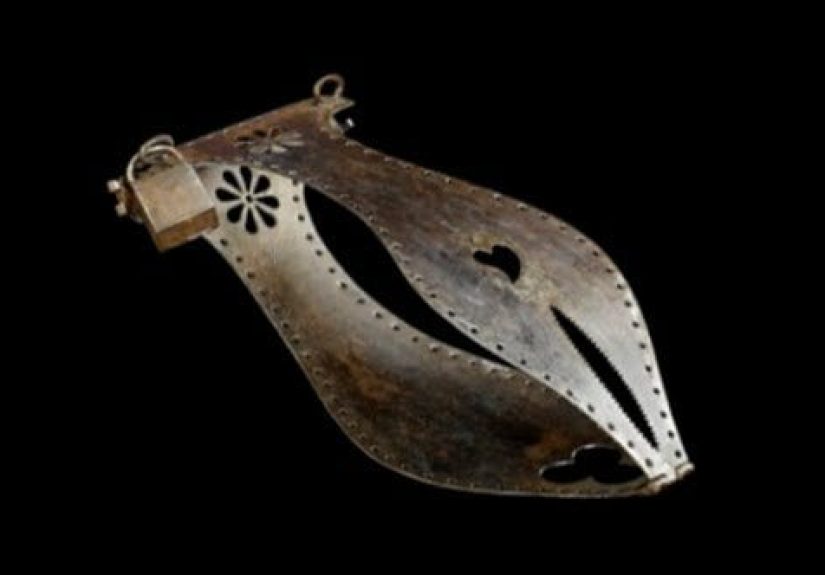
Bonus Oddity: The Chastity Belt Myth
No article about strange historical underwear feels complete without mentioning the chastity belt. Popular culture often imagines medieval women locked into metal belts while knights rode off to war. The problem? Historians generally treat that version as a myth. Many so-called medieval chastity belts in museum collections are now considered later creations, jokes, curiosities, or forgeries rather than everyday medieval garments.
This makes the chastity belt one of the strangest pieces of historical underwear because its fame is bigger than its evidence. It tells us less about actual medieval dressing and more about later people’s fantasies about the Middle Ages. Sometimes the craziest underwear in history is the one people invented after the fact.
Why Historical Underwear Was So Wild
Historical underwear looks strange because it had different jobs than modern underwear. Today, most people expect undergarments to be comfortable, washable, discreet, and easy to buy in a multi-pack. In the past, underwear often had to create the entire fashionable shape of the body.
That means underwear was engineering. It held skirts out, flattened fronts, lifted backs, supported torsos, protected outer clothing from sweat, kept people warm, and signaled status. A fashionable dress might get the applause, but the undergarments were doing the heavy lifting backstage.
Underwear also reflected technology. Linen, whalebone, cane, steel, cotton tapes, elastic, buttons, lacing, and early manufactured hygiene products all changed what people could wear. When materials changed, silhouettes changed. When laundering changed, underwear changed. When women demanded more movement and comfort, reform garments appeared. Fashion history is not just about taste; it is about tools.
Experiences And Reflections Related To Historical Underwear
Studying historical underwear is a surprisingly humbling experience. At first, it is easy to laugh. A hinged pannier? A cage under a skirt? A union suit with a flap? The jokes practically write themselves. But the deeper you look, the more these garments start to feel less ridiculous and more human.
One useful experience is visiting a costume exhibition or museum collection and looking at garments from the inside out. The outer dress may be beautiful, but the hidden structure explains the silhouette. Without stays, panniers, crinolines, or bustles, many famous historical outfits would collapse into completely different shapes. It is like seeing the beams inside a building. Suddenly, the glamour has scaffolding.
Another interesting experience is comparing historical underwear with modern shapewear, sportswear, and thermal clothing. The materials are different, but the goals are familiar. People still want support, warmth, confidence, smooth lines, and clothing that behaves properly under outer layers. The difference is that modern consumers usually want those benefits without needing a maid, a lacing assistant, or a doorway negotiation strategy.
Historical underwear also makes you think about comfort in a more realistic way. We often assume the past was universally uncomfortable, but that is too simple. Some garments were restrictive, yes. Others were clever solutions to everyday problems. A cage crinoline, for example, may look absurd, but it could be lighter than wearing several heavy petticoats. A linen shift protected expensive clothing from body oils and sweat. A union suit helped people stay warm. Even strange garments often had practical logic.
There is also a social lesson hidden in the seams. Underwear shows how strongly culture can influence the body. Different eras decided that the ideal figure should be conical, wide, bell-shaped, narrow-waisted, or projected at the back. People then built undergarments to make bodies match those ideals. That pattern continues today, though usually with stretch fabric and fewer steel hoops.
For writers, designers, students, or anyone interested in fashion history, historical underwear is a gold mine because it reveals the private side of public style. It answers questions that outer garments alone cannot answer: How did people move? How did they sit? What did they wash? What did they consider respectable? What did they endure for fashion? What did they reject when comfort and reform became more important?
The biggest takeaway is that underwear is never just underwear. It is technology, culture, humor, hygiene, status, and identity stitched into one hidden layer. The next time modern underwear feels annoying because a waistband rolls or a tag scratches, remember the pannier that needed hinges and the crinoline that turned walking into spatial planning. Suddenly, the laundry pile may seem a little less dramatic.
Conclusion
The history of underwear is far more exciting than a drawer full of basics suggests. Ancient loincloths, Roman subligacula, medieval braies, Renaissance codpieces, corsets, panniers, crinolines, bustles, union suits, and sanitary belts all reveal how people solved the same problems in wildly different ways: comfort, modesty, movement, fashion, hygiene, and social expectations.
Some of these garments look funny now. Some were ingenious. Some were uncomfortable. Some were misunderstood. But every piece tells a story about the body and the culture around it. Historical underwear shaped more than clothing; it shaped how people moved through rooms, presented themselves in society, and experienced daily life beneath the visible layers.
So yes, historical underwear could be crazy. But it was also clever, revealing, and strangely relatable. Fashion changes, technology improves, and waistbands get stretchier, but humans remain wonderfully consistent: we want to look good, feel supported, and avoid wardrobe disasters in public.