
Table of Contents >> Show >> Hide
- What Was Airbnb’s Around the World in 80 Days Trip?
- The Jules Verne Connection: Why 80 Days Still Captures Our Imagination
- Where Did the Airbnb Adventure Go?
- What Made the Trip Different From a Regular Vacation?
- How Much Did It Cost, and What Was Included?
- Who Was This Trip Best For?
- How to Plan Your Own Jules Verne-Inspired Airbnb Trip Today
- Why This Trip Still Matters for Modern Travel
- Extra Experiences Inspired by Going Around the World in 80 Days
- Conclusion
Some travel ideas whisper politely. Others kick open the door wearing a top hat and shouting, “Pack your passport, we leave from London!” Airbnb’s Jules Verne-inspired Around the World in 80 Days trip belongs firmly in the second category. Created as a limited Airbnb Adventures experience, this globe-spanning itinerary invited travelers to follow the spirit of Around the World in Eighty Days, Jules Verne’s famous adventure novel about Phileas Fogg, a punctual English gentleman who circumnavigates the planet on a wager.
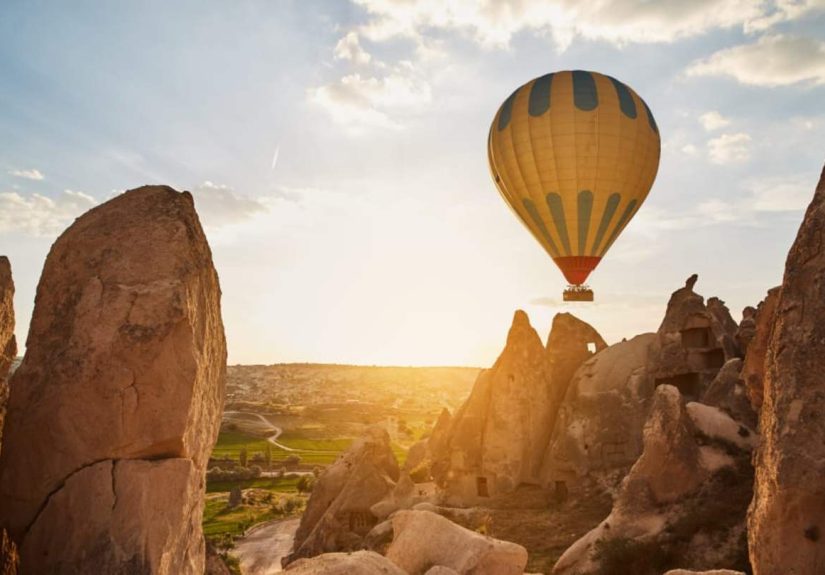
Airbnb’s real-world version was not a casual long weekend with a cute rental and a suspiciously small coffee maker. It was an 80-day, six-continent, 18-country journey designed for travelers who wanted a story big enough to make their luggage nervous. The trip began and ended in London, echoing Fogg’s fictional route, and included an ambitious mix of cultural encounters, natural wonders, local hosts, and cinematic transportation. Yes, there was even a hot air balloon element, because apparently no one is allowed to say “Jules Verne-inspired” without at least one balloon floating dramatically into the conversation.
Although this particular Airbnb trip was a limited 2019 offering rather than a permanent package, it remains one of the most imaginative examples of modern adventure travel. It blended literary nostalgia, small-group tourism, social impact, and the growing demand for travel experiences that go beyond checking into a pretty room. For anyone dreaming of an around-the-world trip, the concept still offers a useful blueprint: travel with a theme, move with intention, and let the journey become the headline.
What Was Airbnb’s Around the World in 80 Days Trip?
Airbnb launched its Around the World in 80 Days Adventure as part of Airbnb Adventures, a collection of multi-day experiences hosted by local experts. The idea was simple in theory and wildly complex in practice: take a small group of travelers across the globe in 80 days, visiting 18 countries across six continents while channeling the adventurous energy of Jules Verne’s classic novel.
The journey was priced at about $5,000 per person, an eye-catching figure considering that lodging, many meals, activities, destination transfers, and assistance with visas were included. Travelers still needed to arrange their round-trip flights to and from London, but the core itinerary was handled by the adventure providers. Compared with the cost of planning a multi-continent route independently, the price sounded almost suspiciously reasonablelike finding a first-class ticket in your coat pocket.
The route included places such as the United Kingdom, Romania, Uzbekistan, Egypt, Jordan, Ethiopia, Kenya, Nepal, Bhutan, Thailand, China, Australia, New Zealand, Japan, the United States, Ecuador, Chile, and Iceland. That is not a vacation itinerary; that is a world map doing cardio.
The Jules Verne Connection: Why 80 Days Still Captures Our Imagination
Jules Verne published Around the World in Eighty Days in the 1870s, a time when steamships, railways, and global trade routes were shrinking the world in ways that felt almost futuristic. The novel follows Phileas Fogg and his valet Passepartout as they attempt to circle the globe in exactly 80 days. The story is part travel adventure, part race against the clock, and part tribute to the human desire to test what is possible.
That is why Airbnb’s modern interpretation worked so well as a travel concept. It did not simply borrow a famous title. It borrowed a feeling: the thrill of movement, the precision of a deadline, and the delightful absurdity of saying, “I’ll be back in London in 80 days, assuming the universe cooperates.”
The Airbnb version also updated Verne’s old-world adventure for a modern traveler. Instead of relying on imperial-era steam routes and gentleman’s clubs, it leaned into local hosts, immersive activities, unusual accommodations, and off-the-beaten-path experiences. The result was less about racing the clock and more about seeing the planet through many small windows: a meal, a trail, a river, a market, a village, a desert sky.
Where Did the Airbnb Adventure Go?
The itinerary covered a remarkable spread of destinations, creating a journey that felt less like one trip and more like several travel documentaries stitched together with boarding passes. In Europe, travelers could begin with London and continue into Romania, where Transylvania offered medieval towns, mountain scenery, and just enough Dracula energy to make night walks feel theatrical.
In Central Asia, Uzbekistan brought the Silk Road into the story. Cities along this ancient trade network are known for blue-tiled architecture, historic madrasas, and markets that make minimalist packing feel like a personal attack. From there, the route moved through destinations such as Egypt and Jordan, where ancient history is not locked behind glassit rises out of sand, stone, and sunlight.
Africa added Ethiopia and Kenya to the experience, expanding the trip beyond monuments into landscapes, wildlife, and cultural traditions. Asia brought Nepal, Bhutan, Thailand, China, and Japan, offering everything from Himalayan views and monasteries to pilgrimage routes and dense urban energy. Australia and New Zealand delivered the Southern Hemisphere’s wide-open drama, while the Americas added the United States, Ecuador, Chile, and Iceland to the final sweep of the route.
What Made the Trip Different From a Regular Vacation?
The main difference was structure. A regular vacation often begins with a flight, a hotel, and a heroic promise to “figure it out when we get there.” An 80-day global adventure requires something a little more seriouspreferably a spreadsheet, a strong immune system, and a suitcase that does not judge you.
Airbnb’s trip was curated as a small-group adventure. That matters because the best parts of long-form travel often happen when logistics fade into the background. Travelers could focus on the experience rather than spending each night comparing train schedules, booking local guides, or wondering whether the next airport transfer was real or merely a rumor.
Local Hosts and Community-Based Experiences
Airbnb Adventures emphasized local hosts, which gave the journey a more grounded feel than a typical sightseeing marathon. Instead of simply moving from landmark to landmark, travelers were meant to connect with communities, landscapes, and traditions that might be harder to access alone.
That could mean hiking toward monasteries, exploring heritage sites, sleeping under wide skies, rafting through dramatic landscapes, or learning from people who know a place beyond its postcard angle. This style of travel suits modern adventurers who want more than a selfie in front of something famous. They want a story with texture.
Multiple Modes of Transportation
The itinerary included several forms of transportation, nodding to the novel’s fascination with movement. While Phileas Fogg relied on trains, ships, and occasional desperate improvisation, Airbnb’s version mixed modern travel with adventure-minded touches. The hot air balloon reference added a charming dose of old-school spectacle, even though the balloon is more closely associated with famous adaptations than the original novel itself.
Still, the symbolism works. Balloon travel says, “I am here for wonder.” Commercial air travel says, “Please remove your laptop from your bag.” The best global itinerary needs both kinds of energy.
How Much Did It Cost, and What Was Included?
The trip was promoted at roughly $5,000 per person for 80 days. That number attracted plenty of attention because it included lodging, many meals, activities, transportation between destinations, and visa assistance. The main exception was the traveler’s round-trip flight to and from London.
For an around-the-world trip, that price point was unusually compelling. Independent travelers attempting a similar route would need to budget for international flights, regional transfers, hotels, guides, meals, insurance, visas, gear, and the occasional emergency purchase of socks in a language they do not speak. Airbnb’s package turned many of those moving parts into one organized experience.
The trip was also connected to social impact. Proceeds were tied to the Malala Fund, which supports girls’ education. That charitable element helped separate the offering from a standard luxury bucket-list trip. It suggested a broader point: travel can be fun, ridiculous, meaningful, and useful all at once. A person can ride through the world with wonder while still supporting something larger than their own passport stamp collection.
Who Was This Trip Best For?
This kind of trip was not designed for someone whose ideal vacation involves sleeping until 10, ordering room service, and refusing to learn the local word for “train station.” An 80-day journey across continents requires flexibility, curiosity, stamina, and a healthy relationship with packing cubes.
The ideal traveler would be someone who enjoys cultural immersion, can handle changing climates, and does not panic when breakfast in one country looks nothing like breakfast in another. It would also suit literary travelers, adventure seekers, remote workers with flexible schedules, and anyone who has ever looked at a globe and thought, “What if I just kept going?”
That said, this style of travel is not only for extreme adventurers. Because the Airbnb model handled much of the planning, it made a complex global trip feel more approachable. The traveler still needed courage and time, but not necessarily the logistical wizardry of a professional tour operator.
How to Plan Your Own Jules Verne-Inspired Airbnb Trip Today
Since the original Airbnb Around the World in 80 Days trip was limited, travelers today cannot simply book the same itinerary as a standard package. However, the idea can absolutely inspire a custom trip. You do not need to copy all 18 countries. In fact, unless you have 80 free days and a heroic laundry plan, you may be better off adapting the concept.
Choose a Strong Theme
A Jules Verne-inspired trip needs a narrative. You could build a route around classic transportation, literary cities, UNESCO World Heritage Sites, legendary rail journeys, island crossings, or famous adventure novels. A theme turns a trip from “places I found on sale” into a story you actually want to tell.
Start and End Somewhere Symbolic
London made sense for Airbnb because it mirrored Phileas Fogg’s fictional departure. Your version could begin in New York, San Francisco, Boston, or another city with strong flight connections and personal meaning. The point is to create a satisfying loop. Humans love circles. So do travel essays.
Mix Famous Stops With Quiet Ones
A strong around-the-world itinerary should balance icons with surprises. Yes, visit the famous temples, deserts, glaciers, markets, and skylines. But also leave room for the village meal, the family-run guesthouse, the small museum, the roadside tea, and the local guide who tells better stories than any brochure.
Protect Your Energy
The biggest mistake in long travel is pretending the human body is a carry-on bag. It is not. It gets tired, hungry, confused, and occasionally betrayed by street food. Build rest days into the route. Stay longer in fewer places. Choose accommodations with laundry access. Pack light. Drink water. Be kind to your future self, who will eventually have to find Gate C37 while jet-lagged and wearing the wrong shoes.
Why This Trip Still Matters for Modern Travel
Airbnb’s Around the World in 80 Days Adventure stood out because it captured a major shift in travel: people increasingly want experiences, not just reservations. A nice room matters, of course. Nobody wants “authentic” plumbing problems. But the bigger trend is toward travel that feels personal, immersive, and memorable.
The trip also showed how storytelling can make an itinerary more powerful. A route inspired by Jules Verne immediately feels more romantic than a list of airport codes. It gives travelers a reason to care, a frame for the journey, and a built-in sense of drama. That is smart travel design and smart content marketing.
For Airbnb, the trip served as a headline-grabbing way to introduce Airbnb Adventures. For travelers, it became proof that even old stories can be reimagined with modern tools. Verne wrote about the technologies of his time. Airbnb used the travel culture of ours: local hosts, curated experiences, digital booking, small groups, and social impact.
Extra Experiences Inspired by Going Around the World in 80 Days
The most exciting part of a Jules Verne-inspired trip is not simply the distance. It is the feeling of stepping into a journey that has momentum. You wake up in one country, learn a phrase badly but enthusiastically, eat something you cannot pronounce, and fall asleep knowing tomorrow may involve a train, a boat, a mountain road, or a border crossing. That rhythm changes how you experience the world. Travel stops being a break from life and becomes life in fast, colorful motion.
Imagine beginning in London with a rainy walk past old railway stations, then heading toward Romania, where misty hills and medieval streets make it very easy to believe every castle has a secret. From there, Uzbekistan could shift the mood completely. The Silk Road is not just a phrase from history class; it is a reminder that people have always moved, traded, argued, cooked, dreamed, and carried stories across continents. Standing in a tiled square in Samarkand or Bukhara, a traveler can feel how old the idea of global connection really is.
Then comes the desert drama of Egypt and Jordan, where the landscape seems designed by someone with a flair for cinema. Ancient sites force you to slow down, even on an 80-day itinerary. You cannot rush a pyramid. You cannot speed-read Petra. These places remind travelers that the world was already enormous long before airlines made it searchable.
In East Africa, the experience becomes more sensory: morning light, wildlife movement, red earth, city sound, and the hospitality of people whose stories complicate every lazy stereotype about a destination. In Nepal and Bhutan, the journey turns upward. Trails, monasteries, prayer flags, and mountain air add a quieter kind of adventure. Not every great travel moment needs adrenaline. Sometimes it is enough to sit still and realize your inbox has absolutely no power on a hillside.
Thailand, China, and Japan could bring the itinerary back into the pulse of cities, food, temples, trains, and rituals. Japan’s Kumano Kodo pilgrimage route, for example, offers a beautiful contrast to modern speed: walking through forests, visiting shrines, and letting the body earn each view. Australia and New Zealand expand the scale again, with open spaces, night skies, coastlines, and landscapes that seem to specialize in making people whisper, “Okay, wow.”
The final stretch through the United States, Ecuador, Chile, and Iceland would give the journey a grand closing act. Utah’s canyon country brings red-rock adventure. The Galápagos offers wildlife encounters that feel almost prehistoric. Patagonia delivers wind, glaciers, and the kind of scenery that makes expensive hiking socks seem emotionally justified. Iceland, with geothermal pools and volcanic landscapes, is the perfect last chapter: strange, soothing, and slightly otherworldly.
The real lesson from these experiences is that an around-the-world trip is not about collecting countries like souvenir magnets. It is about contrast. Heat and ice. Crowds and silence. Ancient stones and modern airports. Shared meals and solo wonder. A Jules Verne-inspired Airbnb adventure works because it understands that travel is at its best when it feels like a story you are living one chapter at a time.
Conclusion
Airbnb’s Go Around the World in 80 Days concept remains one of the most memorable adventure travel ideas of the modern era. It took Jules Verne’s classic sense of possibility and translated it into a real itinerary filled with local hosts, cultural immersion, dramatic landscapes, and practical logistics. Even though the original 2019 trip was limited, its influence is still useful for today’s travelers: build a route with purpose, choose experiences over checklists, and let a great story guide the map.
You may not need exactly 80 days, 18 countries, or a hot air balloon to create your own version. What you need is curiosity, planning, flexibility, and a willingness to let the world surprise you. Phileas Fogg traveled to win a bet. Modern travelers can go for something better: perspective, connection, and a few stories that will make dinner conversations much more interesting.






 Close
Close