Table of Contents >> Show >> Hide
- 10. Ku Klux Klan
- 9. Murder, Inc.
- 8. DINA and the Operation Condor Network
- 7. Soviet State Security Hit Squads: NKVD to KGB
- 6. Black Hand
- 5. Oprichniki
- 4. Praetorian Guard
- 3. Thuggee
- 2. Sicarii
- 1. Nizari Ismailis, the “Order of Assassins”
- What These Assassin Organizations Really Tell Us About History
- Extended Reflection: The Human Experience of Living in the Shadow of Assassin Organizations
- SEO Tags
History has never suffered from a shortage of ambitious people, sharp knives, and truly terrible ideas. But some groups turned murder into a method, a message, or even a brand. When most people hear the word assassin, they picture a shadowy figure in a hood slipping through a doorway at midnight. Real history is messier. Sometimes the killers were religious extremists. Sometimes they were imperial bodyguards. Sometimes they were nationalist conspirators, racist terrorists, mob enforcers, or state-backed hit squads with paperwork, budgets, and the emotional warmth of a filing cabinet.
This list looks at 10 of the deadliest assassin organizations in history, ranked not by an exact body count alone, but by their reach, notoriety, political impact, and use of targeted killing as a strategy. In other words, this is not a leaderboard anyone should feel proud to top. It is a tour through the darker corners of world history, where power often arrived with a blade, a garrote, a bomb, or a very official-looking stamp.
10. Ku Klux Klan
The Ku Klux Klan was not a classic assassin guild in the cinematic sense, but it absolutely belongs in any discussion of organizations that used targeted murder to shape politics. Emerging after the Civil War, the Klan weaponized secrecy, costumes, fear, and nighttime violence to terrorize Black Americans and their allies. Its goal was not random chaos. It was deliberate social control through intimidation, beatings, kidnappings, and murder.
What makes the Klan historically deadly is the cold efficiency of its terror campaigns. It did not just attack individuals; it targeted teachers, officeholders, organizers, veterans, clergy, and anyone seen as a threat to white supremacy. That made Klan violence function like political assassination on a community-wide scale. A group that can murder a state senator, silence a town, and make voters afraid to show up at the ballot box is doing more than mob violence. It is killing with a political purpose, which is exactly what many assassin organizations have always done.
Why it remains infamous
The Klan’s real weapon was not just murder. It was the message sent by murder: stay silent, stay afraid, and stay in your place. History, thankfully, has not judged that message kindly.
9. Murder, Inc.
If the underworld ever opened a subcontracting department, it would have looked a lot like Murder, Inc. Operating in the United States during the 1930s and early 1940s, this Mafia-linked hit squad turned contract killing into an industrial service. It was tied to organized crime networks that wanted efficient enforcement with minimal drama and maximum deniability. In plain English: if somebody had become a problem, these were the people sent to turn that problem into a memorial service.
Murder, Inc. stood out because it professionalized assassination. This was not an emotional revenge killing in a smoky back room. It was structured violence. The group became notorious for carrying out hits for organized crime bosses across multiple cities, often with chilling speed. Their methods varied, and that variety was the point. Reliable killers adapt. They do not cling to one trick like a magician with a sad card deck.
Groups such as Murder, Inc. also remind us that assassin organizations do not have to be political or religious. Sometimes money is the ideology, and the payroll is the creed.
Why it remains infamous
Because it showed what assassination looks like when it becomes a business model rather than a mission statement.
8. DINA and the Operation Condor Network
Chile’s intelligence service DINA, especially in the context of Operation Condor, represents one of the grimmest modern examples of organized political assassination. Operation Condor was a cooperative system among South American military regimes during the Cold War, built to identify, monitor, abduct, and kill political opponents across borders. That is already horrifying. The fact that this was handled with intergovernmental coordination makes it even worse.
DINA became especially notorious for cross-border assassination operations, including the 1976 car-bomb killing of former Chilean diplomat Orlando Letelier in Washington, D.C. That case was a brutal reminder that assassin organizations do not always hide in mountain fortresses or alleyways. Sometimes they travel internationally, work with state resources, and treat exile as merely a change of scenery for the target.
What makes DINA and Condor especially deadly is the scale of the network. This was not one rogue unit or one spectacular attack. It was a coordinated system of repression built on surveillance, detention, disappearance, and targeted murder. Assassination here was not a side effect. It was policy wearing a necktie.
Why it remains infamous
Because it proved that governments and intelligence services can build a multinational murder machine and call it security.
7. Soviet State Security Hit Squads: NKVD to KGB
The Soviet security services, especially the NKVD and later KGB structures tied to covert “special tasks,” developed assassination into a geopolitical instrument. These agencies were not created solely to kill, of course, but they repeatedly used murder, poisoning, abduction, and deniable overseas operations against perceived enemies of the state. When intelligence work and assassination shake hands too enthusiastically, you get this chapter of history.
One of the most famous examples is the assassination of Leon Trotsky in Mexico in 1940 by Ramón Mercader, a suspected Stalin agent. Later cases and defectors’ accounts described specialized poison weapons and carefully staged killings designed to look natural or at least confusing enough to buy time. That is a very sinister combination: technical sophistication plus political permission.
The deadliness of these apparatuses lies in their longevity and reach. Crime syndicates may dominate a city. Revolutionary sects may control a region. But a state security service with intelligence assets, diplomatic cover, and patient bureaucracy can hunt across continents and decades.
Why it remains infamous
Because it fused spycraft with assassination so effectively that the line between intelligence work and murder often disappeared into the fog.
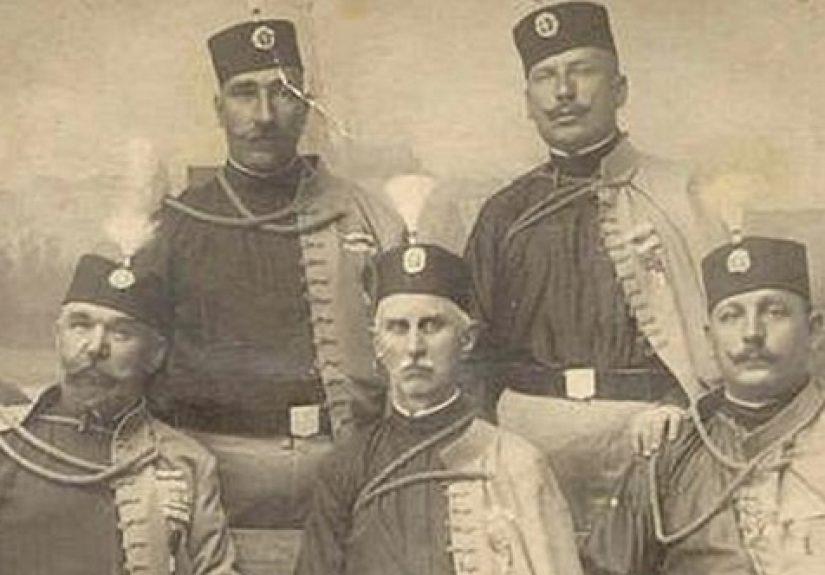
6. Black Hand
The Black Hand was a secret Serbian nationalist society founded in the early 20th century, and it earns its place on this list because few assassin organizations can claim a killing that helped ignite World War I. That is not just deadly. That is history changing direction at gunpoint.
The group used conspiracy, training, covert cells, and political violence to push its nationalist goals. It was instrumental in the plot that led to the assassination of Archduke Franz Ferdinand in Sarajevo in 1914. Gavrilo Princip pulled the trigger, but he did not emerge from nowhere like a villain in a low-budget stage play. He was part of a wider network shaped by revolutionary nationalism and secret support.
What makes the Black Hand especially dangerous in historical memory is the mismatch between its size and its impact. Some organizations kill many people over many years. The Black Hand’s most famous success killed two individuals and then helped unleash a world war that consumed millions. That is the nightmare multiplier effect of political assassination: one bullet, then history catches fire.
Why it remains infamous
Because it turned conspiracy into catastrophe and helped show how targeted murder can destabilize an entire international system.
5. Oprichniki
The oprichniki were the enforcement arm of Ivan IV, better known as Ivan the Terrible, and they brought state terror to 16th-century Russia with theatrical brutality. These men were not a secret society in the usual sense, but they functioned as a loyal corps empowered to crush enemies, punish suspected disloyalty, and carry out violent repression. If subtlety had applied for a job here, it would not have made the first round of interviews.
Associated with the oprichnina, they operated in a climate of paranoia, confiscation, execution, and terror. Their violence was intended to destroy opposition among the nobility and consolidate Ivan’s personal rule. In practice, that meant mass killings, public cruelty, and a reign of fear that became central to Ivan’s bloody reputation.
The oprichniki matter in the history of assassination because they show an early form of institutionalized political murder. This was not just vengeance. It was a ruler creating a system of loyal killers to reshape the state through fear. That idea, unfortunately, would have a long and ugly future.
Why it remains infamous
Because it helped turn personalized terror into a governing tool, complete with ritual, symbolism, and spectacular violence.
4. Praetorian Guard
The Praetorian Guard began as the elite bodyguard of Roman emperors. In theory, they were the people who kept Caesar safe. In practice, they occasionally resembled a workplace committee that solved management disputes with murder. Over time, the Guard became deeply involved in Roman succession politics, helping install emperors, depose them, and in several notorious cases kill them.
Ancient sources and later histories tie the Praetorian Guard to the murders of multiple emperors and major palace intrigues. The Guard even became so politically dominant that it could help make and unmake rulers depending on who paid, pleased, or frightened it most. There are not many organizations in history that can say, “Our annual performance review included deciding who got to be emperor.”
The reason the Praetorians belong on this list is simple: they were an armed institution with privileged access to the most powerful targets in the empire. Assassination is always easier when the killers already have security clearance.
Why it remains infamous
Because it transformed from protectors into kingmakers and killers, proving that the nearest blade is often the most dangerous one.
3. Thuggee
Few groups have inspired as much horror, mythology, exaggeration, and historical debate as the Thuggee bands of India. British colonial accounts depicted them as a vast confederacy of robbers and ritual stranglers who infiltrated travel parties, won victims’ trust, then murdered and robbed them. Modern historians continue to debate how much of the colonial narrative was accurate and how much was inflated, but the core fact remains grim: organized bands of killers did operate, and strangulation was a signature method linked to the tradition known as thuggee.
What makes Thuggee so chilling is the social camouflage. These killers did not usually announce themselves with banners and fanfare. They blended in, traveled with victims, created a sense of safety, and then struck when escape was least likely. It was murder by hospitality, which may be one of history’s most disturbing plot twists.
Even allowing for disputed numbers, Thuggee became synonymous with organized killing and left a mark so deep that the English word “thug” still carries an echo of that legacy.
Why it remains infamous
Because it combined patience, deception, ritual, and murder into a system that terrified travelers for generations.
2. Sicarii
The Sicarii were among the earliest groups to make targeted political killing a recognizable tactic. Active in Roman-ruled Judea in the first century CE, they were extremist militants associated with anti-Roman resistance. Their name came from the small curved daggers, or sicae, they concealed beneath their clothing. Their method was terrifyingly effective: slip into a crowd, stab a target, then melt back into the confusion while everyone else was still trying to understand why the day had suddenly become much worse.
The Sicarii targeted people they saw as collaborators or compromisers, not just Roman authorities. That made them especially feared, because their violence policed loyalty from within as much as it fought power from above. Assassination was not random. It was strategic theater designed to send a warning to entire communities.
They are often cited as one of history’s earliest examples of terrorism and political assassination, and for good reason. Their tactics were intimate, public, and symbolic. The message was simple: no one who makes peace with the enemy is safe.
Why it remains infamous
Because the Sicarii helped establish the blueprint for concealed political assassination in crowded public life.
1. Nizari Ismailis, the “Order of Assassins”
No organization is more closely linked to the very word assassin than the medieval Nizari Ismailis, known in Western legend as the “Assassins.” Based in fortresses such as Alamut and active in parts of Persia and Syria, they used stealth, infiltration, and high-profile political killings against powerful enemies they could not defeat in open warfare. Their story later became wrapped in lurid myths about drugs, paradise gardens, and fanatical obedience, but the historical core is compelling enough without the dramatic fog machine.
Under leaders such as Hasan-e Sabbah, the Nizaris built a network of strongholds and loyal agents. Their selected killers, often described as fida’is, targeted generals, officials, and rivals with carefully planned attacks. These were not wild massacres. They were calculated eliminations designed to shift political balance.
Their importance in history is not just the number of people they killed, but the model they established: disciplined cells, symbolic targets, psychological impact, and a reputation so durable that their name became the common English word for a political murderer. That is grim branding success on a medieval scale.
Why it remains infamous
Because the Order of Assassins became the defining historical image of organized political murder and left its name in the language itself.
What These Assassin Organizations Really Tell Us About History
Across continents and centuries, these groups were wildly different in ideology, structure, and style. Some wore the mask of religion. Some wrapped themselves in nationalism. Some hid behind empire, race, or revolutionary politics. Some simply chased money with murder attached. Yet they all understood one ugly truth: killing one symbolic person can frighten thousands, shift a government, trigger a war, or silence a movement.
That is why the deadliest assassin organizations in history matter today. They are not just dark trivia for history buffs who enjoy weird footnotes and old maps. They show how violence becomes organized, justified, and normalized. They also show how myths grow around killers. Later generations romanticize, exaggerate, sanitize, or exploit these stories until the violence starts to look almost stylish. It was not stylish. It was terror with good publicity.
In the end, assassin organizations flourish wherever secrecy, ideology, and impunity meet. History’s lesson is painfully clear: when a group starts deciding that murder is efficient, meaningful, or sacred, the body count is only part of the damage. The deeper wound is what happens to politics, trust, and ordinary life once fear becomes a governing language.
Extended Reflection: The Human Experience of Living in the Shadow of Assassin Organizations
Reading about assassin organizations from a comfortable chair with decent lighting and a cup of coffee is one thing. Living anywhere near them would have been something else entirely. That experience, across history, usually comes down to a handful of recurring sensations: uncertainty, rumor, silence, and the creeping suspicion that ordinary life is no longer fully ordinary.
Imagine living in a city where a public square, marketplace, temple, senate hall, or roadside inn is not just a place of business, prayer, or gossip, but also a stage for sudden death. The Sicarii exploited crowds. The medieval Assassins relied on stealth and symbolism. The Praetorian Guard operated near the emperor’s inner circle, meaning the danger was literally built into the palace walls. Under Operation Condor, exile itself became unreliable. Distance no longer guaranteed safety. You could flee a country and still feel as though the door behind you had never really shut.
That is part of what makes these organizations so haunting. They do not simply kill people. They alter the emotional climate around everyone else. A government official begins wondering whether a bodyguard is loyal. A traveler sizes up companions on the road and thinks twice before sharing dinner. A dissident abroad starts glancing under the car, checking the mail, and mistrusting every friendly introduction. A neighborhood learns which names are no longer spoken above a whisper. Fear spreads faster than any knife ever could.
There is also the experience of rumor, which thrives wherever assassination thrives. People start asking questions with no safe answers. Was it a robbery, or a warning? Was the victim chosen for what he did, what she knew, or whom they represented? Was the killing ordered by a sect, a state, a gang, or a rival who borrowed the style of one? Assassin organizations gain power from that uncertainty. If nobody knows exactly who can be targeted or why, everyone becomes more cautious, and caution can turn into obedience surprisingly fast.
Then there is the peculiar loneliness these groups create. Communities become hesitant. Witnesses stop speaking. Friends stop visiting. Public life shrinks. Under racist terror groups such as the Klan, targeted killings were meant to isolate activists and frighten supporters away from them. Under secret police systems, neighbors learned that the safest conversation was often no conversation at all. Silence becomes a survival skill. Unfortunately, it also becomes the assassin organization’s favorite background music.
Studying these histories today can feel oddly disorienting because the details change but the emotional architecture remains familiar. Modern readers recognize the same patterns: spectacle, intimidation, mythmaking, plausible deniability, and the conversion of violence into political messaging. One lesson keeps returning like a bad sequel nobody asked for: assassination is rarely just about removing one person. It is about teaching everyone else how vulnerable they are.
That is why these stories still matter. They are not merely gruesome episodes from distant centuries. They are warnings about what happens when secrecy, fanaticism, and power convince themselves that murder is efficient. History’s assassin organizations may look exotic from a distance, but the experience they created was always painfully human: grief, fear, distrust, and the daily exhaustion of living in a world where a shadow might mean something terrible.