Table of Contents >> Show >> Hide
The 1990s were a magical time to be a student. Your backpack probably weighed more than a bowling ball, your lunchbox may have featured a cartoon character with attitude, and every few months a new playground craze arrived with the force of a tiny, plastic hurricane. Then, just as quickly, the principal would appear with a clipboard, a memo, and the phrase every kid dreaded: “Not allowed on campus.”
Welcome to the wonderfully weird world of ’90s school bans, where slap bracelets became safety hazards, Pogs were treated like playground currency, and Bart Simpson T-shirts somehow sparked conversations about respect, rebellion, and whether “underachiever and proud of it” belonged in a math class.
Most of these bans were not national laws. They were local school policies, classroom rules, dress-code crackdowns, and principal-level decisions. Still, they spread through the decade like rumors at recess. Some bans were reasonable. Some were hilariously dramatic. All of them reveal something about how schools tried to manage pop culture before smartphones, TikTok, and group chats took over the distraction department.
Why Were Schools So Ban-Happy in the ’90s?
Schools in the 1990s were dealing with a fast-changing youth culture. Cable TV, toy marketing, hip-hop fashion, sportswear, early personal tech, and blockbuster cartoon characters were shaping what students wore, traded, quoted, and brought to class. Administrators were trying to protect learning time, reduce conflict, avoid safety issues, and maintain dress codes in a decade that seemed determined to turn every hallway into a mini mall.
There was also a legal and cultural tension behind many school bans. Public school students do have free-expression rights, but those rights can be limited when expression causes a material disruption, violates neutral rules, or creates safety concerns. That balance made the ’90s a fascinating decade for classroom contraband. A toy could be harmless at home and still become a five-alarm nuisance during third-period science.
11 Infamous ’90s School Bans
1. Bart Simpson T-Shirts
If the early ’90s had an official school-dress-code villain, it was Bart Simpson. After The Simpsons exploded into pop culture, Bart’s catchphrases landed on T-shirts across America. Kids loved them. Principals? Not so much.
Shirts reading “Underachiever and proud of it, man,” “Eat my shorts,” and “I’m Bart Simpsonwho the hell are you?” were seen by some administrators as rude, disrespectful, or directly opposed to the academic values schools were trying to promote. Some students were told to turn the shirts inside out. Others had to call home for a wardrobe rescue mission.
The Bart ban became one of the most famous examples of 1990s school dress code controversies. To students, Bart was funny. To many adults, he was a spiky-haired warning label for attitude problems. Looking back, the shirts seem tame compared with modern internet culture, but in 1990, Bart was apparently powerful enough to make the school office sweat.
2. Tech Decks
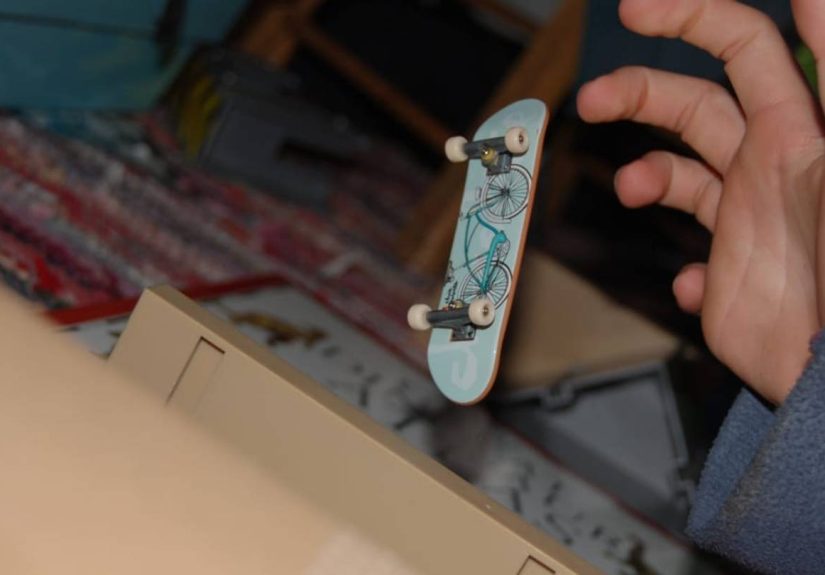
By the late ’90s, students who could not skateboard in school found a loophole: tiny skateboards for their fingers. Tech Decks were miniature skateboards that let kids perform tricks on desks, books, lunch trays, and any flat surface unfortunate enough to be nearby.
Teachers quickly discovered the downside. A Tech Deck in the hands of a bored student could turn a quiet classroom into a finger-skate park. The clicking, flipping, dropping, and “just one more trick” energy made them easy targets for confiscation.
Unlike some bans tied to safety or dress codes, Tech Deck bans were mostly about distraction. They were small, easy to hide, and weirdly addictive. One moment a student was supposed to be learning fractions; the next, they were attempting a tiny kickflip off a social studies textbook.
3. Pogs
Pogs were simple: small cardboard discs, colorful designs, and a heavier “slammer” used to flip them. In practice, they became a full-blown playground economy. Kids traded them, collected them, won them, lost them, argued over them, and occasionally treated them with the seriousness of Wall Street traders in light-up sneakers.
Schools banned Pogs for several reasons. They distracted students, sparked disputes, and sometimes looked a little too much like gambling when students played “for keeps.” Losing a favorite Pog stack could turn recess into a courtroom drama, complete with witnesses, accusations, and one very tired teacher playing judge.
The Pog craze shows why banned toys in schools often had less to do with the object itself and more to do with the behavior surrounding it. A cardboard disc is not inherently dangerous. Thirty students negotiating disputed ownership of a holographic slammer? That is a faculty meeting waiting to happen.
4. JNCO Jeans
JNCO jeans were not just baggy. They were architecturally ambitious. Some pairs had leg openings so wide they looked like denim curtains. For many teens, JNCOs were the peak of cool. For school administrators, they raised questions about safety, dress codes, and whether a student could hide an entire cafeteria tray in one pant leg.
Some schools objected to the jeans because students could trip over the oversized cuffs. Others worried the huge pockets and wide legs could conceal banned items. The look also clashed with stricter dress-code policies that were becoming more common in many districts during the decade.
Today, wide-leg jeans have made comebacks in different forms, but JNCOs remain a symbol of ’90s fashion at its most unapologetic. They were loud without making noise, rebellious without saying a word, and large enough to have their own weather system.
5. Nickelodeon Gak
Nickelodeon Gak was stretchy, squishy, noisy slime sold to children who absolutely understood its highest purpose: making gross sounds at the worst possible time. It could stretch across desks, bounce, splat, and provide endless entertainment to anyone not responsible for maintaining classroom order.
Teachers had every reason to dread it. Gak was messy, distracting, and built for mischief. A single container could hijack a lesson faster than someone whispering, “Watch this.” Some schools banned it after students stretched it, tossed it, and used it to create exactly the kind of chaos Nickelodeon probably knew kids would create.
Gak belongs in the great tradition of toys that are fun because adults hate them. It was not especially educational, unless the lesson was “viscosity plus boredom equals detention.”
6. Slap Bracelets
Few accessories captured ’90s energy like the slap bracelet. You straightened it, slapped it on your wrist, and watched it curl into place with a satisfying snap. Unfortunately, that snap happened again. And again. And again. In class. During tests. While the teacher was explaining long division.
Schools banned slap bracelets for two big reasons: distraction and safety. The constant slapping was annoying enough, but cheap knockoffs sometimes had sharp metal edges that could become exposed if the covering wore down. That turned a fashion fad into a nurse’s-office concern.
The slap bracelet was the perfect ’90s school-ban candidate: noisy, trendy, easy to misuse, and small enough to multiply across a classroom before lunch. It was jewelry with a sound effect, and that sound effect was “confiscated.”
7. Trapper Keepers
Of all the banned items on this list, Trapper Keepers might be the most unfairly iconic. They were designed to help students stay organized. They had folders, rings, pockets, colorful covers, and a satisfying Velcro closure. In theory, they were a parent’s dream.
In practice, some teachers considered them bulky, noisy, and awkward. The Velcro ripping sound became a classroom distraction, especially when repeated all day. Some versions were too large for desks or lockers, and knockoff binders could take over limited workspace like office supplies with territorial ambitions.
The Trapper Keeper ban is funny because it targeted organization itself. Students were not being punished for chaos; they were being punished for having a binder that announced its presence like a tiny thunderstorm.
8. Crazy Bones
Crazy Bones, also known as GoGos, were small plastic figures used for games, collecting, and trading. They had odd shapes, character names, and playground value that fluctuated according to rarity, rumor, and whatever the fourth graders decided that week.
Teachers often banned them because students traded them during class, argued over ownership, and used them for games instead of schoolwork. Like Pogs, Crazy Bones created a mini economy that adults did not fully understand and therefore did not trust.
Some toy companies tried to frame collectibles as educational, pointing to math, counting, and probability. That may have been true in theory. In reality, the classroom version usually looked more like “I’ll give you two common ones and a pencil grip for your rare one,” whispered during spelling practice.
9. Tamagotchis
The Tamagotchi was a tiny digital pet that lived on a keychain and demanded food, care, and attention. That was adorable at home. At school, it was a beeping emotional crisis with buttons.
When Tamagotchis became popular in 1997, many students brought them to class because ignoring them could lead to a neglected digital pet. Teachers suddenly had to compete with pixelated creatures that needed feeding during math. Some schools banned them outright, while others required students to keep them in backpacks or leave them at home.
Tamagotchi bans were an early preview of future technology debates in schools. Long before smartphones, schools were already asking the same question: how do you teach a lesson when the device in a student’s pocket keeps demanding attention?
10. Starter Jackets and Sports Logo Gear
Starter jackets were among the most recognizable fashion items of the decade. Bright, bold, and tied to professional and college teams, they were status symbols in hallways across the country. But in some districts, sports jackets, Raiders gear, and certain team logos became controversial because administrators associated them with gang colors, theft concerns, or campus conflict.
Some schools banned specific teams or broad categories of sports-logo clothing. The policies varied widely by location. In certain California districts, jackets, hats, and other apparel linked by officials to gang symbolism were restricted as part of larger safety-focused dress codes.
For students who simply liked a team, these bans could feel unfair. For administrators worried about violence or intimidation, the rules seemed practical. The result was a classic ’90s school conflict: one student saw fashion, another saw status, and the principal saw a policy memo.
11. Beepers and Pagers
Before cell phones became common among students, beepers and pagers caused their own panic. By the late 1980s and early 1990s, some schools and local governments restricted or banned them because they were considered disruptive and, in many places, associated with drug dealing.
That association was not always fair. Some parents liked beepers because they helped them reach their children. But the cultural image of the pager was complicated. To administrators, a device buzzing during class was a distraction. To lawmakers in some cities and states, it was a symbol of trouble.
Pagers now seem almost charmingly outdated. A device that could only receive short messages feels prehistoric compared with modern smartphones. Still, pager bans were part of a larger pattern: whenever student technology enters school faster than school rules can adapt, panic usually gets there first.
What These Bans Say About ’90s School Culture
The most interesting thing about these infamous ’90s school bans is not that schools banned silly objects. Schools have always banned things. The interesting part is how each ban captured a small cultural anxiety.
Bart Simpson shirts raised questions about attitude and student expression. JNCO jeans and Starter jackets reflected fears about dress codes, identity, and safety. Pogs, Crazy Bones, and Gak showed how quickly a harmless fad could overwhelm classroom routines. Tamagotchis and beepers predicted the technology battles schools still fight today.
In other words, these bans were not random. They were schools trying to draw boundaries around childhood trends that moved faster than policy. The ’90s were full of products designed to be collectible, wearable, noisy, expressive, or addictive. That made them perfect for kids and exhausting for adults.
The Student Side of the Story
For students, banned items often became more exciting after they were banned. That is one of the oldest laws of school life. A slap bracelet was fun. A forbidden slap bracelet was legendary. A Tech Deck was cool. A Tech Deck hidden in a pencil case felt like contraband from a spy movie, except the mission was to do a finger ollie before homeroom.
Many students did not see themselves as disruptive. They were participating in trends, showing personality, trading with friends, or wearing what everyone else was wearing. Adults often saw the same behavior as distraction, disrespect, or risk.
That gap between student meaning and adult interpretation is what made ’90s bans so memorable. A kid wearing a Bart Simpson shirt might have thought, “This is funny.” A principal might have thought, “This undermines the educational mission of the school.” Both reactions were real. Only one of them had access to the intercom.
Are ’90s School Bans Still Relevant Today?
Absolutely. The objects have changed, but the pattern is the same. Schools still debate what students can wear, what devices they can bring, what toys belong in class, and where expression ends and disruption begins. Today’s phone bans, smartwatch rules, hoodie policies, and social-media concerns are spiritual descendants of the Tamagotchi and pager debates.
The ’90s remind us that every generation has its own “unacceptable distraction.” Yesterday it was Pogs. Today it might be a phone notification. Tomorrow it will probably be something with augmented reality, artificial intelligence, and a subscription fee that makes parents sigh deeply at checkout.
What remains constant is the school’s challenge: protect learning without flattening student culture. That balance is hard. Too little structure and classrooms become chaos. Too much control and schools risk turning normal kid identity into a disciplinary issue.
Personal Experiences and Reflections on ’90s School Bans
Anyone who lived through the era, or has heard stories from older siblings, parents, or teachers, knows that ’90s school bans had a special flavor. They were not always announced with legal precision. Sometimes the rule simply appeared overnight. One day everyone had Pogs. The next day the teacher had a shoebox full of confiscated Pogs sitting on the desk like a tiny cardboard evidence locker.
The experience of these bans was often social before it was disciplinary. Students learned quickly which teachers cared, which teachers pretended not to notice, and which teachers had the reflexes of professional goalkeepers when a forbidden toy appeared. A slap bracelet could vanish into a desk drawer in half a second. A Tamagotchi beep could cause twenty heads to turn with the synchronized guilt of kids who knew exactly what had happened.
There was also a strange creativity that came from the bans. Students hid Tech Decks in pencil boxes, tucked Crazy Bones into jacket pockets, and developed elaborate systems for trading Pogs before the bell rang. Some students turned Bart Simpson shirts inside out, only to reveal the design faintly through thin cotton like a ghost of rebellion. Others wore jackets until the first warning, then stuffed them into backpacks so full they looked ready for a camping trip.
For teachers, the experience was probably less charming. A classroom of students secretly feeding digital pets, snapping bracelets, and negotiating collectible trades is not exactly a peaceful learning environment. Many bans were born from repetition. One student with Gak is funny. Ten students with Gak is a science lab accident with branding. One Trapper Keeper opening is normal. Twenty Velcro rips during quiet reading is a soundscape no educator requested.
Parents often had mixed reactions. Some supported the bans because they wanted school to stay focused. Others thought administrators were overreacting to harmless trends. A parent who had just spent money on a Starter jacket, a stack of Pogs, or the coolest binder in the store was not always thrilled to hear it had been declared unacceptable by Tuesday morning.
Looking back, these experiences feel funny because the stakes were usually small, but the emotions were huge. Childhood trends create belonging. Having the right toy, shirt, shoes, binder, or jacket could make a student feel connected to friends. When schools banned those items, students sometimes felt adults were banning not just objects but pieces of their identity.
At the same time, the bans taught real lessons about shared spaces. A classroom is not a bedroom, a playground, or a mall. What is harmless alone can become disruptive in a group. The ’90s bans were messy, inconsistent, and occasionally ridiculous, but they were part of the daily negotiation between individuality and community.
That is why people still remember them. Nobody gets nostalgic for a perfectly ordinary rule. People remember the rules that interrupted a fad at the exact moment it felt unstoppable. They remember the banned shirt, the confiscated toy, the binder that made too much noise, and the digital pet that could not understand why social studies mattered more than lunch.
Conclusion
The 11 infamous ’90s school bans were more than a collection of quirky rules. They were snapshots of a decade when pop culture rushed into classrooms through clothing, toys, collectibles, and early personal technology. Schools responded with bans because they were trying to preserve focus, safety, and order. Students pushed back, adapted, laughed, complained, and kept being students.
From Bart Simpson T-shirts to beepers, these banned items remind us that school culture is always negotiating with youth culture. Every generation brings something new to the hallway. Every school decides what to tolerate, what to manage, and what to drop into the confiscation drawer until Friday. The ’90s just happened to do it with more Velcro, slime, denim, and attitude.
Note: This article is written for web publication in original language and structure, based on synthesized historical examples of 1990s school bans without inserting source links into the body content.