
Table of Contents >> Show >> Hide
- Why This Heatwave Felt Different
- 12 Reactions Europeans Had To The Record-Breaking Heatwave
- 1. They turned fountains into the unofficial town square
- 2. They treated public pools like critical infrastructure
- 3. They carried umbrellas like portable shade patents
- 4. They reorganized daily life around the least terrible hours
- 5. They watched famous landmarks surrender before they did
- 6. They turned sports into endurance theater
- 7. They protested when heat crossed from discomfort into danger
- 8. They demanded stronger rules for outdoor work
- 9. They stared at the sky like it had developed plot twists
- 10. They flocked to beaches, shade, and improvised cooling rituals
- 11. They started making peace with air conditioning
- 12. They responded with dark humor, solidarity, and adaptation mode
- What These Reactions Reveal About Europe’s Future
- On-the-Ground Experiences During the Heatwave
- Conclusion
Europe has always had a dramatic relationship with summer. Normally, that means long lunches, late sunsets, and somebody insisting their apartment stays cool “if you just close the shutters properly.” Then the record-breaking heatwave arrived and politely informed the continent that old tricks were now playing in a much hotter league. What followed was not one single reaction, but a whole collection of very European responses: practical, stylish, stubborn, communal, and occasionally a little theatrical.
This was not just another hot spell with sweaty shirts and melted gelato. During the early-summer 2025 heatwave, parts of Spain and Portugal hit record June levels, Barcelona logged its hottest June in more than a century, Paris shut the Eiffel Tower summit, and Wimbledon turned into a live demonstration of how hard it is to look elegant while holding an ice bag on your head.[1][3] At the same time, officials opened pools for free, restricted some outdoor work, and warned millions of people about dangerous nighttime heat.[2][3]
Why This Heatwave Felt Different
What made this European heatwave so unnerving was not just the number on the thermometer. It was the timing, the reach, and the sense that the heat had barged in early, skipped introductions, and rearranged daily life. Western Europe had its warmest June on record, with temperatures 2.8 degrees Celsius above the 1991–2020 average, while scientists and forecasters linked the event to a persistent heat dome, unusually warm Mediterranean waters, and a broader warming trend that keeps making extreme heat more likely.[3][5][6]
That matters because heat is not only uncomfortable. It changes how cities function, how people work, how tourists move, how athletes compete, and how long the body has to recover overnight. When nights stay hot, buildings radiate stored warmth, and streets feel like oversized pizza stones long after sunset, people stop asking whether it is “really that bad” and start asking where the nearest fountain is.[2][10]
12 Reactions Europeans Had To The Record-Breaking Heatwave
1. They turned fountains into the unofficial town square
One of the clearest reactions was wonderfully straightforward: find water, stand near water, splash water, praise water. Across major cities, people gathered around fountains the way previous generations gathered around gossip. In Berlin, Paris, and other urban centers, fountains became instant cooling stations, selfie backdrops, and temporary public therapy circles. When the heat gets that intense, dignity becomes negotiable and cold mist becomes religion.[9]
2. They treated public pools like critical infrastructure
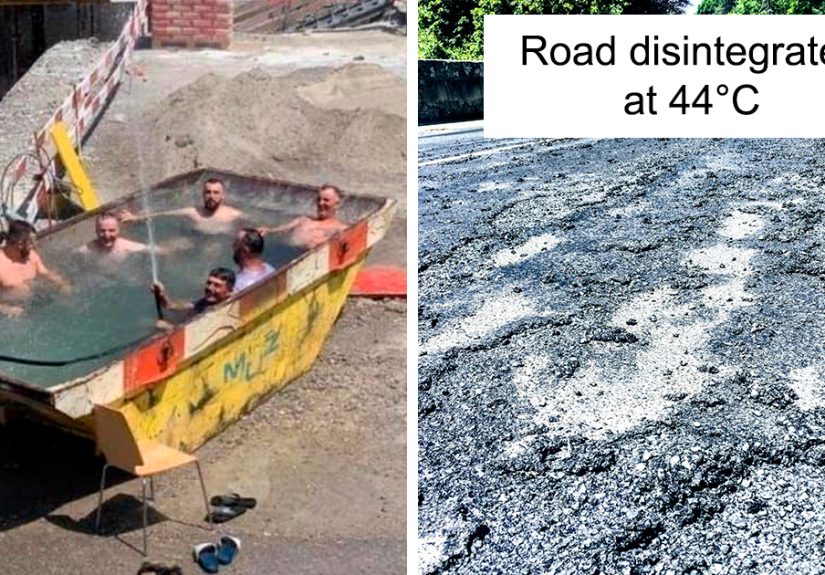
Officials in Marseille opened municipal swimming pools free of charge during the heat, which tells you almost everything about the mood. Pools were no longer just a leisure perk; they were part of the public response. In a heatwave, a city pool stops being a nice summer amenity and becomes a low-tech lifesaver. Europeans who might normally debate architecture, politics, or whether ice belongs in coffee suddenly united around one deeply reasonable principle: if the pavement feels like a griddle, let people jump in water.[2]
3. They carried umbrellas like portable shade patents
Another classic reaction was the rise of the anti-sun umbrella. Tourists and locals alike used umbrellas, hats, and handheld fans with the seriousness of military equipment. In places like Barcelona and Istanbul, the look was less “fashion week” and more “I would like to remain a functioning mammal.” The umbrella, once reserved for rain, became a mobile patch of civilization under a hostile sky. It was practical, photogenic, and honestly overdue.[1][9]
4. They reorganized daily life around the least terrible hours
Heat this severe does not just make people uncomfortable; it changes the clock. Morning becomes the new afternoon, late evening becomes the new social prime time, and the middle of the day becomes something to survive rather than use. The old Mediterranean playbook of shutters, cross-ventilation, and siesta-like pacing came back into focus, but this time with more urgency. In many places, people delayed errands, avoided midday exposure, and reshaped routines around shade, stone buildings, and whatever breeze they could negotiate with the universe.[10]
5. They watched famous landmarks surrender before they did
There is something almost surreal about a heatwave becoming powerful enough to interrupt tourism itself. The Eiffel Tower summit closed during the Paris heat, not because Paris suddenly lost interest in visitors, but because the temperature demanded respect. In Brussels, the Atomium reduced hours. Across France, hundreds of schools closed. When iconic landmarks and public institutions start blinking first, the heat stops feeling like background weather and starts feeling like the lead story.[1][3]
6. They turned sports into endurance theater
Europeans are very committed to outdoor culture, but the heatwave kept rewriting the script. Wimbledon recorded its hottest opening day on record, and players, fans, and staff had to improvise with ice bags, shade, cold drinks, and grit. Heat at a tournament like Wimbledon is not just a side note; it changes performance, concentration, and recovery. The same goes for everyday recreation. Joggers moved earlier, cyclists slowed down, and any plan involving direct sun suddenly required a backup plan and a bottle the size of a toddler.[3][9]
7. They protested when heat crossed from discomfort into danger
The most serious reaction was not cooling off. It was pushing back. In Barcelona, street cleaners and supporters marched after the death of worker Montse Aguilar, carrying banners that declared extreme heat a form of workplace violence. That phrase landed hard because it captured the shift in public thinking. The conversation was no longer just about “summer weather.” It was about labor rights, duty of care, and whether cities were adapting fast enough to protect the people who keep them running.[8]
8. They demanded stronger rules for outdoor work
That protest was part of a broader pattern. Some governments and municipalities moved to restrict outdoor labor during the hottest parts of the day, and local rules increasingly reflected the reality that heat is a workplace hazard. Sicily imposed limits for certain outdoor jobs, and Barcelona issued measures for street-cleaning crews, including more breaks, breathable clothing, shade access, and suspension thresholds when temperatures get too high. Europeans did not merely complain about the heat; they began treating it as something policy should answer.[2][8]
9. They stared at the sky like it had developed plot twists
Heatwaves can make the atmosphere feel strange, and in Portugal the weather delivered an almost cinematic side quest: a dramatic roll cloud sweeping along the coast while temperatures surged to a national June record of 46.6 degrees Celsius. Beachgoers did what human beings have always done when nature becomes both gorgeous and unsettling: they filmed it immediately. People watched, pointed, hurried to pack their things as winds shifted, and tried to process the fact that the sky now looked like it had been directed by a special-effects team.[4]
10. They flocked to beaches, shade, and improvised cooling rituals
When cities overheat, any place with water, shade, or even a cooling fan becomes prime real estate. Beachgoers packed the coast in the U.K. and southern Europe. Tourists clustered near misting setups and cooling units outside landmarks. Elderly residents dipped their feet in wading pools. Some people stood in fountains, others pressed into tree shade, and many simply moved more slowly, as if they were trying not to attract the sun’s attention. The reaction was not glamorous, but it was deeply human: find relief wherever relief still exists.[9]
11. They started making peace with air conditioning
For years, much of Europe treated air conditioning with suspicion, moral hesitation, or at least a dramatic warning about sore throats. But repeated heatwaves are softening that resistance. Reporting from southern Europe showed a reluctant but growing embrace of AC, especially in Mediterranean countries where old coping systems are no longer enough on the hottest days. In other words, Europe is not exactly becoming Phoenix, Arizona, but it is increasingly admitting that closing shutters and pretending to enjoy lukewarm mineral water may not be a full climate strategy.[10]
12. They responded with dark humor, solidarity, and adaptation mode
Maybe the most European reaction of all was emotional multitasking. People worried, sweated, complained, shared shade, checked on older relatives, mocked the weather, and then carried on with a kind of weary intelligence. Heatwaves often create tiny communities of mutual aid: someone passes you water, someone texts a reminder to stay inside, someone helps an elderly neighbor with groceries before noon. This blend of sarcasm and solidarity matters. It is how people manage a crisis that is slow-moving enough to feel normal and dangerous enough to be anything but.[1][2][9]
What These Reactions Reveal About Europe’s Future
The big takeaway is that Europe is no longer reacting to extreme heat as an occasional summer inconvenience. It is reacting to it as infrastructure stress, labor risk, health risk, and political reality. Europe is the fastest-warming continent, and traditional responses that worked reasonably well in milder decades are struggling against hotter days, warmer nights, and longer heat seasons.[5][10]
That helps explain why the public mood has changed. The heatwave strained power demand, disrupted schools and tourism, altered sporting events, and intensified arguments about cooling, urban design, and worker protections. One Scientific American report, citing Ember, noted that a recent European heatwave pushed electricity demand up by 14 percent and even contributed to cooling problems at nuclear plants. Extreme heat is no longer just a climate story. It is now a city story, a labor story, a housing story, and a quality-of-life story all at once.[1][7]
On-the-Ground Experiences During the Heatwave
If you want to understand the emotional texture of the record-breaking European heatwave, you have to look beyond the data and into the lived experience. The numbers were dramatic, yes, but daily life told the more vivid story. In city after city, people were not simply “hot.” They were improvising. They were negotiating with pavement, walls, transit platforms, tourist lines, and apartments that seemed to store the sun like a private collection.
In Paris, the experience was equal parts postcard and warning label. Tourists still came, because tourists always come, but the mood changed. Cooling off in fountains near major monuments stopped looking rebellious and started looking sensible. The closure of the Eiffel Tower summit symbolized the moment perfectly: this was heat strong enough to interrupt one of Europe’s most familiar rituals, the elevated urban view. Suddenly, sightseeing required strategy. You did not just ask, “What do we want to see today?” You asked, “Can we survive the walk there?”[1][3][9]
In Barcelona, the heat felt even more intimate because it collided with work, housing, and grief. Residents reported stifling nights, reduced sea-breeze relief, and the feeling that the city was no longer cooling down the way it used to. The protests after Montse Aguilar’s death showed how quickly the experience of heat can turn political. For outdoor workers, this was not a poetic Mediterranean summer. It was exposure, exhaustion, and the fear that slowing down to stay safe might still be treated as failure.[1][8]
Across southern Europe, the experience often came down to timing and avoidance. People moved earlier, hid longer, and emerged later. Midday streets emptied or shifted into survival mode. Cafes, museum corridors, shaded arcades, and transit stations became temporary shelters. Even leisure changed character. A beach day during a heatwave can look idyllic in photos, but many people were not chasing paradise; they were chasing tolerable conditions. Shade from an umbrella, a dip in the sea, a cold drink, and a functioning breeze could transform the day from brutal to manageable.[4][9]
In places hit by extreme nighttime warmth, the experience was especially draining because the body never fully reset. That is one of the least glamorous but most important parts of a heatwave: the exhaustion accumulates. Sleep suffers. Tempers shorten. Small errands start to feel large. The old joke that Europeans can debate anything over coffee becomes less funny when the coffee arrives after a sleepless night in an apartment that still feels like a brick oven.[2][10]
And yet, alongside the fatigue, there was resilience. People checked weather alerts obsessively. Families planned around vulnerable relatives. Cities activated pools, public messaging, and emergency precautions. Crowds adapted in real time. Europeans did what people everywhere do when the climate stops behaving politely: they borrowed, adjusted, complained, cooperated, and kept moving. The experience of the heatwave was exhausting, yes, but it was also clarifying. It showed exactly how personal climate risk can feel when it stops being a headline and starts following you down the street, into your home, and through the night.
Conclusion
The 2025 European heatwave did more than break records. It exposed the continent’s habits, strengths, blind spots, and thresholds. People rushed to fountains, packed pools, changed schedules, protected workers, argued about air conditioning, and turned daily survival into a series of small public negotiations. That is what made the reaction so revealing. Europe was not simply overheating; it was adapting in plain sight.
And that may be the most lasting image of all: a continent famous for ritual and routine being forced to improvise under a hotter sky. The record-breaking heatwave did not produce one single European response. It produced twelve, and probably twelve more. Some were funny, some were beautiful, and some were grim. Together, they made one thing unmistakably clear: extreme heat is no longer a future problem arriving someday. It has already rung the doorbell, let itself in, and taken the shady seat by the fountain.





 Close
Close