Table of Contents >> Show >> Hide
- What makes a Cape Cod house a “Cape”?
- Signature details of Cape Cod architecture
- 1) The roof: steep, side-gabled, and doing the most
- 2) The façade: simple shapes, limited ornament, strong symmetry (usually)
- 3) Windows & dormers: small changes that transform livability
- 4) Siding: shingles and clapboard, the coastal classics
- 5) Chimneys: central in the classics, flexible in newer versions
- 6) Interiors: cozy, efficient, and surprisingly adaptable
- 7) The “Cape problem” (and how smart updates solve it)
- Classic Cape Cod floor plans: half, three-quarter, and full
- 17 Cape Cod house looks (and the details that make each one work)
- 1) The Half-Cape Starter
- 2) The Three-Quarter Cape
- 3) The Full Cape (The Textbook One)
- 4) The “Weathered Shingle” Cape
- 5) The Painted-Clapboard Cape
- 6) The Dormer-Boosted Cape
- 7) The Shed-Dormer “Space Maker”
- 8) The Entry-Portico Cape
- 9) The Flower-Box Cape
- 10) The “Bright Trim, Dark Shutters” Cape
- 11) The Expanded-Back Cape
- 12) The Side-Addition Cape
- 13) The Screened-Porch Cape
- 14) The “Big Windows to the Sun” Cape
- 15) The “Modern Inside, Classic Outside” Cape
- 16) The High-Performance Cape (Energy-Smart)
- 17) The Cape That Becomes a “Forever House”
- What it’s like to live with a Cape Cod house ( of real-life “yep, that tracks”)
- Conclusion: why Cape Cod style stays popular
The Cape Cod style house is the architectural equivalent of a perfectly toasted marshmallow: simple, cozy, and weirdly hard to mess up. It’s modest without being boring, traditional without feeling museum-y, and flexible enough to handle everything from “starter-home energy” to “we-added-a-dormer-and-now-we’re-fancy.”
In this guide, we’ll break down the defining details of a Cape Cod home, show you 17 Cape-inspired house looks you’ll see across America, and explain how to update the style without turning it into a confused Ranch wearing Colonial cosplay.
What makes a Cape Cod house a “Cape”?
At its core, a Cape Cod home is a practical, compact design built around efficiency: a simple shape, a steep roof, and a layout that originally prioritized warmth and durability. Early versions were modest and low-ceilinged (great for heating; less great if you’re tall and dramatic with your hands). Later, the style reappeared in wavesespecially in the early-to-mid 20th centurybecause it was affordable, familiar, and easy to build and adapt.
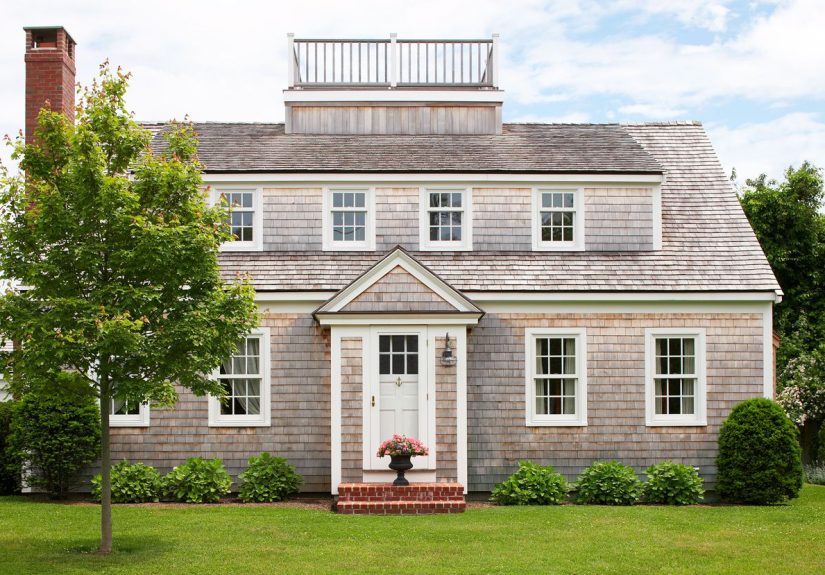
The result is a house style that’s recognizable at a glance: a side-gabled roof, a centered front door (often), multi-pane windows, and a general vibe of “I will survive winter and look cute doing it.”
Signature details of Cape Cod architecture
1) The roof: steep, side-gabled, and doing the most
The Cape’s steep roofline isn’t just aestheticit’s functional. It helps shed rain and snow, protects the walls, and creates that signature “1 to 1.5 stories” silhouette. Bonus: the roof also defines the second-floor experience, where sloped ceilings and knee walls can either feel charming… or like the house is gently pushing you toward the center of the room.
2) The façade: simple shapes, limited ornament, strong symmetry (usually)
Traditional Capes keep exterior decoration minimal. The charm comes from proportion, balance, and repetitionwindows that line up, trim that’s crisp, and an overall “less is more” attitude. Many Capes aim for symmetry, but variations exist (especially smaller or older versions), and those asymmetries can be part of the appeal.
3) Windows & dormers: small changes that transform livability
Multi-pane windows and shutters are classic Cape Cod cues, but dormers are the real space-makers. Adding dormers can turn an awkward half-story into usable bedrooms, offices, or bonus spacebasically converting “attic energy” into “real estate listing brag.”
4) Siding: shingles and clapboard, the coastal classics
Cape Cod exteriors often feature wood shingles (sometimes left to weather into gray) or painted clapboard. These materials reinforce the style’s understated, durable feel. Modern builds and renovations may use newer exterior products that mimic the look while reducing maintenance, but the goal is the same: clean lines and honest texture.
5) Chimneys: central in the classics, flexible in newer versions
A big chimney was historically a practical heat source, often placed near the center. In later interpretations, chimneys may shift to one side or appear at the ends of the house. The placement changes the “classic Cape” look, but the silhouette still reads Cape if the roof and massing stay true.
6) Interiors: cozy, efficient, and surprisingly adaptable
Cape Cod interiors often feel intimate by designcompact circulation, sensible rooms, and layouts that can evolve over time. Original plans were simple, and that simplicity is exactly why renovations work well: you can open a kitchen, add built-ins, or rework the upstairs without fighting a wildly complicated footprint.
7) The “Cape problem” (and how smart updates solve it)
The biggest complaint about Capes is also the most fixable: upstairs comfort. Sloped ceilings, knee walls, and tricky attic spaces can cause heat loss, drafts, and ice-dam drama in colder climates. Thoughtful insulation strategies (sometimes including rigid foam above the roof deck) and air-sealing can make a Cape feel dramatically more comfortablewithout sacrificing the style.
Classic Cape Cod floor plans: half, three-quarter, and full
“Half,” “three-quarter,” and “full” Capes usually describe the front window-and-door arrangement on the façade:
- Full Cape: centered door with balanced windows on both sides (the “textbook” symmetrical look).
- Three-quarter Cape: typically two windows on one side of the door and one on the other.
- Half Cape: door offset with windows only on one side (smaller and historically common as starter homes).
Inside, a traditional Cape layout is straightforward: common rooms on the main level and bedrooms tucked upstairs. Modern versions may expand the footprint, stretch the rear elevation, or add dormers and additions while keeping the front façade calm and classic.
17 Cape Cod house looks (and the details that make each one work)
These aren’t “one perfect blueprint” examplesthey’re 17 common Cape Cod variations you’ll see across American neighborhoods. Treat them like a menu: pick the vibe, steal the details, and leave the parts that don’t fit your life (or your budget).
1) The Half-Cape Starter
A smaller façade with an off-center door and windows clustered to one side. It feels humble, historic, and oddly charming.
- Copy this: simple trim, compact massing, minimal ornament.
- Upgrade idea: add a rear bump-out for kitchen space without changing the front.
- Watch for: tight stair placement and limited upstairs headroom.
2) The Three-Quarter Cape
Not perfectly symmetrical, but balanced enough to look intentional. It’s the “I’m classic, but I’m not trying too hard” Cape.
- Copy this: window rhythm (2 on one side, 1 on the other).
- Upgrade idea: subtle landscaping symmetry to visually “center” the look.
- Watch for: façade additions that break the original proportions.
3) The Full Cape (The Textbook One)
Centered door, windows balanced on both sides, and a calm, confident front elevation that never goes out of style.
- Copy this: symmetrical window placement and consistent trim width.
- Upgrade idea: a small portico or simple entry roof (kept modest).
- Watch for: over-decorating the entry with oversized columns.
4) The “Weathered Shingle” Cape
Shingle siding that ages into a soft gray is peak Cape Cod mood: relaxed, coastal, and timeless.
- Copy this: natural texture + white trim for contrast.
- Upgrade idea: add copper or dark metal accents for warmth.
- Watch for: inconsistent patch repairs that create “shingle checkerboard.”
5) The Painted-Clapboard Cape
Painted siding sharpens the style and leans “neat and traditional,” especially with crisp trim.
- Copy this: restrained color palette with high-contrast trim.
- Upgrade idea: a bold (but classic) front door color.
- Watch for: trendy colors that date the home fast.
6) The Dormer-Boosted Cape
Dormers add usable second-floor space and daylightoften the single biggest lifestyle upgrade in a Cape.
- Copy this: dormers sized to match the home’s proportions.
- Upgrade idea: keep dormer trim consistent with main-house trim.
- Watch for: oversized dormers that overpower the roofline.
7) The Shed-Dormer “Space Maker”
A shed dormer can make upstairs rooms feel like real rooms, not “attic-with-a-desk.”
- Copy this: clean dormer face with aligned windows.
- Upgrade idea: built-in storage under remaining slopes.
- Watch for: ventilation/insulation mistakes that cause comfort issues.
8) The Entry-Portico Cape
Some Capes add a small portico or subtle columnsjust enough to frame the door without turning into a mansion.
- Copy this: modest scale, simple roofline, minimal ornament.
- Upgrade idea: statement lighting that feels traditional, not theatrical.
- Watch for: chunky columns that look out of proportion.
9) The Flower-Box Cape
Window boxes and tidy planting give the Cape instant storybook energywithout altering architecture.
- Copy this: consistent box style across the façade.
- Upgrade idea: pair with simple shutters for depth.
- Watch for: cluttered color combos that fight the home’s simplicity.
10) The “Bright Trim, Dark Shutters” Cape
This contrast emphasizes the window rhythm and makes the façade feel crisp and intentional.
- Copy this: shutters sized correctly (not tiny “decor stickers”).
- Upgrade idea: match hardware finishes across door + lights + numbers.
- Watch for: too many accent colors competing at once.
11) The Expanded-Back Cape
From the street it reads classic Cape; in back, it quietly adds modern lifebigger kitchen, family room, or mudroom.
- Copy this: preserve the front silhouette, expand toward the rear.
- Upgrade idea: use consistent siding to unify old + new.
- Watch for: awkward roof intersections that look “bolted on.”
12) The Side-Addition Cape
A side addition can work if it’s clearly secondarylower, set back, and respectful of the original massing.
- Copy this: step-back placement and simplified roof forms.
- Upgrade idea: connect with a breezeway or mudroom link.
- Watch for: additions that make the home look lopsided from the street.
13) The Screened-Porch Cape
A screened porch pairs perfectly with Cape comfortespecially when the porch detailing stays simple.
- Copy this: clean rail profiles, straightforward posts, traditional screen proportions.
- Upgrade idea: ceiling fan + soft lighting for long evenings.
- Watch for: overly ornate porch trim that clashes with Cape restraint.
14) The “Big Windows to the Sun” Cape
Many Capes are oriented to capture daylight and reduce heating needs. The best updates amplify that logic.
- Copy this: larger windows on the brighter side of the house (where appropriate).
- Upgrade idea: keep front windows traditional; modernize rear glazing.
- Watch for: mismatched window styles on the front elevation.
15) The “Modern Inside, Classic Outside” Cape
Open-plan living can work beautifully inside a Cape if you keep key exterior signals intact.
- Copy this: classic façade, simplified interior walls, smart built-ins.
- Upgrade idea: widen openings while keeping some room definition.
- Watch for: removing structure without a plan (Capes hide loads in sneaky places).
16) The High-Performance Cape (Energy-Smart)
You can keep the Cape look while improving comfort: air-sealing, better insulation, efficient windows, and modern HVAC.
- Copy this: invisible upgrades (insulation, ventilation, sealing) that don’t alter style.
- Upgrade idea: treat knee-wall zones thoughtfully to reduce drafts.
- Watch for: ice damsoften a symptom of poor roof/attic detailing.
17) The Cape That Becomes a “Forever House”
The best Cape Cod renovations don’t fight the style. They keep the calm front, improve the flow, and add just enough space for real life: storage, mudroom, a better kitchen, and an upstairs that doesn’t feel like a ski lodge bunk room (unless you want it to).
- Copy this: respect the original proportions; expand with restraint.
- Upgrade idea: add built-ins, closets, and smart circulation to cut wasted space.
- Watch for: additions that erase the Cape’s simple, iconic silhouette.
What it’s like to live with a Cape Cod house ( of real-life “yep, that tracks”)
Living in a Cape Cod home is a lot like owning a classic leather jacket: it looks great, it works in almost any setting, and it occasionally reminds you that it was designed in a different era with different expectations about comfort. Most homeowners fall in love with the Cape’s curb appeal firstthere’s something undeniably welcoming about that compact shape, the steep roof, and the tidy rhythm of windows. You can pull up after a long day and the house feels like it’s saying, “Come in. Take your shoes off. No one here is trying to impress the HOA with six rooflines.”
Then you meet the upstairs. If your Cape is a true 1.5-story layout, the second floor tends to have sloped ceilings and knee walls that create little triangular “mystery zones.” Those spaces can be magicalperfect for built-in drawers, storage nooks, or reading dens. They can also be frustrating if they’re drafty or poorly insulated. People who’ve lived in Capes for a while often develop strong opinions about air-sealing, insulation, and why winter should not involve forming a personal relationship with an ice dam.
Daily life in a Cape is all about rhythm and practicality. The main floor typically carries the social load: cooking, lounging, and hosting happen there, and it’s easy to make that level feel airy with thoughtful lighting and smart openings between rooms. But the style also encourages you to be intentional about storage. A Cape can absolutely handle modern lifebackpacks, pet gear, holiday binsbut it prefers that you give everything a home. Built-ins, a mudroom corner, or even a simple bench-and-hook setup can feel like a luxury upgrade because it keeps the cozy layout from turning into clutter theater.
Renovation-wise, Capes are surprisingly forgiving. Their simple geometry makes additions and updates more straightforward than many ornate styles. The trick is to keep the front elevation calm and classic, then do your “big living” moves in the back: a larger kitchen, a family room extension, a screened porch, or a dormer that turns the upstairs from “cute but cramped” into “why didn’t we do this sooner?” When it’s done well, the house keeps its original personality while quietly meeting modern needslike better comfort, better flow, and enough outlets to charge every device you own plus the ones you’ll buy next month.
The most charming part, though, is how a Cape invites small rituals. You open the door and there’s a sense of shelter. You notice how the light moves across simple trim. You appreciate how a restrained exterior makes seasonal landscaping feel like the starspring greens, summer blooms, fall color, winter evergreen shapes. A Cape Cod house doesn’t demand attention. It earns it, one cozy, practical, classic detail at a time.
Conclusion: why Cape Cod style stays popular
A Cape Cod house works because it’s honest architecture: simple massing, smart weather-ready choices, and a layout that can evolve. Whether you love the classic full-Cape symmetry, prefer the quirky half-Cape charm, or want a modernized Cape with dormers and energy upgrades, the goal is the same: keep the silhouette simple, respect proportions, and make updates that improve comfort without erasing character.