
Table of Contents >> Show >> Hide
- Lightning Safety in 60 Seconds
- Way #1: Plan Ahead So You’re Not Making Decisions in Panic Mode
- Way #2: Get to the Right ShelterThen Behave Like You Mean It
- Way #3: If You’re Stuck Outside, Shift to Damage Control (Fast)
- Common Lightning Mistakes (a.k.a. How People Talk Themselves Into Danger)
- Bonus: If Someone Gets Struck
- Conclusion: The Three Moves That Keep You Alive
- Field Notes: Experiences That Make Lightning Safety Feel Real (About )
Lightning is nature’s way of reminding us that the sky is not a suggestion box. One minute you’re enjoying a
hike, a baseball game, or a totally innocent trip to the mailboxnext minute the atmosphere is throwing
high-voltage tantrums at anything tall, isolated, wet, or unlucky.
Here’s the good news: most lightning injuries happen because people wait too long to change plans, pick the wrong
“shelter,” or head back outside too early. In other words, lightning safety is mostly a behavior problemwhich is
great, because behavior is one of the few things we can actually control.
Lightning Safety in 60 Seconds
Before the three big tactics, here are the rules of the game. If you understand these, you’ll make better
choices fastwhen fast matters.
-
If you can hear thunder, you’re close enough to be struck. Lightning doesn’t need to land where
the rain is. It can strike well away from the storm core. -
“Blue sky” is not a safety guarantee. Storm edges and “bolt-from-the-blue” strikes are a thing.
(Translation: don’t negotiate with the weather.) -
No place outdoors is “safe” during a thunderstorm. Outdoors is about risk reduction, not
perfection. -
Wait it out. The most common mistake is leaving shelter too soon. The storm’s “bookends”
(beginning and end) can be especially dangerous.
Way #1: Plan Ahead So You’re Not Making Decisions in Panic Mode
Lightning safety starts before the first rumble. When people get hit, it’s often because the plan was,
essentially, “We’ll deal with it later.” Spoiler: later is loud.
1) Check the forecast like it’s part of the packing list
If your day includes anything outdoorsgolf, fishing, hiking, mowing, coachingmake the weather check as automatic
as grabbing your keys. Look for thunderstorm chances, timing, and alerts. If storms are likely, schedule your
outdoor time earlier, shorten the route, or build in “shelter breaks.”
2) Identify “real shelter” before you need it
The best time to figure out where the sturdy building is… is not when your hair is trying to stand up.
When you arrive at a park, beach, trailhead, or outdoor venue, take 30 seconds to locate:
- A substantial enclosed building you can access quickly
- A hard-topped vehicle option (with windows up) if a building isn’t available
- The fastest route to either one (because storms don’t care about your scenic detour)
3) Use a simple trigger: the 30–30 idea
You don’t need a meteorology degree to make a smart call. A classic trigger is “flash-to-bang”: count the seconds
between lightning and thunder. If it’s under about 30 seconds, you’re in the danger zone and it’s time to get to
safe shelter. After the last thunder, keep sheltering for about 30 minutes before you resume outdoor activities.
Pro tip for groups: appoint one person as the “weather watcher.” Coaches, captains, group leaders:
your job is to remove ambiguity. If the rule is clear, nobody’s stuck arguing, “I think it’s moving away.”
4) Decide your “quit time” before the storm arrives
If you’re hiking a ridge, paddling a lake, or fishing a shoreline, set a turnaround time when storms are in the
forecast. Lightning is the rare hazard where “just a little longer” is a terrible strategy. The earlier you
bail, the more shelter options you still have.
Way #2: Get to the Right ShelterThen Behave Like You Mean It
“Shelter” is not a vibe. It’s a specific set of structures that actually reduce risk. This is where people get
fooled by things that feel protective but aren’t (looking at you, picnic pavilions).
What counts as safe shelter?
-
Best: a substantial enclosed building (homes, schools, offices, stores, visitor centers).
Think: four walls and a roof, not “mostly covered.” -
Next best: a hard-topped vehicle with the windows rolled up (car/SUV/truck). Not a convertible.
Not a golf cart. Not your buddy’s ATV.
What does not count as safe shelter?
- Picnic shelters, pavilions, dugouts, open garages, carports
- Tents, small isolated sheds, rain flys, lean-tos
- Under a tree (especially an isolated treeaka the lightning résumé booster)
- Near tall isolated objects, poles, metal fences, or open water
Once you’re inside: avoid these “sneaky indoor” risks
Being indoors is dramatically safer, but it’s not a free-for-all. Lightning can travel through wiring, plumbing,
and conductive materials. During the storm:
- Stay away from windows and exterior doors. Interior rooms are your friend.
- Avoid plumbing and water contact. Skip showers, dishwashing, and hand-washing until it’s over.
- Avoid corded electronics and devices plugged into outlets. Unplugged is better.
- Don’t lean on concrete walls or lie on concrete floors. Reinforced concrete can conduct.
- Skip corded phones. Cell phones not connected to chargers are generally considered safer.
The “don’t leave early” rule: Wait about 30 minutes after the last thunder (or last
lightning you see) before heading back out. The storm’s tail end is a classic time for “one more strike.”
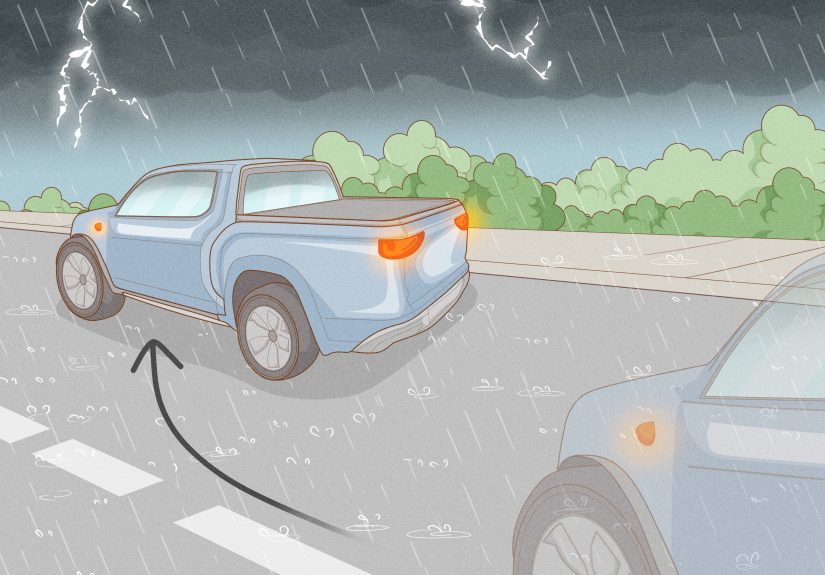
If you’re in a vehicle
A hard-topped vehicle is a solid fallback when you can’t reach a building. The metal frame helps route current
around you (not through you). While sheltering:
- Pull over safely and stay put
- Keep windows up
- Avoid touching metal parts inside the vehicle as much as practical
- Wait the full post-storm window before resuming your drive or outdoor activity
Way #3: If You’re Stuck Outside, Shift to Damage Control (Fast)
Let’s say you’re caught outdoors and you cannot get to a substantial building or hard-topped car in time. First:
don’t beat yourself upthis happens. Second: don’t pretend you can “outsmart” lightning. The goal now is to reduce
your odds and limit how badly things go if lightning hits nearby.
1) Get away from the worst places immediately
- High ground: move off ridges, hilltops, bleachers, and open overlooks
- Open water: get out of lakes, pools, rivers, and away from shorelines
- Isolated tall objects: don’t be the second-tallest thing under a lone tree
- Metal conductors: move away from fences, power lines, poles, and railings
- Open fields: avoid being the tallest “point” in a wide flat area
2) Spread out (yes, really)
If you’re in a group, put space between people. Lightning can injure multiple people through ground current, and
spacing reduces the chance of a single strike taking out the whole crew. This is especially important for teams,
camps, and hiking groups.
3) Choose the “least bad” terrain
Look for a low area (but not a place that could flash flood). Avoid small isolated shelters. In wooded areas, a
stand of smaller trees can be safer than a single tall tree in an open space. If you have to move, move with
purposethen stop running around like a human lightning rod doing errands.
4) The last-resort position (only if you truly can’t reach shelter)
You may hear advice about a “lightning crouch.” It’s not a magic shield, and it’s not a substitute for real
shelter. But if you are caught in the open with no safer option, the idea is to minimize your height and minimize
your contact with the ground.
- Crouch low on the balls of your feet
- Keep your feet together (to reduce step potential)
- Tuck your head and cover your ears
- Do not lie flat (you increase contact with the ground)
Important reality check: The best “outdoor lightning strategy” is always to get to a safer
enclosure. Everything outside is second-best, last-ditch, or “please don’t let this get worse.”
Common Lightning Mistakes (a.k.a. How People Talk Themselves Into Danger)
“It’s not raining yet.”
Lightning doesn’t need your permission, and it doesn’t need a downpour. If thunder is audible, the risk is real.
“We’re under something, so we’re fine.”
Covered is not enclosed. Many injuries happen because people treat open shelters like buildings. They’re not.
“We’ll just sprint back.”
Speed is not the same as safety. Running often keeps you exposed longer and may push you into worse terrain
(higher ground, isolated trees, metal railings). Choose the nearest real shelter and commit to it.
Bonus: If Someone Gets Struck
This is the part nobody wants to read, but everyone should. If someone is struck by lightning:
- Call 911 immediately.
- It’s safe to touch them. They do not “hold a charge.”
- Start CPR/AED if needed. Cardiac arrest is a major early threat.
- Treat for shock and burns while waiting for emergency responders.
Conclusion: The Three Moves That Keep You Alive
If you remember nothing else, remember this trio:
- Plan ahead. Forecast, shelter map, and a trigger rule so you act early.
- Use real shelter. Enclosed buildings or hard-topped carsand wait long enough before returning.
- If trapped outside, reduce exposure fast. Get off high ground, avoid water and isolated tall objects, spread out, and treat “crouching” as a last resort.
Lightning is unpredictable, but your choices don’t have to be. Respect the thunder, make a boring decision early,
and you’ll live to complain about the humidity another day.
Field Notes: Experiences That Make Lightning Safety Feel Real (About )
Safety tips can sound abstract until you’ve watched a storm move like it has a schedule and a grudge. The
following real-world-style scenarios (the kind outdoor folks swap afterward, usually with shaky laughs) show why
the “boring” rules matter.
1) The Lake That Went Silent
A group of friends is out on a calm afternoonpaddleboards, a cooler, zero drama. The forecast said “chance of
storms,” which is the weather equivalent of “might be spicy.” They notice a darker line of clouds far away, but
the water is glassy and the sun is still doing its thing. Then the wind flips, just enough to make the surface
wrinkle. Someone hears a distant rumble and says, “That’s probably not thunder.”
Ten minutes later, it definitely is thunder. The tricky part is how normal everything still looks. There’s no
rain yet, no big gusts, no obvious chaosjust a sound that’s easy to explain away. The group finally heads in, but
now they’re stuck doing the slowest possible escape: crossing open water. The lesson isn’t “don’t go to lakes.”
The lesson is that lightning safety is about early decisions. If you can hear thunder, the time to be sprinting
(or paddling) toward safety was five minutes ago. The smartest move is to get off the water at the first warning,
not the last warning.
2) The Soccer Game That Almost Didn’t Pause
Youth sports are where lightning rules go to battle optimism. A coach is thinking about substitutions, parents
are thinking about snack schedules, and the sky is quietly assembling an electrical weapon. Someone sees a flash,
but it’s far enough away to trigger the ancient phrase: “We’re probably okay.”
Here’s what often changes the story: a clear, pre-decided policy. The best-run fields don’t debate. They have a
plan: stop play at the first thunder, move everyone to enclosed shelter, and restart only after a full waiting
period. In the near-miss versions of this story, the pause happens early and feels “overcautious” until lightning
cracks againcloser. Suddenly, nobody’s mad about missing five minutes of game time. Everyone’s mad they ever
considered staying.
3) The Hike Where the Ridge Was the Worst Place to Be
Hikers know the temptation: the summit is “right there.” The clouds are “over there.” Surely you can tag the top
and head down before anything happens. But storms love ridges because ridges are exposed. In the stories people
tell later, the warning signs are consistent: thunder that starts faint, wind that shifts, a rapid drop in
temperature, and that weird metallic smell some people swear they notice (whether it’s real or just adrenaline is
beside the pointyour body is telling you it’s time to leave).
The hikers who stay safe usually do one unglamorous thing: they turn around early. They trade bragging rights for
a boring walk down. And when the storm hitsoften sooner than expectedthey’re already lower, closer to trees that
are not isolated, and closer to a trailhead with a car. The people who push it end up doing damage control:
scrambling off high ground, spreading out, and hoping the storm’s timeline matches their escape timeline. That is
not a plan. That’s a coin flip.
The through-line in all these experiences is simple: lightning rewards the people who act early and punishes the
people who negotiate. If thunder shows up, your decision window closes fastso build your habits now, while you’re
dry, calm, and not mid-sprint.







 Close
Close