
Table of Contents >> Show >> Hide
- Why Silver Necklaces Get Tarnished in the First Place
- Before You Clean: Check What Kind of Necklace You Have
- Method 1: Clean a Silver Necklace With Mild Dish Soap and Warm Water
- Method 2: Use a Silver Polishing Cloth or Jewelry Cleaner
- Method 3: Remove Heavy Tarnish With Baking Soda
- What About Toothpaste?
- Common Mistakes to Avoid When Cleaning a Silver Necklace
- How to Keep a Silver Necklace Shiny Longer
- Which Silver Necklace Cleaning Method Is Best?
- Experience-Based Tips: What Cleaning a Silver Necklace Teaches You Over Time
- Final Thoughts
A silver necklace has a funny little talent: it can make you look polished while quietly becoming the least polished thing in your jewelry box. One day it is bright, shiny, and behaving like the star accessory it was born to be. The next day, it looks like it spent the weekend in a pirate ship basement.
The good news is that cleaning a silver necklace does not have to be complicated, expensive, or dramatic. In most cases, you can restore shine with a few simple tools and a little patience. The trick is choosing the right silver necklace cleaning method for the level of tarnish, the style of the chain, and whether your necklace has gemstones, pearls, plating, or an intentionally dark oxidized finish.
In this guide, you will learn three effective ways to clean a silver necklace, how to tell which method is best, what mistakes to avoid, and how to keep your sterling silver jewelry from turning moody again next week. There is also a bonus section at the end with real-world experience-based tips, because sometimes the best teacher is a necklace that looked suspiciously like a jump rope made of soot.
Why Silver Necklaces Get Tarnished in the First Place
Before you start scrubbing like you are auditioning for a cleaning commercial, it helps to know what you are dealing with. Most silver necklaces are made from sterling silver, which is usually 92.5% silver mixed with other metals for strength. If you see a tiny 925 mark, that is your clue.
Silver tarnish is not dirt in the ordinary sense. It is a surface reaction that happens when silver meets sulfur compounds in the air and other everyday troublemakers. Humidity, sweat, perfume, lotion, hairspray, chlorine, bleach, salty air, and even the innocent act of leaving a necklace in a damp bathroom can speed things up. That is why your favorite chain can look dull even when nobody has technically “made it dirty.”
Regular cleaning matters for more than appearance. Light upkeep can help prevent thick tarnish buildup, keep clasp areas moving smoothly, and make your necklace look more like jewelry and less like a historical artifact found in a sock drawer.
Before You Clean: Check What Kind of Necklace You Have
Not every silver necklace should be cleaned the same way. A plain sterling silver chain can handle more than a delicate pendant set with pearls or soft gemstones. Take 30 seconds to inspect your piece before you begin.
Look for these details first
Plain sterling silver: Usually the easiest to clean. You can use soap and water, a polishing cloth, or a baking soda treatment for heavier tarnish.
Gemstone-set necklace: Use the gentlest method first. Some stones do not like soaking, harsh chemicals, or abrasive pastes.
Pearls or porous stones: Keep it very gentle. Avoid soaking and avoid strong cleaners.
Silver-plated jewelry: Be cautious. Aggressive rubbing can wear through the thin silver layer.
Oxidized or antiqued silver: That darker shading may be intentional. Over-cleaning can erase the detail and make the piece look flat.
Antique or sentimental jewelry: When in doubt, ask a professional jeweler. Emotional damage from ruining Grandma’s necklace is very difficult to buff out.
Method 1: Clean a Silver Necklace With Mild Dish Soap and Warm Water
If your necklace looks dull, slightly grimy, or mildly tarnished, this is usually the best place to start. It is gentle, simple, and suitable for regular maintenance. Think of it as the everyday shampoo of silver jewelry care.
What you need
Mild dish soap, a bowl of warm water, a soft toothbrush or baby toothbrush, and a soft lint-free or microfiber cloth.
How to do it
Fill a small bowl with warm water and add a few drops of mild dish soap. Swish it around to create a light soapy solution. Place the silver necklace in the bowl and let it soak for a few minutes. If the chain has small links or a detailed pendant, use a very soft toothbrush to gently loosen buildup in the crevices.
Once the necklace looks cleaner, rinse it in clean lukewarm water. Dry it immediately and thoroughly with a soft cloth. Do not leave it to “air dry later” unless your goal is to let water spots and moisture RSVP to the party.
Why this method works
Soap and warm water help remove skin oils, lotion residue, perfume buildup, and light surface grime. It is a great option for necklaces you wear often, especially if they have been exposed to makeup, sunscreen, or everyday life in general.
Best for
Routine cleaning, lightly tarnished sterling silver, and many gemstone-set silver necklaces that need a gentle touch.
Watch-outs
Do not scrub hard. A silver necklace is not a casserole dish. If your necklace includes pearls, opals, or other delicate materials, skip soaking and wipe it more carefully instead.
Method 2: Use a Silver Polishing Cloth or Jewelry Cleaner
When your necklace has visible tarnish but is not in full gothic meltdown mode, a silver polishing cloth or a silver-safe jewelry cleaner is often the smartest move. This method is especially helpful for restoring shine without turning your kitchen into a chemistry demo.
What you need
A silver polishing cloth or a silver jewelry cleaner made for sterling silver, plus a soft dry cloth for final buffing.
How to do it with a polishing cloth
Lay the necklace flat on a soft surface. Gently rub the silver with the polishing cloth, working section by section. Use light pressure and be patient around chain links, clasps, and decorative details. You will probably notice black residue on the cloth. Congratulations, that means it is working, not that your necklace is being dramatic.
How to do it with liquid or cream cleaner
Apply a small amount of cleaner to a soft cloth, then rub the necklace gently. Follow the product directions carefully. Many silver cleaners require a rinse after polishing, followed by a complete dry and buff. Use only products intended for silver jewelry, especially if your necklace is delicate or includes stones.
Why this method works
Polishing cloths and silver cleaners are designed to remove tarnish while bringing back shine. They are often more effective than soap and water for oxidation and discoloration, but usually less messy than a full DIY soak.
Best for
Moderate tarnish, regular touch-ups, travel kits, and people who prefer “less bowl, more sparkle.”
Watch-outs
Avoid aggressive polishing on silver-plated pieces, as it can wear down the finish. Be careful with oxidized or antiqued silver, because polishing too much can remove the darker detail that gives the piece depth. For necklaces with delicate stones, choose a cleaner labeled safe for that style of jewelry or stick with a cloth.
Method 3: Remove Heavy Tarnish With Baking Soda
If your silver necklace looks like it has been rehearsing for a role as “mysterious heirloom from an attic trunk,” you may need a stronger at-home method. Baking soda can help with heavier tarnish, but it should be used thoughtfully.
There are two common ways people use baking soda: a gentle paste or a foil-and-hot-water method. For a necklace, the paste is often easier to control. The foil method can be effective for heavier tarnish on plain sterling silver, but it is not ideal for every necklace style.
Option A: Baking soda paste
Mix three parts baking soda with one part water to form a paste. Dampen the necklace slightly, then use a soft microfiber cloth to apply the paste gently. Rub lightly in small sections. Rinse thoroughly with cool or lukewarm water and dry immediately with a soft cloth.
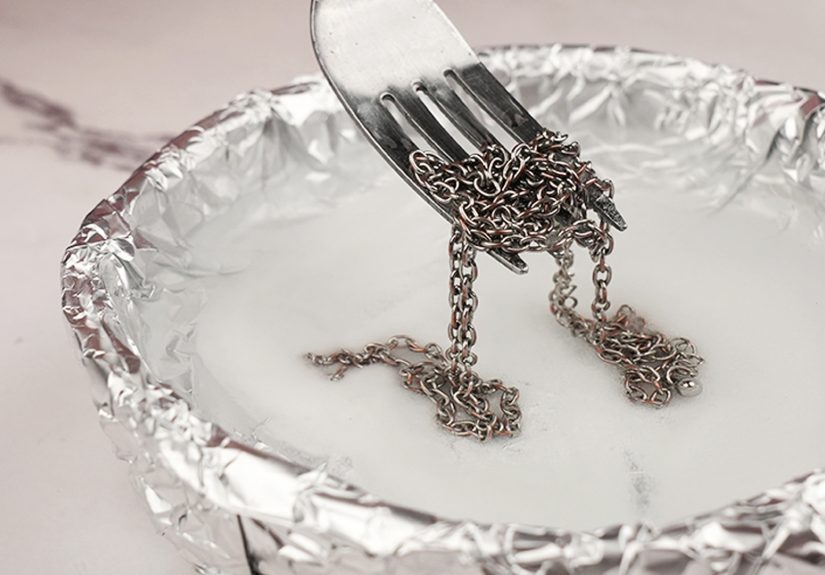
Option B: Aluminum foil and baking soda bath
Line a bowl with aluminum foil, place the necklace on the foil, add baking soda, and pour in hot water. This creates a reaction that can help lift tarnish from plain sterling silver. After a short soak, remove the necklace carefully, rinse it, and dry it completely.
Why this method works
Baking soda can help break up tarnish on silver. The foil bath method relies on a chemical reaction that transfers tarnish away from the silver. It is one of the more talked-about DIY silver cleaning methods because it can be surprisingly effective on stubborn discoloration.
Best for
Heavily tarnished plain sterling silver necklaces and chains without fragile stones, special finishes, or sentimental “please do not experiment on me” energy.
Watch-outs
This is not the best first choice for plated jewelry, oxidized silver, antiques, or pieces with pearls and delicate gemstones. Baking soda is mild, but it is still abrasive in paste form. The foil method is useful, but not every necklace wants to take a hot bath with metal lining. If your silver necklace is valuable, unusual, or fragile, go professional.
What About Toothpaste?
You will see toothpaste mentioned in some cleaning conversations, and yes, it can brighten tarnished silver in a pinch. But it is not my top recommendation for a silver necklace. Toothpaste can be abrasive, especially on detailed chains, plated jewelry, and softer finishes. In other words, it is the backup singer here, not the headliner.
If you care about the long-term finish of your necklace, the three methods above are better bets.
Common Mistakes to Avoid When Cleaning a Silver Necklace
Using harsh chemicals
Bleach, chlorine, and strong household cleaners can damage silver and speed up tarnish. A silver necklace should not smell like a mop bucket.
Scrubbing with paper towels or rough brushes
Silver scratches more easily than many people realize. Use a soft cloth and a very soft brush only when needed.
Forgetting to dry thoroughly
Moisture left in chain links or around clasps can encourage more tarnish. Always dry the necklace completely after cleaning.
Cleaning all silver the same way
A plain sterling silver chain, a rhodium-plated necklace, and a silver pendant with pearls do not all want the same treatment. The safest method is usually the gentlest one that gets the job done.
Over-polishing
Yes, silver likes to shine. No, it does not need to be polished like a trophy every weekend. Too much polishing can gradually wear the surface over time.
How to Keep a Silver Necklace Shiny Longer
Cleaning is only half the story. Prevention is what keeps your necklace from bouncing right back to Tarnish Town.
Store it properly
Keep your silver necklace in a cool, dry place. An anti-tarnish pouch, soft cloth bag, or jewelry box with separate compartments works well. Necklaces also appreciate not being tangled into a metal knot inspired by modern art.
Put it on last
Perfume, hairspray, lotion, sunscreen, and makeup should go on before the necklace. Let products dry down first.
Take it off for messy jobs
Remove your necklace before swimming, showering, cleaning, exercising, or doing anything that involves chemicals, sweat, or excessive moisture.
Wipe it after wearing
A quick rub with a soft cloth after each wear can remove oils and help slow tarnish buildup.
Which Silver Necklace Cleaning Method Is Best?
If you want the short answer, here it is:
Choose mild dish soap and warm water for routine cleaning and everyday grime.
Choose a silver polishing cloth or silver jewelry cleaner for visible tarnish and shine restoration.
Choose baking soda only when your necklace has heavier tarnish and is plain sterling silver without delicate stones, plating, or special finishes.
That order matters. Start with the least aggressive method and only level up if your necklace still needs help. Silver jewelry responds much better to gentle consistency than to one heroic cleaning session every two years.
Experience-Based Tips: What Cleaning a Silver Necklace Teaches You Over Time
One of the most useful lessons people learn about cleaning a silver necklace is that the necklace usually tells you what it needs. A lightly dull chain that still reflects light does not need a deep-clean ritual and a soundtrack. It just needs a little soap, warm water, and a soft cloth. That is the first experience many people have: they expect a major restoration project, then discover the grime comes off in five quiet minutes.
The second lesson usually happens with a necklace that has been ignored for months. Maybe it sat in a jewelry dish near a bathroom sink. Maybe it traveled loose in a purse. Maybe it was “stored safely” in a drawer full of mystery bobby pins and expired lip balm. In that case, soap and water may clean the dirt, but not the tarnish. That is when a polishing cloth feels almost magical. You rub gently, the cloth darkens, and the necklace slowly starts looking expensive again. It is a very satisfying process, partly because it works and partly because it makes you feel like the kind of person who says things like, “I maintain my jewelry.”
Then there is the heavy-tarnish experience, which is where confidence and caution need to become roommates. Many people discover baking soda methods after finding a silver necklace that looks much darker than expected. When used on a plain sterling silver chain, the result can be impressive. But the bigger takeaway is not that baking soda is a miracle. It is that strong methods should be used selectively. People who try the same aggressive cleaning routine on every single piece often learn the hard way that silver plating can wear down and oxidized details can disappear.
Another common experience is realizing that prevention is less glamorous but far more effective. Once someone spends time cleaning a tangled, tarnished silver necklace with tiny links, they become deeply interested in proper storage. Suddenly anti-tarnish pouches seem thrilling. Suddenly taking a necklace off before showering feels like wisdom instead of inconvenience. Suddenly the sentence “I should probably wipe this down before I put it away” becomes part of adult life.
There is also the emotional side of it. A silver necklace is often tied to a memory, a gift, a milestone, or a person. Cleaning it can feel oddly personal. You are not just polishing metal. You are restoring something familiar, something worn close to the skin, something that may have been forgotten for a while and then rediscovered. That is why people tend to remember the first time a favorite necklace goes from gray and lifeless back to bright and wearable. It feels like getting the piece back.
The biggest experience-based truth is simple: silver necklace care gets easier once you stop waiting for disaster. Gentle cleaning, smart storage, and a little consistency beat panic-cleaning every time. Your silver necklace does not need a spa weekend. It just needs regular, sensible attention and a little respect for the fact that it is jewelry, not kitchen hardware.
Final Thoughts
If you have been wondering how to clean a silver necklace at home, the answer is reassuringly practical. Start simple with mild soap and warm water. Move to a polishing cloth or silver cleaner when tarnish shows up. Save baking soda for tougher cases and only when the necklace can handle it.
The best silver necklace cleaning routine is not the fanciest one. It is the one you will actually do before your jewelry starts looking like it belongs in a treasure chest guarded by a curse. Treat your necklace gently, dry it well, store it properly, and it will keep doing what it does best: quietly making every outfit look better.




 Close
Close