Table of Contents >> Show >> Hide
- How to Tell What Is Wrong With Your Bicycle Wheel
- Tools That Make Bicycle Wheel Repair Easier
- Way #1: Fix a Flat Tire or Puncture
- Way #2: True a Wobbly Bicycle Wheel
- Way #3: Replace a Broken Spoke and Stabilize the Wheel
- Common Bicycle Wheel Repair Mistakes to Avoid
- Should You Repair the Wheel Yourself or Visit a Bike Shop?
- Real-World Experiences: What Fixing a Bicycle Wheel Actually Feels Like
- Conclusion
- SEO Tags
A bad bicycle wheel has a special talent for ruining a perfectly good ride. One minute you are coasting along feeling athletic and mysterious, and the next minute your tire is flat, your rim is wobbling like a shopping cart, or a spoke has decided it no longer believes in teamwork. The good news is that many wheel problems can be fixed at home or on the roadside with a little patience, a few simple tools, and the willingness to get your hands slightly less clean than you hoped.
If you are trying to fix a bicycle wheel, most problems fall into three buckets: a flat tire, a wheel that is out of true, or a spoke-related issue. Those are the three most practical and common ways to repair a bike wheel without turning your garage into a professional wheel-building lab. Once you know which problem you are dealing with, the repair gets much less intimidating.
This guide walks through all three methods in plain English, with real-world tips, specific examples, and enough detail to help beginners while still being useful for riders who already know one end of a tire lever from the other. Let’s rescue that wheel.
How to Tell What Is Wrong With Your Bicycle Wheel
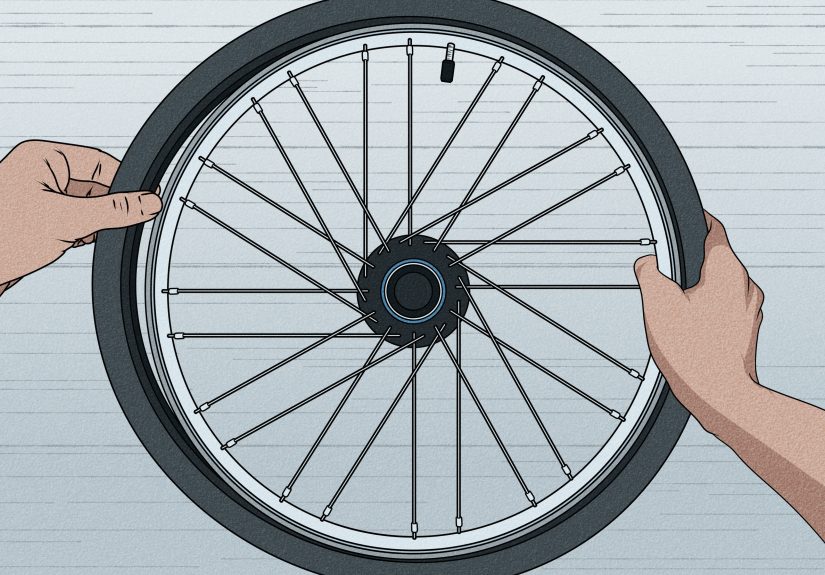
Before you start fixing anything, identify the actual problem. A bicycle wheel can fail in a few different ways, and guessing wrong wastes time. Spin the wheel and look closely.
- If the tire goes soft or fully flat, you are dealing with a puncture, tube issue, valve issue, or tubeless seal problem.
- If the rim moves side to side and rubs the brake pads or frame, the wheel is out of true.
- If one spoke is broken or obviously loose, the wheel may wobble, creak, or feel unstable under load.
- If the rim is cracked, badly dented, or folded, this is usually not a simple repair. That is replacement territory, not heroic optimism.
A quick inspection saves you from doing the wrong fix. For example, many riders assume a rubbing wheel needs truing, when the real culprit is a broken spoke. Others blame the rim when the real problem is just a tube with a tiny puncture from a thorn or a pinch flat from hitting a curb too hard. Bicycle wheels are dramatic, but they are rarely subtle.
Tools That Make Bicycle Wheel Repair Easier
You do not need a pro shop full of equipment to fix a bicycle wheel, but a few tools make life much easier:
- Tire levers
- Spare tube or patch kit
- Mini pump or floor pump
- Spoke wrench that matches your spoke nipples
- Multi-tool
- Replacement spoke and nipple, if possible
- Truing stand if you have one, though the bike itself can work in a pinch
If you ride regularly, carrying a basic flat-repair kit is not optional. It is the difference between a ten-minute repair and the world’s slowest walk home in cycling shoes.
Way #1: Fix a Flat Tire or Puncture
The most common bicycle wheel repair is fixing a flat. This is the gateway skill of bike maintenance. Learn it once, practice it a couple of times, and you will feel like a wizard every time someone else is stranded on the side of the road.
Step 1: Remove the Wheel
If it is the rear wheel, shift into the smallest rear cog before removing it. That gives you more chain slack and makes wheel removal easier. Open the quick release or remove the thru-axle, then drop the wheel out. If you have rim brakes, you may need to release the brake first.
Step 2: Take One Side of the Tire Off the Rim
Use your thumbs or tire levers to unseat one bead of the tire. Start opposite the valve. If the tire is stubborn, push the bead into the center channel of the rim first. That little trick creates more slack and often makes the difference between “simple repair” and “public argument with an inanimate object.”
Step 3: Remove the Tube and Find the Cause
Pull the tube out carefully. Before installing a new tube, inspect the inside of the tire and the rim bed. Look for glass, thorns, wire, sharp rim tape edges, or anything else that may have caused the puncture. Run your fingers gently along the inside of the tire. Gently is the key word. You are troubleshooting, not volunteering to be punctured next.
If you inflate the old tube and find two small holes side by side, you probably have a pinch flat. That usually happens when the tire hits a pothole, curb, or rock hard enough to pinch the tube against the rim. One single hole usually means a sharp object caused the flat.
Step 4: Patch or Replace the Tube
If you have a spare tube, replacing it is the fastest option. If not, patch the old one. Clean and roughen the area around the hole, apply the patch according to the kit instructions, and press firmly. For a permanent-feeling repair, take your time. A rushed patch is basically a scheduled disappointment.
If you run tubeless tires, the fix may be even easier for a small puncture. Add air first and see whether sealant closes the hole. For larger punctures, use a tire plug. If the cut is too large to seal, install a tube temporarily and ride home like a practical genius.
Step 5: Reinstall the Tube and Tire
Put a little air into the tube so it just holds its shape. Insert the valve through the rim, tuck the tube into the tire, and work the tire bead back onto the rim with your hands. Try to avoid using tire levers for the final part unless absolutely necessary, because it is easy to pinch the fresh tube.
Before inflating fully, go around the tire and check that the tube is not trapped between the tire bead and rim. Then inflate to the recommended pressure and make sure the tire bead is seated evenly all the way around.
When This Repair Works Best
This method is ideal when the rim is fine and the wheel itself is structurally sound. In other words, the wheel is only guilty of holding a flat tire, not of being bent, broken, or emotionally unstable.
Way #2: True a Wobbly Bicycle Wheel
If your wheel rubs the brake pads or visibly sways side to side when spinning, it likely needs truing. Truing a bicycle wheel means adjusting spoke tension so the rim spins straighter. It sounds advanced, but a basic lateral true is absolutely something a careful home mechanic can do.
What Truing Actually Does
Bicycle wheels work because the spokes hold the rim in tension around the hub. When some spokes are too loose or too tight compared with the others, the rim gets pulled off line. Truing restores balance. The key word is small adjustments. This is not a “crank it until something magical happens” job.
Step 1: Set Up a Reference Point
A truing stand is great, but if you do not have one, leave the wheel on the bike and use the brake pads as a visual guide. Spin the wheel slowly and watch where the rim gets closer to one brake pad than the other. Mark that section with tape or a washable marker.
Step 2: Find the Right Spokes
If the rim pulls to the left, you usually tighten the spokes on the right side in that area, or loosen the left-side spokes slightly. If the rim pulls to the right, do the opposite. Work in very small increments, usually a quarter turn at a time. That is not because mechanics enjoy suspense. It is because overcorrecting is the fastest way to turn a small wobble into an interpretive dance.
Step 3: Make Small, Even Adjustments
Use the correct spoke wrench size. Tighten or loosen one spoke, then spin the wheel again. If the wobble covers a wider area, you may need to adjust two or three neighboring spokes rather than one. The goal is gradual improvement, not instant perfection.
Also check whether the wheel has a vertical hop, where part of the rim rises higher than the rest. That kind of adjustment is more advanced because it involves changing spoke tension in a different pattern. A minor hop may be rideable. A severe one means the rim may be damaged.
Step 4: Check Overall Tension and Brake Clearance
As the wheel gets straighter, squeeze pairs of spokes with your fingers to compare tension. You are not measuring exact numbers, but you are looking for obvious oddballs. One spoke that feels dramatically looser than the rest is a clue that the wheel may need more than a casual tune-up.
When to Stop Truing and Seek Help
Stop and hand the job to a shop if:
- The rim is cracked
- The wheel has several broken spokes
- The wobble will not improve with reasonable spoke adjustments
- The wheel is badly dented or egg-shaped
- You are working on an expensive carbon wheel and you are not fully confident
A mildly wobbly aluminum wheel is often fixable at home. A heavily damaged wheel is a different story. Truing is for alignment problems, not miracles.
Way #3: Replace a Broken Spoke and Stabilize the Wheel
A broken spoke is one of those repairs that sounds scary until you understand what is happening. The wheel is a tension structure. When one spoke fails, the surrounding ones take on extra load, and the rim usually gets pulled out of true. Replacing that spoke can restore order, or at least enough stability to ride safely to a proper repair.
How to Spot a Broken Spoke Problem
Sometimes the spoke is obviously snapped. Other times the spoke nipple has cracked, the spoke is very loose, or the wheel suddenly develops a wobble after a hard hit. Pluck the spokes like guitar strings. A very low-pitched spoke next to higher-pitched neighbors usually means something is off.
Step 1: Remove the Old Spoke
Take the wheel off the bike. If the broken spoke is on the non-drive side of a front wheel, the repair is usually straightforward. If it is on the drive side of a rear wheel, the cassette may block access, which makes the job more involved. That is where home mechanics begin using words not found in basic service manuals.
Step 2: Match the Replacement Spoke
You need the correct length, bend type, and gauge. If you are unsure, take the old spoke to a bike shop and match it properly. Installing the wrong spoke length creates more trouble than it solves.
Step 3: Lace and Thread the New Spoke
Install the replacement spoke in the same pattern as the neighboring spokes. Thread the nipple onto the spoke at the rim and tighten it until the spoke tension roughly matches the surrounding spokes. Then spin the wheel and true the affected section carefully.
The good news is that when you replace one spoke, the truing often centers on that same area. That makes it one of the more manageable truing jobs for a patient rider.
Emergency Fix If You Cannot Replace the Spoke Immediately
If you are on the road and cannot do a full replacement, remove or secure the broken spoke so it does not catch in the drivetrain or frame. Then open the brake quick release if needed and make small spoke adjustments nearby to reduce the wobble enough to limp home. This is a temporary fix, not a love letter to shortcuts.
When a Broken Spoke Means Bigger Trouble
One broken spoke can be random. Repeated broken spokes usually are not. If several spokes have failed over time, or the wheel still feels unstable after replacing one, the wheel may have uneven tension, fatigue, rim wear, or hub issues. At that point, a full rebuild or replacement is often smarter than endless patchwork.
Common Bicycle Wheel Repair Mistakes to Avoid
- Skipping the tire inspection: If the thorn or glass is still in the tire, your new tube will die almost immediately.
- Using the wrong spoke wrench: A poor fit can round off spoke nipples fast.
- Making giant spoke adjustments: Quarter turns beat wild guesses every time.
- Forgetting tire pressure: Underinflated tires invite pinch flats and sloppy handling.
- Ignoring rim damage: A cracked rim is not a truing project.
- Assuming every rub is the wheel: On disc-brake bikes, rotor rub can mimic wheel wobble.
Should You Repair the Wheel Yourself or Visit a Bike Shop?
Fix the wheel yourself if the problem is a basic flat, a mild wobble, or a single broken spoke you can access and match correctly. Visit a bike shop if the rim is cracked, the wheel keeps going out of true, the spoke pattern is unusual, the hub is damaged, or the wheel is expensive enough that guessing feels financially irresponsible.
There is no shame in using a shop. Professional wheel work exists for a reason. Still, learning the basics saves money, builds confidence, and keeps small issues from becoming ride-ending disasters. It also gives you the smug satisfaction of fixing your own problem before your riding buddy even finds the tire lever in their saddle bag.
Real-World Experiences: What Fixing a Bicycle Wheel Actually Feels Like
Anyone who rides enough eventually collects bicycle wheel stories. Not glamorous stories, usually. More like “I was ten miles from home, it was getting dark, and suddenly my rear wheel sounded like a tambourine.” The funny thing is that wheel repair becomes much less intimidating after you have lived through a few of those moments.
The first experience many riders have is the flat tire that happens at exactly the worst time. Maybe it is on the way to work, halfway through a weekend ride, or five minutes after you told your friend, “I never get flats.” That first repair can feel clumsy. Tire levers slip. The tube somehow twists into modern sculpture. Your pump behaves like it was designed by a cartoon villain. But after a couple of repetitions, the process becomes familiar. You learn to check the tire carefully, line up the valve, and avoid pinching the new tube. The repair that once felt like roadside surgery starts to feel routine.
Truing a wheel is usually a different kind of experience. It is slower and more patient. You spin the wheel, stare at the brake pads, make a tiny quarter-turn adjustment, and spin again. At first it feels like nothing is happening. Then the wobble shrinks. Then it comes back because you got overconfident and turned one nipple too far. Truing teaches humility in a very mechanical way. It rewards calm hands and punishes impulsive ones. Riders who learn it often say the biggest lesson is not technical skill but restraint.
Broken spoke repairs tend to create the most memorable stories because they usually happen after something dramatic: a pothole, a loaded tour, a hard curb strike, or just the slow revenge of metal fatigue. The first time a spoke breaks, many riders assume the wheel is finished. Sometimes it is not. Sometimes one careful replacement and a little truing will bring the wheel back to life just fine. Other times the broken spoke is the beginning of a pattern, and that experience teaches a different lesson: repairs are not always about saving every part forever. Sometimes the smart repair is knowing when the wheel has honestly done its job and deserves retirement.
One of the most useful experiences riders describe is practicing before an emergency. Fixing a flat in your living room is calm. Fixing one in the rain with traffic passing is a completely different sport. Practicing at home teaches muscle memory. You learn where to place your hands, how much force a tire lever needs, and how a properly seated tire looks before you inflate it all the way. When the real problem happens on the road, that familiarity matters more than fancy tools.
Perhaps the best part of learning bicycle wheel repair is the confidence it creates. You stop seeing the wheel as a mysterious spinning object and start seeing it as a system you understand. That confidence carries over into every ride. You listen differently. You notice tiny wobbles earlier. You check tire pressure more often. You pack a smarter repair kit. In short, wheel repair changes you from a rider who hopes nothing goes wrong into a rider who knows what to do when it does. And that is a pretty satisfying upgrade for something that begins with a flat tire and a mild sense of panic.
Conclusion
If you want to fix a bicycle wheel, start by figuring out which problem you actually have. A flat tire calls for tube or tubeless repair. A wobble calls for careful truing. A broken spoke calls for replacement and tension correction. Those are the three most useful, realistic, and money-saving ways to repair a bike wheel without needing a full workshop.
The secret is not brute force. It is patience, observation, and small adjustments. Once you learn these skills, you will spend less time stranded and more time riding. And when your wheel starts acting up again someday, because bicycles enjoy keeping us humble, you will know exactly where to begin.