Table of Contents >> Show >> Hide
- Who Is Yeono?
- Why These 30 Pet Tattoos Feel So Real
- Why Pet Portrait Tattoos Matter So Much to People
- What Makes Yeono’s Style Stand Out in a Crowded Tattoo Scene
- Thinking About Getting a Realistic Pet Tattoo? Read This First
- Tattoo Safety and Aftercare Are Not Optional
- Why the 30-Tattoo Collection Resonates Online
- Experiences People Commonly Share After Getting a Pet Portrait Tattoo
- Final Thoughts
There are tattoos, and then there are tattoos that make you do a cartoon double-take and mutter, “Hang on, is that a real dog?” Yeono’s pet portrait work lives squarely in the second category. Her tattoos are so detailed, so soft, and so emotionally tuned in that they often feel less like body art and more like tiny acts of devotion with whiskers.
That is exactly why the collection of 30 astonishingly realistic pet tattoos by Yeono hits so hard. These pieces are not just technically impressive. They are deeply personal. They capture the glossy eyes, velvety ears, fluffy cheeks, and slightly chaotic charm that make a pet feel like family. In a world where tattoo trends come and go faster than a cat fleeing a vacuum cleaner, Yeono’s work stands out because it is rooted in something timeless: love, memory, and a very serious respect for fur texture.
For pet lovers, a realistic pet tattoo is often more than a cool design. It can be a celebration of a companion who still steals your side of the bed, a memorial for a pet you miss every day, or a way to carry a piece of home on your skin. Yeono understands that emotional weight, and it shows in every tiny stroke.
This article takes a closer look at why Yeono’s tattoos are turning heads, what makes her pet portrait tattoos so lifelike, why realistic pet tattoos have become such a meaningful form of self-expression, and what anyone should know before booking their own furry masterpiece.
Who Is Yeono?
Yeono is a Los Angeles-based tattoo artist originally from South Korea, and she has built a strong reputation for her realistic pet portrait work. She has been tattooing since 2014 and has spent more than a decade refining the kind of delicate, detail-heavy approach that realism demands. Her own interviews make it clear that she did not stumble into this niche by accident. She grew up around tattoo culture, began learning the craft young, and gradually moved through different styles before focusing more heavily on small-scale realism and pet tattoos.
That evolution matters. Great dog tattoos and cat tattoos do not happen because an artist can copy a photo. They happen because the artist knows what to keep, what to simplify, and what emotional detail matters most. A pet’s face is not just anatomy. It is attitude. It is memory. It is “the look” your dog gives when you open a bag of chips. Yeono’s realism succeeds because it preserves that feeling, not just the outline.
Her work is also shaped by a clear artistic philosophy. Yeono has said that the goal is not merely to reproduce a photo exactly. The goal is to create tattoos that touch her clients’ lives. That distinction explains why her pieces feel alive rather than clinical. They are realistic, yes, but never cold. They have softness, mood, and presence.
Why These 30 Pet Tattoos Feel So Real
Fur That Actually Looks Like Fur
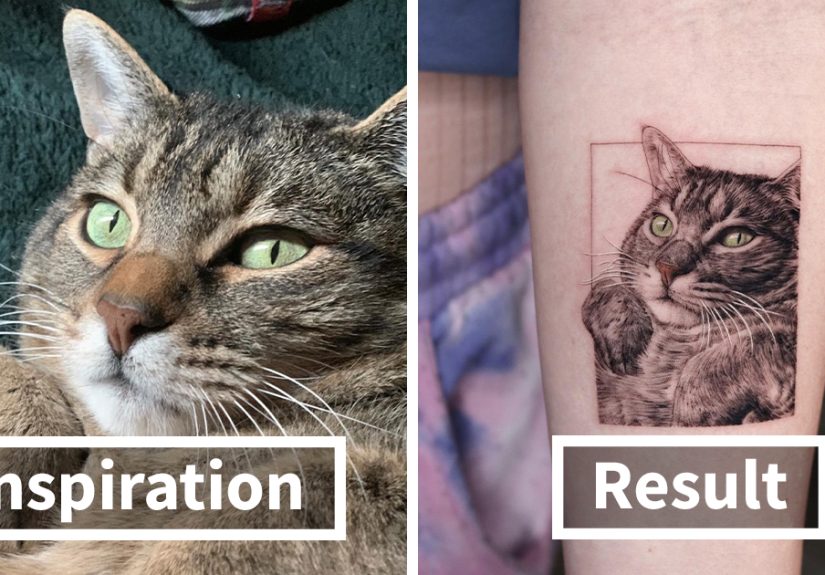
Let’s start with the obvious flex: fur. One of the hardest things to tattoo convincingly is animal fur because it needs texture without turning into visual chaos. Too little detail, and the pet looks flat. Too much detail, and the piece can get muddy. Yeono threads that needle beautifully. Her tattoos often show soft gradations, fine directional strokes, and carefully packed color or shading that mimic the flow of real coats.
That means fluffy dogs look fluffy rather than fuzzy in the wrong way. Long-haired cats look soft instead of scribbled. Short-coated pets still have dimension. It is a technical balancing act, and Yeono makes it look annoyingly effortless.
Eyes That Carry the Whole Personality
If the fur gets your attention, the eyes usually finish the job. Pet owners know the eyes are where the personality lives. The sweet stare, the suspicious side-eye, the “I definitely knocked over that plant and I regret nothing” gazethose tiny differences are what make a portrait feel emotionally accurate.
Yeono’s tattoos often emphasize brightness, moisture, and expression in the eyes, which gives each piece a startling sense of life. It is one thing to tattoo an animal. It is another thing entirely to tattoo your animal. That leap from generic to personal often happens in the eyes.
Smart Composition and Placement
Another reason these tattoos work is that they are designed for skin, not just for a screen. A pet photo may look adorable in your camera roll, but translating it into a strong tattoo means thinking about scale, contrast, body placement, and longevity. Realism can age poorly if the values are too subtle or the size is too small for the level of detail being attempted.
Yeono’s pieces often feel carefully composed for the body. The portraits tend to read clearly from a normal viewing distance, while still rewarding close-up inspection. That is a big deal. A tattoo should not require a magnifying glass and a prayer to make sense six months later.
They Feel Personal, Not Mass-Produced
Some trending tattoo styles become victims of sameness. Scroll long enough and everything starts to blur together. Yeono avoids that trap by treating each pet like an individual subject. Different expressions, different cropping choices, different textures, different moods. A sleepy bulldog should not be approached like a regal Persian cat, and her work reflects that understanding.
The result is a gallery of 30 pieces that feels cohesive without feeling repetitive. The theme is clearly pet love, but each tattoo still tells a different story.
Why Pet Portrait Tattoos Matter So Much to People
It is easy to understand the appeal of a beautiful tattoo. It is even easier to understand the appeal of a beautiful tattoo of someone you love. And for millions of people, pets are not background characters in life. They are daily companions, emotional support systems, comedy acts, tiny home supervisors, and full-time family members with absolutely no respect for personal space.
That is why pet memorial tattoos and pet portrait tattoos have become such a meaningful category. They allow people to hold onto a bond that can feel bigger than words. A framed photo sits on a shelf. A tattoo travels with you. It becomes part of your body, your routine, your reflection. For many people, that permanence is the point.
Some get a tattoo to celebrate a pet that is still very much alive and still very much attempting to eat socks. Others get one after loss, when they want something more lasting than a keepsake box or a saved voicemail from the vet. Both motivations are valid. The emotional power comes from the same place: this animal mattered, and I want that truth visible.
That emotional context also explains why realism is such a popular style. Minimalist paw prints have their place, and so do names, silhouettes, and line art. But realism offers something different. It aims to preserve the exact face people kissed goodbye every morning. That specificity can be incredibly comforting.
What Makes Yeono’s Style Stand Out in a Crowded Tattoo Scene
Lots of artists can tattoo animals. Fewer can create a portrait that feels both technically impressive and emotionally warm. That is Yeono’s sweet spot.
Her background in multiple tattoo styles appears to help her here. Artists who have moved through different visual languages often make stronger decisions about contrast, composition, and flow. In Yeono’s case, that experience seems to support her realism rather than weigh it down. The tattoos feel intentional, polished, and edited in the best sense. Nothing looks accidental.
She also seems to understand a truth that a lot of great portrait artists know: realism is not about copying every single hair. It is about deciding which details create believability. Sometimes the magic is in the fur. Sometimes it is in the nose texture. Sometimes it is in the little tilt of the head that makes the entire pet recognizable in one second flat.
That restraint is part of why her work looks elegant instead of overworked. These tattoos are richly detailed, but they still breathe.
Thinking About Getting a Realistic Pet Tattoo? Read This First
Choose the Right Reference Photos
The best pet portrait tattoo usually starts with the best photos. Clear lighting, sharp focus, visible eyes, and true-to-life color all help. If your favorite photo was taken from across the room in a cave during a thunderstorm, your artist may lovingly ask for better options.
Bring several reference photos if possible. One image may have the perfect expression, while another better shows coat color or ear shape. This gives the artist more visual information and more room to design a strong tattoo.
Be Honest About Size
Realism needs space. Tiny tattoos can be cute, but hyper-detailed realism done too small may not age gracefully. If you want visible fur texture, eye detail, and soft shading, be open to giving the tattoo enough room. Your future self will thank you.
Think About Mood, Not Just Accuracy
Ask yourself what you want the tattoo to feel like. Sweet? Playful? Regal? A little ridiculous in a lovable way? A strong realism tattoo is not only a portrait. It is an interpretation of your pet’s character.
Research the Artist, Not Just the Style
Not every realism artist specializes in animals, and not every animal tattoo artist is equally strong with portraits. Study healed work, not just fresh tattoos. Look for consistency in eyes, fur, contrast, and readability. If an artist’s dogs all look slightly haunted, keep scrolling.
Tattoo Safety and Aftercare Are Not Optional
Here comes the responsible grown-up section, but stay with me because this part matters. A beautiful tattoo still involves breaking the skin, which means studio hygiene and aftercare are a huge deal.
Anyone booking a pet tattoo should make sure the studio follows strong sanitation practices, uses sterile equipment, and provides clear aftercare instructions. Reputable medical guidance also stresses that contaminated tattoo inks can lead to infection, and allergic or inflammatory reactions are possible. In other words, do not let a gorgeous Instagram feed distract you from basic safety.
Aftercare matters just as much. A fresh tattoo needs gentle washing, appropriate moisturizing, and protection from heavy sun exposure while it heals. Picking, scratching, over-soaking, and pretending aftercare is “just a suggestion” are all bad ideas. If the skin develops unusual redness, swelling, discharge, or prolonged irritation, it is worth speaking with a qualified medical professional.
This is especially important with realism. Fine detail depends on clean healing. If you invest in a carefully crafted portrait of your beloved pet, you want to give that tattoo every possible chance to settle well and stay crisp.
Why the 30-Tattoo Collection Resonates Online
Collections like this perform so well online because they combine two very powerful internet forces: incredible craftsmanship and people’s overwhelming inability to resist pet content. Honestly, the internet has been held together by animals for years. Yeono’s tattoos tap into that same universal affection, but they elevate it through skill.
Viewers are drawn in first by shock value. The tattoos look startlingly real. Then they stay because each piece hints at a relationship behind it. Someone loved that little face enough to wear it forever. That makes the gallery feel tender instead of simply flashy.
It also speaks to a larger shift in tattoo culture. Tattoos are no longer seen only as bold statements or rebellious symbols. They are increasingly personal archives. People use them to honor family, document grief, celebrate identity, and preserve connection. Yeono’s work fits perfectly into that modern meaning of tattooing.
Experiences People Commonly Share After Getting a Pet Portrait Tattoo
One of the most interesting things about pet portrait tattoos is that the emotional experience often starts long before the needle does. Many people spend weeks, months, or even years choosing the right photo. They scroll through thousands of images on their phone, laugh at the goofy ones, cry at the old ones, and eventually land on a picture that feels like them. Not just a pet, but their pet. That process alone can be surprisingly emotional because it forces people to slow down and think about what they loved most: the crooked smile, the floppy ear, the sleepy eyes, the tiny underbite, the expression that always said, “You may be in charge of the rent, but I run this house.”
During the tattoo session, a lot of clients describe a strange combination of excitement and vulnerability. They are not just getting a design. They are handing over a memory. People often talk about feeling nervous in a way that is totally different from getting a decorative tattoo. With a flower or a symbol, you can love the result even if it changes a little from the original plan. With a pet, the emotional stakes feel higher. You want recognition. You want warmth. You want that instant spark where you look down and think, “That’s my baby.”
Then comes the reveal, and this is where things get real in every sense of the word. A lot of pet owners say they cry when they first see the finished tattoo. Sometimes it is happy crying. Sometimes it is the kind of crying that sneaks up on you because you thought you were going to be cool and composed, but then suddenly you are staring at your dog’s face on your arm and your emotional stability has left the building. That reaction is especially common with pet memorial tattoos. For people who are grieving, the tattoo can feel grounding. It does not erase loss, obviously, but it can create a comforting sense of closeness.
Another experience people often mention is how frequently the tattoo starts conversations. Friends ask about it. Strangers ask about it. Other pet owners light up instantly and want to share stories about their own animals. A realistic pet tattoo becomes an invitation to talk about someone deeply loved. For many people, that is part of the joy. Their pet continues to bring connection into the world, even in a new form.
There is also the daily-life factor. People say they catch little glimpses of the tattoo while typing, driving, making coffee, or standing in line at the grocery store, and each glance feels like a small reunion. That may sound dramatic, but anyone who has loved an animal knows it is not. Pets work their way into the texture of ordinary life. A good portrait tattoo does the same thing. It becomes part of your normal rhythm, which is exactly why it feels so meaningful.
And finally, there is the satisfaction of getting the tribute right. When people choose a highly skilled artist and commit to thoughtful design, the result often feels bigger than aesthetics. It feels respectful. It feels complete. It feels like the tattoo matches the depth of the bond. That is the sweet spot Yeono’s work seems to hit again and again. These tattoos are visually impressive, yes, but more importantly, they seem to give people a lasting way to carry love, memory, humor, and companionship with them everywhere they go.
Final Thoughts
30 astonishingly realistic pet tattoos by Yeono is more than a catchy title. It is an accurate description of work that feels technically sharp, emotionally rich, and impossible to scroll past without stopping. Yeono has carved out a distinctive place in the world of realistic pet tattoos by doing more than reproducing photos. She captures spirit, softness, and the tiny details that make an animal unforgettable.
For anyone considering a pet portrait tattoo, her gallery is a reminder that the best tattoos do more than decorate the body. They preserve a relationship. They tell a story. They hold memory in a form you can see every day. And when they are done this well, they do not just look real. They feel real too.