Table of Contents >> Show >> Hide
- 1. Create a Seasonal Rotation System
- 2. Audit Your Current Storage Systems Before Buying Anything New
- 3. Invest in Flexible, Modular Storage Instead of Random Fixes
- 4. Add Safety Storage to Your Resolutions, Not Just Pretty Storage
- 5. Schedule Storage Maintenance Sessions All Year Long
- Why These 2026 Storage Resolutions Actually Work
- Real-Life Experiences That Make These Storage Resolutions Worth It
- Conclusion
Every January, people swear this will be the year they finally “get organized.” Then February shows up, the junk drawer starts breeding again, and one lonely label maker sits on a shelf like it has been personally betrayed. If that sounds familiar, welcome. You are among friends, and possibly among several half-used storage bins you bought before decluttering first.
The good news is that smart storage New Year’s resolutions for 2026 do not have to be dramatic, expensive, or worthy of a reality TV makeover. The best goals are simple, practical, and built around how you actually live. Instead of turning your home into a showroom where nobody is allowed to touch anything, aim for systems that reduce friction. When storage works, mornings feel easier, cleanup gets faster, and you stop asking, “Why do I own fourteen reusable tote bags and zero idea where the scissors are?”
This year, think beyond pretty baskets. The strongest home storage ideas combine decluttering, flexible organization, safety, sustainability, and maintenance. In other words, your 2026 plan should not just hide stuff better. It should help you own less chaos and use your space more intentionally.
1. Create a Seasonal Rotation System
If your hallway closet is trying to store beach towels, Christmas ornaments, rain boots, and a badminton set at the same time, it is not a closet anymore. It is a hostage situation. One of the smartest decluttering resolutions for 2026 is to build a true seasonal rotation system.
The logic is simple: keep only what you need right now in your prime-access spaces. Everything else moves to a designated off-season zone. That might mean holiday décor in labeled bins, summer clothes in vacuum bags, winter accessories in a lidded tote, or sports gear moved to a garage shelf or under-bed storage.
A strong seasonal system has three parts:
- A dedicated storage location: Choose one place for off-season items instead of scattering them around the house like a treasure hunt nobody asked for.
- Clear labels: Not “miscellaneous winter things.” Be specific. Try “gloves + knit hats” or “tree lights + hooks.” Future-you deserves respect.
- A swap schedule: Put reminders on your calendar twice a year so the system does not depend on memory alone.
This approach instantly frees up daily-use storage. Your closet becomes easier to manage, your entryway breathes again, and your kitchen no longer shares valuable real estate with cake stands you use twice a year. Seasonal rotation also helps protect items because they are stored more intentionally instead of being crushed behind eleven things you meant to donate last spring.
For families, this resolution can be especially useful. Kids’ clothing, holiday serving pieces, outdoor toys, and guest bedding all take up space year-round even though they are not year-round priorities. A seasonal swap helps your home match your life as it changes, which is really the whole point of organization.
2. Audit Your Current Storage Systems Before Buying Anything New
Let us say it together: containers are not a personality trait. And they are definitely not a substitute for an honest storage audit. One of the most effective organization systems starts with evaluating what is not working now.
Before you buy one more basket, ask a few uncomfortable but helpful questions:
- Where do piles form over and over again?
- Which spaces feel annoying to use every day?
- Are you storing things where they make sense, or where they happened to fit once during a panic-clean?
- Do your labels reflect real categories, or are they strangely optimistic?
This step matters because many storage problems are really access problems. Maybe your paperwork collects on the kitchen island because your filing setup is too complicated. Maybe your pantry feels messy because you cannot see what you already have. Maybe your drop zone fails because there is no actual place for keys, bags, and mail. The issue is often not “I need more storage.” It is “My current setup does not fit my routine.”
Walk through your home with a notebook or your phone and jot down the trouble spots. Pay close attention to vertical space, closet top shelves, the backs of doors, under-bed areas, and the empty inches above appliances or cabinets. These overlooked areas often solve the “I need more room” problem without requiring a major overhaul.
Also, simplify your categories. If you have a bin labeled “charger accessories and miscellaneous backup tech items from previous devices,” you do not have a system. You have a cry for help. Broader, easier-to-maintain categories are more likely to survive real life.
3. Invest in Flexible, Modular Storage Instead of Random Fixes
The best storage solutions for 2026 are not the ones that look perfect for one week. They are the ones that can change as your needs change. That is why modular storage deserves a spot on your resolution list.
Adjustable shelving, stackable drawers, closet systems, pantry risers, file boxes, and movable dividers all work because they give you room to adapt. Life shifts. Kids grow. Work-from-home setups expand. Hobbies appear out of nowhere. One day it is a craft cabinet; the next day it is a snack station and emergency flashlight headquarters.
Modular storage is especially useful in these areas:
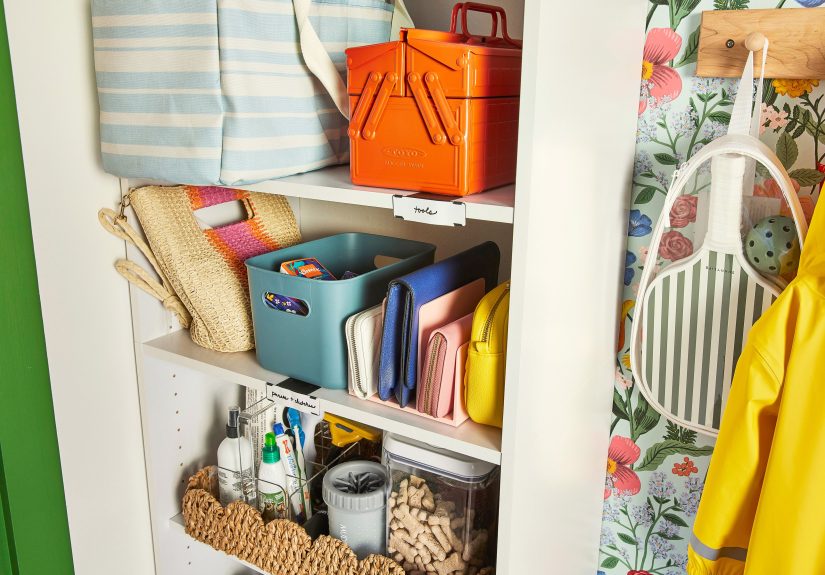
- Closets: Add shelves, hanging organizers, or drawers that can be reconfigured by season.
- Pantries: Use risers, clear bins, and stackable containers where they improve visibility and access.
- Entryways: Combine hooks, trays, baskets, and a shoe zone so everyday items have a consistent landing spot.
- Garages and utility areas: Adjustable shelving helps manage tools, sports gear, cleaning supplies, and overflow household goods.
The key is to build for function, not just looks. Matching bins are lovely, but they are not magic. In some cases, keeping food in original packaging makes more sense because it preserves expiration dates and instructions. In others, transferring items to stackable containers can save space and improve visibility. The right answer depends on the item, not on whether it would look good in a social media reel with upbeat music.
Try this rule: if a storage product does not make an area easier to use, easier to maintain, or easier to clean, do not buy it. That one rule can save money, reduce clutter, and protect you from building an expensive system you quietly hate by March.
4. Add Safety Storage to Your Resolutions, Not Just Pretty Storage
A well-organized home should not only look calmer. It should be safer. This is where 2026 storage goals can level up. Beyond closets and pantry bins, think about the high-stakes categories people forget: medicines, batteries, hazardous household products, emergency supplies, and heavy furniture.
Store medicines correctly
Many people keep medications in the bathroom, but heat and moisture are not ideal. A better resolution is to create a cool, dry, secure medication zone, keep medicines in original containers, and regularly remove expired items. If children or pets live in the home, safety becomes even more important.
Handle batteries and electronics carefully
Lithium-ion batteries are now everywhere, from phones to power tools to e-bikes. Treat them like the serious items they are. Store damaged batteries separately, avoid extreme heat, do not pile random chargers in a tangled drawer of doom, and create one clearly defined charging area with proper airflow and the correct equipment.
Respect cleaning products and household chemicals
Cleaning supplies, paint products, solvents, and other household hazardous materials should stay in original containers with labels intact. Never move them into food containers. Never mix leftovers. And never assume “under the sink” is a safe storage plan just because it has been traditional since approximately the invention of dish soap.
Build an emergency supplies zone
Every home benefits from one organized place for emergency essentials: water, nonperishable food, flashlights, batteries, a manual can opener, backup chargers, first-aid basics, and copies of important documents. Even a compact apartment can support a small kit if the items are grouped and maintained intentionally.
Make heavy storage safer
If you have children, guests, or older adults at home, anchor heavy dressers, bookshelves, and TVs, and place heavier items on lower shelves. Good storage should not invite climbing or tipping. Safety is not glamorous, but neither is explaining to a paramedic why the “decorative” top shelf was full of dumbbells.
In short, your best storage resolution may be the one nobody notices at first glance. Safe storage is quietly powerful. It protects your family, reduces risk, and turns organization into something more meaningful than visual tidiness.
5. Schedule Storage Maintenance Sessions All Year Long
Here is the least exciting and most important truth in this article: organization is maintenance. Nobody reorganizes a closet once and then rides off into the sunset forever. Stuff enters the house. Needs change. Labels peel. Expired products lurk in the back of cabinets like tiny villains.
That is why one of the best New Year’s storage resolutions is to put recurring maintenance sessions on the calendar. Not someday. Not “when things get bad.” Actual dates.
You do not need marathon cleanouts. In fact, shorter sessions work better. Try this rhythm:
- Weekly: reset visible surfaces, entryway clutter, fridge leftovers, and your drop zone.
- Monthly: check the pantry, freezer, medicine cabinet, cleaning caddy, and paperwork pile.
- Quarterly: reassess closets, donation bags, kids’ gear, hobby supplies, and storage furniture.
- Twice a year: do your seasonal rotation and a deeper purge of what no longer fits your life.
During each session, straighten containers, remove duplicates, relabel as needed, and ask one powerful question: Would I set up this system the same way today? If the answer is no, change it. Great storage is not rigid. It evolves.
You should also build in a fast exit strategy for items leaving your home. Donation bags should not become long-term residents of your trunk or hallway. Recycle promptly. Shred papers you do not need. Dispose of expired medications safely. Throw away what truly cannot be reused. A home feels lighter not when you decide to declutter, but when the excess actually leaves.
Why These 2026 Storage Resolutions Actually Work
These ideas work because they are realistic. They do not ask you to become a different person. They ask you to reduce friction, improve visibility, and create systems that match your actual habits. A family with backpacks and sports gear needs a different setup than a studio apartment dweller with limited closet space. A frequent cook needs a different pantry strategy than someone who meal-preps once a week. Good storage respects real life.
That is also why the “little by little” approach wins. A single drawer. One shelf. One category. One seasonal swap. One maintenance session. These are the kinds of actions that build momentum. And momentum, unlike guilt, is surprisingly useful.
So if you want your home to feel better in 2026, skip the fantasy makeover and commit to the fundamentals. Rotate what is seasonal. Audit what is broken. Choose flexible storage. Prioritize safety. Maintain the system. That is how a tidy home becomes a functional one, and how a functional one becomes easier to live in all year long.
Real-Life Experiences That Make These Storage Resolutions Worth It
One of the most common experiences people have after organizing their homes is not dramatic joy. It is relief. Quiet, oddly moving relief. The kind that shows up when you open a closet and nothing falls on your head, or when you can find the tape, batteries, and scissors without launching a family-wide investigation.
For some households, the biggest change comes from seasonal storage. Once winter coats, heavy blankets, and holiday decorations move out of the main living zones, everyday spaces feel bigger without a single square foot being added. People often say their homes suddenly feel easier to clean because counters are clearer, shelves are less crowded, and closets no longer require the flexibility of a circus performer just to reach one sweater.
Another familiar experience is discovering that clutter was never really about laziness. It was about poor flow. When a family creates a proper entryway drop zone with hooks, baskets, and a tray for small essentials, the random piles near the door often shrink almost immediately. Not because everyone became perfectly disciplined overnight, but because the home started cooperating. That is an underrated thrill. Organization is much less about willpower than people think.
There is also a specific kind of satisfaction that comes from auditing storage before shopping. Many people realize they already own enough bins, baskets, jars, and containers to organize half the house. They just were not using them intentionally. Repurposing what you already have can make the process feel less expensive and less overwhelming. It is hard not to feel a little smug in the best way when an old shoe box becomes the perfect charger organizer.
Safety-focused storage creates a different kind of peace of mind. Parents often feel better once medicines are locked away, heavy furniture is anchored, and cleaning supplies are clearly separated and stored correctly. Even people without kids describe a noticeable mental shift after setting up an emergency kit or organizing important papers in one secure place. It turns vague worry into visible preparation. Suddenly “I should probably deal with that someday” becomes “done,” which is a beautiful word.
Maintenance sessions may sound boring, but they are often the habit that changes everything. A ten-minute weekly reset can prevent the dreaded weekend cleanup marathon. A monthly pantry check can stop duplicate purchases. A scheduled paperwork sort can save hours during tax season. Over time, people stop feeling like their homes are constantly slipping out of control. They begin to trust their systems, and just as important, they begin to trust themselves to keep things manageable.
That may be the real experience behind the best storage resolutions for 2026: your home starts working with you instead of against you. Life does not become spotless, silent, and color-coded at all times. But it does become smoother. You waste less time. You buy fewer duplicates. You donate more intentionally. You keep safer zones. You feel less mentally crowded. And honestly, that is a lot more valuable than a perfectly staged pantry no one is allowed to touch.
Conclusion
If you want to make your storage New Year’s resolutions for 2026 stick, focus on systems you can actually maintain. A seasonal rotation plan, a realistic storage audit, flexible modular solutions, safer specialty storage, and recurring maintenance sessions are not flashy. They are better. They make your home easier to use, easier to clean, and easier to enjoy. That is the kind of organization that lasts longer than January.