

Table of Contents >> Show >> Hide
Every day, you probably wake up, scroll your phone, drink your coffee, and assume the world is mostly predictable.
But lurking underneath our normal routines is a universe that is absolutely bonkers in the best way possible.
From clouds that weigh more than skyscrapers to quail that hatched in space, reality reads like a script written by someone who got a little too excited with the “random” button.
Drawing on science magazines, quirky fact collections, and educational sites like National Geographic Kids, Mental Floss, Reader’s Digest, and more, this list of 50 weird facts is designed to shake up how you see Earth, space, animals, and even your own body.
How Strange Facts Can Change How You See Everything
“Weird facts” are more than party tricks. They poke holes in our assumptions. They show that nature doesn’t care about our sense of normal, history is messier than school textbooks, and the human body is much stranger than any sci-fi movie.
When you learn that a tiny creature can out-survive astronauts in space or that a planet spins the “wrong” way, it quietly rewires your sense of what’s possible.
So let’s take a tour of the bizarre. You’ll get a mix of science, history, geography, and pure “wait, that’s REAL?” energy Bored Panda style: curious, playful, and just a little bit unhinged (in a wholesome way).
50 Weird Facts About the World
Nature & Planet Earth
-
1. A single cloud can weigh over a million tons.
That fluffy thing floating over your head is basically a sky iceberg. Estimates suggest that a typical cumulus cloud can contain up to around a million tons of water it just stays up because the droplets are spread out and riding rising air currents. -
2. Some towns in Canada melt ice with beet juice.
Road crews in cold regions have tested mixtures of beet juice and salt brine to help melt ice more efficiently and reduce how much salt washes into the environment. The streets stay safer, and somewhere, a salad is missing its dressing. -
3. The deepest place on Earth could fit Mount Everest with room to spare.
The Mariana Trench in the Pacific Ocean plunges to about 36,000 feet (almost 7 miles). That’s deep enough to drop Mount Everest in and still have water above the summit. -
4. Some “mysterious space slime” is actually ancient bacteria.
For centuries, people reported weird clear jelly on the ground after meteor showers and called it “star jelly.” Modern research suggests it’s often Nostoc commune, a cyanobacterium that dries into a crust, then swells into a jelly-like blob after rain. Extraterrestrial? No. Extra-weird? Absolutely. -
5. A huge chunk of Earth’s oxygen comes from invisible ocean organisms.
Tiny photosynthetic plankton, including cyanobacteria, are responsible for producing a massive portion of the oxygen we breathe. Forests are great, but the real unsung oxygen factories are microscopic and swimmy. -
6. There are deserts that get snow.
The Atacama Desert in Chile one of the driest places on Earth has occasionally seen snowfall. Picture sand dunes wearing a very confused winter coat. -
7. Trees “talk” to each other underground.
Through fungal networks nicknamed the “wood-wide web,” trees can share nutrients, send chemical warnings about pests, and even favor their own seedlings. Your neighborhood oak is basically using organic Wi-Fi. -
8. Lightning hits Earth about 8 million times a day.
Storms around the world generate bolts nonstop. At any given moment, thousands of lightning strikes are zapping the planet a very flashy reminder that nature is always “online.”
Space Is Much Stranger Than Sci-Fi
-
9. Venus is the drama queen of the solar system.
Venus spins clockwise (most planets spin the other way) and takes longer to rotate once than to orbit the Sun. A day on Venus is longer than a Venusian year. -
10. Our galaxy may hold hundreds of billions of stars.
Estimates suggest the Milky Way could contain 100–400 billion stars. You will not meet them all, but good luck to any astrologer trying. -
11. Tardigrades can survive space and a decade without food.
These microscopic “water bears” can endure extreme heat, cold, radiation, vacuum, and even the vacuum of space, going into a dried-out “tun” state for years. When the apocalypse hits, it’s just cockroaches and tardigrades left sharing snacks. -
12. The first animals in space were fruit flies.
In 1947, fruit flies rode a U.S. rocket to study radiation effects. They beat dogs, monkeys, and humans into space by years, purely on the strength of their genetics and general willingness to go anywhere. -
13. Laika the dog was the first animal to orbit Earth.
Laika, a stray from Moscow, flew aboard Sputnik 2 in 1957. Her mission proved that living beings could survive launch and weightlessness, but she tragically died in orbit, sparking ongoing debates about ethics in animal research. -
14. Japanese quail eggs have hatched in space.
In 1990, Japanese quail earned a weirdly specific record: the first birds incubated and hatched in space. Their space missions help scientists study development and reproduction in microgravity. -
15. There may be more stars in the universe than grains of sand on Earth.
Astronomers estimate that across all galaxies, the number of stars is so huge it likely exceeds the number of sand grains on all the world’s beaches. That’s a lot of potential alien group chats.
Animals That Refuse to Be Normal
-
16. Platypuses “sweat” milk.
Female platypuses don’t have nipples. Instead, they secrete milk through pores in their skin, and babies lap it off mom’s fur. They also lay eggs and the males are venomous. At this point, the platypus is just showing off. -
17. Penguins sometimes propose with pebbles.
In some species, a male penguin will offer a carefully chosen pebble to a potential mate. If she accepts it, that pebble becomes part of the nest basically, an icy engagement ring. -
18. A group of flamingos is called a “flamboyance.”
Whoever named collective nouns looked at flamingos, saw long pink legs and synchronized posing, and simply told the truth. -
19. Octopuses have three hearts and blue blood.
Two hearts pump blood to the gills, one to the rest of the body. Their copper-based blood works better in cold, low-oxygen water and gives them a kind of goth aesthetic inside and out. -
20. Some jellyfish can “age backward.”
The species Turritopsis dohrnii can revert its cells to an earlier stage when stressed, effectively resetting its life cycle. It’s often nicknamed the “immortal jellyfish,” even though predators can still turn it into a snack. -
21. Cows can have best friends.
Studies in animal behavior suggest that cows form social bonds and show higher stress when separated from preferred companions. Barn drama is real. -
22. Axolotls can regrow entire limbs and more.
These Mexican salamanders can regenerate legs, tails, parts of their heart, and even parts of their brain. Meanwhile, humans are still trying not to lose the same sock twice. -
23. There’s a frog that literally freezes and thaws itself.
Wood frogs in North America can survive winter with much of their body water frozen. They thaw out in spring and hop away, as if “temporary ice cube” was normal.
Humans: You’re Weirder Than You Think
-
24. Your tongue print is unique.
Like fingerprints, every person has a one-of-a-kind pattern of tongue shapes and textures. Researchers have even explored tongues as a biometric ID. Not the most convenient airport scanner, but memorable. -
25. You shed enough skin cells to fill a small bag of flour each month.
Dead skin dusts your house, your sheets, and pretty much every surface around you. Congratulations: you are permanently self-snowing. -
26. Most of the cells in your body are not human.
Your microbiome bacteria, fungi, and other microbes outnumbers your human cells by a large margin. You’re less “one person” and more “well-organized colony.” -
27. Your nose can detect an enormous range of smells.
Research suggests the human nose can distinguish up to around a trillion different odors, far more than the old myth of “10,000 scents” claimed. -
28. You are literally made of stardust.
Many of the elements in your body carbon, oxygen, iron, calcium were forged in ancient stars that exploded long before the solar system existed. You’re basically a recycled supernova with anxiety. -
29. Your brain edits your memories like a sloppy film director.
Every time you recall something, your brain reconstructs it. Over time, details shift, vanish, or get “improved.” Your memories feel like video replays, but they’re more like remix tracks. -
30. Most of your dreams vanish within minutes.
Within about 5–10 minutes of waking, you forget a large portion of your dreams which is probably for the best, given how many of them involve being late, naked, or both.
History & Culture With a Plot Twist
-
31. Oxford University is older than the Aztec Empire.
Teaching was happening at Oxford by the late 11th century, while the Aztec Empire rose in the 14th century. Time is not arranged the way school timelines make it look. -
32. Cleopatra lived closer in time to the Moon landing than to the building of the Great Pyramid.
Cleopatra died in 30 BCE. The Great Pyramid was finished around 2560 BCE, while the Moon landing was in 1969 CE. For her, the pyramids were already ancient history. -
33. In Switzerland, it’s illegal to own just one guinea pig.
Because guinea pigs are social animals, Swiss law treats a single guinea pig as a victim of neglect. You either get them a furry roommate or risk breaking the law. -
34. There are countries with no rivers at all.
Saudi Arabia, for example, has no permanent rivers. It relies on groundwater, desalinated seawater, and seasonal wadis instead of flowing rivers. -
35. The shortest war in history allegedly lasted under an hour.
The Anglo–Zanzibar War of 1896 is often cited as lasting between 38 and 45 minutes. Imagine declaring war, losing, and still having time to grab breakfast. -
36. There’s a New Zealand hill with a 85+ letter name.
The hill often referred to as Taumatawhakatangihangakoauauotamatea… (the name keeps going) is one of the longest place names in the world and a nightmare for GPS voices. -
37. Some monarch butterflies migrate thousands of miles without having done it before.
The individual butterflies that migrate south in the fall are not the same ones that made the journey north in spring but they still find their way to the same wintering sites, guided by instincts and environmental cues.
Everyday Life, Language, and Technology Oddities
-
38. The Bluetooth logo is a Viking mashup.
Bluetooth is named after Harald “Bluetooth” Gormsson, a Danish king known for uniting tribes. The logo combines the runic letters for H and B basically a medieval monogram turned tech brand. -
39. The Eiffel Tower grows in the summer.
Heat makes the metal expand, so the tower can gain several inches in height on hot days. It’s not just you who feels a bit bigger in warm weather. -
40. The hashtag symbol’s real name is “octothorpe.”
Telecom engineers coined the term in the 1960s. Now the octothorpe is an influencer. -
41. Lobsters used to be considered prison food.
In colonial America, lobsters were so abundant they were fed to prisoners and servants, and used as fertilizer. Now people pay top dollar to eat the former “trash seafood.” -
42. There’s a word for the smell of rain on dry ground.
It’s called petrichor, coined by researchers in the 1960s to describe that earthy fragrance after a long dry spell. -
43. Some languages use the same word for blue and green.
In several languages, historically including Japanese, the same word covered what English speakers separate into “blue” and “green.” Color categories are partly cultural, not just optical. -
44. Elevators are statistically one of the safest ways to travel.
Despite every action movie ever, modern elevators have multiple braking systems and strict safety codes. Stairs are more dangerous and not just for your quads. -
45. You’re more likely to be killed by a vending machine than a shark.
Shark attacks are rare; tipping vending machines cause surprising numbers of injuries and deaths. The real apex predator may be your late-night snack. -
46. There are more possible ways to shuffle a deck of cards than atoms on Earth.
A 52-card deck has 52! (52 factorial) possible arrangements a number so huge that the exact order of the deck you just shuffled has almost certainly never existed before in the history of the universe. -
47. Your phone is more powerful than the computers used for the Moon landing.
The Apollo guidance computers had less processing power than a modern smartphone. Humans went to the Moon with something closer to a glorified calculator. -
48. Bananas are naturally radioactive.
Because they’re rich in potassium, and a tiny fraction of potassium is the radioactive isotope potassium-40, bananas emit a minuscule amount of radiation. No, you cannot power your house with a fruit bowl. -
49. Maps usually distort the size of countries more than you realize.
Common map projections make high-latitude regions like Greenland look gigantic compared with places near the equator. On a globe, the proportions tell a very different story. -
50. Most of the internet is basically invisible to you.
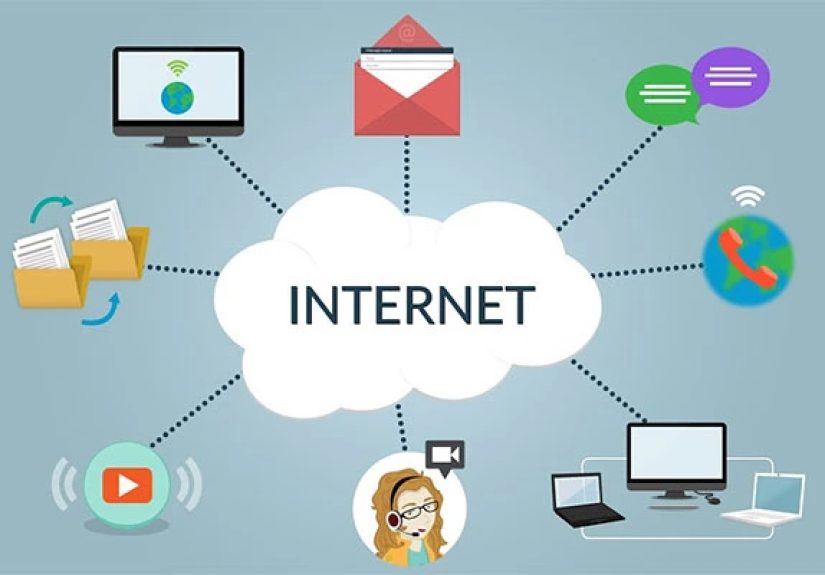
The “surface web” you search daily is tiny compared with the massive amount of data stored in private databases, archives, and internal systems the so-called “deep web” that search engines never index.
How These Weird Facts Can Shift Your Daily Life
Weird facts are fun to read, but the real magic happens when you carry them around in your head and let them change how you move through the world.
Imagine you’re stuck in a painfully awkward social situation a work mixer, a first date, or that random moment when someone says, “So… tell me something interesting about yourself.” Having a stash of odd-but-true facts is like having conversational bubble wrap. You can break the tension with, “Did you know Venus has a longer day than year?” or “Fun fact: cows have best friends, which honestly feels relatable,” and suddenly people are laughing instead of staring at the snack table.
These facts also change the way ordinary things feel. After you learn that clouds can weigh over a million tons, you don’t just look up and think “pretty”; you also think, “That is a floating ocean pretending to be cotton candy.” Walking through a drizzle turns into a micro-lesson about petrichor. Seeing a banana becomes a reminder that nature comes with built-in radiation but in a way that’s harmless and kind of hilarious.
If you have kids (or just know some small, permanently curious humans), weird facts are secret educational cheat codes. You can get a child more interested in science by telling them about immortal jellyfish or tardigrades that survive in space than by handing them a textbook and saying, “Photosynthesis is important.” When they gasp at penguins proposing with pebbles or laugh at platypus milk “sweat,” you’ve opened a door to biology, evolution, and ecosystems without ever saying the word “curriculum.”
Even mentally, these facts stretch you. Learning that Cleopatra lived closer to the Moon landing than the building of the pyramids wrecks your internal timeline in the best way. It reminds you that history isn’t a neat line of “ancient → medieval → modern,” but a tangled web of overlapping stories. Realizing that you’re mostly microbes and recycled stardust does something similar on a personal level: it shrinks your ego a bit while making life feel bigger, stranger, and more connected.
There’s also a quiet comfort in knowing the universe is this weird. When your life feels chaotic, it helps to remember that chaos is kind of the default setting. Lightning is constantly zapping the planet, jellyfish are time-looping their life cycles, and somewhere in Switzerland, a pair of guinea pigs is legally required to keep each other company. Your messy email inbox suddenly doesn’t seem so catastrophic.
Finally, weird facts help you stay curious. Curiosity is a muscle, and every “wait, really?” moment flexes it. The more you notice how strange, unlikely, and creative reality is, the harder it is to get completely bored. You start asking more questions. You take a second look at ordinary things. You Google the random bird on your balcony. You remember that the world is still full of discoveries that haven’t made it into a list like this yet.
So yes, on the surface this is “just” a list of 50 weird facts. But underneath, it’s a small invitation: keep being amazed. Let the world surprise you. And next time someone says, “Everything is boring,” feel free to reply, “Friend, I have questions about jellyfish and bananas.”
Conclusion: The World Is Delightfully Weirder Than You Realized
From star-hatched quail to immortal jellyfish and clouds that weigh more than cities, the world refuses to be normal and that’s exactly what makes it worth paying attention to. The more you learn, the more you realize how little of reality fits inside your everyday assumptions.
Keep this list as your cheat sheet for curiosity: a set of reminders that life on Earth (and beyond) is stranger, funnier, and more surprising than it looks from your commute window. Use these weird facts to start conversations, teach kids, shift your perspective, or just entertain yourself when you’re doomscrolling.
You don’t have to memorize every detail. Just remember the feeling: the little mental jolt when you discover that even a banana or a raindrop has a story. That feeling is your brain waking up and once it does, the whole world starts to look new.




 Close
Close