
Table of Contents >> Show >> Hide
- Why Designers Notice Outdated Features So Quickly
- 1. Matching Furniture Sets That Look Like They Were Bought in One Click
- 2. All-Gray Everything
- 3. A TV-First Layout With All the Furniture Pushed Against the Walls
- 4. Tiny Area Rugs That Make the Room Look Smaller
- 5. Heavy, Dark Window Treatments That Suffocate the Room
- 6. Overly Themed Decor and Word Art That Tells the Room What to Say
- 7. One Harsh Ceiling Light and Nothing Else
- A Quick Reality Check: Outdated Does Not Mean Hopeless
- Real-World Experiences With Outdated Living Room Features
- Conclusion
The living room is a little like a first impression at a dinner party. It speaks before you do. It says, “We have great taste,” or “We panic-bought this entire room during a holiday sale and never emotionally recovered.” Designers can usually spot the difference in about three seconds flat.
That does not mean your living room has to look expensive, trendy, or as if it was photographed for a glossy shelter magazine where nobody owns a phone charger. But it does mean certain features tend to age a room fast. Some once felt polished and practical. Now they can make a space feel flat, overdone, or stuck in a different decorating era.
The good news is that most outdated living room features are not fatal design flaws. They are fixable. Often, the issue is not the room itself, but the way color, scale, layout, texture, and accessories are working together. In other words, your living room probably does not need a full demolition montage. It may just need better decisions.
Below are seven outdated living room features designers immediately notice, why they date a space so quickly, and what to do instead if you want a room that feels current, comfortable, and actually lived in.
Why Designers Notice Outdated Features So Quickly
Designers are trained to read a room fast. They notice proportion, lighting, material mix, visual weight, and how people are meant to move through the space. That is why outdated living room decor often jumps out instantly. A dated room usually feels too coordinated, too cold, too theme-heavy, or too committed to one old trend.
The most stylish living rooms today feel layered rather than staged. They mix materials, include some contrast, balance comfort with personality, and avoid looking like they were copied straight from a 2016 Pinterest board titled “Dream Home!!!” with three exclamation points and a mason jar cover photo.
1. Matching Furniture Sets That Look Like They Were Bought in One Click
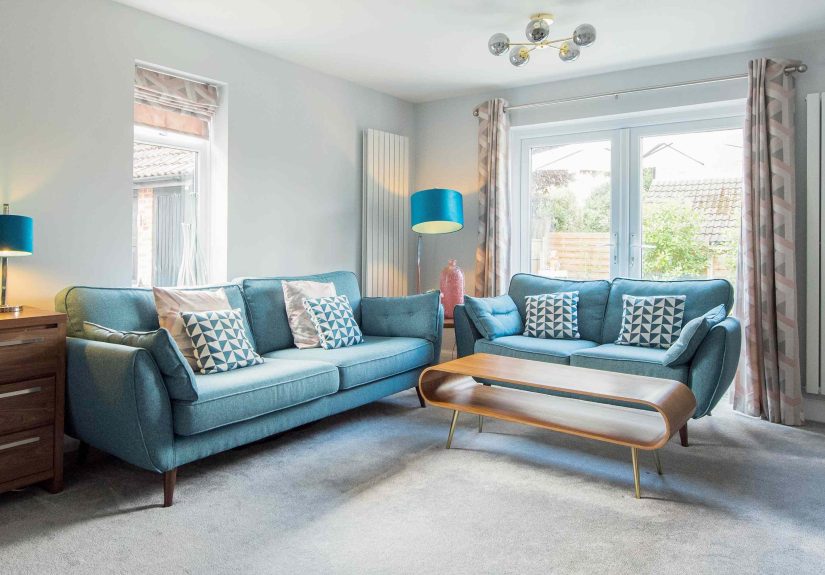
If your sofa, loveseat, chair, coffee table, end tables, and media console all look like they arrived as one giant “living room bundle,” designers notice immediately. Matching furniture sets were once sold as the easy way to create cohesion. In reality, they often create a room that feels stiff, predictable, and a little showroom-ish.
A living room gains character when the pieces relate to one another without looking identical. A linen sofa can work beautifully with a leather chair. A vintage wood coffee table can play nicely with a modern side table. The goal is not chaos. The goal is chemistry.
Why it feels dated
Over-coordination removes personality. It can make a space feel mass-produced instead of collected over time. Designers tend to prefer rooms that look assembled thoughtfully, not ordered as a combo meal.
What to do instead
Break up the set. Keep the sofa if you love it, then swap out one or two companion pieces. Add contrast with a different wood tone, a sculptural accent chair, or a coffee table with more texture. Even replacing matching lamps can make the whole room feel less formulaic.
2. All-Gray Everything
There was a long stretch when gray was the undisputed ruler of the living room. Gray walls, gray sofas, gray rugs, gray floors, gray throw pillows, and maybe a gray blanket for emotional support. The problem is not gray itself. The problem is when gray becomes the whole personality of the room.
Designers now tend to see all-gray living rooms as flat, chilly, and a bit dated. Rooms today are moving toward warmth: mushroom, taupe, camel, clay, olive, rust, walnut, chocolate, deep blue, and other colors that make a space feel grounded rather than sterile.
Why it feels dated
Gray-heavy interiors can drain the life out of a room, especially when paired with cool lighting and minimal texture. Instead of calm, the result often feels tired. Instead of sophisticated, it can read as builder-grade with better pillows.
What to do instead
You do not need to banish every gray item from the premises. Start by warming the room up. Add wood tones, cream textiles, aged brass, earthy paint, or richer upholstery. If your sofa is gray, layer in rust, brown, moss, or deep navy accents. One warm-toned rug can do more for a gray living room than ten motivational candles ever could.
3. A TV-First Layout With All the Furniture Pushed Against the Walls
Designers can spot this one from the doorway. The television is the unquestioned monarch. Every seat points directly at it. The sofa is glued to one wall, the chairs are exiled to the corners, and the coffee table is floating in the middle like it is waiting for instructions.
This layout is common because it feels safe. People assume pushing furniture to the edges will make the room feel larger. Ironically, it often does the opposite. It leaves a dead zone in the center and kills conversation.
Why it feels dated
Modern living rooms are expected to do more than face a screen. They are used for reading, hosting, lounging, working, and talking like actual humans. Designers increasingly favor layouts that create interaction and flow, not just a front-row seat to streaming platforms.
What to do instead
Float at least one major piece if your floor plan allows it. Pull the sofa off the wall by a few inches or more. Angle chairs toward each other. Use a rug to define the conversation area. The TV can still exist, obviously. It just should not feel like the only reason the room has furniture.
For example, in a rectangular room, try a sofa facing two chairs with a coffee table in between, and place the TV to the side or above a lower-profile console wall. Suddenly the room works for movie night and actual guests.
4. Tiny Area Rugs That Make the Room Look Smaller
A too-small rug is one of the fastest ways to make a living room feel off. Designers notice scale problems instantly, and undersized rugs are repeat offenders. If the rug is only big enough to hold the coffee table and nothing else, the room can feel disconnected and awkward.
This is one of those classic design mistakes that happens for understandable reasons. Bigger rugs cost more. Measuring is boring. And once you are standing in a store, every rug somehow looks larger than it does at home. It is a trap.
Why it feels dated
Small rugs visually shrink the seating area and make furniture look like it is hovering around the perimeter. It creates that “temporary apartment setup” feeling, even in a beautiful home.
What to do instead
Choose a rug large enough for at least the front legs of your main seating pieces to sit on it. In many living rooms, an 8-by-10 or 9-by-12 works far better than a 5-by-7. And do not be afraid of pattern. A rug with color or subtle design can instantly make a room feel more custom and less cautious.
5. Heavy, Dark Window Treatments That Suffocate the Room
Dark swags, thick valances, fussy layered drapes, shiny grommet panels, and vertical blinds that clatter like they are haunted all tend to age a living room quickly. Designers usually notice window treatments because they take up a surprising amount of visual real estate.
Older living rooms often treated windows like an opportunity for dramatic costume design. Modern rooms usually look better when window treatments support the architecture instead of overpowering it.
Why it feels dated
Heavy treatments block natural light, add bulk, and can make ceilings feel lower. They also tend to compete with everything else in the room. Even if the furniture is current, outdated drapes can drag the entire space backward.
What to do instead
Opt for simple, tailored panels in linen, cotton, or a textured blend. Hang them higher and wider than the window frame to make the room feel taller and brighter. If privacy matters, layer with woven shades or discreet blinds. The overall effect should feel relaxed and intentional, not like the windows are preparing for a stage performance.
6. Overly Themed Decor and Word Art That Tells the Room What to Say
If your living room is leaning too hard into one theme, designers notice immediately. That includes farmhouse slogans, giant script signs, coastal rooms that look like they were decorated entirely by decorative rope, or spaces stuffed with identical “curated” accessories that do not actually mean anything.
One sign that says “gather” is not a decorating crime. But when the room starts reading like a home goods gift aisle with seating, it can feel dated very quickly.
Why it feels dated
Themed decor often feels trend-driven and impersonal. It creates a room that looks prepackaged rather than personal. Ironically, the more you try to force a vibe, the less authentic the room tends to feel.
What to do instead
Choose decor that suggests your style instead of announcing it with a megaphone. Use art, books, ceramics, textiles, and objects with real variation. A collected room tells a story better than a wall sign ever will. If you want farmhouse warmth, bring in old wood, worn leather, or handmade pottery. Let materials do the talking.
7. One Harsh Ceiling Light and Nothing Else
Lighting can make a well-designed living room feel polished, or make it feel like a waiting room with throw pillows. Designers notice outdated lighting fast, especially when a room relies on one bright overhead fixture with cool-toned bulbs and zero backup.
Living rooms need layered lighting. Overhead lighting is only one part of the plan. Without table lamps, floor lamps, sconces, or accent lighting, the room can feel flat and unforgiving. Nobody looks their best under aggressive ceiling light, and neither does your furniture.
Why it feels dated
Single-source lighting feels utilitarian, not atmospheric. It ignores the way people actually use the room at different times of day. It is also a dead giveaway that comfort was not part of the original design plan.
What to do instead
Layer the light. Add a floor lamp near a reading chair, a table lamp on a side table, and dimmable bulbs whenever possible. Swap out basic fixtures for something with more shape and scale. Your living room should glow, not interrogate.
A Quick Reality Check: Outdated Does Not Mean Hopeless
If your living room has two or three of these features, do not panic. Most homes evolve slowly. Very few people redecorate all at once, and honestly, that is often a good thing. The best living rooms rarely look finished in one weekend. They get better through editing, layering, and smarter choices over time.
Start with the changes that make the biggest difference:
- Replace one matching piece with something that adds contrast.
- Warm up a cold palette with earthy color and natural materials.
- Buy the larger rug.
- Pull furniture inward for a better layout.
- Simplify the windows.
- Edit out decor that feels too themed or too cluttered.
- Add at least two new light sources.
That is usually enough to shift a living room from dated to deliberate.
Real-World Experiences With Outdated Living Room Features
In real homes, outdated living room features rarely show up one at a time. They tend to travel in groups, like cousins who arrive early and stay too long. A homeowner might begin with the best intentions: buy a matching set because it is easy, choose gray because it feels safe, hang dark curtains because the room seems too plain, and mount the TV above the fireplace because everyone else on the internet appears to be doing it. None of those decisions sounds terrible on its own. Together, though, the room can start to feel strangely rigid.
One common experience is realizing the room looks neat but never feels comfortable. People sit there, but they do not linger. The space photographs fine, yet everyday life in it feels awkward. Guests perch instead of relax. Conversation dies because every chair faces the television. The rug looks okay until someone points out that none of the furniture actually touches it. Then you cannot unsee it.
Another familiar experience is the slow disappointment of trend fatigue. At first, the all-gray palette feels clean and modern. A year or two later, it starts to feel chilly, especially in winter or in rooms with limited natural light. Homeowners often describe the space as “blah” before they can explain exactly why. Usually the problem is not the sofa or the wall color alone. It is the lack of warmth, contrast, and texture working together.
Window treatments are another big one. Many people do not notice how heavy drapes affect a room until they swap them for lighter panels. Suddenly the ceilings feel taller, the daylight looks softer, and the whole room seems less tired. It is one of those changes that makes people wonder why they lived in a cave for so long.
Decor choices can trigger the same kind of awakening. A room filled with signs, trendy accessories, and perfectly coordinated shelves may look “done,” but it often does not feel personal. Once homeowners start replacing generic decor with books they actually read, art they actually love, and objects with a bit of age or story, the room becomes more believable. More human, less catalog.
Lighting upgrades create some of the most dramatic before-and-after experiences. People are often shocked by how different the same room feels at night with two table lamps and one floor lamp instead of a single overhead bulb. It goes from bright in the wrong way to inviting in the right way. That is the kind of change you feel immediately, even if you cannot explain it in design-school vocabulary.
The most encouraging experience of all is realizing a dated living room usually does not need a total reset. A few edits can change the energy completely. Better scale, warmer color, softer light, less theme, more personality. That is usually the formula. Not perfection. Just a room that finally looks like someone thoughtful lives there.
Conclusion
The outdated living room features designers immediately notice are usually not shocking mistakes. They are simply choices that no longer support how people want their homes to feel now. Rooms today work better when they are warmer, more layered, more flexible, and less obsessed with matching, minimalism, or manufactured “style.”
If you want a living room that feels current, start by editing what looks too cold, too small, too heavy, too coordinated, or too theme-driven. Then add what many older rooms are missing: depth, texture, contrast, and comfort. Your living room does not need to chase every trend. It just needs to stop looking like it still has a favorite HGTV episode from 2014.





 Close
Close