
Table of Contents >> Show >> Hide
- What “Shopping” Means in a No-Buy Year (So You Don’t Accidentally Ban Shampoo)
- Why a Year Without Shopping Works (Even If You Don’t “Need” It)
- Step 1: Write Your “No-Buy Rulebook” (The Part Everyone Skips, Then Regrets)
- Step 2: Make Buying Inconvenient (Because Convenience Is the Enemy of Self-Control)
- Step 3: Replace Shopping With Something That Actually Refuels You
- Step 4: Use the “Need vs. Want” Filter Without Turning Into a Robot
- Step 5: Track the Wins (Because Your Brain Needs Proof)
- Common Pitfalls (And How to Avoid Face-Planting Into a Shopping Cart)
- What Happens After the Year? (Spoiler: You Don’t Become a Minimalist Monk)
- : The Real-Life Feel of a Year Without Shopping
- Conclusion
Imagine telling your future self: “This year, I’m not buying random stuff.” Not “I’ll be good during Prime Day.”
Not “I’ll only browse.” A full, honest-to-goodness year without shopping.
Welcome to the no-buy yeara personal experiment that’s part money reset, part mental declutter,
and part “Wait… why did I own three nearly identical black hoodies?” It’s also not about punishing yourself,
living on lentils in a candlelit bunker, or becoming the final boss of frugality. The goal is simpler (and harder):
stop defaulting to buying.
In this post (#89), we’ll break down what “a year without shopping” really means, how to design rules that don’t
self-destruct in February, and what you can realistically gainfinancially, emotionally, and even environmentally.
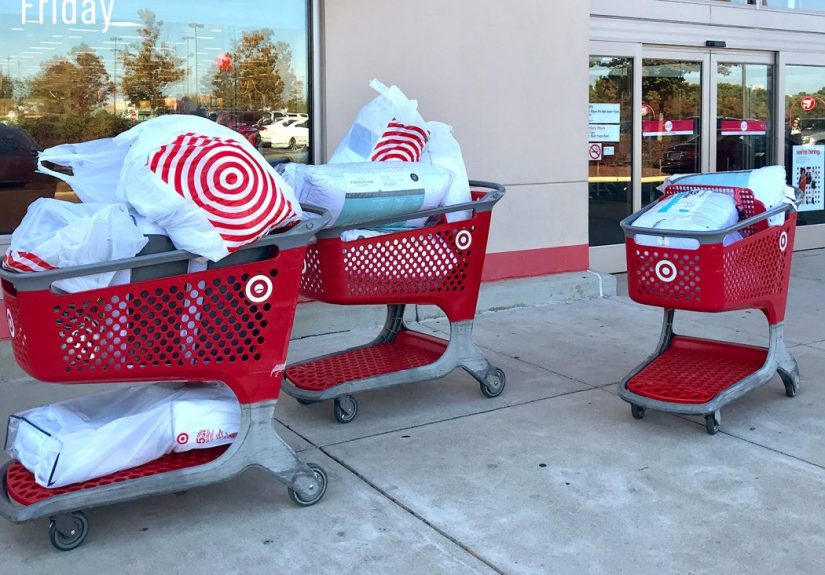
And yes, we’ll talk about the moment you walk into Target “for toothpaste” and wake up in your car with a throw
blanket and a decorative bowl. It happens.
What “Shopping” Means in a No-Buy Year (So You Don’t Accidentally Ban Shampoo)
A no-buy year isn’t “never spend money.” It’s “stop buying non-essential items you didn’t truly plan for.”
Most people define shopping as discretionary purchasesthings you want, not things you need to keep your life running.
Common “No” categories
- Clothes (especially “just because” outfits and trend buys)
- Beauty (makeup, skincare backups, “limited edition” anything)
- Home décor (pillows have a way of multiplying)
- Gadgets (new tech you’ll “definitely use” for exactly 11 days)
- Convenience spending (takeout, delivery fees, impulse snacks)
- Entertainment purchases (new subscriptions, apps, paid downloads)
Common “Yes” categories
- Groceries and basic household supplies
- Healthcare (medications, appointments)
- Transportation and work essentials
- Repairs (fixing what you already own)
- Pre-planned replacements (like replacing shoes that are actively falling apart)
Here’s the trick: your rules should be clear enough to follow and flexible enough to live.
The best no-buy years are built around your real lifenot a fantasy life where you never get invited to weddings
and your phone battery lasts forever.
Why a Year Without Shopping Works (Even If You Don’t “Need” It)
People start no-buy years for different reasons, but most motivations land in three buckets: money, mind, and
“please don’t let my closet become a museum of past personalities.”
The money reason: your dollars stop leaking
Small purchases don’t feel dangerous. They’re cute. They’re “only $18.” The problem is that discretionary spending
is a thousand tiny cuts, and your budget is not a superhero with unlimited blood.
A no-buy year creates a hard pause. It gives you space to pay down debt, build an emergency fund, or simply stop
feeling like your paycheck vanishes into a portal labeled “miscellaneous.” Even if you don’t have debt, redirecting
“shopping money” toward savings can change your entire financial stress level.
The mind reason: shopping is emotional (and the internet knows it)
Shopping isn’t only practical. It can be soothing, distracting, or rewardingespecially when you’re stressed, bored,
lonely, or avoiding an email you should’ve answered three days ago. Research on impulse buying consistently finds
that emotions, environment, and marketing triggers can nudge people into unplanned purchases.
A no-buy year helps you notice the pattern: the urge rises, you scroll, you buy, you get a short hit of satisfaction,
and then… you’re back to baseline. When you remove the “buy” option, you’re forced (gently, annoyingly) to find a
new way to handle the feeling underneath.
The environment reason: buying less is a waste-reduction superpower
The U.S. generates an enormous amount of textile waste, and clothing is a big part of the modern “buy, wear, purge”
cycle. A no-buy year doesn’t solve systemic waste alone, but it does reduce your personal demand for new stuff
which matters more than perfect recycling intentions.
Step 1: Write Your “No-Buy Rulebook” (The Part Everyone Skips, Then Regrets)
A no-buy year without rules is just a vibe. And vibes crumble under a well-timed sale banner.
Build a simple rulebook you can screenshot and reread when your brain says,
“But it’s 40% offthat’s basically saving money.”
Pick your timeline and your goal
- Full year: best for deep habit change
- Quarter or 90 days: great if a year feels too intense
- No-Buy “seasons”: like No-Buy January + No-Buy July
Define what you want from the year: debt payoff, savings, less clutter, less anxiety, or more intentional spending.
Your goal becomes the reason you say “no” when your cart is full.
Create a “Yes List” and a “No List”
Don’t just ban categories. Also define what’s allowed. The “Yes List” prevents loophole arguments with yourself at 11:48 p.m.
- Replacement-only rule: You can replace essentials only when you finish or break them.
- Planned purchases rule: If it’s on your list for 30 days, it can be considered.
- Repair-first rule: Try to fix it before you replace it.
Decide how you’ll handle tricky moments
These are the classic “No-Buy Year Boss Battles”:
- Birthdays and holidays: Do you buy gifts? Do you do experiences? Handmade? Set a budget?
- Social life: Are you cutting restaurants entirely or setting a monthly cap?
- Work needs: What counts as essential for your job or school?
- Emergencies: What’s your plan when something breaks?
The goal is not to be perfect. The goal is to prevent “I made one exception” from becoming “I accidentally renovated my living room.”
Step 2: Make Buying Inconvenient (Because Convenience Is the Enemy of Self-Control)
If you want to stop impulse shopping, you can’t rely on willpower alone. Willpower is like phone battery:
impressive at 100%, tragic at 9%.
Remove triggers
- Unsubscribe from store emails and deal alerts
- Delete shopping apps (or at least log out and remove saved cards)
- Turn off push notifications (“Your cart misses you!” is not friendship)
- Mute influencers or accounts that trigger comparison buying
Add friction to purchases
- Use a 24–72 hour waiting rule
- Move “fun money” to a separate account (so you see it leaving)
- Write the item down instead of buying it
- Ask: “What problem does this solve, specifically?”
A no-buy year works best when it becomes easier not to buy than to buy.
Step 3: Replace Shopping With Something That Actually Refuels You
Many people don’t shop because they love objects. They shop because shopping is a quick emotional reset:
novelty, control, anticipation, distraction. If you remove it, you need a replacementotherwise boredom will
tap your shoulder and whisper, “Let’s just browse.”
Low-cost dopamine replacements
- Library life: books, audiobooks, movies, even digital magazines
- “Use what you own” challenges: pantry meals, closet outfits, makeup rotation
- Movement: walks, YouTube workouts, stretching (free and mood-upgrading)
- Creative projects: journaling, drawing, cooking, DIY repairs
- Social plans that aren’t spending traps: potlucks, hikes, game nights
You’re not just “stopping shopping.” You’re reclaiming time, attention, and emotional energy from the buy cycle.
Step 4: Use the “Need vs. Want” Filter Without Turning Into a Robot
Needs are essentialsfood, shelter, basic clothing, healthcare, transportation. Wants are everything else, including
“this candle smells like inner peace.” The tricky part is that wants can feel urgent.
Try these questions:
- Would my health or safety suffer without this?
- Do I already own something that works?
- Is this for my real lifeor my “future self” fantasy?
- Will I still care in two weeks?
- Am I trying to fix a feeling with a thing?
You’re not aiming to eliminate joy. You’re aiming to stop letting marketing decide what “joy” looks like.
Step 5: Track the Wins (Because Your Brain Needs Proof)
A no-buy year can feel invisible day-to-day. You didn’t buy something… again. Congrats? That’s why tracking matters.
It makes progress visible and keeps motivation alive.
Easy things to track
- Money not spent (estimate what you would’ve bought)
- Debt paid or savings added
- Declutter wins (items used up, repaired, donated mindfully)
- Urge logs (what triggered you, how you handled it)
You’re building data about yourself. And data is powerfulespecially when it says, “I’m not actually a person who
needs new stuff every week to function.”
Common Pitfalls (And How to Avoid Face-Planting Into a Shopping Cart)
Pitfall: “All-or-nothing” thinking
If you slip once, the challenge isn’t “ruined.” A no-buy year is a practice, not a purity test. The win is noticing
the slip, learning the trigger, and continuingwithout turning it into a month-long spending spiral.
Pitfall: loopholes that aren’t actually helpful
“It was thrifted.” “It was on sale.” “I used points.” Those can still be impulse buys. The question isn’t
whether the price was lower. The question is whether the purchase aligns with your rules and goals.
Pitfall: replacing shopping with a new obsession
Some people swap shopping for extreme penny-pinching, which can create stress and social isolation. If your no-buy
year makes you anxious all the time, adjust the rules. Sustainable change beats dramatic discomfort.
What Happens After the Year? (Spoiler: You Don’t Become a Minimalist Monk)
The best outcome isn’t “never buy anything again.” It’s intentional spending. After a year, you
know your triggers, your values, and your patterns. You know what you actually use. You know the difference
between “I want it” and “I want the feeling I think it will give me.”
Many people shift into a low-buy lifestyle afterward:
- Only buy from a pre-written list
- Keep a one-in, one-out rule for clutter categories
- Set monthly “fun money” with zero guilt (and real boundaries)
- Focus on experiences and relationships instead of stuff
A year without shopping isn’t about deprivation. It’s about becoming the person who choosesnot the person who
automatically clicks “Buy Now.”
: The Real-Life Feel of a Year Without Shopping
The first month is the loudest. You don’t realize how often you “shop for fun” until you stop. Suddenly, every ad
feels personallike the internet is standing outside your window holding a coupon code and whispering, “You deserve
a treat.” You start noticing the weird little moments when you reach for your phone because you’re bored, stressed,
procrastinating, or just craving a tiny burst of novelty. The urge doesn’t mean you’re failing. It means you’re
human in a world designed to sell to humans.
By month two, you get practical. You learn what you actually run out of. You stop buying backups of backups “just
in case,” because you’re paying attention now. You become suspicious of the “limited edition” label, like it’s a
tiny red flag wearing a party hat. You also discover the power of friction: if you have to re-enter your credit
card number and you don’t have it memorized, that extra 30 seconds is sometimes enough for your brain to say,
“Wait, why are we doing this?”
Somewhere around months three and four, the challenge turns into identity. You’re no longer “trying not to shop”
you’re someone who doesn’t shop casually. And that’s a different mindset. You start using what you own. You remix
outfits. You repair things you would’ve replaced. You borrow. You trade. You figure out that the library is basically
a cheat code for entertainment. You might even feel a little smug, but in a charming waylike a person who brings a
reusable water bottle and thinks they’re saving the planet one sip at a time. (To be fair, it helps.)
The middle of the year tests you with events: birthdays, holidays, weddings, seasonal sales. This is where your
rulebook earns its paycheck. If you planned for gifting, you don’t panic-buy. If you didn’t, you learn quickly that
“I’ll just figure it out later” is how you end up ordering something at 1:00 a.m. with expensive shipping. You also
learn that some people don’t understand the challenge and will try to recruit you back into shopping like it’s a
group project. The key is having an easy script: “I’m doing a no-buy year, but I’m still down to hang outwant to
do a walk or a game night?”
Toward the end of the year, the biggest surprise is how normal it feels. You still buy necessities. Life still
happens. But the constant hum of wanting quiets down. You realize you can feel stressed without spending, bored
without scrolling, and happy without buying something to prove it. The challenge doesn’t make you perfect. It makes
you aware. And that awareness sticksso when the year ends, you don’t “finally get to shop.” You get to choose.







 Close
Close