
Table of Contents >> Show >> Hide
- The timing problem: sobriety meets 2020
- Why alcohol got louder during the pandemic
- What made quitting harder in lockdown
- The sober survival kit: what helped when the world was closed
- What if you slipped?
- When it’s time to get professional help
- The long view: what sobriety gave people after the pandemic
- A 500-word field note: the experience of quitting right before COVID
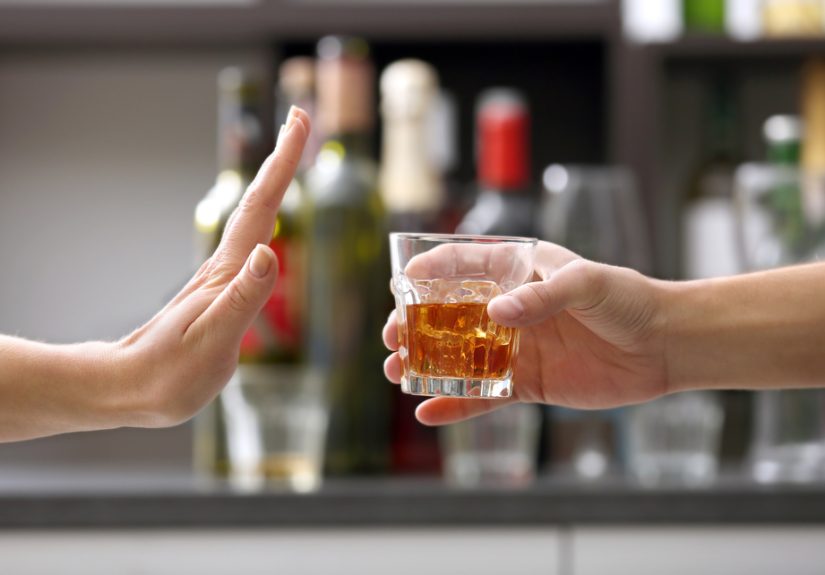
Quitting alcohol is usually portrayed as a clean, cinematic reset: you wake up, sip a heroic amount of water,
jog into the sunrise, and suddenly your skin glows like you’ve been softly lit by a ring light.
In real life, stopping drinking is less “movie montage” and more “Where did I put my patience and why is my brain
trying to barter with me like it’s a pawn shop?”
Now add a global pandemic. The world shuts down, routines evaporate, anxiety moves in like a roommate who never buys
toilet paper, and every social interaction becomes a tiny negotiation with distance, risk, and feelings. If you quit
drinking right before COVID-19 (or in the middle of it), you didn’t just choose sobriety. You chose sobriety on
“hard mode.”
This article looks at why the pandemic made quitting feel uniquely tricky, what research says about alcohol use
during that time, and what a realistic “sober survival kit” can look like when life is unpredictable.
(Quick note: if you’re under 21, the safest choice is not to drink at allthis piece focuses on adult alcohol use
and recovery.)
The timing problem: sobriety meets 2020
Early sobriety is often about rebuilding structure. You replace a habit (drinking) with a plan (literally anything
else). You learn your triggers. You practice saying “no” without turning it into a TED Talk. You create a schedule
that keeps your brain from whispering, “You know what would really spice up this Tuesday?”
Then the pandemic arrived and set your schedule on fire. Offices closed. Gyms closed. Families separated. People
were isolated in apartments, or crammed into homes with constant noise, or working on the couch four inches from the
snack cabinet. The usual stabilizerscommutes, meetups, classes, even casual small talkvanished overnight.
Quitting drinking during that stretch could feel like trying to learn to swim while someone keeps changing the water
level. One week you’re doing okay. The next week you’re watching the news, doom-scrolling at 2 a.m., and wondering
why your nervous system is auditioning for a disaster movie.
Why alcohol got louder during the pandemic
A lot of people didn’t just think drinking increased during COVIDthey measured it. Studies comparing pre-pandemic
and early-pandemic patterns found increases in drinking frequency for many adults, with some groups showing sharper
jumps. Researchers also tracked increases in heavy drinking episodes in certain populations.
That matters to someone trying not to drink, because the environment shifted. Alcohol wasn’t just present; it was
culturally “normalized” as a coping tool. Social feeds filled with jokes about day-drinking, virtual happy hours,
and “quarantinis.” It wasn’t subtle. It was basically a billboard that said: Stress? Have you tried wine?
Public health data also underscored how stress and mental health strain were rising. In one CDC survey from mid-2020,
a notable share of respondents reported starting or increasing substance use to cope with pandemic-related stress and
emotions. When stress rises, cravings often follow.
And the stakes are not small. Excessive alcohol use remains a leading preventable cause of death in the United States,
and CDC estimates show it contributes to a very large number of deaths each year. That’s not meant to scare youit’s
meant to clarify why “just drink less” is not a cute little life hack for everyone. For many, quitting is a health decision,
not a vibe.
What made quitting harder in lockdown
1) Isolation amplified cravings
Many people rely on social accountability to stay steady: meeting a friend after work, attending a group, going to a
class, showing up somewhere that isn’t their living room. Lockdown shrank the world to a few rooms, and your brain
had way more alone time to make persuasive arguments.
2) Boredom wasn’t harmless
Boredom sounds cute until you’re living it. In early sobriety, boredom can feel like an itch you can’t scratch.
Alcohol used to “solve” the empty space. Pandemic boredom added extra hours of empty space and took away a lot of
healthy distractions.
3) Triggers moved into the house
When your home becomes your office, gym, restaurant, and social life, it also becomes your trigger zone. That one
chair where you used to drink? Now it’s also where you work, worry, and watch the news. Your nervous system starts
connecting everything to everything.
4) Access changed
Many areas expanded takeout and delivery options for alcohol during the pandemic, and stores selling alcohol often
remained open even when other businesses closed. That meant temptation could be closer, easier, and more “built in”
than before.
The sober survival kit: what helped when the world was closed
Sobriety isn’t one magic trick. It’s a pile of small, repeatable moves that keep you from negotiating with your own
impulses. During the pandemic, the people who stayed steady often did a few practical things consistently.
Build a “boring” routine on purpose
In uncertain times, predictable routines are underrated superhero gear. The goal isn’t to become a productivity robot.
The goal is to reduce decision fatigue. If your evenings are the danger zone, plan the hours between dinner and bed like
they’re a flight plan: simple food, a show, a shower, a book, lights out. The routine doesn’t have to be glamorous; it
has to be reliable.
Create replacement rituals (not just “distractions”)
Alcohol is rarely just liquid. It’s a ritual: the sound of a can opening, the “reward” feeling after a hard day, the
social punctuation mark. Replacing alcohol works better when you replace the ritual toosomething you can count on that
signals “we’re safe now” to your brain.
Examples people leaned on during lockdown: making a nightly tea, cooking a new recipe, organizing a drawer while listening
to a podcast, going for a walk at the same time each day, or doing a ten-minute stretch routine. The details don’t matter
as much as the consistency.
Make your environment a little less persuasive
If alcohol is in the house, your brain doesn’t need to imagine itit can see it. Some people removed alcohol entirely.
Others asked a partner to store it out of sight. Some avoided alcohol aisles while shopping online. The point isn’t moral
purity; it’s friction. Make the unwanted choice harder to do automatically.
Use connectioneven if it’s pixelated
One of the biggest pandemic pivots was recovery support moving online. Mutual-support groups have long been part of
alcohol recovery, and many meetings became available online or by phone, which helped people maintain connection even
while distancing.
Treatment and counseling also leaned more heavily on telehealth. Federal health agencies and researchers noted how expanded
telehealth options helped reduce barriers to care for substance use disorders. For some people, a video appointment was
the difference between getting support and going without it.
Have a “craving script” ready
Cravings often show up with a sales pitch: “Just one,” “You deserve it,” “This doesn’t count because the world is on fire.”
A craving script is a prepared response you can repeat without debating. You don’t need poetry. You need something short
and believable, like: “Not today,” “I don’t drink,” or “This feeling passes.”
Pair it with an action you can do immediatelytext someone, drink water, step outside, change rooms, start a short task.
You’re not trying to win an argument with your brain; you’re trying to outlast a wave.
What if you slipped?
The pandemic was a stress test. Some people slipped. That doesn’t mean sobriety is “over.” It means you’re human and you
hit a hard moment. Research and clinical guidance emphasize that return-to-drinking risk exists, especially under stress.
The practical move after a slip is to treat it like data, not a verdict.
- What happened right before? (News? loneliness? conflict? exhaustion?)
- What need were you trying to meet? (relief, sleep, numbness, connection)
- What would help next time? (support, boundaries, a different routine, professional care)
If you’ve been drinking heavily for a long time and stop suddenly, withdrawal can be dangerous. In that situation,
professional medical guidance matters. This isn’t about willpowerit’s about safety.
When it’s time to get professional help
If alcohol has become hard to control, if cravings feel overwhelming, or if drinking is tied to anxiety/depression,
it can help to talk with a clinician. Alcohol use disorder (AUD) is recognized as a medical condition, and evidence-based
support can include therapy, mutual-support groups, and FDA-approved medications for some adults.
In the U.S., SAMHSA’s National Helpline and FindTreatment.gov can help people locate treatment resources. Not everyone
needs the same approach, and “the right plan” is the one you can actually follow.
The long view: what sobriety gave people after the pandemic
Here’s the part that doesn’t always make it into the quarantine memes: people who stayed sober through that chaos often
built skills that outlasted the crisis. They learned how to tolerate discomfort without anesthetizing it. They practiced
reaching out instead of isolating. They learned which coping strategies were sturdy and which were basically cardboard
in a rainstorm.
Many discovered that sobriety wasn’t only about removing alcohol; it was about adding capacitymore honest rest, more
stable mood, more present relationships, and fewer mornings spent negotiating with regret. And yes, some people also
learned how to bake bread. That’s not nothing.
A 500-word field note: the experience of quitting right before COVID
The first weird thing was the timing. I’d stopped drinking and expected the usual early-sobriety hurdles: awkward social
events, restless evenings, the occasional dramatic craving that shows up like an infomercial. Instead, the world closed.
Suddenly there were no social events to dodge, which felt like a gift until it didn’t. You can’t relapse at a party if
there are no partiesbut you can absolutely relapse in sweatpants at 3 p.m. because the silence starts to feel personal.
At first, I told myself the pandemic made sobriety easier. No bars, no birthdays, no “just one drink” invitations.
Then week two arrived with its strange blend of boredom and fear. Time stopped behaving normally. Days blurred together.
I’d open the fridge and stare like it might contain answers. My brain started romanticizing alcohol as if it were a wise
old friend and not the thing I’d quit because it kept stealing my best hours.
The hardest part wasn’t temptation; it was the constant background stress. The news was a loop of uncertainty. People I
loved were far away. Every plan had an asterisk. I realized alcohol used to be my “off switch,” and now I didn’t have one.
That’s when sobriety stopped being a decision and became a practice. I needed something to do with my hands and my mind
when panic knocked. So I built little rituals like they were scaffolding: tea at night, walks at the same time every day,
a ridiculous commitment to cooking dinner even when cereal was calling my name.
Connection mattered more than I expected. I used to think I could white-knuckle anything alone, which is a fun fantasy
until you try it during a global crisis. I learned to text people before I spiraled, not after. I learned that “I’m having
a rough day” is a complete sentence. Online support felt strange at firsttiny faces in tiny boxes, everyone muted and
unmuted like a nervous orchestrabut it still worked. Hearing someone else say, “Me too,” made my cravings smaller.
I didn’t become blissful. I became steadier. I learned that a craving is not an emergency; it’s a weather system. It rolls
in, it acts dramatic, and then it leavesespecially if you don’t feed it. And when the world started reopening, I realized
I’d built a life that didn’t require alcohol as a ticket to entry. I could show up to my own days. I could feel things and
survive them. That wasn’t a pandemic hobby. That was a new operating system.






 Close
Close