Table of Contents >> Show >> Hide
If your flower beds are starting to look like plant traffic jamslots of foliage, fewer flowers, and mysterious bald spots in the middle of clumpsit’s probably time for one of gardening’s most satisfying chores: dividing perennials in the fall. A little digging now can mean fuller, healthier plants and a whole lot more color next spring.
Fall is prime time to divide many spring- and early-summer-blooming perennials. The air is cooler, the soil is still warm, and roots can quietly stretch out for several weeks before the ground freezes. That sweet combo helps plants recover from the shock of being dug up, sliced, and moved around your yard.
In this guide, you’ll learn why fall division works so well, how to divide perennials without carnage, and which nine classic plants deserve a spot on your “must-divide” list this season.
Why Dividing Perennials in Fall Works So Well
Perennials are generous by nature. They return year after year and, over time, many quietly expand into larger clumps. That’s greatuntil the center of the clump stops blooming, plants start bullying their neighbors, or disease and pests find a cozy home in overcrowded foliage.
The big benefits of dividing perennials
- More blooms: Overcrowded plants often bloom less. Dividing reduces competition for water and nutrients so flower production rebounds.
- Healthier plants: Freshly split clumps usually have younger, more vigorous roots and better air circulation, which can reduce disease issues.
- Better garden design: Divisions let you repeat favorite plants throughout your beds instead of having one lonely clump in the corner.
- Budget-friendly “plant shopping”: Dividing is basically free propagation. You get more plants without spending another cent at the garden center.
Why fall is such a good time
Many extension services recommend dividing in fall about four to six weeks before your expected first hard frost. That gives plants enough time to grow new roots and settle in, without the stress of summer heat or the pressure to bloom at the same time. Cooler air temperatures mean less moisture loss from leaves, while soil is still warm enough for steady root growth.
A good rule of thumb: divide spring and early-summer blooming perennials in fall, and fall-blooming perennials in spring. There are exceptions, but this guideline works well for most cottage-garden classics.
How to Divide Perennials Like a Pro
Step 1: Pick the right day
Choose a cool, overcast day rather than a blazing-hot afternoon. Your plants will lose less moisture, and you’ll sweat less too. If the soil is dry, water the bed deeply the day before to make digging easier and less stressful for the roots.
Step 2: Gather your tools
You don’t need a full contractor’s toolboxjust a few simple garden standbys:
- Sharp spade or shovel
- Hand fork or digging fork
- Sturdy garden knife or pruning saw
- Bypass pruners for trimming foliage
- Bucket or tarp for temporarily holding divisions
Clean, sharp tools make cuts cleaner, which helps roots recover faster and lowers the chance of spreading disease.
Step 3: Dig, divide, and replant
- Cut back the foliage to 3–6 inches (depending on the plant) so leaves don’t lose too much water while roots work on re-establishing.
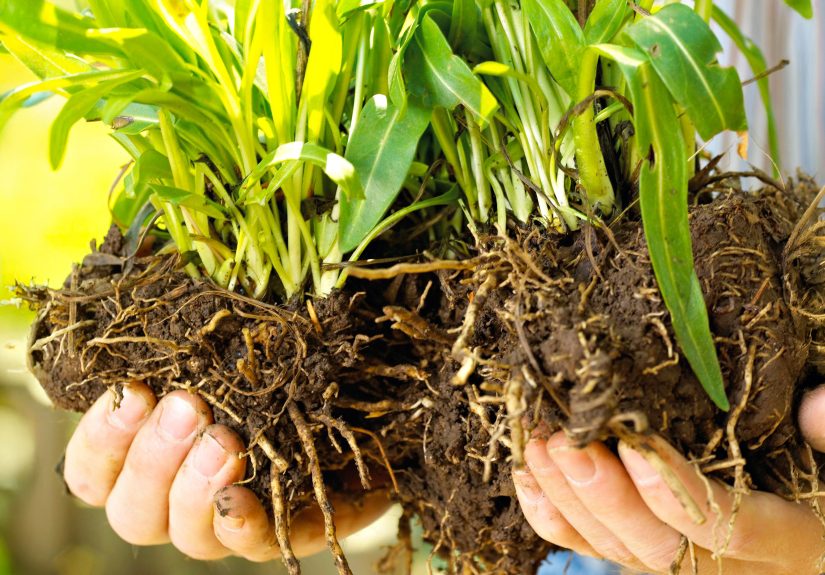
- Dig up the entire clump, starting a few inches outside the drip line. Slide your spade under the root mass and gently lever it up.
- Split the clump using your hands, a garden knife, or two digging forks back-to-back. Each new division should have a healthy set of roots and several growing points (“eyes,” buds, or fans).
- Replant promptly at the same depth the plant was growing before. Water well to settle the soil around the roots, then keep the area evenly moist until the ground freezes.
9 Perennials You Should Divide This Fall
Ready to dig in? Here are nine perennials that respond especially well to fall division and will thank you with better blooms next year.
1. Daylilies (Hemerocallis spp.)
Daylilies are the overachievers of the flower worldtough, adaptable, and eager to spread. Over time, their thick, fleshy roots form dense clumps. When they’re crowded, blooms dwindle and the center of the clump can look tired.
Most gardeners divide daylilies every four to five years, or any time you see fewer flowers and more foliage. Fall is a great option after they’ve finished blooming and cooler weather arrives.
To divide, cut foliage back to about 3–4 inches, dig up the entire clump, and use two garden forks or a sharp spade to pry it into smaller sections. Each fan of leaves attached to a healthy root section can become a new plant. Replant your new fans at the same depth and water well. Expect a jump in bloom production once they settle in.
2. Siberian Iris (Iris sibirica)
Siberian irises are graceful, low-maintenance plants that form large clumps of grassy foliage topped with elegant flowers in late spring or early summer. As they age, the center of the clump often stops blooming, leaving a hollow middle ringed by growth at the edges.
That’s your cue to divide. Every three to five years is typical. In early fall, dig up the whole clump, cut back the foliage to 5–6 inches, and trim away dead or mushy roots. Use a sharp spade or knife to slice the clump into sections, each with several fans and a strong root system. Replant divisions in sunny, well-drained soil, spacing them so each has room to form another generous clump.
3. Hostas (Hosta spp.)
Hostas are shade-garden royalty, but even they can get a bit too comfortable. Mature plants often expand until they’re spilling over paths, crowding smaller neighbors, or producing leaves that look smaller and less robust.
While hostas can remain undisturbed for years, fall division is ideal when you want more plants or need to control their size. Wait until the foliage begins to yellow and night temperatures cool down, but the ground is still workable.
Water well the day before. Then dig around the clump and lift it out. Washing soil from the roots makes it easier to see where to cutlook for clusters of buds (“eyes”) at the crown. Cut the clump into sections, each with at least one or two eyes and plenty of roots. Replant in rich, well-drained soil in part to full shade, and keep them watered until the first hard freeze.
4. Barrenwort (Epimedium spp.)
Barrenwort, also known as Epimedium or bishop’s hat, is a workhorse groundcover for dry shade. It slowly forms wide clumps under trees or shrubs, with delicate spring blooms and attractive foliage.
If it starts to invade neighboring plants or you want to extend that pretty carpet farther along a path, fall is the moment to divide. Dig around the clump, lift it carefully, and slice it into smaller chunks with a sharp knife or spade. Because Epimedium spreads mainly by rhizomes, you can also simply cut away and transplant pieces of the outer edge. Replant divisions a foot or two apart to give them space to mature.
5. Bleeding Heart (Dicentra spp.)
Old-fashioned bleeding heart is a springtime star, with arching stems and heart-shaped flowers that look like they’re dangling from delicate chains. The plants often go dormant in summer, disappearing completely above ground.
After three to five years, you may notice fewer flowers or sparse growth. When that happens, it’s a sign the clump is ready for division. The best time is late summer or early fall, once the foliage has begun to die back.
Dig a wide circle to capture the shallow, spreading roots. Lift the clump, trim off damaged roots, and look for “eyes” near the crown. Use a sharp knife to cut the clump into sections, each with two or three growing points. Replant divisions in partial shade with moist, well-drained soil, and mark the spotcome spring, they’ll pop back up and bloom more vigorously.
6. Hardy Geranium (Geranium spp.)
Hardy geraniums (not to be confused with annual bedding geraniums) are low mounds of foliage topped with small, colorful flowers. They’re fantastic fillers along paths, in mixed borders, and under shrubs.
Over time, some varieties become leggy or develop a bare center. Every three to five years, cutting back and dividing helps rejuvenate growth. In fall, shear the top growth back to a few inches, then dig up the plant. You can often pull the clump apart by hand; otherwise, use a sharp knife to separate it into smaller sections.
Replant in moist, well-drained soil in sun to part shade. Give each new plant room to spreadspacing varies by variety, but 1–3 feet is common. Next year, expect more even growth, tidier mounds, and plenty of flowers.
7. Speedwell (Veronica spp.)
Speedwell comes in a variety of forms, from mat-forming groundcovers to upright spires. Most varieties bloom in late spring or summer, then quietly expand into larger patches.
When you see the center thinning out or flowering dropping off, it’s time for a makeover. Late summer or early fall is ideal. Cut the foliage back, dig up the clump, and remove any tired or woody portions in the middle. Divide the outer, more vigorous sections into several new plants.
Replant divisions in full sun and well-drained soil, spacing according to the mature size of your variety (often 1–3 feet apart). With good aftercare, they’ll respond with healthier growth and a more impressive flower show next season.
8. Solomon’s Seal (Polygonatum spp.)
Solomon’s seal is a shade-garden favorite, with elegant arching stems and dangling, bell-shaped flowers. It spreads by underground rhizomes, slowly forming colonies that can soften the edge of a path or fill a shady bed.
Dividing Solomon’s seal is wonderfully straightforward. In fall, dig up a portion of the patch and expose the rhizomesthose fleshy, horizontal stems just below the soil surface. Use a clean knife to cut the rhizome into pieces, each with several buds or growing points.
Replant the pieces a few feet apart in humus-rich, moist-but-well-drained soil. Keep them watered until dormancy. By spring, they’ll send up new shoots, and over time you’ll enjoy a gracefully expanding colony in your shade garden.
9. Shasta Daisy (Leucanthemum × superbum)
Shasta daisies are cheerful, classic perennials that happily bloom for weeks in early to midsummer. When they’re pleased with their location, they spread quickly. After a few years, though, you may notice that flowers are fewer, or the center of the clump looks tired.
That’s your signal to dividetypically every two to three years. In early fall, cut stems back to about 4 inches, then dig up the entire clump. Knock or wash off excess soil so you can see the root structure. Remove and discard the worn-out center, and save the vigorous outer portions.
Split those outer sections into several pieces, each with a solid root mass. Replant in full sun, spacing divisions about 1–2 feet apart. With good soil preparation and consistent moisture, you’ll be rewarded with stronger, more floriferous plants next year.
After-Care: Helping Your Divided Perennials Thrive
Once everything is dug, sliced, and replanted, your work isn’t quite done. How you care for your divisions in the weeks after planting can make the difference between “meh” and “wow” next spring.
- Water deeply and consistently: Aim to keep the soil evenly moist (not soggy) until the ground freezes. New roots need reliable moisture to establish.
- Mulch lightly: Apply a 1–2 inch layer of shredded leaves, straw, or fine bark around new divisions to help conserve moisture and reduce temperature swings.
- Skip the fertilizer for now: Most experts suggest waiting until spring to fertilize so you don’t push tender new top growth right before winter.
- Label your plants: It’s very easy to forget what went where once everything dies back. Simple plant tags will save future-you from confusion.
By spring, your divided perennials will be ready to surge into growth with renewed energyand you’ll enjoy fuller, more balanced beds without overcrowding.
Real-Life Lessons from Dividing Perennials (Experience & Tips)
Gardeners who get hooked on dividing perennials in fall often describe it as “tidying plus treasure hunting.” You clean up overcrowded beds and, almost magically, end up with a whole new batch of plants to tuck into bare spots. Over time, a few patterns and practical lessons tend to emerge.
One common experience is underestimating just how many divisions you’ll get from a single clump. A mature daylily or Shasta daisy can easily turn into half a dozen or more new plants. Many gardeners start dividing to solve a crowding problem and suddenly realize they have more plants than places to put them. Having a plan ahead of timeextra spots in a new border, a neighbor who’s happy to adopt extras, or even a “plant swap” with friendskeeps your driveway from turning into a temporary nursery.
Another real-world lesson: preparation makes the whole process feel smoother. Gardeners who lay out mulch, compost, and tools ahead of time, and dig the new planting holes before lifting the old clumps, often find that divisions spend less time drying out. When holes are prepped, you can move quickly from “dig and divide” to “replant and water,” which is kinder to the roots and easier on your schedule.
People also learn quickly that not every perennial needs frequent division. Hostas, for example, can sit happily in one spot for years; many gardeners only divide them when plants outgrow their space or when they want more copies of a favorite variety. On the flip side, Shasta daisies and some Speedwell varieties benefit from more regular splitting because their centers tire sooner. Paying attention to what your specific plants are telling youfewer flowers, a hollow center, or obvious overcrowdingworks better than following a strict calendar.
A lot of gardeners report that fall division actually improves the look of their beds almost immediately. Cutting back floppy foliage and reshaping large clumps can reveal nearby plants that were being overshadowed. Moving divisions into sparse areas also helps visually balance borders. It’s not unusual to finish a weekend of dividing and feel like you’ve had a mini “garden remodel” without buying a single new plant.
There’s also a social side to this chore. Because dividing perennials produces instant extras, many gardeners turn it into an opportunity to share plants. Passing on a piece of a beloved hosta or an old clump of Siberian iris becomes a way of sharing stories toohow long it’s been in the garden, where it came from, and how reliable it’s been over the years. Years later, those shared plants become a sort of living record of friendships and gardening seasons.
Finally, gardeners often notice that fall-divided plants behave differently the following season. While newly split perennials might not produce their absolute maximum number of blooms immediately, they usually look healthier overall: greener foliage, better shape, and fewer signs of stress. Within a year or two, most will surpass their old performance. That long-view perspectiveaccepting a little disruption now for stronger, more floriferous plants lateris at the heart of good perennial gardening.
If you’re new to dividing perennials, it’s perfectly fine to start with one or two forgiving speciesdaylilies and hostas are some of the easiestand build confidence from there. As you see how quickly plants recover and how much better your beds look the next year, dividing perennials each fall may become one of your favorite seasonal rituals.
Conclusion: A Little Fall Digging, A Lot More Spring Color
Dividing perennials in fall isn’t just about maintenanceyou’re resetting the energy in your beds, encouraging stronger blooms, and multiplying plants you already love. By focusing on reliable candidates like daylilies, Siberian iris, hostas, barrenwort, bleeding heart, hardy geranium, speedwell, Solomon’s seal, and Shasta daisy, you’ll get the biggest payoff for your effort.
A cool day, sharp tools, and a bit of elbow grease are all it takes. Come spring, when those refreshed clumps leaf out and flower with new enthusiasm, you’ll be very glad you grabbed the shovel this fall.