
Table of Contents >> Show >> Hide
- What Is an AC Fuse Box?
- Why This Box Matters More Than You Think
- Where Is the AC Fuse Box Located?
- What Is Inside an AC Disconnect Box?
- Fused vs. Non-Fused AC Disconnects
- How to Read the Labels Without Becoming an Electrician Overnight
- Signs There May Be a Problem with the AC Fuse Box
- What Homeowners Can Safely Do
- What Homeowners Should Not Do
- When to Call an HVAC Technician vs. an Electrician
- Simple Maintenance That Can Help Prevent AC Electrical Problems
- Homeowner Experiences: What People Learn the Hard Way About AC Fuse Boxes
- Final Thoughts
- SEO Tags
If you have ever walked past your outdoor AC unit and noticed a small metal or plastic box mounted nearby, congratulations: you have met one of the least glamorous but most important parts of your cooling system. It is commonly called an AC fuse box, though in many homes it is really an air conditioner disconnect box. Not exactly a flashy name, but neither is “thing that prevents service technicians from getting zapped,” and that is basically its job.
For homeowners, this box can feel like one of those mysterious home features that came free with the house, along with a weirdly placed light switch and one cabinet that only stores takeout menus. But understanding your AC fuse box can help you troubleshoot common cooling problems, talk more confidently with an HVAC technician, and avoid dangerous mistakes when your system acts up in the middle of a sticky summer afternoon.
This guide breaks down what an AC fuse box is, where to find it, what is inside it, what can go wrong, and what you can safely do as a homeowner. No electrician cosplay required.
What Is an AC Fuse Box?
An AC fuse box is the outdoor disconnect box that shuts off power to your air conditioner’s condenser unit. It is typically mounted on the exterior wall of the house, usually within sight of the outdoor unit. In plain English, it is the nearby power shutoff that lets a technician service the system safely.
Here is the important twist: not every AC disconnect contains fuses. Some disconnect boxes are fused, meaning they hold cartridge fuses that provide overcurrent protection. Others are non-fused and function only as a shutoff point. That is why homeowners often use “AC fuse box” as a catch-all term even though the box may or may not actually contain fuses.
Think of it this way: every fused disconnect is a disconnect box, but not every disconnect box is a fuse box. Home ownership loves a technicality.
Why This Box Matters More Than You Think
Your AC disconnect box matters for three big reasons: safety, equipment protection, and troubleshooting.
1. It gives your AC a local shutoff
When an HVAC pro works on your outdoor condenser, they need a visible way to cut power at the unit itself. That is the whole point of the disconnect. It is there so nobody is guessing whether the system is still energized.
2. It may protect the unit from electrical overload
If your disconnect is fused, the fuses act like sacrificial bodyguards. If the current exceeds safe limits, they blow to protect the unit. That does not mean your system is “fixed.” It usually means something happened that deserves attention.
3. It can explain why your AC suddenly stopped working
If the outdoor unit will not turn on, the issue could be a tripped breaker, a blown fuse, a failed capacitor, bad wiring, a thermostat problem, or a different electrical fault. The disconnect box is often one of the first places a pro checks.
Where Is the AC Fuse Box Located?
In most homes with central air, the AC disconnect box is mounted outside near the condenser. It is typically attached to the wall a few feet from the outdoor unit. If you are standing by the condenser and looking around for a gray or beige box with a hinged cover, you are probably in the right neighborhood.
Some homeowners confuse the disconnect box with the main electrical panel inside the house. They are not the same thing. Your main panel controls circuits throughout the house. The AC disconnect is the local shutoff near the cooling equipment.
It is also possible to have a disconnect that looks more like a switch than a little fuse cabinet. Some models use a pull-out block. Others use a molded-case switch. Same mission, different costume.
What Is Inside an AC Disconnect Box?
What you find inside depends on whether the box is fused or non-fused.
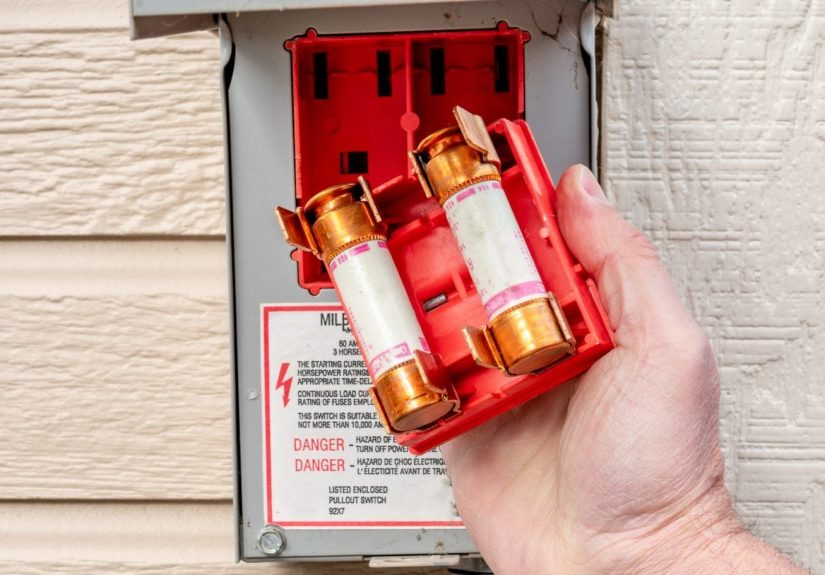
Inside a fused disconnect
A fused disconnect usually contains:
- A pull-out handle or removable disconnect block
- Two cartridge fuses
- Line and load terminals
- A weather-resistant enclosure, often rated for outdoor use
These cartridge fuses are not the little glass fuses you might remember from old electronics. They are typically cylindrical and sized for HVAC duty. Their job is to interrupt the circuit if current rises above the unit’s safe design limits.
Inside a non-fused disconnect
A non-fused disconnect usually contains:
- A pull-out block or switch mechanism
- Line and load terminals
- No protective fuses
In that setup, overcurrent protection is handled elsewhere, usually by the circuit breaker in the main electrical panel.
Fused vs. Non-Fused AC Disconnects
Homeowners often ask whether one style is “better.” The honest answer is: the correct type is the one specified for your system and installed properly.
Fused disconnects
These add another level of protection at the outdoor unit. They are often used when the equipment nameplate or installation instructions call for fuse protection. If a fuse blows, it cuts power and may protect the equipment from worse damage.
Non-fused disconnects
These are common too. They simply provide a visible shutoff for service. In these systems, the breaker back at the panel usually handles overcurrent protection.
The key point is that the unit nameplate matters more than guesswork. Manufacturers list important electrical data such as minimum circuit ampacity and maximum fuse or circuit breaker size. That information is what should guide the installation, not a hardware-store hunch or a “this looks about right” moment.
How to Read the Labels Without Becoming an Electrician Overnight
If you look at your outdoor unit or service paperwork, you may see terms like these:
Minimum Circuit Ampacity (MCA)
This tells the installer the minimum current-carrying capacity required for the circuit.
Maximum Fuse or Circuit Breaker
This tells you the largest allowed overcurrent protection device for that equipment. This number matters a lot. Using an oversized fuse is unsafe because it can allow dangerous current to flow before protection kicks in.
HACR breaker
You may also see references to HACR-type circuit breakers. That is standard HVAC electrical language and part of how the manufacturer specifies acceptable protection for the unit.
NEMA 3R
This is a common outdoor enclosure rating. It means the disconnect box is designed for outdoor use and protection against rain and similar conditions. It does not mean the box is indestructible, waterproof forever, or thrilled about twenty years of corrosion.
Signs There May Be a Problem with the AC Fuse Box
A disconnect or fuse issue can show up in a few homeowner-friendly ways:
- The thermostat is calling for cooling, but the outdoor unit stays completely silent
- The indoor blower runs, but the air from the vents is warm
- The breaker trips repeatedly
- The disconnect box looks rusty, scorched, cracked, or loose
- You hear buzzing or notice a burnt smell near the outdoor unit
- The system starts and stops erratically
That said, these symptoms do not automatically mean “blown fuse.” A bad capacitor, contactor, compressor problem, loose wiring, thermostat issue, or clogged filter can create similar symptoms. HVAC systems are talented that way: one symptom, five possible villains.
What Homeowners Can Safely Do
You do not need to poke around energized components to be a smart homeowner. There are several safe, sensible steps you can take before calling for service.
Check the thermostat first
Make sure the thermostat is set to Cool and the setpoint is below room temperature. Yes, this sounds obvious. Yes, it solves a surprising number of calls.
Check the main breaker panel
Look for a tripped breaker serving the AC or condenser. If a breaker is obviously tripped, a single reset may be reasonable. If it trips again, stop there and call a professional. Repeated trips are a warning, not a challenge.
Inspect the disconnect box visually
With the system off, look for obvious issues like corrosion, a loose cover, insect nests, water damage, or discoloration. You are observing, not performing surgery.
Clear debris around the condenser
Leaves, grass clippings, and overgrown shrubs can make the unit work harder. Good airflow around the condenser helps performance and reduces strain.
Replace or clean the HVAC filter
A dirty filter can reduce airflow, hurt efficiency, and contribute to system stress. It is one of the easiest maintenance steps a homeowner can do.
Take photos before service
If the disconnect box or nameplate is visible, take clear photos for the technician. This can make service faster and can help confirm fuse type, unit data, and box style before anyone shows up at your door carrying the wrong part.
What Homeowners Should Not Do
This is the part where confidence should politely sit down.
- Do not replace a blown fuse with a different size “just to get the AC going”
- Do not bypass a fuse with metal, foil, or any improvised nonsense
- Do not assume the disconnect is dead just because the thermostat is off
- Do not stick tools into the box unless you are qualified and the power is verified off
- Do not keep resetting a breaker or replacing fuses without finding the underlying cause
A blown fuse is usually a symptom, not the root problem. The real culprit may be a failing capacitor, shorted wiring, locked compressor, bad contactor, or another electrical fault. Replacing the fuse without fixing the cause can lead to repeat failure, equipment damage, or a dangerous condition.
When to Call an HVAC Technician vs. an Electrician
Sometimes the line between HVAC and electrical work gets blurry. Here is a simple rule of thumb:
Call an HVAC technician when:
- The outdoor unit will not start
- The disconnect fuses may be blown
- The system is blowing warm air
- The capacitor, contactor, compressor, or refrigerant system may be involved
Call an electrician when:
- The disconnect box is damaged, loose, corroded, or improperly installed
- You suspect wiring issues between the panel and the disconnect
- The breaker, service conductors, or electrical panel may be the problem
- The box needs replacement due to age, water intrusion, or code-related concerns
In some cases, you may need both. Welcome to homeownership, where problems occasionally form committees.
Simple Maintenance That Can Help Prevent AC Electrical Problems
No maintenance routine can guarantee you will never have a disconnect or fuse issue, but it can reduce stress on the system and help you catch problems earlier.
- Check your air filter monthly and replace it when dirty
- Keep at least a couple of feet of clearance around the outdoor unit
- Remove leaves and debris from the condenser area
- Schedule professional maintenance before peak cooling season
- Ask the technician to inspect electrical connections, terminals, and the disconnect box
- Have corrosion, loose covers, and water-damaged enclosures addressed promptly
Routine maintenance helps efficiency, comfort, and equipment life. It also makes it less likely that your AC will stage a dramatic shutdown on the hottest day of the year, which is a hobby many systems seem to enjoy.
Homeowner Experiences: What People Learn the Hard Way About AC Fuse Boxes
One homeowner notices the house feels muggy even though the thermostat says everything is normal. Inside, the blower is running. Outside, the condenser is dead silent. The first thought is usually, “Great, the whole AC is gone.” But after a service call, the issue turns out to be a blown fuse in the disconnect and a failing capacitor that caused it. The lesson? Warm air from the vents does not always mean total system failure. Sometimes the indoor part is working while the outdoor part has lost power.
Another homeowner sees the disconnect box for years and assumes it is just some random utility accessory, like a box installed by the house’s previous owner for decorative confusion. Then one day the HVAC tech opens it, pulls out the disconnect block, and explains that this little box is the safety shutoff for the condenser. Suddenly the mystery box is no longer mysterious. It is a reminder that many of the most important parts of a house are the least photogenic.
Then there is the classic “helpful” fix. Someone discovers the fuse is blown and decides to replace it with whatever seems close enough from the shelf in the garage. Bigger must be better, right? Absolutely not. Oversized fuses can let too much current pass before the circuit is interrupted, which defeats the whole purpose of protection. Homeowners who learn this from a professional usually never forget it. It is one of those expensive lessons that sticks.
Corrosion is another sneaky issue, especially in humid or coastal climates. A homeowner may not notice anything unusual until the box cover gets stiff, the metal begins rusting, or the disconnect looks weather-beaten enough to audition for a shipwreck documentary. By the time the unit starts acting unreliable, the problem may involve moisture, worn contacts, or a deteriorating enclosure. This is why a quick visual check a few times a year is more useful than it sounds.
Many homeowners also discover that repeated breaker trips or repeated blown fuses should never be treated as an annoying quirk. It is tempting to reset once, breathe a sigh of relief, and call it a victory. But if it happens again, that is the house telling you something is wrong. Maybe the compressor is struggling. Maybe a contactor is failing. Maybe the wiring has a problem. The smart move is to stop resetting and start diagnosing.
There are also success stories that come from doing the small things right. A homeowner changes the air filter regularly, keeps shrubs trimmed back from the condenser, and gets annual maintenance before summer. When a technician checks the system, the disconnect box is still in decent shape, the unit has proper airflow, and minor issues get caught before they become sweltering emergencies. It is not glamorous, but neither is sweating through your sheets in July because a $20 part failed on a Saturday night.
The biggest real-world takeaway is simple: homeowners do not need to become HVAC experts, but they do benefit from knowing what the AC fuse box does, where it is, and when to leave the rest to a professional. That little box by the condenser is not just background scenery. It is part safety device, part troubleshooting clue, and part reminder that your air conditioner depends on more than cold air and wishful thinking.
Final Thoughts
An AC fuse box may not be the most exciting feature of your home, but it plays a serious role in protecting your air conditioning system and making service work safer. The main thing to remember is that the “AC fuse box” is usually the outdoor disconnect, and it may be fused or non-fused depending on the system. If your air conditioner stops cooling, the disconnect and its fuses may be part of the story, but they are rarely the whole story.
For homeowners, the smartest approach is simple: understand what the box is, check only what is safe to check, keep the system maintained, and call a qualified pro when electrical parts are involved. That is not being overly cautious. That is being the kind of homeowner who enjoys air conditioning instead of arguing with it.



 Close
Close