
Table of Contents >> Show >> Hide
- Step 1: Check the Rules and Decide Whether You’re Really Ready
- Step 2: Choose the Right Spot for Your Backyard Hive
- Step 3: Buy the Right Equipment and Set It Up Before Bee Day
- Step 4: Order the Right Bees and Install Them the Smart Way
- Step 5: Inspect Regularly, Feed When Needed, and Stay Ahead of Varroa
- Common Beginner Mistakes to Avoid
- What to Expect in Your First Year
- Backyard Beekeeping Experiences: What It Really Feels Like
- Conclusion
If you have ever watched a bee zigzag across your garden like it owns the place, you already know the appeal. Backyard beekeeping feels part science project, part homestead flex, part tiny-air-force management simulator. It can also be deeply rewarding. You get a front-row seat to one of the most organized little societies on Earth, and if all goes well, you may eventually harvest honey that tastes like your own neighborhood in a jar.
But let’s clear up one sticky thing right away: starting a beehive is not the same as putting a cute wooden box in the yard and waiting for magic. Honey bees are livestock. They need planning, equipment, seasonal care, pest management, and a beekeeper who can tell the difference between “everything looks great” and “why are there six thousand bees hanging off a tree branch?”
The good news is that getting started is absolutely doable for beginners when you keep the process simple. Instead of drowning in fifty tabs, five catalogs, and one enthusiastic Facebook group arguing about hive colors, focus on the five steps that actually matter. Get legal. Pick the right location. Buy the right gear. Install healthy bees. Then manage the colony like a responsible human rather than an accidental bee landlord.
Here is how to start a beehive in your backyard in five simple steps, with practical advice, realistic expectations, and just enough humor to keep the stingers in perspective.
Step 1: Check the Rules and Decide Whether You’re Really Ready
The first step in backyard beekeeping is not buying bees. It is finding out whether you can legally keep them where you live. Many cities, counties, and neighborhoods allow beehives, but the details vary. Some places require permits or registration. Others limit the number of hives, specify setback distances from property lines, or require fencing or flyway barriers. In short, your dream hive should not begin with a strongly worded letter from code enforcement.
Check local ordinances before you buy anything
Call your city hall, county extension office, or state department of agriculture. Search your municipal code using terms like “beekeeping,” “honey bee,” “hive,” and “livestock.” Also review HOA rules if you have them. Even in places where beekeeping is allowed, nuisance complaints can become a problem if your bees crowd a neighbor’s pool or turn the sidewalk into a buzzing departure lounge.
Ask yourself the unglamorous questions
Can you lift hive boxes? Can you inspect a colony every week or two during the active season? Are you willing to keep learning after the first Instagram-worthy photo? Do you or someone in your household have a serious sting allergy? Are you prepared for start-up costs, which include more than just the hive itself?
These questions are not meant to scare you off. They are meant to save you from the classic beginner mistake of romanticizing beekeeping as “garden decor with wings.” A healthy colony needs attention, especially in spring and late summer.
Start small and get help early
Most beginner-friendly advice points in the same direction: start with one or two hives, not six. One hive is simpler, but two hives give you something valuable to compare. If one colony looks weak, queenless, or strangely moody, the other can help you spot the difference between “normal bee weirdness” and a real problem.
This is also the moment to find a mentor or join a local beekeeping club. A hands-on class, a local association, or one experienced beekeeper who does not speak entirely in bee riddles can save you from expensive mistakes. Local knowledge matters because beekeeping is deeply seasonal and climate-specific. Advice that works in one region may not fit another.
Step 2: Choose the Right Spot for Your Backyard Hive
If your hive location is bad, the bees will let you know. Usually with attitude.
A good backyard hive site balances bee health, human safety, and simple day-to-day convenience. You do not need a massive property, but you do need a thoughtful setup.
Look for morning sun and a calm, low-traffic area
Bees benefit from early sun because it gets the colony active sooner in the day. A spot with morning light and some protection from harsh wind is often ideal. Avoid places that stay soggy, flood easily, or trap damp air. Hives do not love standing moisture any more than cardboard boxes do.
Create a safe flight path
The entrance of the hive should face away from areas where people regularly walk, play, grill, or dramatically wave their arms. Leave a clear area in front of the hive so bees can take off and land. If neighbors are close, add a fence, shrubs, or tall vegetation to encourage the bees to fly up and over human head height instead of directly through the backyard social scene.
Raise the hive off the ground
Set the hive on a stand, cinder blocks, or another sturdy base. Elevating it helps with drainage, makes inspections easier on your back, and can reduce trouble from skunks and other animals that enjoy bothering hives at night. Also make sure the location is level and stable. A crooked hive is not rustic. It is annoying.
Provide water before the bees go looking elsewhere
Bees need water for cooling the hive and handling food, especially in warm weather. If you do not provide a dependable water source, they may adopt your neighbor’s birdbath, kiddie pool, or suspiciously expensive fountain. Set out water early, keep it consistently available, and add pebbles, corks, sticks, or floats so bees can land without drowning. Once bees commit to a water source, they tend to remember it, so make yours the attractive option from the beginning.
Think like a good neighbor
Talk to nearby neighbors before your bees arrive. This one conversation can prevent a lot of drama later. Let them know where the hive will go, what steps you are taking to reduce nuisance behavior, and why they should avoid spraying blooming plants with insecticides when bees are active. Good beekeeping is not just about the hive. It is about the whole backyard ecosystem around it.
Step 3: Buy the Right Equipment and Set It Up Before Bee Day
This is the part where beginner beekeepers discover that bees themselves are only part of the budget. The equipment matters, and buying sensible gear from the start makes everything easier.
Your basic beekeeping setup
For a simple Langstroth hive setup, you will typically need a bottom board, hive bodies or boxes, frames, foundation, an inner cover, and an outer cover. You will also need a hive stand.
For yourself, buy protective gear that helps you stay calm while learning. A veil is a must. Many beginners also use gloves and a bee suit or jacket until they gain confidence. You will also need two classic tools of the trade: a smoker and a hive tool. The smoker helps calm the colony during inspections, and the hive tool helps pry apart boxes and frames that bees glue together with propolis like tiny overachieving contractors.
Set up everything before the bees arrive
Do not wait until your package or nuc is on the porch to assemble frames while sweating through your shirt and wondering where the screws went. Build and place the hive in advance. Make sure the boxes are ready, the stand is stable, the grass around the apiary is cut back, and the entrance reducer and covers are in place.
Being prepared before installation day reduces stress for you and for the bees. It also prevents the rookie move of letting a package sit too long in the sun while you search for a missing frame.
Do not overspend on shiny gadgets
New beekeepers are often tempted by catalogs full of accessories that promise easier inspections, happier bees, and possibly inner peace. Resist the urge to buy every bee-themed object in existence. Start with the essentials, then add specialized equipment later if your hive survives, grows, and gives you a reason to expand.
Step 4: Order the Right Bees and Install Them the Smart Way
Once your site and gear are ready, it is time to get the actual residents.
Choose between a package and a nuc
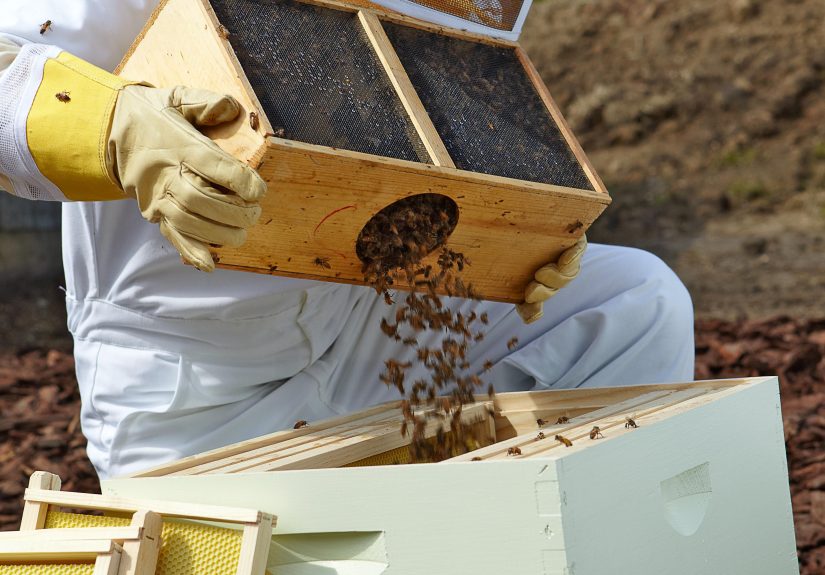
Most beginners start with either package bees or a nucleus colony, often called a nuc. A package usually contains a caged queen and a measured number of worker bees with no established comb. It is a clean slate, but the colony has to build from scratch.
A nuc is more like a mini working colony. It usually comes with frames, comb, brood, food stores, and a laying queen already accepted by the bees. Because it has a head start, a nuc often builds up faster and may feel easier for beginners. The tradeoff is that you need to buy from a reputable source, because you do not want to purchase someone else’s bee problems along with the colony.
Buy local when possible
Local bees from a reputable supplier or beekeeper are often a smart choice because they are already adapted to your region’s climate and forage pattern. Order early, especially if you want spring delivery. Good bee suppliers often sell out faster than concert tickets, but with fewer glow sticks.
Skip swarm catching as a first project
Yes, free bees sound thrilling. No, chasing a swarm with a cardboard box is not the ideal beginner plan. Swarm capture and bee removal can be exciting, but they are usually better handled with help from an experienced beekeeper. Your first colony should come from a predictable source, not from a tree branch that looked available on a Tuesday.
Install the bees promptly and calmly
If you receive package bees, install them quickly rather than leaving them waiting around. If you are installing a nuc, transfer the frames gently into the hive in the same order and orientation when possible. After installation, reduce the entrance if needed, close the hive securely, and give the bees a little peace. New colonies need time to settle in and accept their new home.
Your first follow-up inspection should focus on whether the queen is present and laying, whether the bees are drawing comb, and whether the colony has enough food. This is not the moment to become a hive archaeologist. Stay focused on the basics.
Step 5: Inspect Regularly, Feed When Needed, and Stay Ahead of Varroa
This is the step that separates people who keep bees from people who briefly owned a decorative wooden box.
Inspect on purpose, not out of curiosity alone
New beekeepers often open the hive because they are excited, nervous, or both. That is understandable. But inspections should have a purpose. Look for eggs or brood, check that the queen is laying, assess food stores, look for room to expand, and watch for signs of swarming, disease, or pest trouble.
During buildup season, you may inspect every week or two. Move smoothly, use smoke gently, and do not leave the colony wide open longer than necessary. Bees are much more pleasant when you stop treating their living room like a museum exhibit.
Feed only when it makes sense
Some beginner colonies need supplemental sugar syrup, especially when nectar is scarce or when they are building comb after installation. Feeding can help a new colony get established, but it is not a replacement for good forage or good management. If your area has a strong nectar flow and the colony has plenty of stored food, you may not need much feeding at all.
Manage space to reduce swarming pressure
When a colony grows rapidly in spring, crowding can increase the urge to swarm. Add frames or boxes as needed so the bees have room for brood and food storage. Swarming is natural, but it is less fun when your “backyard beehive project” relocates to the neighbor’s maple tree.
Take Varroa mites seriously from day one
If there is one issue that beginner beekeepers should never postpone learning about, it is Varroa mite management. Varroa mites weaken colonies and spread viruses. Healthy-looking bees can still carry damaging mite levels, which is why routine monitoring matters.
Common sampling methods include the alcohol wash and the powdered sugar roll. Many experienced educators favor the alcohol wash because it is more reliable. The larger point is this: do not guess. Test. Keep records. Follow an integrated pest management approach. If mite levels are too high, respond in time using an appropriate treatment plan for your season and setup.
Ignoring mites because the hive “looks busy” is like ignoring the check engine light because the radio still works. Technically possible. Spiritually unwise.
Common Beginner Mistakes to Avoid
- Buying bees before checking local rules.
- Putting the hive in a wet, shady, high-traffic corner of the yard.
- Skipping a local mentor and trying to learn entirely from random online arguments.
- Starting with too many hives too soon.
- Opening the hive too often without a plan.
- Forgetting to provide water and accidentally outsourcing the problem to your neighbor’s pool.
- Waiting too long to monitor for Varroa mites.
- Expecting gallons of honey in year one instead of focusing on colony survival.
What to Expect in Your First Year
Your first year of backyard beekeeping is mostly about establishment, learning, and survival. Yes, honey is possible in some situations. No, it should not be your main expectation. A beginner’s real goal is to help the colony build comb, raise brood, store enough food, stay healthy, and make it through the seasons in good shape.
That means your success may look less like a pantry full of honey jars and more like this: the queen is laying well, the colony is growing, the bees have a stable water source, you caught a mite problem early, and you no longer panic every time one buzzes past your ear.
Honestly, that is a fantastic first-year win.
Backyard Beekeeping Experiences: What It Really Feels Like
The funniest thing about starting a backyard hive is how quickly your relationship with sound changes. Before beekeeping, a buzz is just a buzz. After beekeeping, you become the kind of person who stands in the yard listening like a tiny airport traffic controller. A loud, steady hum on a warm afternoon sounds reassuring. An angry, higher-pitched defensive buzz sounds like your bees are filing formal complaints.
Most beginners also remember the first installation day forever. You put on your new bee jacket, which makes you feel either highly professional or like a very nervous astronaut. Your gloves suddenly seem too thick for basic hand movement. You wonder whether the bees can sense fear. Spoiler: they can definitely sense clumsy.
Then something surprising happens. Once the colony is in the box and the lid is on, the whole thing becomes less mythical and more practical. You stop thinking of the hive as a mysterious golden-honey machine and start seeing it as a living system that responds to space, weather, forage, pests, and timing. That shift is important. It is where real beekeeping begins.
Another common experience is learning patience the hard way. New beekeepers want instant answers. Is the queen okay? Are they happy? Will they make honey? Why are they bearding? Why are they fanning? Why is there wax here but not there? The hive answers on bee time, not human time. Sometimes the right move is not another inspection. Sometimes the right move is to close the lid, write down what you saw, and come back on schedule instead of barging in like a stressed landlord.
You also become weirdly attached to small victories. The first time you see eggs in neat little rows, it feels like you won a science fair. The first time the bees start using the water source you set up instead of wandering off to explore the neighborhood, you feel absurdly proud of a bucket with rocks in it. The first calm inspection where you light the smoker correctly, move slowly, and put everything back without crushing bees feels like a personal milestone worthy of background music.
There are stressful moments too. You may have an inspection where the hive feels more defensive than usual. You may worry about a queen you cannot spot. You may find that the colony needs feeding when you hoped it would be self-sufficient already. You may discover that mites are not an abstract concept from a handbook but a real management issue with real timing. Those moments are not signs that you are failing. They are part of the honest rhythm of keeping bees.
Perhaps the most rewarding experience is that beekeeping changes how you see your whole yard. Flowers stop being decoration and become forage. Water sources become strategy. Pesticide choices become serious. Bloom times matter. Wind direction matters. The little patch of suburban land behind your house starts to feel connected to a much bigger ecological story.
And then one day, maybe in late summer, you stand a few feet from the hive and watch bees returning home heavy with pollen. The traffic is steady. The colony sounds settled. You realize you are no longer just somebody who wanted a backyard beehive. You are a beekeeper now. Slightly tired, occasionally sticky, always learning, but definitely a beekeeper.
Conclusion
Starting a beehive in your backyard does not require perfection. It requires preparation. If you check the rules, choose a smart hive location, buy solid beginner equipment, install healthy bees from a reputable source, and commit to regular inspections and Varroa management, you give yourself an excellent chance of success.
The five simple steps are simple on purpose. They keep you focused on what matters most. Backyard beekeeping is not about collecting fancy gear or chasing instant honey. It is about building a healthy colony, learning the seasonal rhythm of the hive, and becoming the kind of caretaker your bees can actually use.
Start small. Stay curious. Respect your neighbors. Keep the water filled. Test for mites. And remember: every skilled beekeeper once stood in the yard wearing too many layers, holding a smoker, and wondering whether the bees were judging them. They probably were. But you can still do this.







 Close
Close